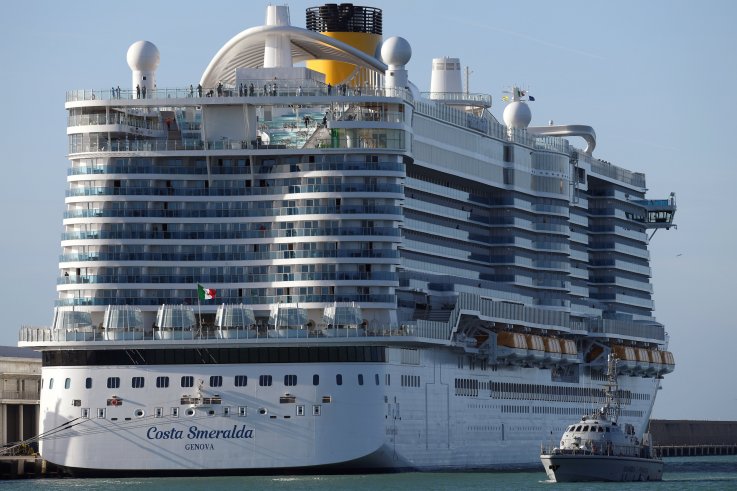
Thursday, March 05, 2020

Life or Death: A Healthy Bet?

If nothing else, one has to admire the creativity of this idea:

"Life Settlement Players Root for Health Account Bill"

So let's unpack this, shall we?

First: what, pray tell, are "Life Settlement Players?"

Long time readers know that this refers to the viatical market:

"Since life insurance is property, it can generally be sold. In this case, the client saved the annual premium and picked up an easy $5,000."

That is, one can sell one's life insurance policy to another person for a quick buck or three (depending on one's health and life expectancy). This is generally perfectly legal (there are, of course, other considerations, biut that's another post). And, thanks to a little known piece of HIPAA, there are some great tax advantages, as well:

"A viatical settlement made to an individual considered terminally ill (under HIPAA, one who has a life expectancy of 24 months or less) is entirely tax free."

We'll circle back to that "terminally ill" qualifier in a moment.

Okay, Henry, but what's that got to do with the price of tea in China, or some pending health insurance-related legislation?

Well, let's see what H.R. 5958's all about, shall we?

A clue may be found in the name: "Senior Health Planning Account Act."

Basically, it "could help people use the proceeds from the sale of life insurance policies to pay health care expenses."

So what's the big deal?

Well, let's circle back to HIPAA, viaticals, and taxes:

Remember, one can only receive viatication funds tax-free if one is either terminally ill or using the the proceeds to fund one's (uninsured) long term are needs. But if you're not in one of those categories, there are some taxes to be paid. What this bill does is to obliterate that distinction for tax purposes:

"Under the provisions of H.R. 5958, a consumer who sold an in-force policy and put the money in a senior health planning account could spend the money on “qualified health care expenses” without paying federal income taxes on the proceeds from the life insurance policy sale."

Sweet!

Of course, we then have to define "qualified health care expenses," but that should be relatively easy under existing regs (specifically, Section 213d, also used for HSAs/HRAs/FSAs).

So one can see why this would be an attractive marketing tool for folks in the viatical settlement industry: it basically opens up a (potentially vast) new market.

Of course, still has to pass...


[Hat Tip: FoIB Allison Bell]

Wednesday, March 04, 2020

The Magic 50th

As in 50th employee:

"[I]f you employ more than 49 people, you've either got to offer (and help pay for) a group plan or pay a penalty tax"

One can see the problem here for potential employee #50: what are the odds he (or, of course she) will actually be offered a job? Because that new employee is going to raise the employer's cost of doing business substantially, what with having to either install a group plan or face a stiff penalty. The Boss is going to have some major soul-searching on this hire.

But at least there's a light at the end of the tunnel, yes? The rule/tax/penalty sunsets eventually, right?

Ummm, not so much:


"The Internal Revenue Service (IRS), in a recently released memorandum from the Office of Chief Counsel.... has taken the position that the Employer Shared Responsibility Payment (ESRP) imposed by section 4980H of the Internal Revenue Code is not limited by any statute of limitations, and that it could assess these payments for years — potentially indefinitely — after a failure to comply." [emphasis in original]

Oy.

Breathe a sigh of relief if you're #49.

Or maybe not:


Tuesday, March 03, 2020

Oy Canada - Another day, another looney

So to speak:


#Medicaid4All

Monday, March 02, 2020

Sausage making and the ACA: A How-To Guide

When applying for an ObamaPlan on the 404Care.gov website, one is required to provide certain information, including date(s) of birth, Social Security number(s), and the like. This is then matched against other government databases for confirmation.

But what if you (or the person helping you) enters incorrect information?

Well, this may be of help (via email from CMMS):

"The information consumers provide when applying for Marketplace coverage is used to determine whether they are eligible for coverage and, possibly, financial assistance. In some cases, the information on a consumer’s application may be different from the Marketplace’s trusted data sources, including the Social Security Administration, the Department of Homeland Security, and the Internal Revenue Service ... The Marketplace may require a consumer to provide documentation to resolve this inconsistency or DMI [Data Matching Issue]"

And how, precisely can this be done?

So glad you asked:


Your tax-dollars at work!

Friday, February 28, 2020

Another CanuckCare© #InconvenientTruth

Show me the (Canadian) money:


#Medicaid4All

Thursday, February 27, 2020

Insuring Corona

No, sillies, not that corona, the coronavirus (aka COVID-19). As we noted the other day in our trip cancellation insurance post (and referenced yesterday in our latest travel medical insurance item), the disease and, more specifically, the threat it represents has become quite the hot button: lots of news articles about ships and planes being quarantined or re-routed, whole cities appellant on lockdown., and (of course) the travel and toruism industries are taking a big hit.

From an insurance perspective, there are of course a host of different issues, but this post will focus on the travel medical side. To that end, I reached out to our good friends at Global Underwriters, and FoIB Peter S provided me some much-needed and extremely helpful clarification.

For one thing, he taught me a new (and quite important) phrase: "known/public events." That is, those things that are either completely new or had previously flown under the radar becoming quite well known. And one can hardly think of a better recent example of this than the current coronavirous situation. As we noted in yesterday's post, pre-existing conditions are generally excluded under travel medical plans, but that's not really relevant here: this is so new that it's unlikely there were many insureds who had contracted the disease prior to buying coverage. So that clause wouldn't likely come into play.

But now that the disease is "out on the wild," that phrase ("known/public event") carries a whole new weight: as Peter says, "[r]emember that known/public events (e.g. coronavirus) are not insurable. Bottom line, you’re going to have a bunch of disappointed customers that didn’t read the fine print or exclusion section of a particular policy."

I also asked him about med-evac coverage (since this is usually included in travel medical policies). My question related to the possibility that one might be evacuated but then turned away from one's home country due to being diagnosed with the virus (or maybe just suspected of having it). There's a whole can of worms, of course: as Peter told me, "[o]bviously, we can’t evac someone that is being quarantined. But we would pay Evac & Repat expenses associated with their eventual release."

So there's that.

We'll likely have more as this develops, so stay tuned.

Wednesday, February 26, 2020

Travel Medical Update: Let's talk Pre-Ex

Travel Medical policies are for folks traveling outside the US, which is where most health insurance coverage ends. So for cruises or trips to Europe, or that Cancun get-away, savvy folks purchase plans to help with any medical issues (usually emergencies) which may arise.

This takes on particular importance in the current Coronavirus environment, but that's another post.

These plans generally either exclude or severely restrict coverage for Pre-Existing conditions, which makes sense.

But we now learn (via email) about a new feature available on GeoBlue Voyager Choice travel medical plans:

"Pre-existing conditions are covered under this plan as any other condition, subject to terms and conditions."

And what are those t's and c's?

Pretty simple, really:

"You must be concurrently covered by a primary health plan," which is defined as "an individual health benefit plan, or certain governmental health plan (including Medicare Supplements and Medicare Advantage plans) designed to be the first payor of claims." This would include group or individual medical plans, as well, but specifically not "Medicaid, state run Medicaid programs, and Veterans Administration health benefit plans."

Interesting, that last.

Anyway, something to check out when booking that next vacay.

[Thanks to FoIB Beth S]

Tuesday, February 25, 2020

But hey, Free: A Critical Look

An oft-repeated theme here at IB is that Coverage ≠ Care. That is, having insurance (or Medicaid) is no guarantee that one will successfully obtain the care one needs. To wit:

"Twenty percent of Ohio adults reported that they or a household member go without medical care because of the cost even though more than 90 percent of them have health insurance"

So that's half of the puzzle.

We also know that all of the current crop of Democrat-party Presidential contenders favor some form of "universal" health care (be it Single Payer, a Public Option, or some other variation on that theme), often citing CanuckCare© as a model.

And of course, we've demonstrated any number of ways that the Canadian model does not, in fact, actually deliver on its health "care" promise:

"Rationing—in the form of waiting lists—has left hundreds or even thousands of Canadians to die without surgeries."

So we can safely put that little gem to bed.

But what about the idea that our Northern neighbor's health care scheme saves money? This claim, by the way, has been made by several of the aforementioned front-runners (at least as regards to nationalized health care schemes in general).

Well, as it turns out, not so much:

"Canadians spend less on health care than Americans mostly because they are not allowed to use as much — not because they are getting a better deal."

But that was then (last Spring). Surely this is a one-off?

Um....no. As co-blogger Bob V informs us:

"[I]n Ontario, the country’s largest province, the cost of nationalized health care took up 46% of its entire budget in 2010. By 2030, that number is projected to be 80%."

But hey: Canadian moolah.

Monday, February 24, 2020

CanuckCare© Update


Sure, sure, but hey: Free!

And this, dear readers, is what's in store for us under #Medicaid4All.

[Hat Tip: Kulvinder Kaur MD]

Friday, February 21, 2020

Talk about a high deductible!

Offered without (further) comment:


#WhatCouldGoWrong

Thursday, February 20, 2020

Thursday LinkFest


■ FoIB Shari G sends us this video from the esteemed (and oft-linked) Sally Pipes on the false Promise of #Medicaid4All:


■ FoIB Jeff M tips us to this un(?)-intended consequence of CON laws and tightening networks:


This has apparently been in the works for several weeks, and points out some of the challenges of providing health care for our more rural citizens.

■ And finally, in email from FoIB Randy G, a note on the SECURE ACT:

"[T]he new law eliminates the concept of the “stretch IRA’s” which extend the tax-deferred status of an inherited IRA when passed along to a non spouse beneficiary ... the beneficiary would need to take the payments over 10 years ... This could create an enormous tax burden.

So, if you have clients expecting to inherit qualified funds, then you should consider re-positioning these funds into One America’s Asset Care Annuity Funding Whole Life plan. This plan will help in turning an inherited, taxable part of an estate into a tax free income stream for LTC expenses
."

Cool beans!

■ BONUS Link:


Wow!!

Wednesday, February 19, 2020

AussieCare© FTW

We haven't written a lot about health care Down Under (most recently here), so a short recap seems in order:

"Medicare is the publicly funded universal health care insurance scheme in Australia operated by Services Australia. Medicare is the main source of payment of health care in Australia"

As here, some care is financed by private insurance, but most is paid for by the Australian taxpayer through the country's Medicare program.

As with all such schemes, this involves rationing, in this case of essential primary health services. As FoIB Holly R alerts us, this can spell special trouble for at-risk women:

"Canberra women awaiting crucial genetic information left in limbo as BRCA breast cancer test waitlist blows out to 12 months."

Again we see rationing in the form of time management; that is, it's obvious that the philosophy is that, by making patients wait long enough, some (many?) will die before services are actually rendered.

Or, for the more right-brained among us:
[click to embiggen]


#Medcaid4All

Tuesday, February 18, 2020

Puzzling Fraudster Tricks

We've written before about would-be Moriarty's trying to scam insurance companies. Some, of course, are more successful than (the vast majority of) others:

"Judge rules Denver man who 'killed his wife' can use up to $500,000 from her life insurance to pay for his defense"

Others, well, not so much:

"California dad charged with insurance fraud after he drove off cliff, killing autistic sons"

But this one, courtesy of co-blogger Bob V, takes the (proverbial) cake:

"Boston man pretended brother was still alive, opened life insurance policies for him, in attempt to claim $5 million in benefits"

Yikes.

The first thing that strikes me is that total face amount. How does one purchase that much coverage, in what appears to be record time, without getting caught out? As we've mentioned before, life insurance underwriting, especially at that lofty level is going to require any number of physical and financial exams. And it gets even more weird (not to mention ironic):

"Investigators found witnesses in China that said Zheng’s brother died two to three years earlier of a sudden heart attack suffered on Tomb Sweeping Day."

Heh.

It's still not clear to me how the perp actually pulled this off. The story mentions that he'd renewed his (then-deceased) brother's driver's license, and used the deceased's bank accounts, but the actual mechanics go unreported.

Great job, MSM.

(Although, on second thought, maybe it's just as well)

Monday, February 17, 2020

Subsidized Folks Heads' Up

From CMS:


[click to embigen]

I have a client whose spouse is a legal permanent resident, and who qualifies for a subsidy (Advance Premium Tax Credit, APTC), and his subsidy eligibility notice says:

“• By March 8, 2020, send documents to confirm:
• [Spouse's] immigration status
”

And a list of acceptable documentation.

I just sent him an email to remind him.

Have you checked your notice?

It's not too late....

Friday, February 14, 2020

Attention Old Line Staters: ACA News (Really!)

Our friend Sheron Sidbury alerts us to this helpful info:


Who knew?

Food Pyramid Update 2020.1

Well, it's been a while since we noted the health-improving properties of certain comestibles and potables:

"A new study published in JAMA Internal Medicine on the health effects of resveratrol – a compound found in red wine, dark chocolate and some fruits and vegetables – has generated a lot of sensational headlines"

Resveratrol is thought to help protect one's body from "damage that can put you at higher risk for things like cancer and heart disease."

And now, thanks to co-blogger Bob V, we learn that one of my favorite vegetables is also pretty nifty:

"Using Eggplant to Lower Your Blood Pressure"

Turns out, eggplant "contains an agent that inhibits angiotensin converting enzyme (ACE). As a result, eggplant is working ... through the same mechanism as blood pressure medicines like lisinopril."

I'll have mine grilled, thank you!

Thursday, February 13, 2020

Another AHP Success Story

As I was explaining the other day to an acquaintance, one of the biggest challenges regarding the ACA viz insurance is the lack of a risk-assessment mechanism. In both the individual and group markets, this means that there are no health-related questions allowed, rates are based solely on age, sex and location (and, in the individual market, on tobacco use as well).

Which is equivalent to an auto insurer having to charge the same rate for a guy with 3 DUI's and 4 speeding tickets, and the soccer mom with a clean sheet.

But that's all theory and concept; how does this apply in "the real world?"

Readers may recall my recent post about my client who had just lost another valued employee to a competitor who offered health insurance ("benefits"), and who was for the first time considering taking the plunge himself. He turned to me for help, and I explained that there were two "paths" to consider: the simple (but expensive) ACA one, and the potentially cost-savings one (AHP):

Rates for ACA plans require merely a list of employees, their ages, sex and marital status, and the nature and location of the business. No medical info is necessary. So groups with 3 employees on chemo and 4 on dialysis pay the exact same rate as those with relatively healthy employees.

On the other hand, AHP plans require medical histories, current meds and the like, and thus the process requires more effort (by the agent and by the employer and employees). But healthier groups can benefit greatly (one can argue the "fairness" of this, but that's another post). And sometimes, they can benefit 'bigly.'

In this case,the benchmark ACA plan we looked at would have a total monthly premium of about $3,700 (keep in mind, this is a 3-employee group, two singles and a family plan).

By contrast, the AHP quote came in at less than half of that: $1,550 per month.

And all it really took was maybe an hour's extra work, total.

Sweet, no?

Wednesday, February 12, 2020

Ahoy there, Mate! Travel Insurance Alert

Last time we took a detailed look at Travel (Interruption) Coverage was almost a decade ago:

"More commonly known as "trip interruption insurance," this type of coverage falls under the Property/Casualty rubric."

By now
, we're pretty much all aware of the havoc that the Coronavirus is having on folks' travel plans:

"A Holland America cruise ship with more than 2,200 people aboard was denied entry to Thailand on Tuesday over fears that passengers may be carrying the new coronavirus, bringing the total number of ports from which it has been turned away to at least five."

And of course that list is expected to grow unless/until we get a handle on the disease.

But then, a number of travel insurance-related questions arise:

What if you're stuck on such a ship?

What if you're scheduled to embark on that honeymoon cruise next week?

What if you're in the middle of a trip around Southeast Asia and need to cut that short?

Well, for these and more we turned to our good friends at Global Underwriters where head honcho Peter S provided some helpful insights (courtesy of Travelex, a carrier specializing in travel insurance):

"This outbreak is now a known event and Travelex Insurance plans underwritten by Berkshire Hathaway Specialty Insurance would need to be purchased prior to 1.21.2020 for trip cancellation or interruption coverage to apply.

It is important to note that fear of travel, travel advisories and destination being inaccessible due to this illness are not covered risks under the Travelex Insurance policies. In order to cancel or interrupt a trip due to quarantine, the traveler or traveling companion would need to be physically quarantined themselves
."

Keep in mind, this is for Travel/Trip Cancellation coverage, which is generally separate from Travel Medical insurance (although it may be available as a rider, as well).

To continue:

"Plans where the Cancel for Any Reason upgrade has been purchased allows travelers to decide for themselves whether to travel or cancel their trip according to the terms of the plan."

This is an important reminder; I recently quoted such a plan, and noticed that absent this clause, there were only very specific instances where cancelled trip costs could be eligible for reimbursement. Of course, it also included a hefty difference in premium, but one can understand why.

Peter also included some related info from the CDC, including:
■ CDC recommends that travelers avoid all nonessential travel to the People’s Republic of China (this does not include the Special Administrative Regions of Hong Kong and Macau, or the island of Taiwan).

■ CDC recommends that travelers avoid all nonessential travel to China. In response to an outbreak of respiratory illness, Chinese officials have closed transport within and out of Wuhan and other cities in Hubei province, including buses, subways, trains, and the international airport.  Additional restrictions and cancellations of events may occur.

And more.

If you're scheduled to travel abroad any time soon, it's probably a good idea to check with your carrier (both transportation and insurance) to see what coverage is available.

Safe travels, and Thanks Peter!!

Tuesday, February 11, 2020

Well isn't *that* special?

Special needs, that is.

Got an interesting email the other day from MassMutual about a topic that we've only tangentially touched upon previously (and, perhaps ironically also involved MassMutual):

"MassMutual and Easter Seals are once again teaming up to increase awareness of the important decisions and financial challenges facing families with special needs members."

In that instance, it was a wonderful fund-raising effort that resulted in a lot of money going to help out Special Needs Families.

The latest message was a bit more personal:

"Henry, have your clients thought about what would happen if they, or other caregivers, were no longer around to make sure that their family member with special needs was able to maintain their quality of life?"

A most cromulent question. I do, in fact, have a client in that situation (well, her husband is, long story). And I'm aware of other folks in my circle of friends and acquaintances that have or are caring for a special needs dependent. And although the "normal" worry is "how are we going to make it through this day," there's at least a sense of the dilemma that will come about if (and for a parent, more likely a when) the caregiver predeceases his or her charge.

I've long know about this risk, just never had the opportunity (or need) to do anything about it. But as we live longer, and as medical science continues to evolve such that these folks live longer, I fear  that this is a burgeoning problem (and/or market, one supposes).

And that's where MassMutual's latest email come in:

"Higher survival rates, greater life expectancies, and more extensive [ed: and expensive] therapies can mean more costs for a longer period of time."

Indeed.

So what to do about that?

Well, MassMutual (and to be fair, there may well be other carriers doing this, as well) offers a Survivorship Whole Life Legacy policy that seems custom-built for this niche:

"The proceeds from a Survivor Legacy life insurance policy owned inside of a special needs trust can help provide for the continued needs of a person with special needs after their caregiver is gone."

Wow!

They sent along a handy Agent's Guide, but one supposes they have one for 'normal' folks, too.

Kudos, MassMutual!


[Hat Tip: FoIB Mara F]

Monday, February 10, 2020

Frozen out by the MVNHS©

That's COLD, even by Britain's Much Vaunted National Health Service© "standards:"

Sure, sure, but hey: Free!


Sure, sure, but hey: Free!

#Medicaid4All