Friday, August 30, 2013

HHS wants you to meet Howard

I subscribe to hhs.gov and their Exchange online marketplace blog. Lately they have been sharing stories about people who will be impacted in a positive way under Obamacare. The most recent person we have been introduced to is Howard. He is a self employed software designer. Here is part of Howard's story pulled directly from the article.

          Uninsurable until 2014

          Howard shared his story with us:
“Five years ago, I was diagnosed with Diabetes. Once you get that diagnosis, the insurance company says, ‘you’re uninsurable.’ To get access to medical care now, what I do is participate in clinical trials on diabetes. I’m one of the people who actually are guinea pigs for new drugs. Insurance companies want perfect people, which is totally impossible. Everybody is going to get something at some time."
The average software designer makes roughly $90,530 per year according to the Bureau of Labor Statistics. So Howard's issue isn't cost as much as it is his health status and the fact he hasn't had insurance for five years.

One question: If Howard has been uninsured for five years and affordability isn't the issue, then instead of being a "guinea pig" doing clinical trials why didn't he enroll in PCIP?

Cavalcade of Risk #191: Call for submissions

Julie Ferguson hosts next week's Cav. Entries are due by Monday (the 2nd).

To submit your risk-related post, just click here to email it.

You'll need to provide:

■ Your post's url and title
■ Your blog's url and name
■ Your name and email
■ A (brief) summary of the post

PLEASE remember: ONLY posts that relate to risk (not personal finance tips and the like). And please only submit if you are willing to link back to the carnival if your submission is accepted.

Thursday, August 29, 2013

Open wide and say...Yikes!

One of the "core" elements of the train wreck's Essential Health Benefits mandate is the requirement to provide pediatric dental benefits.

FoIB Jeremy from Assurant Employee Benefits has some news about how that's going to play out in real life. As with so many aspects of the ObamaTax, there's little guidance from Capital City as to what's going to actually be enforced come January. It appears that large groups (ie over 50 employees) probably won't have to make any changes to their plans to remain in compliance.

Small groups, though, will see "pediatric dental EHB services embedded in their medical plan...but those will generally be only dental services for the pediatric population (under age 19)." [ellipses in original]

But what are these services? In general, they'll mirror current coverage available with the SCHIP program, with perhaps some broader coverage available for additional screenings.

But the truly scary part is what's going to happen to the cost of orthodontia.

Hunh?!

One of the key "features" of the dental benefit is coverage for "medically necessary orthodontia." But FoIB Fred of Companion Life wonders, since "a definition of medically necessary orthodontia has not been yet established, it is unclear" how many ortho claims will fall in that category?

It's perfectly clear how many such claims will fall under that rubric: 100% of them. Count on it. And, as we have seen in, for example, the higher education, when the government subsidizes something, its cost always skyrockets.

Sounds like the brace-fitters, at least, have reason to rejoice.

Wednesday, August 28, 2013

We've got Answers!

Recently, I was invited to apply for the position of Content Expert Writer (CEW):Insurance for Answers.com. The process was interesting: an intense, comprehensive on-line writing and editing test and a requirement to craft real answers for several Answers.com entries (both within and without my subject area).

They took a few weeks to evaluate the candidates (there were apparently several); I have been offered the position ("there can be only one").

I am very flattered, and eager to begin.

Needless to say, this position is in addition to my real job and InsureBlog, so I'll be learning (re-learning?) some time management skills. Fortunately, I have the best co-bloggers on the 'net, so if I end up slacking in my IB duties for a brief while as I come up to speed, I know that our readers won't be neglected - Thank you all!!

Obamacare for Dummies: Navigator Edition

Navigator grants have been awarded! HHS announced that funding would be $67 million spread across 33 states. As Mike noted in his post earlier, the funding magically increased from $54 million thanks to the Prevention and Public Health Fund Obamacare Slush Fund  that authorizes Kathleen Sebelius free reign over how to use it.

Anywho, with funds distributed, the hiring should begin and Navigators will soon be able to go online and complete their required training. In fact, they can already get a head start on the educational part.

Today CMS released a 217 page Standard Operating Procedures Manual for Navigators. The manual includes important stuff such as: making sure you smile, occasionally nod, say thank you, and most importantly, become an expert...in 34 days.

This is going to run so smoothly...

Tuesday, August 27, 2013

Such a deal!

I'm from the Government and I'll take you to the New World. Trust Me. Uh, do you happen to have a map?

In Connecticut, "Navigators" have been designated in each county -  after a nominally competitive bidding process - to manage "assisters" in the county who will actually be responsible for helping people enroll in Obamacare.  Connecticut is operating its own Exchange.   More info here

Here is Connecticut's definition of "Navigators"
The following organizations can qualify as Navigators:

• Community and consumer¬focused nonprofit groups
• Trade, industry and professional associations
• Unions
• Resource partners of the Small Business Administration
• Indian tribes, tribal organizations, urban Indian organizations
• Other public or private entities that meet Navigator requirements
The following organizations cannot be Navigators:

• Health insurance issuers
• Subsidiaries of health insurance issuers
• Associations that include members of the insurance industry or that lobby on behalf of the insurance industry
Actual advice to real people will be doled out by the "Assisters".  Connecticut promises this:
Assisters are individuals in your community – they work at nonprofits, small businesses, faith-based and other community organizations . . .  Assisters will be:

• Certified with training in the Affordable Care Act, Access Health CT, providing appropriate support based on language and culture, and more
• Trusted community members who have undergone thorough background checks
• Ready to help individuals, families and small businesses during the initial enrollment period (October 1, 2013-March 31, 2014)
Assisters apparently cannot be licensed insurance agents unless they happen to work for one of the specified community organizations.  So it appears Connecticut is not allowing anyone to become either a Navigator or an Assister who might actually, you know, have expert insurance knowledge but instead intends to employ people who must learn everything they need to know about Obamacare in what? - 30 days?  But - don't worry! - they will all be "certified" and "trusted" and they will all have undergone "thorough background checks."   All information they give you will be "based on language and culture".  Oh,  "and more".

Well, what can possibly go wrong?

Underwriting Cancer

Recently, I had an interesting experience with a client which I'd like to share as an example of how important agent communication can be.

A gentleman called up inquiring about some additional life insurance. I did my usual pre-screen process, and he was in decent health, no tobacco use, "normal" height and weight. Got the quote, agreed on a plan design, and sent in the application.

As with most policies nowadays, this one required a routine "paramed" exam (blood, urine, physical measurements, nothing major). The exam was scheduled for this coming Friday.

Today he called with some discouraging news: as part of a routine test last week, he learned that he had prostate cancer. Thankfully, it's in the early stages, but of course this poses a problem with the new life insurance application.

When he called to tell me the news, he assumed that we'd just pull the plug on the application, but I suggested that perhaps all was not lost. There have been some significant changes in life insurance underwriting the past few years, and all was not necessarily lost. I promised to call my underwriter and then we'd go from there.

So, I called my underwriter (one of the perks of my primary carrier is that I have access to the actual underwriter, not just an assistant), and explained the situation. I expected that she'd agree with the client, and pull the application. To my surprise, however, she started asking questions. Turns out, their underwriting guidelines are more flexible than I'd believed, and there's actually a decent chance that we can still get the policy issued (albeit at a temporarily much higher rate). All of this will depend on the conversation my client has with his surgeon next week, but things are at least hopeful.

Live and learn.

Monday, August 26, 2013

Early Renewal Fever - catch it!

Previously, we reported that several carriers have begin offering early renewal options to  small group clients in an effort to stave off (if only for a while) some of the more egregious effects of the ObamaTax.

This morning's email brought the first such offer I've seen for individual clients. From Medical Mutual of Ohio:

"For your clients in a non-grandfathered plan.... an opportunity to consider an early renewal of their individual plan for December 1, 2013.  This will allow them to keep their current plan until December 2014 if they choose."

Again, this is only a short-term fix; eventually, they'll have to move over to an ObamaTax-compliant plan. But for a little while at least, they'll be able to keep the insurance they currently have.

And the check'll be in the mail.

Friday, August 23, 2013

Mid Friday Good news, Bad news

First, from our friend Holly R, the good news:

"5 Body Parts Scientists Can 3-D Print"

As we've mentioned before, this tech is a potential game changer for dealing with diseased or damaged organs, blood vessels, even bones.

Now the bad:

"Gallup surveyed 1,021 U.S. adults ages 18 and older in mid-August, it found only 15 percent of all participants “were very familiar” with PPACA. Eighteen percent said they were “not too familiar,” and 12 percent admitted they were “not all familiar” with the law."

Now admittedly, this is only "bad news" to proponents of the train wreck. That is, after all the money and efforts thrown at educating the public about the (supposed) benefits of the ObamaTax, for its most crucial demographic to be this uninformed is quite amusing.

Oh, and this just in: President Obama's promise that premiums would decrease 3000% under the ObamaTax appears to be coming true:

"The average employer-provided family health insurance premiums have climbed $2,976 since 2009"

This from the right-wingers at the Kaiser Family Foundation, so there's that.

Thursday, August 22, 2013

First Big Brown, now the Cavaliers

Bob noted yesterday that UPS was on the bleeding edge of employers dumping spousal coverage. Today we learn that - surprise! - the domino's are starting to fall:

"The University of Virginia said Wednesday that it will stop offering health insurance to some employees' spouses because of rising costs under ObamaCare."

But remember folks, "if you like your current insurance plan, you can keep your current insurance plan."

Until you can't.

He's only MOSTLY dead.... [UPDATED]

Here's something you don't see every day:

"After showing no signs of life for 45 minutes and being declared dead, a 37-year-old Ohio man suddenly came back to life ... doctors treated Yahle with every medicine they could for 45 minutes, but he didn’t respond and was officially declared dead."

Mr Yahle had had some breathing problems earlier in the day, which had prompted a 911 call and ambulance ride. After hearing that his father had been pronounced dead, his 17-year-old son rushed to his side, yelling “Dad, you’re not going to die today."

Turned out he was right.

Which by the way brings up an interesting (well, to me, anyway) question: given that he was pronounced dead by a licensed physician at an accredited facility, is his wife eligible to file a claim on his life insurance? Generally, that requires a death certificate, but if he was legally pronounced dead.... [ed: see update, below]

On the other end of the spectrum, here's some good news for folks who are having problems conceiving a child:

"European and American scientists say a simplified version of the entire procedure aimed at developing countries could be done for about 200 euros ($265) with generic fertility drugs and basic lab equipment that would fit inside a shoebox."

Currently, IVF is an expensive proposition (although, to be fair, a whole lot less than actually raising one's progeny), so this may be the breakthrough for which anxious parent-wannabes have been waiting.

UPDATE: On a hunch, I posed this question to the claims folks at our primary carrier. Good sports that they are, they replied:

"NO Claim. We would require a certified death certificate, and there wouldn’t be one issued because they are not dead."

Oh, well - easy come, easy go.

The ObamaTax doesn't affect you

Well, unless you call theft "affecting me."

As Bob pointed out yesterday, large companies aren't stupid - they simply find ways to manage the stupidity raining down on them from Capital City. Sometimes, though, it's not just raining, but pouring.

Case in point? Delta Airlines:

"The [ObamaTax] requires large employers to pay an annual fee of $63 per covered participant in 2014. For Delta’s roughly 160,000 enrolled active and retired employees and their family members, this represents more than $10 million added to the cost of providing health care next year."

Remember also that employers don't pay this fee: customers do. So next time you fly. remember to tip your friendly TSA groper agent and stop grumbling about the extra few bucks you're transferring to folks who - unlike you - actually get those subsidized health insurance rates thanks to the $63 slush-fund Pre-Existing Condition Fee.

Back to school time...

And for many folks, that means moving day for Junior. Laptops, TV's, clothes, and all the rest are potentially at risk for theft or damage, and the question then becomes:

"Are they covered?"

Well, that depends.

The Insurance Information Institute recommends:

1 - Create a “dorm inventory” to document what’s leaving home. Too much bother? Needn't be: just use their handy (and free!) widget. And yes, there's an app for that (available at the site, for both Androids and iPhones)

2 - Check homeowners or renters policies for off-site coverage. Many homeowners and renters policies include coverage for personal belongings even when their off-site (such as residing in the dorm with Junior).

As always, check with your agent for specifics on your policy, including things like jewelry and instruments. You'll be glad you did.

Wednesday, August 21, 2013

Exchanges Plus/Minus

On the "plus" side, we learn today that:

"More Americans than predicted may decide to flock to the new public exchanges for health coverage ... at least 8.5 million consumers plan to buy insurance through exchanges ... a prediction far outpacing what the Congressional Budget Office has projected"

So, success.

That is, if they actually open on time, and if there are actually carriers participating, and if enough folks aren't turned off by the thought of their their personal financial, medical and tax information being in the hands of unlicensed, uninsured and under-educated Navigators.

Seems like that's a lot of if's, doesn't it?

On the other hand, it appears that the legacy media is just now learning something that InsureBlog readers have known for a while: that the subsidy reimbursement scheme has some major holes:

"One of the major concerns insurers have is whether the millions of individuals who buy insurance when the [ObamaTax] kicks in will be able to send in a premium check promptly every month"

Whoa there, Nellie! "Will be able?  How 'bout "why would they bother?" After all, as Bob asked earlier this summer, what if "a policyholder decides to exercise their right to a 90 day grace period and does not pay their premium for 3 months?" They (arguably) had coverage, but was it ever really in force?

And who cares?

Well, the providers do, and they've petitioned Ms Shecantbeserious to change a key provision:

"CMS’s approach also unfairly burdens providers who treat these patients because they will not get paid by the (insurance company) for covered services and will have to wait to try to obtain direct payment from the patient"

Maybe that's just the cost of being a provider in an Exchange-based network.

Cavalcade of Risk #190: Late summer edition

Jacob Irwin hosts this waning days of summer round-up of interesting risk-related posts, including lightning strikes and cyber strikes. Not to be missed (well, you don't want to get hit by either of those).

NB: We're scheduling Fall Cav's, just drop us a line to claim yours. It's easy, fun, and a nice little traffic bump.

Tuesday, August 20, 2013

LTCi - Ch-ch-changes (NOT good news)

As we noted last Fall, Long Term Care insurance rates for the fairer sex have been artificially flat for quite a while, and were due for some "adjustment" (read: increase). Recently, my good friend (and home town LTCi guru) Chris van B emailed that "actuarial data shows that 67% of LTC insurance claims go to females. As a result, two of the largest carriers, Genworth Financial and John Hancock, have introduced gender based rates."

In English, this means that unisex rates (where males subsidize females) are on the way out, at least for these two carriers (although thus far Hancock is the only carrier to have these new rates approved in Ohio). It seems no stretch that they are but early adopters, and that other carriers will soon follow suit.

And speaking of John Hancock and LTCi, they're about to bail on the Golden State's long term care Partnership Program. And of course, they explained this in the simplest of terms:

"Sales of the California partnership program policy have been modest, and "we have found that the strategic direction of our LTC products and markets no longer synchronizes with California partnership regulatory requirements," the company said in a memo to producers."

Uh-hunh. That's insure-speak for: "we haven't been selling enough of these policies to make it worth our while to continue even trying." One hopes that this is an outlier, because the Partnership Program is a great deal for seniors and wannabe-seniors.

Life Imitating A News Article, Imitating Life


While having lunch the other day, I was talking with two physicians, one retired from active practice and the other having practiced for close to 30 years. The conversation turned to physicians today and the financial difficulties they face. Retired Physician was a Cardiologist. With steady decrease to medical reimbursements over the years, Retired Physician made less money each year he practiced, while his skill and expertise increased. Since medicine is paid by a piece meal basis, payment is for each patient served and the only way to make more money is to see more patients, physicians are burning out and going broke.

This isn't a big secret; a recent CNN piece noted that  “[t]his quiet reality, which isspreading nationwide, is claiming a wide range of casualties, including family physicians, cardiologists and oncologists.

As our conversation continued, Retired Physician lamented that as his practice grew (at one point there were 49 employees), his pay and his partners' pay continued to decline as more money went into payroll, benefits, malpractice and overhead. Even though he had never been sued, his malpractice insurance premiums continued to rise each year. What finally made him retire was when he had to make a decision about which long-term employees to let go (some had been with the practice for 20 years) in order to stay in business, or what benefits to cut in order meet other financial requirements.

Dr. William Pentz, 47, a cardiologist with a Philadelphia private practice, and his partners had to tap into their personal assets to make payroll for employees last year.  "And we still barely made payroll last paycheck," he said. "Many of us are also skimping on our own pay."

What we all agreed on was that with the low reimbursements and growing federal regulations, medicine is not the once-lucrative business that had attracted our best and brightest. Today’s physicians will face a lower standard of living due to higher debt to pay back and lower incomes.

Doctors list shrinking insurance reimbursements, changing regulations, rising business and drug costs among the factors preventing them from keeping their practices afloat.  "Many are too proud to admit that they are on the verge of bankruptcy," she said. "These physicians see no way out of the downward spiral of reimbursement, escalating costs of treating patients and insurance companies deciding when and how much they will pay them."”

Medicine in America, motivated by success, had become the stalwart in the world. Our physicians, considered to be the leaders in medicine, had breakthroughs that have increased our life spans and our quality of life. Diseases, once life sentences, have been conquered and others have treatments that allow individuals to continue to live productive lives. How have these men and women been rewarded? By facing constant cuts to their very livelihood, they may not be able to continue to practice their chosen profession.

On average, there's a 10% to 15% profit leak in a private practice," he said. Much of that is tied to money owed to the practice by patients or insurers. "This is also why they are seeing a cash crunch." "The economics of providing health care in this country need to change. It's too expensive for doctors," he said. "I love medicine. I will find a way to refinance my debt and not lose my home or my practice."

As we ended our lunch - a retired physician, a still practicing physician and a health care executive - we hoped that the business and profession of medicine would not end, but continue to grow and prosper.

Federal law requires that Medicare reimbursement rates be adjusted annually based on a formula tied to the health of the economy. That law says rates should be cut every year to keep Medicare financially sound.

Although Congress has blocked those cuts from happening 13 times over the past decade, most recently on Dec. 23 with a two-month temporary "patch," this dilemma continues to haunt doctors every year.”

Monday, August 19, 2013

New York Time comment section shows just how uninformed the public is

If you can somehow get past Krugman and how ignorant of basic facts he is, the comment sections are somehow even worse. What you have to wonder are people just being this dishonest or are they really this clueless?

http://www.nytimes.com/2013/08/19/opinion/krugman-one-reform-indivisible.html?comments#permid=14:1

"VikramPhatak,Austin, TX

I am also the owner of a rapidly expanding busines. (Mine is in computer security and I have 48 employees.) Average salary is $90K+ and we already offer health benefits.

I am having the exact opposite experience. Health insurance premiums are set to go DOWN by nearly 50% in October, saving the company $35K/mo ($420K/yr). That savings will enable me to hire 4 more people, while increasing profits for investors.

Apparently my savings are due to no longer having to pay for freeloaders. As a proud Texan and entrepreneur I am happily surprised by Obamacare."

Where to start;

Rates going down in October means this is a pre-community care  rating renewal. The only ObamaCare feature that could account for any savings is MLR reform which is already in its second year so that didn't cause a 50% decrease.

Saving 35K per month means they were paying close to 70K per month for a 48 life group. All states have small group reform, the only policy I have ever seen close to $1500 per emlployee were $0 or very rich plans for very old and sick groups. Which would be helped, but not till January.

No longer having to pay for freeloaders is the give away this entire comment is BS, ObamaCare does the exact opposite. It guarantees coverage when people need it freeing then to wait till then to buy it. It also allows those with unhealthy lifestyles to stick the rest of use with a large portion of their expenses.

The last comment in the thread was a gem;

"I did have an associate atty who is not technically an employee (she is "Of Counsel") of the firm, but who has been on our health care policy for 15 years. She was unceremoniously kicked off as of Sep 1 and has been forced to find individual coverage, but she has health issues, the reason why she was kicked off in my opinion. She is not eligible for COBRA due to this stupid employment rule of the ins companies. This is a very serious matter for her, and her family. So our broker has been able to write her some kind of temporary coverage to "...get her to Jan 2014" when she cannot be denied coverage, though the matter will probably still not be a favorable as her current (former) coverage is. Talk about your "death panels."

Disgraceful. We need universal, single-payer coverage for all American citizens."

This is a law firm, complaining they can't cover a non employee on their EMPLOYEE benefit plan. Notice the call for single payer, but no offer from the law firm to you know actually hire the individual which would solve the problem right away. 

Ja, ve haff der insurance

As we move inexorably closer to a nationalized, single-payer health care system, it may be worth noting that another such system is fading, quickly:

"The German government abolished the three-year waiting period for an individual to move from state-regulated health insurance to private health insurance. This has lead to more Germans purchasing private cover."

But why would good German citizens turn up their noses at "free" health care? Pretty simple, really: they've "started investing in private health insurance products to gain access to better medical treatment, without having to pay expensive medical costs."

Remember when we had such a system?

Good times, good times.

Forever 21 no more

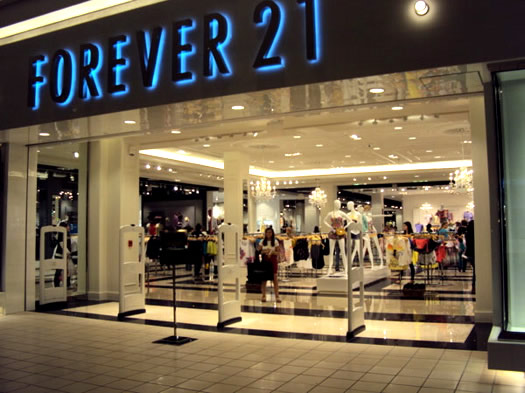
Forever 21, a store that caters to young people on a budget, is one of my daughter's favorite places to shop. And who can blame her? Great selection of fashion forward clothes and accessories at terrific prices.

But as with so many other businesses, especially those employing those same young people, the ObamaTax has bitten them on the tush, too:

"Popular clothing company Forever 21 is the first of what might be many companies to limit its non-management workers’ hours to 29.5 a week"

[ed: "first" ?! Au contraire!]

So what does this mean for those "non-management" employees? Well, the obvious affect is a smaller paycheck. But it's about to get smaller, since these innocent victims of the ObamaTax will now be forced to purchase health insurance, at an inflated cost, from the Exchanges.

Or pay a nominal fine penalty tax.

Gee, which do you suppose they'll choose?

If you like your current plan...So sad, Too bad

Much like Health Savings Account plans will be phased out under the ObamaTax, Garden State B&E (no, not that - "Basic and Essential") plans are on the chopping block:

"The bare-bones health insurance policy that’s been the plan of choice for New Jerseyans who can’t afford something better is set to go away next year ... B&E plans were meant to help young families get coverage and stanch the drop of enrollment in the individual health market, their relatively low price ... made them the most popular option for those who don’t get insurance through an employer or a government program."

Over 100,000 Garden State residents currently on these plans will now be shunted off to more expensive Exchange-based policies. While this may not seem like a big deal (NJ is home to almost 9 million souls), it's a big deal to folks who could barely afford even the minimal premiums ("as little as a couple hundred dollars a month for some people"), let alone removing even more choice from their health care financing menu.

And speaking of the ObamaTax, our friend Avik Roy has found an unpublished memo from the Congressional Research Service which notes that Ms Shecantbeserious and her minions have missed  about half of the scheduled deadlines mandated by the train-wreck. These include a "requirement for the Secretary to “develop requirements for health plans to report on their efforts to improve health outcomes” and "rules that would safeguard the privacy of medical records."

Must have given themselves a waiver.

Friday, August 16, 2013

Still Finding Out "what's in it" - Even More Controversy in the Abortion Controversy

Yahoo reports - and consider the source here:

"Under the health care law, insurance plans in the new markets may cover abortion unless a state passes a law prohibiting them from doing so. Plans offering coverage for abortion, however, may not use federal funds to pay for it."

By law Senators, Representatives, and their staffs must buy insurance thru an Exchange.  In Exchange plans, the government thinks it can force plan sponsors and insurers to provide abortion coverage.  But also by law, the OPM cannot use federal funds to pay for any plan that provides abortions.

So will members of Congress and their staffs have abortion coverage?  

Yes.  Unless, no.

Still Finding Out "What's In It" - Obamacare Navigators take precedence over Disease Prevention

This helps us understand the administration's true priorities with Obamacare.

"In a sign that HHS secretary Kathleen Sebelius is worried about Obamacare, she transferred some 20 percent of the money for the “navigators” from programs earmarked for disease prevention."

Well of course The Fair Kathleen is worried.  She can hear the onrushing train whistles, too.

But . . . notice she scraped up the extra funding from money appropriated for disease prevention.

I think this is yet more evidence to support criticism that has been present from the very beginning: the top-priority goals of  Obamacare are achieving maximum possible enrollment as a means of gaining maximum possible political control over the medical care delivery and financing system.  The goals of improving public health and reducing medical cost are clearly subordinate to the top-priority goals.

And this maximum possible political control would last until the end of time, or until the federal bureaucracy decides to give back that control to the people . . . whichever comes first.


Still finding out "what's in it" after 3 years - and counting.

Investors Business Daily posted this story online August 13 that suggests “If a charitable hospital treats a homeless person who staggers into the emergency room without insurance, it may be punished with taxes and fines."

IBD explains this is because a federal law known as EMTALA requires charitable hospitals to treat a minimum number of patients who can't pay.   If a hospital does not comply the EMTALA penalty is loss of tax-exempt status.  Yet ObamaCare requires everyone to have health coverage so in theory, after January 1, 2014 there won’t be any more patients who can’t pay.  This means charitable hospitals may have a hard time avoiding an EMTALA violation after January 1, 2014.   How will they keep their tax-exempt status?

The obvious way is for Congress to amend EMTALA.  But as a practical matter, I don’t think the federales will enforce the EMTALA penalty even if it’s not amended.

Why not?

Because if a charitable hospital treated only “a homeless person” i.e., some meaningless handful of non-paying patients, is it reasonable to believe IRS would act?  I think not.

On the other hand, I also doubt IRS would act if a charitable hospital treated a meaningful number of non-paying persons.  A public dispute over this puts IRS squarely on the side of denying treatment.  That would embarrass the IRS and the administration.  Even worse, it would reveal the continuing existence of a large number of uninsured people.  That of course would (1) discredit Obamacare, and (2) politically embarrass Obama . . . because he has promised America for years that his signature health plan will fix the uninsured problem.

So I doubt the conflict between EMTALA and Obamacare will have any material affect on any particular charitable hospital.

One other observation about the information reported by IBD:

Obamacare requires each charitable hospital to file a report to IRS once every 3 years "to prove that the charitable hospital is still needed in their geographical area."  And if IRS deems the hospital not needed?  Will it be forced to close?  As a matter of fact, no.  It will be forced to convert to a for-profit status.  That;s because it's not needed as a not-for-profit but still very much needed as a for-profit.  See?

Cavalcade of Risk #190: Call for submissions

Jacob Irwin hosts next week's Cav. Entries are due by Monday (the 19th).

To submit your risk-related post, just click here to email it.

You'll need to provide:

■ Your post's url and title
■ Your blog's url and name
■ Your name and email
■ A (brief) summary of the post

PLEASE remember: ONLY posts that relate to risk (not personal finance tips and the like). And please only submit if you are willing to link back to the carnival if your submission is accepted.

NB: We're starting to schedule Fall Cav's, so please consider hosting an edition yourself. It's easy, and it's fun, just drop us a line to claim yours.

Thursday, August 15, 2013

Truth hurts

It isn't often that we praise insurance companies for intellectual honesty, but every once in a while one comes through. Case in point: Blue Cross Blue Shield (NC). The Tar Heel State's largest carrier "is warning potential patients about rising premiums and other problems."

While this may seem self-evident to anyone who's been paying attention to the train wreck, there are apparently still people who don't understand that adding millions of previously uninsured with no underwriting and using Community Rating models to set premiums is a recipe for disaster.

BCBS notices something that we've been saying for a while: that younger, healthier folks will likely choose the nominal fine penalty tax over the exorbitant premiums for a product they likely don't believe has much value.

And then there are the dim-witted folks who "call it fear mongering aimed at changing aspects of the law the insurance industry doesn't like, like the $100 billion in new taxes the industry will have to pay over the next 10 years."

Um, guys? The "industry" doesn't pay any taxes. They never have and they never will. No business pays taxes, ever. Sheesh.

[Hat Tip: FoIB Jeff M]

Health Wonk Review: Dog Daze (of August) edition

David WIlliams hosts this late summer round-up of interesting, provocative and always informative posts of health care wonketry. It's so hot, it's cool.

Wednesday, August 14, 2013

So, about those convenience items

Via email, UHC has informed us that Ms Shecantbeserious has (finally) settled on rules for the birth control convenience item mandate, which include four (4) substantive changes:
1.Modification of the Religious Employer Exemption (REE) definition.
2.Extension of the current Temporary Enforcement Safe Harbor (TESH) through Dec. 31, 2013.
3.Replacement of the TESH with an Eligible Organization designation for plan years starting on or after Jan. 1, 2014, including a new self-certification form for Eligible Organizations.
4.Requires that a health insurance issuer providing fully insured coverage or a third-party administrator that receives certification from an Eligible Organization provide direct payment for contraceptives services at no cost to the plan or its members.
With regard to the religious exemption issue, instead of having to meet 4 criteria to be eligible, an organization must meet only one:

"A “religious employer” now must only be organized and operated as a non-profit organization and referred to under Code section 6033(a)(3)(A)(i) or (iii), which refers to churches, other houses of worship, their integrated auxiliaries and conventions or association of churches, as well"

And if that's not clear enough for you, The Fair Kathleen has also introduced the "Eligible Organization Designation," which seems simple enough:

"An Eligible Organization is a non-profit religious organization with religious objections to covering contraceptive services. Those organizations that self-certify as an Eligible Organization may exclude coverage for some or all contraceptive services."

There's even a handy self-certification form that needs to be submitted by the end of the year.

You just knew there'd be a "but" in here somewhere, didn't you?

Well, here 'tis:

"Under the final rules, a health insurance issuer providing fully insured coverage that receives an Eligible Organization certification form must provide direct  payment for contraceptives services at no cost to the plan or  its members."

Why is it so difficult for the folks in Capital City to understand that nothing is "free?" All that happens here is the usual sleight of hand as insurers pad everyone else's premiums to pay this tax (and that's what this is, whether Ms Shecantbeserious calls it that or not). Or do they truly believe that pills and condoms grow on trees?

Wouldn't surprise me if they did, at that.

HumpDay LinkFest

■ Will they or won't they? Back in May, Patrick quoted Ron Pollack, Founding Board Chairman of Enroll America (EA), who told him that "Enroll America  has not filed to serve as navigators and has no intention of doing so."

Fast forward a bit, and we learn that EA is still a bit less than forthcoming about its role in the train wreck:

"Jessica Barba Brown, national communications director at Enroll America, says the exchange promotion team now has a staff of 130 and about 3,000 registered volunteers ... The campaign organizers said the Get Covered America campaign is a "metric-focused" organization but declined to discuss numerical goals for their outreach efforts."

So what, exactly, are those "tens of millions of dollars" doing? Inquiring minds want to know.

The Gem State, which had initially opted to design and run its own Exchange, has run into a spot of trouble:

"Idaho will be relying on the federal health insurance exchange for at least a year while it develops its own"

Turns out that they took a little too long in getting their Exchange planned out, let alone implemented.

Most folks love their chocolate, and now there's another reason to rejoice in the confection:

"In a study published [recently] in the journal Neurology, researchers reported that chocolate may help improve brain health and thinking skills in the elderly"

Some words of caution, though: the benefits appeared to accrue only to those who were already at higher risk of dementia, and it's not clear how long the affects actually last. But hey, it's a tasty way to potentially decrease one's risk of dementia.

FoIB Jeff M tips us to this news from the Tar Heel State:

"Triad Adult and Pediatric Medicine, Inc. will close its adult practice on S. Eugene St. in Greensboro on Aug. 30"

Now this might seem like a "local news story," but it's actually more significant: it affects some 20,000 patients, who will now have to find new health care providers. The bulk of these folks (70% or more) are currently uninsured. his means that, once they've bought their shiny new, government-mandated policies, they'll need to spend some quality time trying to find someone with whom to use them.

Good luck with that.

Monday, August 12, 2013

More thoughts on AEI Paper: Best of Both Worlds

This AEI paper will set you to thinking.  For example . . . 

It reminded me that, back in the 1970's before the rising cost of medical care made it prohibitively expensive, many employers who sponsored comprehensive medical insurance plans achieved 100% participation by making them "non-contributory".  In other words, the plan sponsors paid the entire premium, so their employees did not have to make any "premium contribution" in order to have insurance. All employees (& their families) in these plans were automatically covered just by being employed.

This has always seemed to me a far superior way to achieve 100% participation than the heavy-handed, unwieldy, and still legally-dubious tactic of "mandating" the purchase of private insurance.

Unfortunately non-contributory plans have disappeared because rising medical cost made comprehensive insurance far too expensive.  So today, employees must enroll for insurance and "contribute" a part of the premium.  Naturally – unfortunately – as these contributions rise, a growing number of lower-paid or poorer employees find it hard to pay their contributions, decide not to enroll, and end up with no insurance at all. 

But does high medical cost leave any practical alternative to comprehensive coverage with mandates?

Of course it does. 

The plan sponsor (in this discussion that would be the single-payer government sponsor) could cover 100% of the cost for a basic set of benefits - NOT a comprehensive set.  Everyone would automatically receive these basic benefits without the high cost of comprehensive benefits,  and without the need for an insurance purchase mandate.

This idea is essentially point (2) of the AEI plan (Page 1 of the Executive Summary).

It's certainly possible to incorporate means-testing so that the poor get a fully “free” plan, and everyone else would make some contribution based on a sliding income scale. If you like taxes, you could call that a "tax".

It's also possible to allow purchase of private insurance to supplement the basic benefits.  The private supplemental insurance could also be subsidized on a sliding scale. 

Based on the experience with Medicare, the private insurance industry is able to offer lots of practical choices for such supplemental plans.  In fact this is also the experience in several other countries that provide a basic public plan and permit citizens to purchase voluntary, private supplemental insurance if they so desire.  France is a particularly good example; or Switzerland, or Chile.

This arrangement - coupled with other provisions AEI recommends - appears both simpler and less expensive than Obamacare is turning out to be.

Contrast Obamacare, which enshrines the idea of "comprehensive" insurance rather than basic coverage. On top of that, CMS regulations require yet additional coverage above that specified in the law itself.   This bias toward comprehensive coverage is one of the chief reasons Obamacare is so expensive.  (And as we are finding out - thank you, Fair Nancy - there are many other reasons, too.)

New: Best of Both Worlds; AEI's Universal Health Care Recommendations

This month, the American Enterprise Institute, a 75-year old conservative, business-oriented think tank, published its recommendations for a universal health insurance plan.  It started from the question:  “If we could build from scratch the very best health care system, what would it look like, and why?”  AEI’s answer is contained in this 45-page report.

I think you’ll find it worth your while to read at least this summary of AEI’s plan.  The entire report is here - if you can spare the time, read the whole thing.

The Down Syndrome Conundrum

Consider, if you will , the following statement:

"If muscular dystrophy were completely cured, the world would lose something from the absence of that culture"

Or, perhaps:

"If celiac disease were completely cured, the world would lose something from the absence of that culture"

Would you agree with either of these?

How about this one:

"If Down syndrome were completely cured, the world would lose something from the absence of that culture"

That's the potential of promising new research being done at the University of Massachusetts Medical School, which claims that "it may be possible to switch off the genetic material responsible for the condition that causes cognitive delays, heart defects and shortened lifespans."

The trade-off for all of these hopeful changes is a loss of what at least a few in the DS community see as "the mechanism that creates people who offer lessons in patience, kindness -- and what it means to be human."

It seems to me that this is a rather selfish - and short-sighted - perspective; what do our readers think? Please take a moment to cast your vote, and we'd love to hear your thoughts in the comments section. 


Ah, the Much Vaunted National Health Service© strikes again

The doc lied, the patient died:

"A surgeon who told a patient he had successfully removed her brain tumour and urged her not to seek further treatment had in fact not removed it ...  By the time she sought private help, her tumour was inoperable."

In fact, he strung the poor woman and her husband along for several years, going so far as to alter a pathology report and even tell the victim's own physician that she was fine.

And in true MVNHS©, he faces "a misconduct hearing."

That'll teach him.

ODJFS reminds me why I shouldn't hire workers in Ohio

As we trudge through this mess that the ACA is creating I am reminded of another pseudo-insurance disaster run by the government.

Earlier this year I hired a part time adjuster that was laid off by Anthem when they outsourced the job to the Philippines. A normal adjuster should do 20 claims per hour. This adjuster averaged 1 claim per hour. Give her a couple warnings, no improvement. Catch her padding her time sheet, she does it two more times. Finally terminate her for lack of production and falsifying her time sheet.

And then it starts to get expensive. She files a claim saying she was let go for lack of work. Even though lying on an unemployment application is supposedly illegal, I don't think anyone has ever been taken to task for this. Then the paperwork starts; I have over an inch of filings with ODJFS (Ohio Department of Job and Family Services) of responses to their letters and copies of emails sent to the employee warning her.

Today I get a letter;

"... this agency finds that the claimant is totally unemployed from Employee Benefit Concepts Inc. due to a lack of work."

$1,440.92 of my money was just given to an ex employee fired for not working and padding her time sheet. Not to mention, right after firing her I hired a replacement, a sure-fire defense for any lack of work claims (you would think).

When I call ODJFS they now say the letter was an error and she was not awarded benefits for lack of work, she was awarded benefits because I didn't have her sign the emails warning her about her poor performance. This was a remote employee that lived 3-4 hours away that only came to the office once for training. When asked how remote employees are supposed to sign warnings, we were told that we should have required her to come in (like that would happen). Not to mention, I lost another case where an employee refused to drive 1 hour to the office.

Luckily Anthem is paying the majority of the claim and I am only out $1,440.92 plus a few thousand dollars of my time, but this is a great example of what goes wrong when insurance is misused by government for social causes.

Paying an ex-employee not to work is not an insurable interest, I'm forced to buy a policy that not only doesn't benefit me, it's actually counter to my interest.

ODJFS, who makes the benefit determinations, has no stake in the game. No matter how egregious the determination or riddled with errors, they have no accountability. They can give away employers' money regardless of how bogus the claim and counter to actual policies and they are doing a good thing, helping the poor unemployed.  

Fraud is an acceptable part of the process. I have even called the fraud hotline to report ex-employees claiming they were let go for lack of work when clearly that was not the case and was told that is what applicants are instructed to do. Apparently the hours wasted of employers time has no value to ODJFS and fraudulent claims are just potential payments that need massaged.

Anthem found the right solution, outsource the jobs out of Ohio where you pay less, get more, and have no ODJFS giving away your money.

Saturday, August 10, 2013

Harry Reid Predicts Medical Care Welfare System

On Friday August 9th in Las Vegas, Senate Majority Leader Harry Reid said the country has to “work our way past” insurance-based health care.   The interestingly-named Steve  Sebelius then asked Reid whether he believes that ultimately the country would have to have a health care system that abandoned insurance as the means of accessing it, Reid said: “Yes, yes. Absolutely, yes.”

Of course the Democrat Party's ultimate intent to implement a single-payer scheme is no surprise; it has been their intent for decades and this public statement of it is not nearly the first.

A single-payer scheme as Reid describes it would not mean that insurance companies go away; the federales would continue to contract with insurance companies and perhaps other types of administrators to operate the single payer scheme.  What it would mean is that the concept of medical insurance largely ceases to exist and would be replaced by a medical care welfare system.

In a medical care welfare system people will, in theory, be entitled to medical care simply because they are citizens (excuse me, that should be: simply because they are present in the room).   The government - the single-payer - will finance most of this entitlement thru taxes excepting only amounts that politicians deem appropriate cost-sharing.

An insurance-based system requires a certain amount of personal responsibility  so I suppose its demise is inevitable in this country at this time.  That troubles me, but not nearly as much as the unstated agenda behind the political posturing:  namely, the federales desire to control an additional 18% of the economy.  Economic control is political control.  Polls continue to show that most Americans remain uncomfortable with all this, and I think most Americans will live to rue the day it happens.

Friday, August 09, 2013

Ah, *there's* the catch!

As we've previously discussed, the opportunity to choose an "early renewal" date is pretty attractive for healthier (and/or younger) groups. Likewise, less healthy (and/or "older") groups may see some substantial benefit from the implementation of Community Rating (CR); one of mine is scheduled to take a 30% decrease next year.

So one might believe that it's all to the good for those groups who look to benefit from CR.

But maybe not.

From email this morning:

"In regards to groups that will benefit from the community rates and want to change to a 1/1/14 renewal. Please keep in mind that these are projections and they will be moved to an ACA plan and we do not know what that plan will look like. The projections shown do not include essential benefits, which will be included on all ACA plans. It is thought that essential benefits will add approximately 8-10% onto the premium."

What this means is that:

1 - Contra The President, these groups will not be able to "keep their current coverage"

2 - At least some (and perhaps most or all) of the anticipated savings from CR will be eaten up by the new Minimum Essential Benefits

3 - Groups that currently enjoy their Health Savings Account contributions are out of luck

4 - The whole "early renewal" issue does not take into account "regular" renewals based on medical inflation, claims and the like

Easy come, easy go.

[Hat Tip: FoIB Beth D]

Sprechen sie ObamaTax?

Because Ms Shecantbeserious and her minions have been soooo successful implementing the Exchanges, looks like they have some spare time to add fuel to the (metaphorical) fire:

"Now [Ms Kathleen] is seeking to fill another need relating to the operation of the exchanges: translation services ... Effectively provide 24x7 oral over-the-phone interpretation services in any language (supporting at least 100 languages)"

Yeah, that's gonna work out just fine.

Thursday, August 08, 2013

Runnin' on empty

In news that should surprise exactly no one who's been paying attention, Ms Shecantbeserious' minion has now publicly acknowledged that "[m]ost of the 24 health care co-ops created under Obamacare are in danger of running out of money before they even begin offering health insurance to consumers."

And why is this non-news to regular IB readers?

Well:

"CO-OPs are high-risk ventures: the Office of Budget and Management has projected a default rate for them as high as 43%. Through 2012 over $2 Billion had been distributed by HHS to these start up insurers."

Patrick published that prescient post almost two months ago (and tipped us to the latest news), and Mike had a related one a week earlier. The take-away is that, when one considers how much money has been thrown at these, and what they were expected to do, it would have been news if they'd succeeded.

And why is that?

Well, CO-OPs (short for Consumer Operated and Oriented Plan, which is both funny and creepy) were designed to funnel federal dollars to favored lobbying groups. Whether or not these organizations actually "delivered the goods" was irrelevant. Indeed, based on the the OBM's analysis, it was highly unlikely that that was even in the mix.

And how do we know this?

Follow the money:

"Half the co-ops the IG reviewed said they had no private support at all. The other half said their private funding amounted to less than 2 percent of their federal startup loans."

If these were really supposed to be serious and competitive players, then where were the big dollar private donors (eg Soros, Buffett, et al) to prop them up? Or, if you prefer, where were the private sector dollars and venture capitalists who really believed this was a viable business model in the ObamaTax environment?

Money talks, no?

What if they gave an Exchange and nobody came? [UPDATED]

Lest it be lost amid the noisy crash of the Data Hub, here's news that should cheer up folks who despair that - once all these pesky "security issues" are settled - life on the Public Exchanges will be a bowlful of cherries and choices.

Wait, did I say "cheer up?"

So sorry - I meant to say 'discourage:'

"Major health insurance companies--Blue Cross, Aetna, United, Humana--have decided not to participate in various states in the Obamacare health-insurance exchanges ... Aetna, a fortune 100 company with $34.2 billion in revenue, has pulled out of the government-run exchanges in three states"

And of course we've documented plenty of other examples. The net result is that these Exchanges - literal oligopolies - will offer little (if any) choice and much higher prices, irrespective of any anticipated subsidies. But it's so superior to the system we leave behind....

UPDATE: And co-blogger Patrick just sent along this news:

"Aetna has reversed course on plans to participate in Ohio’s federally-mandated health insurance exchange next year ... Aetna has withdrawn its individual exchange filing in Ohio for 2014 but plans to continue offering its Coventry individual product on the exchange"

While we haven't been privy to details of the Coventry (a recent Aetna acquisition) product, it's a safe bet that it will feature a "skinny network" (and most likely higher rates than folks have been led to believe).

Navigators vs Agents: Told Ya So

Earlier this week, we noted the intensive training through which insurance agents will have to go in order to be certified to advise folks regarding (and ultimately selling policies through) the Exchanges. We also noted that this would not necessarily be true of Navigators. Now, I'm all for accountable, well-educated professionals being as knowledgeable as possible about the various ins and outs of these products and the subsidies that may (or may not) help to pay for them.

What is completely ridiculous, though, is that Ms Shecantbeserious and her minions have now "cut back on the number of training hours required for the Obamacare "navigators," federal workers who under the health care law are tasked with helping consumers purchase insurance through the state exchanges."

To be clear, this is not an issue of "fairness" (hey, life ain't fair), it's an issue of accountability. And it's also an issue of gross negligence:

"Grants to hire and train the workers aren't expected to be released for another two weeks ... That leaves just 32 business days to hire and train thousands of helpers in these states."

And I'm sure that the mad rush to cram in as many of them as possible - trained or not, qualified or not, honest or not - won't result in even more confusion and opportunity for identity theft and fraud, not to mention potentially catastrophic results when folks learn that the person on whose advice they relied were grossly under-trained.

But hey, it's only $54 million, right?

Wednesday, August 07, 2013

Flip Flopper

Key PPACA proponent and "health law" expert Timothy Jost is once again coming to the defense of President Obama. This time it is to save Congress Critters and their staffers from being thrown to the wolves by having to get their insurance AND PAY FOR IT through Federal and State Exchanges Marketplaces. If you didn’t read Bob’s post on Monday, this super special group of people will not be able to "keep the plan they currently have" but will still receive the generous Federal Government contribution.

What's so wrong with that? Well according to an article in Health Affairs Mr. Jost wrote back in January doing this would be illegal and may violate large employer rules on adequate and affordable health coverage. In that article Mr. Jost states:
"The problem is that section 2711 of the Public Health Services Act, added by the ACA, prohibits annual dollar limits on health plan coverage, and HRAs are by definition limited in the dollar amount they offer for coverage…That conclusion, however, left open the question of “stand-alone” HRAs.  In some instances HRAs are not integrated into a group health plan, but rather simply offered to employees to allow the employee to purchase conventional insurance in the individual, non-group, market with pre-tax dollars.  Some employers had hoped that with the advent of the exchanges in 2014, they would be able to offer their employees a fixed dollar contribution through an HRA, which would permit the employee to take advantage of the tax subsidies currently available through HRA coverage but get the employer out of the health insurance business…Large employers, who must offer adequate and affordable health care coverage to their full time employees (and dependents) or pay a penalty if an employee ends up receiving premium tax credits, would probably not have been able to use this strategy, as it is hard to see how a stand-alone HRA could meet the “adequate and affordable test,” but it could be an attractive strategy for small employers who wish to move to a defined contribution approach to health benefits. The FAQ clarifies that this approach is not possible under section 2711."  
Fast forward to a Reuters article today where he has this little gem:

"It was probably never Congress' intention to take away federal benefit contributions from Capitol Hill employees, just to push them into them into the exchanges. There is nothing in the health law that prohibits private companies from contributing to employee health insurance premiums for plans purchased on the health exchanges. This clarifies what they really intended to do all along. Congress had subjected itself to a requirement that applied to nobody else in the country."
So tell me Tim, as a law professor which quote of yours is correct?

Security to the Bridge!

And the hits just keep on comin'. This morning, we noted that there seem to be some major issues facing the income verification process for folks who'd like some of that sweet, sweet subsidy money:

"An exchange will have some flexibility when it comes to asking for extra documentation from individuals"

Turns out, it may not be "flexibility" so much as "vulnerability." Co-blogger Bob tips us to this rather disturbing news:

"The federal government is months behind in testing data security for the main pillar of Obamacare ... The missed deadlines have pushed the government's decision on whether information technology security is up to snuff to exactly one day before that crucial date [October 1st]"

There's so much at stake here, and so many things that could go wrong, that it's hard to really pin down the worst of this. The Reuters folks think it's identity theft, and we've also discussed that threat. But the sad fact is, the project itself is so vast, and with so much of it being thrown together at the last minute, one can't help but wonder "what were they thinking?"

And there's this:

"A [crucial information technology] test was to have been performed between June 3 and 7 ... is now set for this week and next."

Meanwhile, the Countdown Clock continues its inexorable measure, as E-Day approaches. Contra Reuters, this may be the scariest thing:

"The delays mean that the ruling by CMS's chief information officer certifying the Obamacare IT system as secure will be pushed back from September 4 to September 30"

Who wants to bet that - no matter the true results - the Official proclamation will be that "all is well?" Yeah, that's what I thought, too.

Cavalcade of Risk #189: What in the world edition

R J Weiss makes his hosting debut today with this outstanding collection of risk-related posts. From Worker's Comp to Morningstar Reports, R J's got ya covered.

You made HOW much??

Here's a conundrum: if the Data Hub isn't online come October (or even January) 1st, and since the (Evil) Employer Mandate is delayed, then how will Capital City's right hand know about its left when it comes to Exchange subsidies?

Well, the folks in charge seem to think that's not going to be a problem:

"Obama administration officials have been telling Congress the exchanges will have ways to check consumers' income information in 2014."

Uh-hunh.

And how might that be?

Turns out, the "normal" data on which the Exchanges would rely comes from the IRS, Social Security and Equifax. But what if these agencies can't actually provide the verification? No problem:

"[T]he exchange will cut off access to the tax credits"

Really?

Are these the same bureauweenies that arbitrarily (and illegally) extended subsidies to states with Federally-run Exchanges? Or the ones who unilaterally (and illegally) delayed the Employer Mandate?

It is?

Then this becomes troublesome:

"An exchange will have some flexibility when it comes to asking for extra documentation from individuals"

Yeah, I'm sure that won't be abused.