Friday, May 31, 2013

E(HR)xtravaganza

So the other day, I'm corresponding with the practice manager of one of my physician group clients. This particular PM is extremely professional and knowledgeable, to the point that I rarely hear from her unless I instigate the conversation. I had emailed her regarding the upcoming ObamaTax compliance issue we wrote about earlier this week.

I really just wanted to know if she had any questions, or would like to meet for a mid-year plan review. She politely declined, but what got my attention was her reason: she was knee-deep in implementing new EHR (Electronic Health Record) tech, and that it was proving to be a massive challenge for her - she simply couldn't spare the time for anything else.

This is an obvious problem with such a massive new requirement. But inherent in that challenge is an even greater one: how can smaller practices afford this kind of investment? It is, in fact, one of the most egregious (intended?) consequences of the ObamaTax:

"[F]or those who don’t meet the electronic medical records deadline for implementation, the government has laid out a series of penalties. The message to doctors is clear: implement electronic records or pay a price."

But if you're a small(er) practice, how do you afford this implementation? As Nate pointed out last Fall, "the move to electronic health records may be contributing to billions of dollars in higher costs for Medicare, private insurers and patients ... hospitals that received government incentives to adopt electronic records showed a 47 percent rise in Medicare payments at higher levels from 2006 to 2010"

Which brings me to my real question: doesn't (expensive) EHR implementation actually encourage smaller providers to seek refuge in (ie be bought out by) larger ones? In the long run, economy of scale will always trump the little guy.

Late Morning LinkFest

■ HHS Secretary Shecantbeserious sure loves her slushies. No, not that kind, this kind:

"A little-noticed part of [the ObamaTax] channels some $12.5 billion into a vaguely defined “Prevention and Public Health Fund" ... the department can spend the money as it sees fit and without going through the congressional appropriations process. The sums involved are vast. By 2022, the department will be able to spend $2 billion per year at its sole discretion. In perpetuity."

Well, at least until the money runs out.

As we've long documented here at IB, the Much Vaunted National Health System© has become a (sick) joke, and yet the Brits are only now beginning to "get" it:

"The truth is, though, that these problems have been going on for years. The difference now – and the Government deserves credit for this – is that this dirty linen is starting to be washed very publicly"

What's truly frightening, though, is that at one point, the British government allowed a private group to run an MVNHS@ hospital, one which (when under government control) had been "under threat of clsoure due to poor care and financial deficits."

So what happened when a private consortium of doctors took over? Guess.

And, finally, some sobering news from FoIB Holly R, who sends us this very helpful, well-balanced NPR story on the travails of long term care, including this moving and informative video:


"48 years old and single"

Who'll take care of Rebecca?

People don't plan to fail, they fail to plan.

Student Health Exchanges

No, not those Exchanges. These Exchanges:

"Students at [University of Illinois Chicago] covered by the school’s health insurance will have an added benefit come the fall: sex change surgery."

We've long dismissed student health plans as poor values, but we never expected this turn of events.

One presumes that Ms Shecantbeserious is eying this development with a gleam in her eye....

Thursday, May 30, 2013

ObamaTax: Another Nail

As we've long documented, one of the (intended?) effects of the ObamaTax is a looming physician shortage. But perhaps some clarification is needed: the shortage is most likely to hit the insured and/or less wealthy demographic first.

Why is that, you ask?

Well:

"Dr. Michael Ciampi [has] ... stopped accepting all forms of health insurance. In early 2013, Ciampi sent a letter to his patients informing them that he would no longer accept any kind of health coverage, both private and government-sponsored"

And to make sure his patients know exactly how that would impact them, he's also taken the full-transparency route (for which we also applaud him) by posting all his prices on-line.

Regular readers may recall our (exclusive) interview with Dr Rob Lamberts last fall, when he explained how his new practice model - Direct Primary Care (DPC) - works:

"The DPC model is one in which the patient pays the doctor directly for their care, usually in the form of a monthly "subscription," plus or minus a fee for visits."

That's different from how Dr Ciampi has evolved his practice; he "collects payment at the end of the visit, freeing him of the time and costs associated with sending bills."

It also frees him to charge whatever he likes (well, whatever the market will bear, anyway) without having to answer to insurance or government bureaucracies. It also means that he can spend more time with patients. Nothing wrong with that.

California's Sneaky Little Trick

There has been much discussion about affordability in the insurance exchanges. From huge potential rate increases to lower than current rates being proposed under Covered California, the range of costs vary significantly.

So it came as a surprise last week when news broke that California's program was showing lower than projected premiums. Ezra Klein called it "Very Good News for Obamacare." Major news networks cited the release telling viewers that premiums were going down.

Then came the rest of the story. Indeed Covered California was going to see a rate reduction for individual insurance. BUT, these plans were compared to the average small group plans. For perspective, the average premium for individual plans sold through EHealthInsurance in California last year was $177 a month. Covered California said the average premium for the three lowest Silver plans statewide was $321 a month, albeit for more comprehensive benefits.

So, why compare 2014 individual rates to today's small group rates? Well, Covered California provided this little gem for you:
"It is difficult to make a direct comparison of low rates to existing premiums in the commercial individual market because in 2014 there will be new benefits and today’s coverage on an actuarial basis is all over the map. The best frame of reference is by looking at current rates available in the small group market in California. Each market is a competitive market with guaranteed issue. Comparing rates to comparable products in the small employer market, rates ranged from two percent above the 2013 average premium to 29 percent below the rates in California’s most populous markets. This is impressive since the 2014 products include doctor visits, prescriptions, hospital stays and more essential benefits."


What's really going to be impressive is if these "preliminary" rates will actually hold.

Wednesday, May 29, 2013

Cavalcade of Risk #184: Post-Memorial Day Risk-a-thon

Jeff Rose hosts this week's small - but powerful! - roundup of risk-related posts. From fast-food to k-rations, you'll run little risk of being disappointed.

Thanks, Jeff!

MVNHS© Back in the News

Thanks to alert IB reader Peter K, we have two new items to add to our Much Vaunted National Health System© database. Last month, we noted that "[MVNHS©] doctors are prematurely ending the lives of thousands of elderly hospital patients because they are difficult to manage or to free up beds;" this was one side of the coin. It only gets worse, though, when one considers the other side of it:

"Patients undergoing planned operations on the NHS are far more likely to die if they have their operations towards the end of the week ... those who had surgery on a Friday were 44 per cent more likely to die following the procedure than those who had the same operations on a Monday." Of course, when you have an overworked and largely unaccountable group of people providing "care," that TGIF mantra becomes somewhat problematic, no?

It gets worse, though. One of the early criticisms of the ObamaTax is that you'd have care providers with the compassion of the DMV. This is already the case under the MVNHS©, and it's the direction we're headed:

"Almost 3,000 people may have died unnecessarily in just one year at the 14 NHS trusts whose excessive mortality rates were reviewed in the wake of the Mid Staffordshire scandal"

Regular readers may recall that we covered that particular shanda over 4 years ago (and it's still making news):

"Appalling standards of care that may have contributed to the deaths of at least 400 patients at a hospital trust were missed repeatedly by managers and regulators ... at Mid Staffordshire NHS Foundation Trust"

At least they've learned their lesson, though, right?

Um, not so much:

"The worst figures were recorded at Blackpool Teaching Hospitals where, in the year to October 2012, the number of deaths anticipated was 1,947 but actually there were 2,357, a difference of 410." [emphasis added]

This is extraordinary, on several levels. First, whatever are they teaching at this hospital? Advanced courses in euthenasia? Second, that "difference of 410" doesn't seem like so much, until one looks at the fact that they were off by almost 30%.

That's not "margin of error," that's Margin of Kevorkian.

Tuesday, May 28, 2013

Tuesday Afternoon LinkFest

■ First up, via email, United Healthcare lets us know that its "Early Warning Report forecasts the states, legal entities and group sizes ... that are currently eligible to be issued MLR premium rebates by [UHC] associated with the 2012 calendar year. Any owed rebates will be paid in July ... There are 21 states and two territories in which UnitedHealthcare does not currently anticipate paying any rebates associated with group business"

Don't spend it all in one place.


The Council for Disability Awareness has just released its 2013 Research Report, focusing on the differences between how employees perceive disability benefits versus how HR folks understand them. As one might imagine, it's a rather wide gap:

♦ Most HR professionals (84 percent) believe the ability to earn an income is their employees’ most valuable financial resource, yet only 26% thought their employees were adequately prepared to withstand a disability


HR professionals believe their employees are financially vulnerable to a loss of income

Both HR professionals and their employees severely underestimate the odds of becoming disabled

There's more, including the odds of becoming disabled and for how long. Recommended, and available here.


  Some good news and bad news on the ObamaTax front. First, the bad news (from its proponents' POV): voters favor repeal by a 22-point margin. One supposes that will only increase as we head into Fall, and the (scheduled) Exchange roll-out.

  And now the good news (for ObamaTax opponents): businesses are beginning to "get" just how bad this train-wreck is going to be, and more of them are looking to hop on the self-funded wagon:

"[H]ealth insurers are stepping up. Among their latest offerings: allowing ever-smaller companies to switch to a riskier form of coverage traditionally favored by big employers."

I'm sure Nate would disagree (as do I) with the "riskier" characterization, but the point is, going this route is likely to save some big dollars for employers.

There's a bit of irony here: way back in 2006, we had an exclusive interview with the folks at (now-defunct) ACMG, which was just then rolling out a self-funded program for smaller businesses. Kind of a shame that they were so far ahead of their time, but the post is a good introduction to how these plans work, and why they really aren't all that "risky."

E & Ooops

Much like doctors and lawyers carry malpractice insurance, licensed insurance agents carry Errors and Omissions (E&O) coverage. This type of liability policy protects policyholders (clients) if/when the agent screws up, causing financial loss.

Now come the Navigators. In addition to having to pass no background checks or graduate high school, these folks will also not be required to carry any kind of E&O coverage. Which is actually a good thing (from their perspective) because it's not clear that such coverage would actually be available to them even if they wanted it.

Professional liability insurance (including E&O) requires certain things to be true. In the case of E&O, one must be licensed to sell insurance. Okay, Henry, what about someone who isn't licensed, but needs this kind of coverage, such as an IT professional? There's no Ohio Bureau of Geek Licensing, but these folks would be eligible to purchase
Professional Liability insurance due to training and expertise.

Navigators may be neither licensed nor certified, heck, they don't even need a high school education to qualify; they'll simply attend 20 to 30 hours of instruction and be sent out the door, where they'll spread their, um, "expertise" to unsuspecting victims "clients." But what happens if/when they screw up? What financial recourse will their "clients" have? Their homeowner's policy (if any) won't cover them because it's business, and it's unlikely that they're independently wealthy (deep pockets).

Where's the consumer's protection?

Co-blogger Patrick pointed me to this article, which reports that Navigators in the Hawkeye State will be required to purchase surety bonds. The problem is that a surety bond is not the same as professional liability; it essentially covers theft of money.

For example, a Navigator tells a "client" that coverage will definitely be in force the next day. Three days later, the "client" has a heart attack and runs up tens of thousands of dollars in hospital bills, only to find out that coverage was not, in fact, in force. The most that "client" can recover from the Navigator is whatever he paid the Navigator for his services, not the huge hospital bills he now owes.

This would be where professional liability (E&O) insurance would come into play had a licensed agent been involved. From the article, it appears that Iowa Navigators must be licensed, so they may, in fact, be eligible for E&O coverage. But this is not the case in all 58 states; and therein lies the rub. Having spoken with two actual experts in this area, neither could think of a carrier that would write this coverage.

Which is not to say that it couldn't be developed, should the marketplace demand it. The problems inherent in underwriting such a plan, though, seem pretty insurmountable. And how would one price this in a competitive way? It's unlikely that most of the Navigators are going to be clearing $96-large; more likely, this will be another part-time job to help ends meet. So how do they afford even a minimum premium (generally hundreds - if not thousands -  of dollars a year)?

Yeah, that's what I thought, too.

[Huge IB Thanks to P&C Gurus Teresa S and Bill M for helping me noodle through this post]

Monday, May 27, 2013

ObamaTax Compliance heads' up

Received a sample notice that will (when finalized) have to be sent from employers to their employees later this summer. If you're interested, click here to download it. It's 3 pages, and pretty scary.

Scary, Henry?

Well, here's the thing. The employer will need to complete this form, and attest that, for example, his group plan meets the "minimum value standard." That is, that "the plan's share of the total allowed benefit costs covered by the plan is no less than 60 percent of such costs."

One presumes that the carrier will notify employers whether their group does, in fact, meet that criteria, but it's not entirely clear that this will be so for all carriers in all markets.

There's a related issue that so far seems to be flying under the radar: Exchanges and participation requirements. All carriers require that a minimum percentage of eligible employees sign up for coverage. This is to help reduce the chance of adverse selection, where only the least healthy enroll. The term "eligible" is somewhat flexible, but in general it's full-time employees who don't have "valid waivers." A valid waiver might be, for example, coverage through a spouse, or Medicare. Oddly, an individual medical plan does not qualify as a valid waiver, so that employee must be accounted for in the grand total.

So here's a question: if an employee opts off the group plan in favor of a (subsidized) individual plan from his state's Exchange, is that a "valid waiver?" This matters - a lot - because if enough folks opt off the group plan, it's going to go away, whether or not this is what the employer (and the other employees) want.

But remember: if you like your current plan, you can keep your current plan.

Or not.

[Hat Tip: FoIB Beth D]

Friday, May 24, 2013

Outstanding Carrier Trick

As we reported almost 8 years ago, in our exclusive interview with its Medical Director Dr Dexter Campinha-Bacote, Aetna has long been in the forefront of health care transparency.

Now, our good friend David Williams blogs that the carrier has "won an Award of Distinction  for its short videos designed to help members comprehend and use their benefits."

David offers some great reasons why he approves of this development, and singles out Aetna's terrific payment estimator in particular:

Kudos, Aetna!

About that Union Label

Nice to see the legacy media catching up with us:
"[S]ome unions leaders have grown frustrated and angry about what they say are unexpected consequences of the [ObamaTax] ... The problem lies in the unique multiemployer health plans that cover unionized workers ... union plans were already more costly to run than traditional single-employer health plans. The [ObamaTax] has added to that cost"
Gee, who could have seen that coming?

Oh, yeah.

And it's not just the unions, either. A large majority of Americans (56%) believe it would be "[b]etter to go back to previous system" (pre-ObamaTax).

And this is before the Exchanges and (Evil) Mandate kick in.

What could *possibly* go wrong - An Update

Last week, we noted that the IRS was knee-deep into building the enforcement mechanisms for the ObamaTax. But just how deep are they really?


[Click graphic to embiggen]

Hospital Claim of the Day

Received an audit back on behalf of a client. When we can our plans only pay Hospitals their cost plus a 12% profit margin or Medicare plus 20%, which ever is greater. A member went to a new Spine Surgery Center and the bill was $8,300. Medicare + 20% was $620.28. Billed Charges are 1300% increase of Medicare allowable.

Luckily this new facility was out of Network so we don't have a PPO telling us we have to pay inflated prices. Even a 50% discount, top side for this market, would have been over a $4,000 bill.

Cavalcade of Risk #184: Call for submissions

Jeff Rose hosts next week's Cav. Entries are due by Monday (the 27th).

To submit your risk-related post, just click here to email it.

You'll need to provide:

■ Your post's url and title
■ Your blog's url and name
■ Your name and email
■ A (brief) summary of the post

PLEASE remember: ONLY posts that relate to risk (not personal finance tips and the like). And please only submit if you are willing to link back to the carnival if your submission is accepted.

Thursday, May 23, 2013

Obama Skinny Plan Irony

Prior to ObamaCare a few million people had these not-quite-insurance insurance mini med policies. The administration and pro-reform crowd decided people who purchased these plans needed protection from themselves and set out to wipe them away. Some of these forsaken plans had limits only in the tens of thousands. They might only pay a few hundred dollars per day for hospitalization or surgery.The requirement that plans have no limits, annual or lifetime when fully implemented would see these plans die a deserved death.

These helpless souls had much to look forward to under Obamacare, why they would have full comprehensive coverage at an affordable price....

....or not:
"Wonder what a “skinny” or “low-benefit” insurance plan is? The terms may vary, but the basic idea is that policies would cover preventive care, a limited number of doctor visits and perhaps generic drugs. They wouldn’t cover things such as surgery, hospital stays or prenatal care"
Thanks to ObamaCare they now have even fewer benefits then they had before.

Health Wonk Review: Cereally? Edition

Brad Wright offers up a clever, lighthearted and (his word) sardonic take on the Health Wonk Review. From Einstein to Beckham, angels and bell curves, you're sure to find something to amuse, enlighten and/or enrage you.

Kudos, Brad!

Doctor's orders

"ObamaCare is ... demoralizing doctors, distracting providers toward bureaucracy and away from patient care. It is disrupting quality and access, and damaging health."

Says whom?

Says Dr Charles Willey, "CEO of Innovare Health Advocates in St. Louis, a medical group employing five physicians and five nurse practitioners in five offices."

Dr Willey is suing the Feds to try to derail the "train wreck," focusing on the IRS's unique and powerful role in enforcing ObamaTax provisions. He points to government overreach like  the IRS's "attempt to enforce those penalties in states like Missouri" which, like 32 others, opted out of establishing its own state-run Exchange.

Best of luck to you in your efforts, Dr W.

[Hat Tip: FoIB Holly R]

Wednesday, May 22, 2013

The Grease Fire Spreads [UPDATED]

First HHS "suspended" enrollment into PCIP because of insufficient funding. Now comes word that HHS will be cutting payments to providers who treat those in PCIP. From the New York Times:

Under a new policy issued by Kathleen Sebelius, the secretary of health and human services, “health care facilities and providers will get paid less” for providing the same services to patients in the federal program, known as the Pre-Existing Condition Insurance Plan.
The article further stated:
Federal health officials said the alternatives were worse. If the program runs out of money, they said, some sick people will lose access to health care, and others will be unable to pay for the treatments they receive, forcing doctors and hospitals to write off large amounts of “uncompensated care.”  
In a regulation to be published Wednesday in the Federal Register, the administration says that doctors and hospitals must accept the amounts set by the government as “payment in full” for services in the high-risk pool administered by the federal government. 
On a related note, Ms. Shecantbeserious was busy touting the law in Europe. She "characterized the Affordable Care Act as part of a global movement toward better health through government-led reform."

Based on her words, one would guess that Government will need to seek additional funds (taxes?) while also cutting payments for health services (rationing?) Yep. This is our future under Obamacare.

UPDATE [HGS]: And some breaking news this afternoon on the PCIP front:

"Eighteen states have decided to turn their state Pre-existing Condition Insurance Plan (PCIP) programs over to [HHS Secretary Shecantbeserious]."

As Patrick notes above, the reduced payment scheme is going to really hurt prospective providers, and hence any patients that might want to be treated. But let it never be said that Madame Secretary's minions lack a sense of humor:

"These actions will help ensure the program's smooth transition to 2014"

Droll.

On the Oregon ObamaTrail

Well, some good news for Beaver State residents who may be shopping for health insurance this fall. Unlike so many other states, carriers seem to be supportive of Oregon's Exchange:

"The Oregon Insurance Division has posted individual and small-group rate proposals for 2014 ... rate proposals from a total of 16 conventional carriers and two new CO-OP plans for the exchange and non-exchange markets."

Oregon is one of the minority of states that has chosen to implement its own Exchange, rather than rely on Ms Shecantbeserious and her minions to do so on its behalf. Noticeably absent from the list of participating carriers are Blue Cross and United Healthcare, two rather large elephants in the room. They've chosen to cast their lot with the non-Exchange market, instead.

Interesting developments.

Tuesday, May 21, 2013

Unexpected Insurance Headlines

Offered without comment:

MetLife removes alien status from captive

Help Wanted

We've already noted that carriers seem to be actively avoiding the Exchanges due to go online in the next few months. Of course, that's for the individual market - the small group market must be doing gangbusters, though, right?

Right?

Turns out, maybe not:

"The California Health Benefit Exchange has put out a call for general agents ...  to recruit, train, supervise and support the retail agents that help the small employers that sign up for the state's Small Business Health Options Program (SHOP) exchange plans."

But why should they?

All along, agents have been told, at least implicitly, that their services aren't necessary (cf: Navigators). Agents must undergo fairly extensive scrutiny and training, and must continually update their professional education. All of which comes at a cost, in time and in money. Of course, the folks in Sacramento understand the value of the agent in the process, and are willing to pay for the very best.

No, I didn't think you'd fall for it:

"Exchange managers want general agents to keep estimates for total costs under $3 million"

Really, and just how many groups do they think will sign up?

Small Businesses are Exempt from PPACA?

A couple of weeks ago The Hill reported that 48% of small business owners believe that PPACA will hurt their business. In the article there is a quote from President Obama about the impact this will have on small business. He said: "Some small businesses are being told their costs are going to go up, even though they're exempted from the law" or stand to benefit from it.

I am a small business owner working within a large insurance agency. I have two employees and I provide benefits including medical insurance. Under our arrangement I currently pay 100% of the premiums. I have been able to do so because we are a healthy low risk and because my employees understand the value of the benefit and know that it is part of the overall compensation package.

I strongly object to the notion that I am exempted from the law. It is true I can drop coverage and not pay a penalty. But that would put my employees into exchanges where every dollar they have to spend in premiums is more than what they currently pay. My key employee, based on family income, wouldn't qualify for a subsidy. She (52) and her spouse (53/smoker) would be looking at a $15,000 pay cut. For this key employee I currently pay around $8,700 a year. Even if I gave her a raise by that amount it still costs her a ton of money out of pocket.

We will also see our premiums go up. Our insurance company has informed us that because of community rating we are looking at an increase of 50% or more. On top of this factor we also will pay a PCORI fee, a reinsurance fee, a risk adjustment fee, and a market share fee. In total these fees will represent roughly a 3% increase. Add to that we now must provide an array of additional benefits without limitations that we don't use nor need. Last, they will also charge us more because our industry code is a low risk one.  In total my guess is the costs will rise by close to 75%.

My premium increases are going to make it unaffordable to remain in business and dropping coverage simply shifts an enormous burden onto the people who help the business be successful. So, my question to President Obama and HHS is please explain how my business stands to benefit from PPACA?

Dumber and Dumberer

As the Exchange Countdown Clock slowly - inexorably - winds down, our attention turns to the eternal question: "what's next?"

Ostensibly, folks who plan on buying their new health insurance from one of the public Exchanges will turn to one of those new-fangled "Navigators" for help. After all, these folks are new to the insurance purchasing process, and need highly trained folks brimming with integrity and advanced insurance knowledge.

Or maybe not:

"At a private briefing with federal officials last month, committee aides say they were told there would be no criminal background checks for navigators or requirements that they hold a high-school diploma"

Contrast this to actual licensed insurance agents. Here in Ohio (and I imagine these requirements are fairly universal across the other 57 states) one must have (at least) a high school diploma (or equivalent), take 40 hours of pre-licensing training, pass a rigorous licensing exam with a minimum of 70% correct answer, and complete over 20 hours of Continuing Education every two years.

Now who would you trust with your financial and personal information, let alone to help guide you to an informed purchasing decision?

Yeah, thought so.

PCIP Could Save the World

or at least the US Private Insurance system. It is an old rule of thumb that 20% of your population accounts for 80% of your claims. Hospitals account for 50% of all spending and most of the excessive cost and profit.

PCIP found this out when they blew through their allotted 5 billion to quickly. Being from the Government and always looking to help they had a very effective solution;

http://www.lifehealthpro.com/2013/05/17/feds-post-pcip-regs

"The federal PCIP program run by the U.S. Department of Health and Human Services (HHS) will set most reimbursement levels at just 100 percent of the Medicare reimbursement rates, officials said"

For doctors this might be a slight haircut but for large hospitals, the ones racking up large bills, used to getting 300-400% of Medicare, or more, this will be noticeable.

If the Government was truly interested in being useful they would provide catastrophic insurance to reign in hospital spending and leave all the day to day care and the other 80% of the population alone. This would immediately make insurance affordable for the majority of the country which would likewise drop the percentage uninsured. It would also do so without all the other intrusive programs and requirements of the ACA.    

Monday, May 20, 2013

The ObamaTax Dodge

As employers quickly realize that the ObamaTax will not, in fact, be lowering premiums by 3000%, they (and their agents) have begun looking for ways to minimize the impact.

Contrary to popular belief, new ObamaTax plans don't actually have to be all that benefits-rich. In fact, the Feds themselves agree that a plan which covers basically just the Minimum Essential Benefits "would appear to qualify as acceptable minimum coverage under the law, and let most employers avoid an across-the-workforce $2,000-per-worker penalty for firms that offer nothing."

That is, an employer could drop his existing full-coverage (or Catastrophic, for that matter) plan in favor of one of these "bare bones" configurations (Bob, you were way ahead of your time!). Coupled with a supplemental plan to cover some days in the hospital and the like, and the landscape suddenly changes.

This may prove especially attractive for employers with low-wage employees, who want to avoid the ObamaTax employer mandate penalty but can't afford to offer full-blown coverage. And if the premiums are low enough, perhaps those subsidies will cover the lion's share of their premiums.

Interesting concept.

JeffLinks Tuesday

FoIB Jeff M sends along two very helpful ObamaTax items.

First, courtesy of the Kaiser Foundation, a helpful (and free!) ObamaSubsidy calculator. This will no doubt help take some of the edge off those massive premiums hikes looming on the horizon.

But probably not.

Second, if you're a business owner, heads' up. Ms Shecantbeserious has released  a handy little FAQ sheet with timely (right) info on the SHOP (Small Business Health Options Program).

'Course, that presupposes that these things will ever actually get off the ground.

You can download the FAQ here.

Stupid Carrier Trick - Logging edition

Recently, I sold and delivered a policy to a client who, when applying, chose the monthly draft ("check-o-matic") premium payment option. This is a convenient way to budget premiums and, at least with this company, the second least expensive way to do so (typically, carriers impose a surcharge depending on how often premiums are paid - monthly, quarterly, etc). When the policy was approved and we had set an appointment for delivery, he indicated that he'd decided to change to annual pay.

Not a major issue - I notified our general agent (GA) for that carrier, and an amendment form was included with the policy. So far, no big deal. When I delivered the policy, I had the client sign that form (along with approximately 273 others) and sent it back in the handy, pre-paid envelope.

So far, so good.

You can imagine my surprise, then, to receive an email from the GA that "the new, re-issued policy" was on the way.

What new, re-issued policy?

Turns out, this carrier - even though we had signed and returned the amendment form - has decided that it needs to re-issue the entire policy, and over the weekend I received another half pound of paper (really!). Sent to me for a mere $2.50 of USPS postage.

I am far from a "tree-hugger," but even I find this offensive. Nothing substantive changed in the policy - why wouldn't the carrier simply print up and send out a little "certificate" noting the change?

Sheesh!

Saturday, May 18, 2013

Rate Kaboom!

We've been warning about this for quite some time: if you think health insurance rates are bad now, just wait until the ObamaTax is in full swing.

But what do we know, anyway? Remember our Dear Leader promised rates would plummet by 3000%.

Turns out, not so much:

"Internal cost estimates from 17 of the nation's largest insurance companies indicate that health insurance premiums will grow an average of 100 percent under Obamacare, and that some will soar more than 400 percent"

Math sure is hard.

[Hat Tip: FoIB Jeff M]

Friday, May 17, 2013

HSA's still on life support

At the risk of mangling metaphors, the water's still murky and the jury's still out on the fate of Health Savings Accounts [ed: "mangled?!" How 'bout strangled?]. I've contended for a while (most recently here) that, due to the "cost-sharing reduction" requirements which essentially outlaw true High Deductible Health Plans, HSA's are DOA.

In fairness, Bob disagrees (agreeably, of course); he's "becoming more convinced there is a viable market for major med (and ancillary lines) outside the exchange. Yes, the products will still need to provide EHB's and adhere to MLR ... but they will also have more flexibility."

But we're both speaking in generalities here; that is, about the marketplace as a whole. LifeHealthPro's Allison Bell has an interesting article today on a specific segment of the market: those who may be eligible for tax subsidies:

"Low-income people will still be able to use health savings accounts (HSAs) after Jan. 1, 2014 ... For low-income people who want to use HSAs, the problem is that getting help with paying deductibles could make it impossible for a "qualified health plan" ... An individual who would not be eligible for the tax advantages of an HSA because the plan variation to which he or she would be assigned does not qualify as a [high-deductible health plan] may purchase the plan without cost-sharing reductions," officials said"

Well how nice for them. But what about those of us in the middle class, who aren't going to be eligible for subsidies? I asked Allison if this proclamation applied to us, as well, and she kindly replied:

"I think the guidance here is just about low/moderate income people who are getting cost-sharing subsidies that would make having an HSA and getting exchange coverage mathematically impossible. I think regular folks could still have an HSA and a non-subsidized, non-cost-sharing-subsidized plan, because the deductible could still be high enough that the plan would be compatible with the HSA rules."

Can't fault her for honest reporting, but I'm still unconvinced. After all, the whole "skin in the game" nature of HSA plans is in direct - and stark - contrast to plans that have to include all manner of pre-defined benefits payable at 100% (such as birth control convenience items).

If the story is accurate (and I have no reason to doubt that it is), then folks who haven't traditionally been prospects for HSA-type plans will suddenly become the only ones who actually qualify for them. But the very characteristics which made them less than ideal prospects (eg "what's my co-pay?") haven't changed, and won't change in the "new" environment.

'Tis a shame, really.

Underwhelming

As Bob noted last month, that seems to be the response of carriers to the upcoming Exchanges. Recall, though, that these are for individual policies; employers interested in group plan rates and products will access the "wholesale" version, SHOP (Small Business Health Options Program).

And shouldn't that actually be SB-HOP?

And as in the case of the aforementioned Exchanges, the reception by carriers has been - at best - lukewarm.

Case in point: Washington (the state, not Capital City).

"The board of the Washington Health Benefit Exchange is thinking about pushing the start date for the state's Small Business Health Options Program (SHOP) exchange to Oct. 1, 2014."

But, aren't those supposed to be online much sooner? As in, October of 2013?

Maybe, but you can't sell what you don't have, and thus far, a rousing one (1) carrier has expressed interest in participating. And that carrier, Kaiser Permanente, offers plans in only a limited area, not statewide.

There's a word for this....

Oh, yeah.

Thursday, May 16, 2013

I think I'm going to be sick

"The Internal Revenue Service official in charge of the tax-exempt organizations at the time when the unit targeted tea party groups now runs the IRS office responsible for the [ObamaTax]."

Words. Fail.

Chickens. Home. Roost.

From the "I told you so" files:

Back in January, we observed that, even though the ObamaTax had heavy union backing, there was some concern that these efforts might backfire:

"Union leaders say many of the law's requirements will drive up the costs for their health-care plans and make unionized workers less competitive"

Fast forward to April, and we see the wall start to crumble:

"A labor union representing roofers is reversing course and calling for repeal of the [ObamaTax], citing concerns the law will raise its cost for insuring members."

And now to complete the trifecta:

"Deep in the list of taxes that the [ObamaTax] will hit Americans with is a 40 percent excise tax on health plans typical union members have ... This tax will most directly affect union families and early retirees"

Schadenfreude - it's what's for dinner.

What could *possibly* go wrong - Part XXVII

A perfectly pleasant day, ruined:

"The [IRS] has requested funding for 1,954 full-time equivalent employees for its Affordable Care Act office in 2014 ... these bureaucrats will write and enforce tax regulations for parts of the economy in which they have no core competence."

Well, how is that any different than the way things stand now?

Oh, right:

"To monitor compliance with [the ObamaTax], the IRS and HHS are now building the largest personal information database the government has ever attempted ... The data hub will be used as the verification system for ObamaCare's complex subsidy formula. All insurers, self-insured businesses and government health programs must submit reports to the IRS about the individuals they cover, which the IRS will cross-check against tax returns."

So one wonders:

Will tax cheats be denied health care?


What if you accidentally underpay?

Who, exactly, is building this database? Is it at least an American company?

Given previous security breaches, it's not entirely certain that your data won't be misused or disseminated (ask the recent victims of the IRS non-profit certification process). And given that the Feds' reliability in matters data are, at best, spotty, one is also not reassured.

Sleep tight.

Kentucky Progress: The Gov self-destructs

Several weeks ago, we introduced readers to the efforts of one Bluegrass State patriot, David Adams, fighting against Frankfort's seemingly illegal efforts to install an ObamaTax insurance Exchange.

Now David has video of Gov Beshear apparently admitting as much:


Bravo, David!

Buying and selling HIPAA

HIPAA privacy rules regarding PHI (Personal Health Information) are pretty stringent. As an agent, I have to be careful about disclosing PHI even to clients' own family members.

Pause.

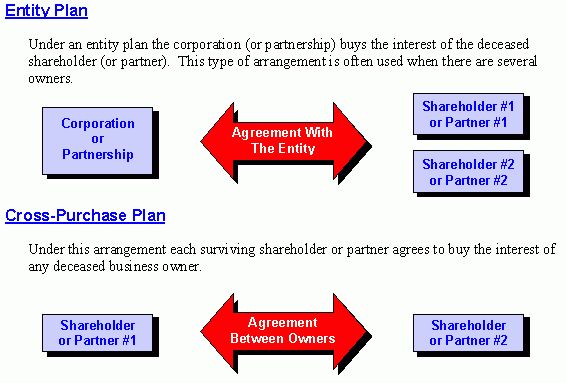
Buy-sell agreements (and other business uses of life insurance) are great risk management tools. If a partner or key employee dies, the business may suffer immediate financial losses which can be mitigated by the infusion of cash from a life insurance policy.

Pause.

Life insurance policies are contracts, and are required to adhere to certain standards and rules, one of which is that the application is part of the policy, and must be attached to (or enclosed within) it. The application forms the basis for the whole transaction, and includes not just name and date of birth, but pertinent health and financial information, as well.

Now, let's tie this all together:

Fred and Barney own Bedrock Widgets, and enter into a buy-sell agreement. They call me to purchase life insurance policies on each other to fund it. I take their applications and submit them to the Prehistoric Life Insurance Company, where they're underwritten and the policies issued. We meet, and I deliver the policies: Fred's to Barney, and Barney's to Fred.

See the problem?

Barney now has all of Fred's health info, and vice versa.

This could be....uncomfortable.

But is it against HIPAA regs?

Standard industry practice says no: the application is (by law) part of the application and by law a copy must be included in the policy. So carriers have - thus far - avoided having to address this seeming contradiction.

Thus far.

[Hat Tip: FoIB Brian D]

Wednesday, May 15, 2013

9 Terrifying Words

Who knew how prescient our 40th president would turn out to be?

The IRS - the folks tasked with enforcing the ObamaTax - are making the news (again) in a particularly disturbing way:

ObamaTax chow down

Whether it's movie theaters, theme parks or fast food joints, the ObamaTax is certainly taking a bite out of the employment market. As the Wall Street Journal notes:

"Some restaurant operators are scaling back expansion plans because of uncertainty about the expense of insuring employees under the [ObamaTax] ...  East Coast Wings & Grill, a 26-unit chain in North Carolina and Texas, in March imposed a three- to five-unit limit, for the time being, on the number of restaurants that franchisees can own, because of worries about health-care costs."

Ooopsies.

It's really a double-whammy: the costs themselves, plus the uncertainty of how they'll shake out. So businesses refrain from expanding, which in turn means fewer jobs are created, which in turn adds more drag to an already anemic economy.

And it's only going to get worse.

Over at Reason, there's a letter from an employer to his 23 employees laying out what they can expect in terms of changing health care policies and costs, and why. But here's the money quote:

"The higher cost for [the employer] would reduce our ability to hire, give raises, etc."

These are very real, very immediate concerns, but have been given short shrift in the legacy media. The letter is amazing for it's comprehensive but totally understandable explanation of where they've come, and where they're headed, by an employer who really "gets it." Read the whole thing.

See and Say and the ObamaTax

In addition to all the other wonderful ObamaTax news to which we've been treated lately, add this (Hat Tip: Assurant Employee Benefits):

Did you know that, come January, your ObamaTax-compliant "health" plan will also include "pediatric services including oral and vision care?"

Well, small group and individual plans will have to cover those, and you'll have the privilege of paying for those "benefits" (whether you want to or not).

These little "goodies" can have no annual or lifetime limits, must cover up to $700 per child (maximum of $1,400 per family - yay), and meet MLR requirements.

Click here to access the whole FAQ.

Cavalcade of Risk Number 183: Shaky Isles edition

Russell Hutchinson hosts this week's roundup of risk-related posts from New Zealand, and includes some interesting items from around the globe.

Do check it out.

Can you see it now, Kathleen?

"[H]enceforth insurers shall be forbidden by law to charge smokers higher rates than non-smokers. Smoking, as it turns out, “is a preexisting medical condition

Tuesday, May 14, 2013

Kathleen, hear those locomotive whistles yet?

And now, from the Washington Post Wonkblog:
"Over the past three months, Sebelius has made multiple phone calls to health industry executives, community organizations and church groups and asked that they contribute whatever they can to nonprofit groups that are working to enroll uninsured Americans and increase awareness of the law"

Health news

■ First up, great news if you like Dom Perignon:

"[N]ew research  suggests three glasses of bubbly a week can improve your memory ... a regular tipple of champagne can help  prevent brain disorders such as dementia and Alzheimer’s disease."

Apparently, a compound found in certain grapes used in producing champagne - phenolic acid - can act as a memory aid.

Cheers!

In somewhat of a medical miracle, an Aussie who had been declared clinically dead for over half an hour was "brought back to life by a brand new resuscitation technique ... testing a mechanical CPR machine, which performs constant chest compressions, and a portable heart-lung machine -- normally used in theatre -- to keep oxygen and blood flowing to the patient's brain and vital organs."

And he wasn't the only one - there've been half a dozen others, as well.

■ Several months ago, Bob blogged on the intersection of ObamaCare and groceries. Fast forward a bit, and:

"Another group is objecting to another part of [the ObamaTax]: Grocers ... a U.S. health law provision that mandates the companies display the calorie content of all their foods."

The problem is that this adds huge costs to food production and distribution, threatening "a logistical nightmare."

Yeah, well, welcome to the club, laddies.

FoIB Holly R tips us to this story about cutting edge tech and a little girl:

"[D]octors at Children’s National Medical Center are making hearts. Not actual hearts, but three-dimensional synthetic models churned out by what looks like an ordinary printer."

While 3D guns are currently sucking up the media oxygen, these little wonders could save lives. Each organ is individually designed based on a patient's "particular intricacies and deformities" and then printed out and "installed."

Brave new world, indeed.

And finally, the story of Angelina Jolie's recent surgery is making the news, and it reminds me of a post we did at the beginning of the year:

"The 24-year-old Miss DC plans to undergo a double mastectomy ... removing both breasts as a preventative measure to reduce her chances of developing the disease that killed her mother, grandmother and great aunt."

Ms Jolie apparently shares some of the same concerns:

"[S]she underwent a preventive double mastectomy earlier this year after learning she carries a gene that increases her risk of developing breast cancer and ovarian cancer."

One presumes that, at some point, she'll deal with the potential of ovarian cancer in a similar way. I'm still somewhat conflicted about this kind of pre-emptive surgery, but have to admire the bravery of the women who face the decision, and for speaking out about it.

Monday, May 13, 2013

If you like your agent...

Remember back in the day, when we were promised "if you like your current plan, you can keep your current plan?" And remember how well that turned out?

Yeah.

Well, turns out that if you like your current agent, you may be able to keep him (or, of course, her). But probably not. From Anthem email:

"As part of our on-going support and commitment to you and your retention efforts, you will remain the Agent of Record for your clients when we transition them to an ACA-compliant off exchange* plan"

How nice.

Notice that little asterisk?

We'll get to that in a moment.

First, though, let's clarify what that term "transition" means. As we explained last month, existing plans will be going away shortly (what, you thought they meant it when they said you could keep your plan?), and currently insured folks will be "mapped" or changed over to comparable ObamaTax-compliant ones (and by "comparable" we mean "nothing at all like"). Don't like that idea? Please let Mr Baucus know.

Once you've been "mapped" to your new plan, you may have some questions about it, so you'll likely want to discuss those with your agent.

And now for that pesky little asterisk:

"You may be required to become Exchange Certified if your client enrolls via the Exchange"

And if your agent (rationally) take a pass on that attractive offer? Well, then, time to pick a new one. Of course, that likely means someone whom you don't know, have never known, and have no relationship with. Not to mention, someone who may, in fact, be completely uninterested in helping you.

Feel better?

What could possibly go wrong?

So Ms Kathleen, under fire for her clumsy, expensive implementation of the ObamaTax, has decided to strong-arm encourage the folks on whom she's counting to provide the actual products for the Exchanges:

"Health and Human Services Secretary Kathleen Sebelius is asking companies for financial donations to help implement President Barack Obama's healthcare overhaul"

While this is every bit as sad, pitiable and contemptible as it appears, I have another question:

How legal would such a donation be?

After all, there's that little box on our tax forms for donations to the presidential campaigns, and of course individual citizens are allowed to pay more in taxes than they actually owe.

But how, exactly, can corporations do this? When individuals "contribute" by electing to pay more, they can't specify that these extra dollars go to specific agencies.
One supposes that corporations can also choose to pay more, but again, that's going to a general fund, not a specific agency or effort.

So how does XYZ Mutual actually do this (if they're so inclined)?

And speaking of tax forms, yours just got more complicated:

"When Obamacare’s individual mandate takes effect in 2014, all Americans who file income tax returns must complete an additional IRS tax form ... will require disclosure of a taxpayer’s personal identifying health information in order to determine compliance with the [ObamaTax[ mandate."

So not only will these wunderkinds have access to your personal financial data, but now your health data, as well.

Warm fuzzies, anyone?