Wednesday, July 31, 2013

Aetna Touch-N-Go, and the Big Picture

A couple of days ago, we reported on Aetna's apparent change of heart regarding the sale of individual medical insurance here in Ohio. Today, they're back in the news:


There are three essential differences between the Public (FFE) and Private Exchange models:

First, only plans purchased on the Public Exchange will be eligible for subsidies (maybe: the subsidy rules keep changing);

Second, plans available on the Public Exchange are expected to have much smaller ("skinnier," in the vernacular) provider networks;

And third, fewer carriers are expected to participate in the Public Exchanges (limiting competition and choice).

It's that third item that's key: absent a robust marketplace, even subsidized plans are likely to remain out of the financial reach of many folks. That's due partly to premiums, and partly to plan design. The least expensive ObamaTax-compliant plans ("Bronze" level) have potential out-of-pocket maximums much higher than many plans available today, further exacerbating the (un)affordability issue.

If (when?) major players like Aetna take a pass on the Public version in favor of the Private, it will cause an even greater strain on the former's sustainability. The Private Exchange model, on the other hand, looks poised to be reasonably successful: for the most part, these will offer more choice (and thus competition) and better service.

Wait, what's that about service, Henry?

Well, it's like this: agents (you know, the folks who are trained and experienced in the actual business of health insurance) are effectively shut out of the Public Exchanges. But a lot of us have signed up for the Private Exchanges. So when a consumer needs an accurate, knowledgeable and credible answer, to where do you think he will turn?

On the other hand, we know that a lot of agents have already thrown in the towel (and/or are planning to do so in the near future), so that may not be a realistic assessment, either.

Yeah, I'm just full of warm fuzzies today.

Wednesday Potpourri

■ While you're busy planning that end-of-summer trip to Rome or London (or Istanbul, for that matter), you should know that your health insurance works a bit differently overseas. One way to help protect yourself is with a Travel Medical plan.

■ As if the ObamaTax train-wreck wasn't causing enough damage to the health care and insurance sectors, its broad "appeal" has rippled through the whole economy:

"This letter was written by the three of the nation's largest labor unions ... Right now, unless you and the Obama Administration enact an equitable fix, the ACA will shatter not only our hard-earned health benefits, but destroy the foundation of the 40-hour workweek that is the backbone of the American middle class."

Ooops.

■ Earlier this month, the (Evil) Employer Mandate was put (temporarily) on hold. Before we start singing and dancing for joy (Hi, Joy!), though, here's some sobering news. According to the Congressional Budget Office:

"The Obama administration's move to delay a mandate on businesses to provide health coverage will mean $12 billion in lost tax revenue and additional costs ... one million fewer people will get employer coverage in 2014 as a result of the postponement"

So we get higher costs and fewer people insured. Yup, sounds like a plan!

[Hat Tips to Holly R and Gail S]

Rakin' in the ObamaTax Bucks

As Patrick noted last week, the ObamaTax Medical Loss Ratio (MLR) provision seems to have been a wonderful gift to the health insurance industry:

"So, thanks to MLR, insurance companies took in an additional $50 Billion in 2012 and paid out $800 Million less in rebates"

Lest our readers think that this is an exaggeration, we learn today that at least one carrier, WellPoint, is making some serious coin off of the ObamaTax:

"[N]ewly minted CEO Joseph Swedish said the company expects a windfall of sorts from the [ObamaTax] — as much as $20 billion by 2016."

While that's only partially due to the MLR (other factors include increased market share and more folks buying coverage through the Exchanges), it's certainly looks to be "berry, berry good" for the folks at Blue Cross.

By the way, take a look at your renewal and let us know how well you're faring.

Tuesday, July 30, 2013

Insurance as a loss leader

It's often asked how long carriers will put up with low margins and tight regulations. It's not a very attractive market to be in right now. Unless insurance isn't your primary business. If you're a hospital or health system breaking even but driving more business to your facilities would be a good deal. Making an extra couple points on insurance operations would just be gravy.

Even better is having your competitors or taxpayors subsidize any loses while your hospital runs up charges.

Lucy (Peanuts fame) found working in Maryland

Lucy would be called an inflation-denier for her never-ending demand that it cost $0.05. Even today hocking life insurance she is set on five cents being the price. I have to wonder if officials in Maryland aren't giving their price setting just as little thought:

"The Maryland Insurance Administration is telling some carriers that want to sell coverage through its individual exchange program to make deep cuts in their premiums. "

"In the bare-bones, “bronze level” of coverage, for example, the monthly premium rates originally requested for a 25-year-old nonsmoker living in Baltimore ranged from $136 to $350.

The rates approved in that category of coverage range from $124 to $237.

The rate reductions demanded range from 1.1 percent for a QHP to be sold by a unit of Kaiser Permanente to 32 percent for a QHP to be sold be a unit of  UnitedHealth Group Inc." [emphasis added]

It is important to remember that if the actuaries for United are wrong they don't get to keep the money, it would go back to the policy holders; thus they don't have any incentive to be that far off.

I have to wonder where $237 came from. That doesn't sound far off for a healthy person policy today with maternity. Guaranteed issue with community rating and $350 even sounds aggressive. 

Gov tries to circumvent ACA in way HHS clearly tells employers not to

How sweet this would be if not for the inevitable consequences:


Like any true Democrat, Rep Waxman doesn't think they should be bothered by any actual law.

Representative Henry A. Waxman, a California Democrat who helped write the 2010 law, said, “The federal government, as our employer, should provide the same contributions it makes to our current health plans.” 

HHS has made it very clear to the rest of us though that we dare not even consider such an arrangement.

"FAQS About Affordable Care Implementation (Part XI)” (FAQ) available here issued by the Departments of Labor, Health and Human Services (HHS), and the Treasury (collectively, the Agencies) on January 24, 2013 sends a clear message to employers that trying to escape ACA or other federal group health plan mandates by replacing their traditional insured or group health plans or policies with health reimbursement arrangements (HRAs) or other arrangements under which the employer agrees to provide a fixed defined contribution to be used to buy or reimburses employees for buying individual health insurance generally won’t pass legal muster.  The FAQ also indicates that employers sponsoring HRAs that only reimburse medical expenses, not individual health insurance premiums also need to review their arrangements to verify that those programs also comply with ACA and other applicable rules." [emphasis added]

It  has been prohibited to use Section 125 unreimbursed medical funds to reimburse insurance premiums. Outside those two mechanisms I'm not aware of any way to reimburse individuals for premiums and not run afoul of any other law. The one exception being giving them a raise and taking the tax it. Would love to see Congress pass out $10,000 raises to everyone and how that would go over.


The Rate Game

Patrick's post yesterday about small group renewal rates seems to have touched a nerve, and I think it's worthwhile spending some time on the whole "early renewal" issue. The premise of early renewal is that some groups may benefit from moving their renewal dates back from (say) early 2014 to late 2013. To that end, carriers have begun offering this service to existing groups.

Yesterday, Anthem sent me a list of my eligible groups, along with what they anticipate will happen to those groups' rates once community rating (and all the rest) kicks in.

As with Patrick's experience, some of my groups would actually see significant rate reductions come next year, while others would see substantial rate hikes. What became immediately obvious is that the "sicker" (and/or older) the group, the better they will fare come January 1. And, of course, the converse is also true.

As a practical matter, then, those sicker/older groups will most likely stay put, since they have nothing to gain from renewing early. But the healthier ones will most likely pull that trigger in an effort to stave off those hefty renewal rates for as long as possible.

And I'm just a very small fish in a very large pond. Imagine this scenario playing out across the country, with many (most?) of the sicker groups staying put, and the healthy ones renewing early. The practical - and obvious - result will be that rates for everyone will skyrocket as carriers seek to find a way to balance these competing forces. It's just not a sustainable model.

One of our commenters also observed, based on his own experience, that "this leads to healthier groups dropping out, and eventually the unhealthy groups are paying even more than they used to." And since the (Evil) Employer Mandate is currently on hiatus, there's really very little that can be done to stop this from happening.

Now, there is one potential reason for those older/sicker groups to take the plunge: Health Savings Accounts (HSAs). That's because, under the ObamaTax, these plans are effectively outlawed (or at least rendered much less effective) after this year. So depending on how important a given group deems its HSA to be, they may well consider keeping it (vs a lower premium) a good trade-off. We shall see.

Monday, July 29, 2013

Death of Small Group Insurance - One Chart

January 1, 2014. Community rating, narrower age banding, guaranteed issue, and other fun parts of the law will begin on this date. In preparation, our agency has been meeting with major health insurance carriers on the impact PPACA will have on our employer sponsored plans with less than 50 employees. For my accounts the results have been staggering:

 
49 employer groups, 4 with decreases of 20%-30%, 4 with 0-10% increases, 20 employers with 30% or more increases. How will businesses absorb/pass on the cost increases? Drop coverage. With no penalties for not offering why wouldn't they?

Flawed thinking on ObamaCare, giving it a shot has consequences

Reading the comments to an article in the NYT on the Obama Admin's implementation of ACA, I came across a very common response:
"Corkyjon it seem to me that you speculate in the negative; the best thing that we can do for ourselves is to let Obama care play itself out. It's meant to work by getting all the uninsured to get coverage or suffer a penalty id they don't, and to offer coverage despite pre-existing conditions, Sounds good . . . will it do what's expected of the program ? that's to be seen"

What I never see mentioned or discussed by these individuals is the consequences or aftereffects of giving it a shot. They make it sound like giving it a shot is a free sample.  That is not in anyway accurate. If it doesn't work we are looking at:
  1. Hundreds of billions (if not trillions) of additional debt.
  2. Individuals being kicked off insurance with no place to go
  3. Employers having exited the market and possibly not willing or able to get back in
  4. Shopping habits and expectations for insurance altered
  5. Carriers having exited the market and possibly never returning
If this fails we just don't pick up where we left off before. The stimulus was a failure, that doesn't mean we don't have to pay the trillion dollar bill. ACA's failure could easily dwarf that. That is why you don't half-ass complete overhauls of major segments of the economy like this. 

The ObamaTax Subsidy Cheat

As we noted almost 2 years ago, the ObamaTax specifically forbids folks in states with Federally-run Exchanges from receiving any subsidies (and this would include those hybrid State/Fed models, as well). Of course, a little thing like the law is of little consequence to the folks in Capital City, and so the IRS has stated unequivocally that "it determined that Congress intended for subsidies to be available in both state- and federally-run marketplaces," thus greatly expanding the scope (and, of course, the cost) of the subsidies.

Now come two House committees (finally) looking into this egregious decision:

"Two House committees sent a letter to Treasury Secretary Jack Lew ... the law explicitly allows the subsidies to only be applied to purchases made on an exchange “established by the state"

As we were saying (seven months ago).

Since only 16 of the 58 states would legally be eligible for these subsidies, this represents a pretty significant chunk of ObamaChange. The Sooner State (one of those with a state-run Exchnage) "is now the plaintiff to a lawsuit arguing that the federal government cannot legally provide subsidies to federally run exchanges."

Here's wishing them well.

ADDENDUM: Meanwhile, Motor City seems intent on further exacerbating the ObamaTax Subsidy budgeting challenge:

"[T]he city is proposing a controversial plan for paring some of the $5.7 billion it owes in retiree health costs: pushing many of those too young to qualify for Medicare out of city-run coverage and into the new insurance markets that will soon be operating under the Obama health care law."

Yup, hundreds (thousands?) more unemployed folks hitting the Exchanges. And remember, thanks to the now-delayed roll-out of the Data Hub verification system, most if these folks will be climbing on board the subsidy gravy train.

Your tax dollars hard at retirement work.

Friday, July 26, 2013

Promoting the ObamaTax

We've been wondering for a while now, why - if the ObamaTax is such a grand bargain - is it necessary to advertise it so heavily, and to enlist everyone from Sheriff Andy to Michael Jordan to shout its praises from the rooftop. Not only have we received no answer, but Ms Shecantbeserious and her minions insist on doubling - nay, tripling - down.

Item the first: A gorgeous, impeccably designed ObamaTax bumper sticker (to compliment the Co-Exist one on your Prius). We've provided our take on this work of art above.

Item the Second: In keeping with the whole "community organizing" spirit of the Obamastration, Ms Kathy has enlisted folks like "Nahla Kayali ... among the first wave of 2,000 community organizers in California getting trained to persuade more than 1 million uninsured people in the state to sign up for [the train wreck]." Since the success of the whole risky scheme seems to rest on the shoulders of young people (whose lower expected utilization is deemed essential in offsetting the costs of older folks), this seems a no-brainer [ed: I see what you did there].

Item the Third: One of the biggest challenges to those first two may be this little tidbit:

"IRS employees have a prominent role in Obamacare, but their union wants no part of the law."

Ooops.

Turns out, even the folks tasked with enforcing the (Evil) Mandates aren't keen on participating. And who can blame them? After all, they're used to getting gold-plated (and low-to-them-cost) coverage through the Federal Employees Health Benefits Program. Wouldn't want to lose that, now, would we?

How Much Did That Rebate Cost You?

President Obama has made another exaggerated speech regarding the insurance rebates that are being issued under PPACA. While "insurance premium savings" sounds admirable, there are a few facts we must point out to show the relative ignorance of Obamacare backers.

MLR was designed to leverage insurance company profits and administrative expenses. Reality is all we have seen from MLR is an increase in profits and expenses. Here are the facts:

  • From the US Census Bureau: for 2011 to 2012 the number of people purchasing private insurance has remained flat at roughly 197,300,000.
  • According to ehealthinsurance and The Kaiser Family Foundation average premiums in 2011 were around $3600 per person (from group and individual policies by family and single I came up with this very conservative number)
  • According to Aon average increases in premiums from 2011 to 2012 were 7% (conservative again)
Now for the numbers:

2011 total premiums: $710 Billion
2011 rebates issued: $1.3 Billion

2012 total premiums: $760 Billion
2012 rebates issued: $500 Million

So, thanks to MLR, insurance companies took in an additional $50 Billion in 2012 and paid out $800 Million less in rebates.

Only in Washington is this "savings".

The danger of polling the masses...Employee Choice in Carriers

Journalists, a term used loosely as few actually practice the craft any more, love polls. Easy to create, easier to write stories off of, and if you put even a little thought into the questions your guaranteed to have the narrative you want to push.

Which brings me to this tidbit;

ebn.benefitnews.com/-Employees-want-Choose-Their-insurer-

"A new survey out this week from insurance researcher HealthPocket corroborates that idea, with 65% of employee respondents saying they’d like to select their health insurance company rather than have their employer choose."

I think first we need to remember who we are talking about, over-generalizing here but employees are the same people that:
  1. Will pay four times as much for a brand name instead of the generic
  2. Will pay ten times as much for the new heavily advertised combo pill instead of taking two generics
  3. Will go to the hospital for a non emergency MRI paying $2400 instead of getting one outside the hospital for $600
 I could go on all day but they have seldom proved themselves to be smart consumers. On the contrary: if it wasn't for the huge investment employers make in picking and managing health insurance plans, most of them would not even have insurance.

Properly run insurance should be a commodity anyways, a $2500 HSA from Anthem should have minimal differences than one from United. What are you choosing then if you're picking carriers? Website? Customer Service quality? Contract Negotiation? Do we think employees would actually be adept at measuring any of these and making informed decisions, or would we quickly end up with marketing gimmicks? Carrier with the biggest star endorsement. Freebies and add-ons. Funniest Super Bowl commercial. Do we really need more advertising in insurance? Do we not see how that has worked in Pharmaceuticals?

What employees should be picking are more cost effective and higher quality providers, physician and hospital. They should be shopping for cheaper drugs and lower cost MRIs instead of worrying about the paper pusher at the end. 80-85% of cost goes to care, let's fix that and then worry about the insurance.

Thursday, July 25, 2013

MVNHS© for Thee, but not for Me

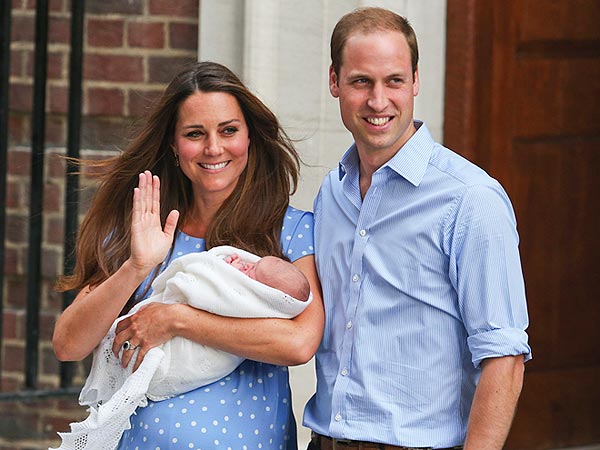
First, a belated Mazel Tov to William and Kate on the birth of their son, and may he enjoy a long, happy and healthy life.

Would that it were so for most of their fellow Brits, who - unlike the happy royal couple - have to endure the agony that is the Much Vaunted National Health System©:

"According to the Daily Express, a suite at the private Lindo Wing of London’s St. Mary’s hospital costs £6,265 per night — and this “excludes consultants’ fees ... 37 per cent of the British public think that she should be having her firstborn on the National Health Service"

Which begs the question: why do over a third of their fellow countrymen hate the Royal Couple and their newborn son?

Closer to home, how many rational folks believe that this is not going to be the case for our own "Royalty" once the ObamaTax is fully implemented?

Thought so.

Dr Jerry Maguire?

About 3 years ago, our own Certified Medical Office Manager (and now co-blogger) Kelley Beloff put some major holes in the Myth of the Rich Doctor:

"I recently received a report stating that the average reimbursement of the average office visit code (99213) for physicians is $65.49. Yep, $65.49. That is all your physician gets for seeing you in a normal 15 minute appointment."

And out of that comes his overhead, including staff salaries, office rent, malpractice insurance premiums and, presumably, a little vig for himself.

Fast forward a bit, and we learn that not much has changed except, perhaps, a certain perception:

"What physicians are trying to tell us is that they don’t see themselves as necessarily any more responsible for health care costs than all of those stakeholders"

Which stakeholders include patients (among others) who are used to virtually immediate and unlimited access to health care. One wonders if there may be a correlation there with the cost of health insurance.

One problem, of course, comes immediately to mind: the only insurance product that effectively addresses this issue is about to be ObamaTaxed out of existence:

"Now, co-blogger Nate points out that "an HSA with anything short of max deductible and no contribution would pass," and that's a fair cop. But without the ability to sock away tax-advantaged dollars in anticipation of future claims, you're not talking "HSA" at all."

Kinda wish they'd read the thing, before they passed it.

Exchanges offer cash back bonus!

Exchanges in DC just got a little more attractive, around 2-3% or a free trip to your sunny local of choice that is.

http://www.benefitspro.com/2013/07/23/credit-cards-causing-headaches-for-exchanges

"The exchange managers would consider taking SHOP premiums via credit card and debit card in 2015, if interest in that option appears strong."

If you had the option to pay your insurance premiums with credit card and receive cash back or points to use, what smart business owner wouldn't jump all over that? It is sort of ironic with government's push to squeeze every penny possible out of administrative cost  they willingly add 2-3% in administrative costs for payment convenience.

Spending money on brokers or customer service reps, not acceptable; spending more than that on credit card fees....no problem. On an average family premium of $700 the credit card fees are roughly $20. The cost of an ACH around $0.10.

Wednesday, July 24, 2013

Aetna back in the Game?

A month ago (to the day!) we noted that Aetna had suspended sales of its individual major medical products here in the Buckeye State.

This just arrived in my email inbox:
"We are pleased to announce that effective immediately, you may quote and sell new business for Aetna Advantage Plans for Individuals, Families and the Self-Employed in Ohio.

As a reminder, as of June 24 any Ohio applications that had already been submitted were processed by our underwriting team."
Hunh.

Wednesday WroundUp

■ The future is a lot closer than you might think. We know that Star Trek presaged cell phones, tablets and holograms; now we may actually get tricorders, too:


■ If you're not regularly reading Avik Roy's Apothecary, you're missing a lot. Here's a sample:

- The NY Times Tries — And Fails — To Protect Obamacare From Health Insurance ‘Rate Shock’

- The Devastating Obamacare Tax On Low Income Workers At Large Firms

- Labor Unions: Obamacare Will ‘Shatter’ Our Health Benefits, Cause ‘Nightmare Scenarios’


Lots more at Avik's place.

■ FoIB Holly R sends us this interesting item on life insurance and single folks:

"Single people are often responsible for parents or grandparents, and they want to make sure those dependents will still be cared for."

More at the link.

Cavalcade of Risk #188: Tech & Mech edition

Nina Kallen presents this week's round-up of risky posts, with an emphasis on "their technical and detailed nature." Have you ever wondered about health insurance in China? How about how to overcome pre-existing conditions when applying for insurance? All this - and more! - at this week's Cav.

Tuesday, July 23, 2013

Exchange Security Breach.....who pays?

There have been a lot of discussions this past week or two on the potential of ID theft in the exchanges. While people getting their ID stolen is bad, as a business owner my bigger fear would be losing my business because the exchanges allowed someone's ID to get stolen.

When I trade protected info with other firms we have Business Associate Agreements (BAA) and other written contracts that protect me if they fail to protect the data I provide them. If they screw up I would still get sued, which is just as bad or worse than actually losing, but hopefully would have some recourse. Cover my cost and any damages if it is proven to be their fault.

When CMS, IRS, or others require by law I send them data  they sign no such agreement. Nor for the most part are they liable or susceptible to individual lawsuits from citizens.

Assume you're an employer who purchases your company health plan through the exchange. In doing so you provide them SSNs, health details, and other PHI. That info becomes compromised and ends up in the public and the hands of criminals. Who do you think gets sued? How much assistance would you expect from Washington in proving it was in fact them that exposed the data and thus your not responsible? How much in Attorney fees to prove it wasn't you and will you ever see that money back?

Just say no?

Here's a thought: what if they gave an Exchange and nobody came?

That's the premise behind a group calling itself the Citizens' Council for Health Freedom, which has rolled out a campaign to dissuade folks from buying plans on the public Exchanges. CCHF offers four rationales:
1.No private insurance – Obamacare is “Medicaid for the middle class” – or as CBO director Douglas Holtz-Eakin calls exchange coverage: “a second Medicaid program.”

2.No privacy – Data enters federal database accessible by IRS.

3.Limited choice – Coverage is “narrow network” policies.

4.High-cost premiums – Income redistribution to pay for exchange operations and subsidizing high-cost individuals.

While we certainly applaud their efforts, someone really needs to debunk some of their premises.

That would be me:

1. While the ObamaTax certainly encourages (and subsidizes) the expansion of Medicaid, the Exchanges themselves are a separate initiative. Conflating the two seems, well, confusing.

2. Anyone who's been paying attention to the news the past few months and still believes they have any privacy left is fooling themselves. The Data Hub doesn't care whether or not you've enrolled via an Exchange: all of that info is shared across agencies [ed: well, supposed to be shared might be more accurate].

3. Agreed: there is little doubt left that Exchange-based plans will employ "skinny" networks in an effort to rein in costs. A futile effort, of course, but an effort nonetheless.

4. This one's a maybe, and based on how one perceives the role of the government in what should be private transactions. On its face, I'd have to agree that the subsidies are simply robbing Peter to pay for Paul's insurance. Others might take a more charitable view.

CCHF also claims that "people still will be able to buy coverage outside the public exchange system, and that PPACA does not impose penalties on individuals simply because they buy coverage outside the public exchanges."

This is simply not true: only folks buying coverage on the public Exchange will be eligible for subsidies; I'd call that a pretty steep penalty for taking a pass.

In any case, it'll be interesting to watch this play out.

ADDENDUM: Bob has a slightly different take on privacy, the Exchanges and the Data Hub.

Monday, July 22, 2013

A disturbing ObamaTax thought...

"House Republicans received a boost from Democrats on Wednesday during votes to delay ObamaCare’s individual and employer mandates ... Twenty-two Democrats joined Republicans in a vote to delay the individual mandate"

This in response to the Obamastration's unilateral suspension of the (Evil) Employer Mandate a few weeks ago. The premise seems to be "if employers are off the hook, why shouldn't individuals be off it, as well?"

Which may well be "fair," but it raises a disturbing point: having looked high and low, I can find no evidence that either side is also proposing a moratorium on the Guaranteed Issue provisions of the ObamaTax.

Now you may be wondering, why is this a big deal, Henry?

Here's why: as of January 1, insurers will no longer be able to decline coverage to unhealthy people. In fact, they must write anyone and everyone who applies, regardless of health status. But if no one is required to "buy in," it seems likely that only the least healthy among us will do so. After all, absent the (evil) individual mandate, healthy folks have no real incentive (other than personal responsibility) to sign up. But "sick" people have ample motivation, and will likely do so in droves, further driving up rates for those already insured, and presumably causing some (many? most?) to drop their increasingly unaffordable coverage.

ObamaTax supporters, of course, consider this a feature, not a bug.

Monday Morning ObamaTax News

Late last month, the 10th Circuit Court of Appeals gave Hobby Lobby a temporary reprieve from the birth control convenience item mandate. Last Friday, "U.S. District Judge Joe Heaton ... stayed the case until Oct. 1 to give the federal government time to consider filing an appeal with the U.S. Supreme Court." So for now, at least, the owners of Hobby Lobby can enjoy their 1st Amendment rights (until SCOTUS rules it a tax, one supposes).

■ FoIB Holly R alerts us that Anthem Blue Cross will not be participating in the California small business health insurance Exchange:

"The company said it still intends to sell policies outside of the small-business exchange ... so its decision to stay out of the exchange could hamper the state's ability to make the marketplace attractive to businesses."

What does this mean? It means that Golden State businesses will have even fewer SHOP choices than they'd thought. Less competition means higher prices (compared to off-Exchange plans).

Econ 101.

■ And speaking of fewer choices:

"Nearly half of America’s brokers (45 percent) say they’re considering exiting the health insurance business altogether, with the majority (51 percent) saying they are only slightly or not at all confident about the future of their firm and their industry"

So if you like your agent, you can keep your agent.

Or not.

Friday, July 19, 2013

Fees, Glorious Fees (continued)

As Nate reported earlier this week, the ObamaTax Patient-Centered Outcomes Research Institute (PCORI) fees taxes are due this month.

Despite the conventional wisdom (and official line) that carriers pay the fee for fully insured plans, we know that's not the case. They simply pass them along to their customers (policyholders). Self-insured plans already understand this, because the employer (plan sponsor) has to pay the fee directly.

For plan years ending last October through this September, the fee is $1 per covered life; for plan years ending this coming October through September of '14, they take a modest 100% increase (to $2). After that, the sky's the limit (technically, they'll increase as a function of medical inflation, but we'll stand by our characterization).

Yippee!

[Hat Tip: Cornerstone]

Easy Peasy, Lemon Sqeezey

Behold, the ObamaTax, simplified: 


[Hat Tip: Heritage]

Meantime, FoIB David Adams reports that Blue Grass State health insurance premiums are set to rise a modest amount.

And by "modest" he means upwards of 80%.

Hunh.

CoBlogger Kudos!

To our own Bob Vineyard, runner up in this year's National Underwriter Industry Elite Awards (for Industry Awareness):


Congratulations, Bob!!

Cavalcade of Risk #188: Call for submissions

Nina Kallen hosts next week's Cav. Entries are due by Monday (the 22nd).

To submit your risk-related post, just click here to email it.

You'll need to provide:

■ Your post's url and title
■ Your blog's url and name
■ Your name and email
■ A (brief) summary of the post

PLEASE remember: ONLY posts that relate to risk (not personal finance tips and the like). And please only submit if you are willing to link back to the carnival if your submission is accepted.

Thursday, July 18, 2013

MVNHS©: If You See Something, Shut Up

Well, this is hardly a surprise:

"Any organisation that is treated as being beyond reproach is bound in time to become flabby ... When I pointed out that the NHS fared badly by most international comparisons three years ago, my since-deceased mother was harassed by Left-wing journalists"

No, the "journalists" didn't kill his mum, but they'd certainly like to kill any dissension, as would the folks at the top of the MVNHS© food chain:

"[O]f course, this isn’t about different policy options. It’s about preventing any serious discussion from beginning."

Sound familiar?


ObamaTax Exchange Setup Running at Peak Efficiency

Well, peak government efficiency:

"Two U.S. government officials warned on Wednesday that the launch of new state healthcare exchanges could potentially be delayed"

No kidding?

Why is that, do you suppose?

Oh:

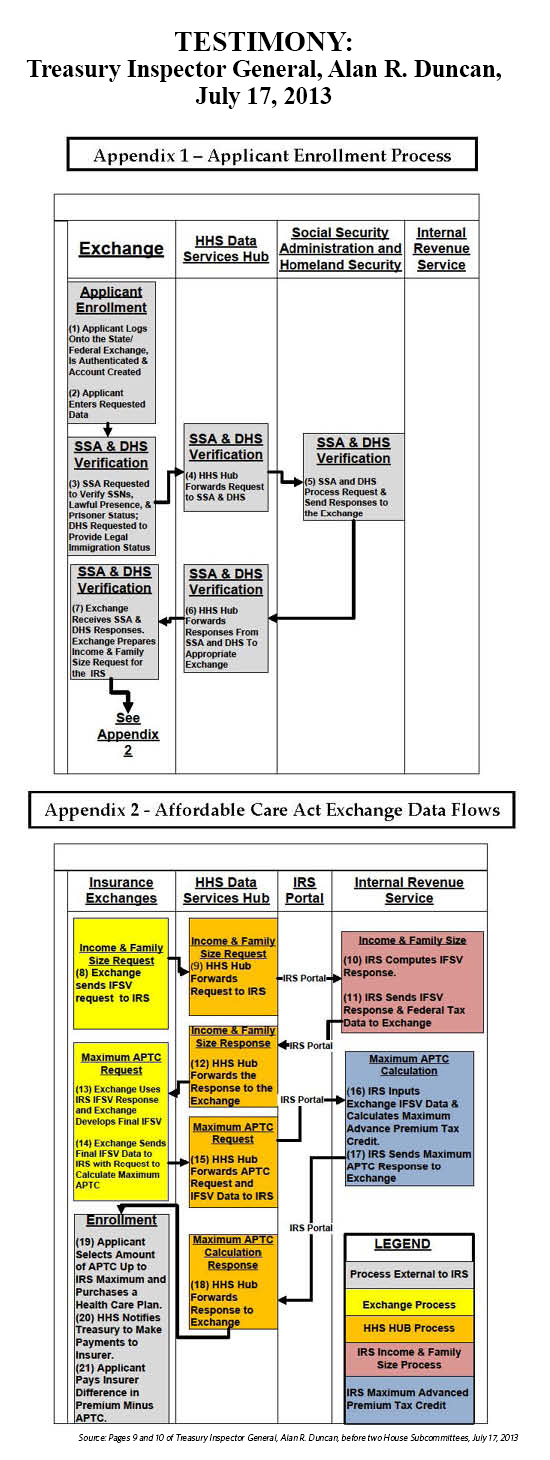
"[A]n auditor with the Treasury Inspector General for Tax Administration, an Internal Revenue Service agency that monitors performance, said testing the systems needed to implement the exchanges "will be difficult to complete" by the October 1 start date."

I bet.

Not a big deal though, right Mr Taxman?

Well....

"The lack of adequate testing could result in significant delays and errors in accepting and processing"

The good news is that all is proceeding according to plan:

"Obamacare, the president said, is "doing what it's designed to do"

Indeed.

ObamaTax stormin'

It ain't sci-fi:

Health Wonk Review: The Bard's edition

Louise Norris presents this week's intellectually stimulating ode to Billy Shakespeare, aka the Health Wonk Review. What makes Louise's HWR's so great is the time and care she puts into making sure each post includes context that shows she's read each and every one.

Kudos, Louise!

Wednesday, July 17, 2013

Burying the Lede

In newspaper parlance, "burying the lede" means to "begin a news story with nonessential details," or to obfuscate the actual "news." In this case, the New York Times lauds the ObamaTax, quoting sources in New York that claim it will reduce premiums in the individual market by 50%.

[ed: Gosh, whatever happened to the president's promise that they'd plunge 3000 percent?]

To hear Gov Cuomo tell it, "New York’s health benefits exchange will offer the type of real competition that helps drive down health insurance costs for consumers and businesses"

There's just one little problem:

It's a meaningless claim.

How's that, you ask?

Simple, but it takes 12 paragraphs to get to the real reason rates may be lower:

"While the rates will fall over all, apples-to-apples comparisons are impossible from this year to next because all of the plans are essentially new insurance products."

The new "metal" plans have much higher out-of-pocket exposures than plans currently allowed to be marketed in the Empire State; it's really not difficult to understand why Kia's cost less than BMW's.

But that doesn't fit the meme.

Tuesday, July 16, 2013

Scamster Tricks

So I return from lunch to find a voicemail from a distraught young lady. Seems she had bought health insurance this morning (or so she believed) but didn't have sufficient funds in her checking account to cover the premium, and wanted to make sure that, once that was fixed, her coverage would begin tomorrow, as agreed.

What makes this interesting is that I had no idea what she was talking about. I am a relatively successful agent, but I don't have so many clients that I can't remember one from a few hours earlier (more's the pity, one supposes).

After some probing, it turned out that the young lady had spoken with - and given all her private health, checking account and other personal information to - an agent who shares my last name but is no relation. The more I asked, and the more she shared, the more alarm bells were going off in my head. For one thing, I explained to her, the company from which she purportedly bought her policy does not sell health insurance.

For another, no professional agent is going to take an application over the phone (too easy to claim fraud, and where, exactly, does one "sign" over the phone line?). Add to that the fact that the call-back number she'd been given appeared to be non-functional and, well, we have a problem.

Based on recent ObamaScam stories, I asked her if perhaps the gentleman had mentioned the "new health care law." She told me that the agent had called her husband, who'd directed him to call her.

So much of this screams "scam" that I gave her two pieces of advice: first, that she should call her bank to determine whether her account had, in fact, already been dinged, and that if it hadn't, she should freeze the account. I also gave her the consumer hotline number for the Florida Department of Insurance (she's a Sunshine State resident), and suggested that she share her entire story with them as soon as possible.

Fingers crossed hopefully for a happy ending to this one.

5 Years in the Making: An OmniCare Update

We first started covering the OmniCare prescritpion drug whistleblower/kickback debacle just over 5 years ago; our most recent update was early last year, when we noted that the government's position on the whole mess was, erm, equivocal.

And now, thanks to tenacious FoIB Holly R, we (seem to) have resolution:

"A federal judge in Chicago has approved a settlement between Omnicare Inc., the U.S. government and two states, bringing an end to a whistleblower lawsuit filed under the False Claims Act"

Whew.

Cost of PCORI tax

This week we are gathering data for clients to file their PCORI Tax payment, and explaining it to them. Between our time, the groups' time, the Broker, and CPA it takes hours and cost at least a couple hundred dollars per group.

The tax on the first three groups I have done this AM;

$11
$8
$15

And they wonder why wages stagnate, small businesses don't hire or offer insurance, and the economy doesn't grow....

Monday, July 15, 2013

Friends with Benefits

It appears that those who are benefitting most from the financial side of the Patient Protection Act have been engaged with the Administration in some capacity over the years. Here's a short list of who has been "rewarded".

Sara Horowitz - Her organization, The Freelancers Union, was chosen to receive a $340 million loan to start a new insurance CO-OP in New York. She led one of George Soros' organizations who also was linked to President Obama back when he was in the Illinois legislature.

Anne Filipiac - She served in the White House as Deputy Director of Public Engagement and had a prominent leadership role in the 2008 Obama for America campaign. She also worked at HHS. Now she is President for Enroll America. We all know how much the administration and HHS admire her organization, right Kathleen?

Planned Parenthood will be serving as navigators. They will be receiving grants to help educate and enroll consumers into the very services they provide. Seems like a pretty sweet deal.

Trevor Neilson - Former member of the Clinton Administration who is now president of Global Philanthropy Group has been targeted by the White House to get celebrity endorsements from the likes of his client list that includes: Eva Longoria, John Legend, and Madonna to name a few. Mr. Neilson served as one of President Obama's surrogates during the 2012 campaign.

The advertising firm Porter Novelli was founded by William D. Novelli, who was the CEO of  AARP from 2001-2009. Catherine “Kiki” McLean is a senior partner and managing director of Porter Novelli.  She is a Democratic Party operative who worked for the campaigns of Al Gore, John Kerry, and Hillary Clinton, as well as the 2008 presidential campaign of Barack Obama.  McLean was hired by Porter Novelli in June of 2009. Since 2010, Porter Novelli has been awarded $49 million in HHS contracts.

Must be nice knowing your time and donations can come back tenfold.

Your receiptionist will be verifying subsidy eligibility...?

Received this notice from an association we belong to, not much more to be said


“solution” CMS has for random checking the subsidy eligibility for Exchanges starting 1/1/14. The CMS July 5th announcement that the fancy data-hub verification system will not be used the first year, so they’ll just accept whatever income the person verbally says.  This seems like a huge invitation for lying & fraud.  So, what is CMS’ “solution”?  They’ll make random calls to employer firms, and ask whoever answers the phone, “Is John Doe employed here, and does he or his family make $X thousands of dollars?”  Not only will the random person who happens to pick up the phone not know such very personal details, but also this will be a crisis for company morale & privacy.  (This is yet another reason why your clients & prospects need to have the P-or-P data & system in place for such calls.)"

Reminds me of when my high school would call home to verify absences, all legit of course, and how well that system worked. 2 years from now I bet we hear stories about 10,000 employers linked to a single phone number.

The IRS sent more than $46 million in tax refunds to 23,994 “unauthorized” alien workers who all listed the same address in Atlanta, Ga., in 2011, according to an audit report by the Treasury Inspector General for Tax Administration (TIGTA).

Gee, Ya Think??

As we've repeatedly pointed out, the whole ObamaTax Exchange roll-out is a magnet for fraud. And the evidence for that continues to pile up:

"As California prepares to launch its health care exchange, consumer groups are worried the uninsured could fall victim to fraud, identity theft or other crimes at the hands of some of the very people who are supposed to help them enroll."

No kidding.

Here's the problem (well, one of them, anyway): the Golden State is on course to"register" some 21,000 Navigators, most of whom will have no prior insurance background. But that's not the best part: the Feds require no background checks on would-be Navigators, and the rocket surgeons in charge of Cover California (the state's health insurance Exchange) confirm that they don't "have a plan for investigating any complaints that might arise once the counselors start work. That means consumers who might fall prey to bogus health care products, identity theft and other abuses will have a hard time seeking justice if unscrupulous counselors get hold of their Social Security number, bank accounts, health records or other private information."

Gee, what could possibly go wrong?

The Exchange has adopted new rules which would require fingerprinting and background checks, but how likely is it that these will actually be implemented?

Yeah, that's what I thought, too.

Too little, too late?

The good news is that the MVNHS© has apparently come to its senses, and is planning to shut down the Liverpool Pathway:

"...the Government will announce today the end of the deeply controversial Liverpool Care Pathway ... relatives and patients claimed that the LCP was being used to accelerate death, or even to kill patients who were not dying at all by starving and dehydrating them until they did, in fact, die."

The question then becomes whether or not this step is, in fact, enough:

"The NHS’s medical director will spell out the failings of 14 trusts in England, which between them have been responsible for up to 13,000 “excess deaths” since 2005."

That's roughly 2,000 per year, certainly a great savings on health care for the Much Vaunted National Health System©, but not necessarily the outcome many families (let alone patients) would have preferred.

What's striking about this is that it appears that what we saw with the Stafford fiasco was not an isolated event, but a function of MVNHS© culture. We in the States should be taking careful note of these events, since they're likely to play out very much the same way here under the ObamaTax.

As is this:

"Thousands of people are being put at risk of losing their sight unnecessarily due to variations in rates of cataract operations across England ... More than half the country’s Clinical Commissioning Groups, organisations set up by the health service to organise and buy treatment, restrict access to operations."

These are essentially mini Death Panels, and they seem to operate on the "lottery system;" that is, depending on where you are, you may or may not receive care in time, or even at all. And if you think this is happening just with eye care, I've got a bridge to sell you.

Did Obama waive employer mandate to save the rest of ObamaCare?

CATO had an interesting write up on the Liberty University v. Lew case, Liberty lost the battle but it could have been a victory in the War.

http://www.cato.org/blog/fourth-circuit-deals-hidden-blow-obamacare
"The plaintiffs in both Pruitt and Halbig claim, correctly, that Obamacare forbids the administration to issue the law’s “premium assistance tax credits” in the 34 states that have refused to establish a health insurance “exchange.” The Pruitt and Halbig plaintiffs further claim that the administration’s plans to issue those tax credits in those 34 states anyway, contrary to the statute, injures them in a number of ways. One of those injuries is that the illegal tax credits would subject the employer-plaintiffs to penalties under Obamacare’s employer mandate, from which they should be exempt. (The event that triggers penalties against an employer is when one of its workers receives a tax credit. If there are no tax credits, there can be no penalties. Therefore, under the statute, when those 34 states opted not to establish exchanges, they effectively exempted their employers from those penalties.)"

If the Obama Admin fears the entire law could be struck down the knee jerk reaction would be to remove the penalty. With no employer penalty the plaintiffs would have no damages.  

"Third, shortly after announcing it would effectively repeal the employer penalties until 2015, the administration wrote the Liberty, Pruitt, and Halbig courts to argue that the delay should (at the very least) delay the courts’ consideration of those cases. In Liberty, the Fourth Circuit rejected all of those claims."

What the removal of the penalties would do to the cost would be horrific from a budget standpoint, but Obama has never really been shy of trillion dollar budgets anyways.