Thursday, April 21, 2016

Stossel Nails It

First, r'fua shleima to Mr Stossel:

"I write this from the hospital. Seems I have lung cancer."

The post highlights some of the more egregious examples of customer service faux pas, but I'd like to focus on one or two specific points he makes along the way.

For example:

"I get X-rays, EKG tests, echocardiograms, blood tests. Are all needed? ... [N]o one discusses that with me or mentions the cost. Why would they? The patient rarely pays directly. Government or insurance companies pay."

This is crucial: when a third party is footing the lion's share of the bill, we become less sensitive (or completely desensitized) as to what that bill actually is. Hence, the kinds of pricing distortion we read about in Kelley's (fantastic) post yesterday on how providers calculate what a given encounter will cost.

Reinforcing this theme, he continues:

"Instead of answering to consumers, which forces businesses to be nimble, hospitals report to government, lawyers and insurance companies."

By implication, reporting to these outside agencies causes the business (hospital) to focus on the process, not the results. And since the provider's true "customer" is the government or insurer, why would it really care about the patient's convenience?

And then he gets to a very interesting point. He notes that we're told, over and over, that we can't legitimately second-guess these providers, because health care is " too complex for consumers to negotiate."

That may nor may not be true (and I would argue that it's likely at least partially true in the case of brain surgery or cancer treatment, but perhaps less so when it comes to less serious ailments), but Mr S notes that:

"[C]ars, computers and airplane flights are complex, too, and the market still incentivizes sellers to discount and compete on service."

True, and he underscores that by pointing out that we generally buy these goods and services with our own money, not the government's or an insurance company (company cars and travel excepted, of course).

Regular IB readers know that I've long been a fan of consumer-driven healthcare; the challenge is that I fear that that ship has sailed.

Springtime Health Wonk Review

Peggy Salvatore hosts this week's innovative collection of health care wonkery. From Big Pharma to Grandthered ObamaPlans to a video on Worker's Comp there's bound to be something to pique your interest.

Wednesday, April 20, 2016

Medical Fee Schedule: Explained

David Williams from Health Business Blog has some questions about how the medical world comes up with its fee schedules. Specifically, he was relating a story regarding his wife’s recent visit to an Urgent Care Facility and the resulting charges associated with that visit. Let’s take a look at those questions and see if we can provide some answers for inquiring minds.

If something is billed for $427 but reimbursed at just $22, it seems that BI is overcharging or Blue Cross is underpaying. Or is it both?

Actually it is neither. The only set fee schedule that is relevant is the fee schedule put out by Medicare each year. This is the fee schedule from which all other fee schedules are derived.

To create a fee schedule for a medical office there are several factors to take into account:

1) The reimbursement set by Medicare via the Medicare Fee Schedule,

2) The usual and customary charge for a similar service in your geographical location,

3) The fee schedules of all other insurances of which you are contracted, and

4) How much money the facility/doctor needs to generate to stay in business.
In creating a fee schedule for a medical facility the starting point is 150% of the Medicare fee. Then this number is compared to all other reimbursements from all other in network contracts to ensure that you are billing more than they are paying (if you bill less than the contracted amount, you will be paid the amount billed. If you bill more than the contracted amount you will be paid the contracted amount.) Next, you ascertain how much your competition is charging for the same service and finally you figure out how much money is needed to keep the doors open. From all these factors a fee schedule is created.

A final piece to remember is that in medicine the worth of a practice, hospital, or urgent care is based on its Accounts Receivables. In Medicine, A/R is the charges billed, not the monies received. If charges are high, then the A/R is high. This means that conceivably the A/R amount will be coming into the business.

What happens to the poor schlub who’s out of network, or worse, lacks insurance? Is the $427 from rare patients like that –who pay 20x what Blue Cross pays– accounting for more than 100% of the center’s profits?

In terms of the out-of- network patient or the patient without insurance, their overall patient responsibility will be higher based on the higher charge. However, in today’s high premium/high deductible atmosphere few patients seek out out-of-network or cash payments. Straight out-of-network/cash patients do not financially support a medical facility, unless that facility’s business model is set up as such. In this case, the Urgent Care is set up on an Insurance Reimbursement Model.

If a medical facility so chooses, they can institute a policy where by out-of-network or cash patients pay a discounted rate, as long as the discount is given to each patient.

Is what I see on the EoB actually the economic reality behind the transaction? Or is BI or my wife’s BI practice being paid a capitated amount for her care and is this bill only meaningful for calculating our cost?

The charge listed on the EOB is the fee that the practice has determined is the equitable amount of money it should receive for the service provided. The reimbursement from the Insurance Company is the amount of money that it is willing to pay for the service rendered. Each insurance company has its own fee schedule, so the charge has to be high enough to ensure payment from each company for each service rendered (see answer question 1).

As a matter of practice most medical facilities will have a 30-40% write-off from what was paid to what was billed.

This is not a capitated amount. Capitation is a set amount of money paid lump sum to a provider for the overall care of a patient. An urgent care facility would not receive capitation payments since it caters to emergency one time only patients and does not cover a full episode of care.

What is a patient who’s interested in “transparency” and “cost effectiveness” supposed to think? Did we do the right thing by going to urgent care or not? I think it would have been a lot more useful to see a comparison between the actual urgent care visit cost and a hypothetical visit to the ER or physician office.

You are correct, the information from the EOB does not allow you to compare to any other facility. Transparency is defined as the medical facility notifying the patient of the charge for the procedure. I would not compare my price to my competitor since my goal is to get your business, nor would I give out my fee schedule to any other provider for the same reason.

There is no hypothetical visit as each medical facility would have its own charge and each facility will have its own contracted rate, thus there could never be apples to apples comparison.

I understand that on the surface the difference between the charge and the fee seem in-congruent, but you have to remember you are looking at one small piece of a very large financial picture. Another patient with the same procedure may have an insurance company that reimburses that charge at 66% and yet another patient’s insurance company reimburses at 80%. Fee schedules are created to ensure that all reimbursement possible is captured.

Tuesday, April 19, 2016

Nice, but "D'Uh!"

Pretty much been the plan all along:

"MLR provision causing ‘disincentive’ to sell health insurance"

So says Palmetto State Senator Tim Scott.

He's referring to the elimination of commissions for agents.

And he gets at best partial credit.

Why?

Because we already know that MLR has nothing to do with why commissions aren't being paid now, during the off-season. We can only speculate as to whether they'll return in the fall.

Time will tell.

Monday, April 18, 2016

Stupid Premier Health Tricks (Part 2)

As noted previously, Premier Health Plans has an unnecessarily confusing and, to be frank, barely functional web quoting system. To get a quote, one must enter the potential client's information as a "lead," which then leads one through a series of screens and tabs to enter basic info. Everything is keyed off the client's email, which, once entered, is immutable.

As is the client's name.

I found this out after trying - unsuccessfully - for three days to sell a plan. I almost got through this morning when I was able to log in, and get through most of the screens, but came up short on the enrollment one because I had entered "Geoff" instead of "Jeff," and it wouldn't let me change that spelling. Since I'd already used his email address, and needed to start over (a 3rd time!), I set up a new account in his name at one of those free-mail sites.

That accomplished, I logged back in and was - finally! - able to complete the application.

I cannot say enough bad things about this carrier's quoting and enrollment system. For one thing, once a "lead" is saved, there's no (obvious) method for deleting it. Second, there's no way to change those email addresses without contacting tech support. Which I tried to do (twice!) this morning with no success.

Heckuva way to run a railroad.

Insurance GIGO

That's an old computer term meaning "Garbage In, Garbage Out;" that is, if your program or data is faulty, the results you get are going to be unreliable. And it seems that a bunch of us aren't quite getting that message:

"Half of Insurance Shoppers Giving Inaccurate Information"

Turns out that, in a recent survey at one of those insurance quoting sites, over 50% of the folks gave erroneous info. It's not clear whether that was inadvertent or deliberate, of course, but if you're giving the wrong answers, you're going to get useless quotes.

The site itself offers quotes across multiple lines of coverage, including home and auto.

Is this the end of the world? Of course not, but what it means to those giving inaccurate answers is that they're going to be waiting in line a bit longer, and their purchasing decision just got slower and more difficult.

Exit question: why would someone go to the trouble of requesting a quote and then provide bogus data? I just don't get it.

Friday, April 15, 2016

Fee for Service Insurance

So, with more and more carriers cutting health insurance commissions, the idea of a fee-based model becomes more and more attractive. Here in The Buckeye State, we're allowed to do so, with some caveats [ed: those in any of the other 57 states should consult their Department of Insurance]. Since I'm basically cheap frugal, I was hoping that my good friends at Cornerstone would be able to provide guidance (vice me paying mega-$$'s to my attorney).

And yesterday I was pleasantly rewarded (but not surprised - they are first-rate); it occurred to me that it might be interesting to share some of what I learned, particularly as it seems to be the wave of the future, and I know a lot of our readers are also consumers with a horse in this race.

So, some basic info:

As noted above, Ohio agents may charge a fee when selling health insurance. Almost counter-intuitively, it may not be offset by any commissions that are ultimately paid (I'll circle back to that). Further, one can't discriminate regarding protected classes; that is, one can't charge different fees based on a customer's race or sex, etc. One may discriminate between current and new clients, though.

The next challenge is determining the amount and frequency of that fee. In reverse order: one must decide whether this is a one-off, or annual (recurring, such as during Open Enrollment). One must also determine on what it's based: a flat dollar amount or some percentage of premium. By far the most rational and effective is the flat amount method (for a variety of reasons).

The hardest part, of course, is determining the size of that fee: too much, and one's priced oneself out of the market; not enough, and one's both undervaluing oneself and risking a potentially crushing workload with little to show for it.

Quite the conundrum, and one I'm still noodling through.

There are also various disclosure requirements: basically, one has to tell folks upfront that one charges a fee (and how much, etc), and cannot offer to refund any part of it based on the completion of a sale or any commissions. This makes sense: anything that looks like rebating most likely is rebating (and thus verboten).

So, that's the big picture, and I'm still wrestling with how and when (maybe even if) to implement it. The good news is that Cornerstone has graciously (and generously) shared their disclosure and other forms so that, once I've figured out my end, it's pretty turn-key.

Interesting times ahead.

Thursday, April 14, 2016

Frustrating Carrier Tricks: Premier Health edition

One of our local hospital chains recently (last couple of years) set up its own health insurance company. As is typical with these kinds of plans, they use the HMO model, which means that, with a few very rare exceptions, there's no coverage at all for out-of-network care. I'm not generally a fan of these, but I've written a couple cases when clients have insisted.

Adding to my dislike for the carrier, they use a convoluted quoting/application system that is far from intuitive, and buggy to boot.

Case in point:

A very nice young man was referred to me by his father. We looked at various options, and he selected a Premier Health plan. So he came by the office yesterday, and we signed on to sign him up.

Almost an hour later, we were no further along than when we'd started. I even referred to the detailed instructions that they'd sent along; unfortunately, the screens in the instructions didn't match those showing up in real life. We finally gave up, and I called my service rep for help. It's now well over 24 hours later, and she was unable to get this case to work, either, even after speaking with tech support.

Now, I have written a couple cases with them, so I know that (at least at one point in the not-too-distant past) it was possible to do so. Why they've decided to make the process even more arduous and customer-unfriendly remains a mystery.

Shame on you, Premier Health Plan.

Wednesday, April 13, 2016

Speaking of (ObamaCare) Spikes

"If you like your plan..." Wait, what?


[Hat Tip: Larry Levitt]

Tuesday, April 12, 2016

Tuesday LinkFest

■ Believe it or not, the 404Care.gov site isn't the only fraudulent thing that affects our financial and personal health. Robert Malove has a very interesting, exhaustive post on how healthcare fraud harms pretty much everyone, directly or indirectly.

For instance:

"Fraudulent Practice #1: Upcoding ... when a service is provided or a diagnosis is made, but the provider bills insurance for a more expensive service"

And there's plenty more.

■ We've blogged before about the Fitbit (and similar devices), but generally focused on who owns the data and how it is used. Here's a story about how one man's Fitbit saved his life:

"[A] 42-year-old man who went to the emergency room ... immediately following a seizure, the data tracked on his Fitbit helped inform doctors of the appropriate course of action to take to save his life."

No word yet on whether or not he made his step goal that day.

■ And we've also posted on marriage's impact on buying (and paying for) health insurance, but here's an interesting twist, courtesy of the folks at HotAir:

"Several studies have found that being married improves survival in cancer patients"

It's been said that married men don't necessarily live longer, it just seems longer, but this study appears to contradict that.

Wonky Blabermouths

But in a very nice way:

Join David Harlow, Joe Paduda and special guest stars for this week's vidcast highlighting select posts from last week's outstanding Health Wonk Review. Tune it at 1:00PM (Eastern) this afternoon for a rollicking good time.

Monday, April 11, 2016

Exchange (In)Security Alert

We've long chronicled the terrible security hole that is the ObamaTax Marketplace (most recently here). But wait, it gets better worse:

"Federal investigators found significant cybersecurity weaknesses in the health insurance websites of California, Kentucky and Vermont that could enable hackers to get their hands on sensitive personal information about hundreds of thousands of people"

So it's not just the Federales with the gaping hole where their cybersecurity should be. It's also interesting [ed: and by "interesting" we mean "frightening"] that the Government Accountability Office actually found these flaws last Fall, but we're only learning of them now, some six months later.

But never fear, our intrepid ObamaTax CyberCop Task Force is on the job!

Or maybe not:

"[G]iven the number of weaknesses they discovered in just the three states studied, other state-run health insurance exchanges could be vulnerable, too"

Oy.

Oh, how big a deal is this, you may be wondering?

Well, how about this:

"[O]ne state did not encrypt passwords ... One state did not properly use a filter to block hostile attempts to visit the website ... one state did not use the proper encryption on its servers, making it easier for hackers to get in"

These are all computer security 101 level things; heck, it's hard to even set up a new cell phone without all of these in place.

The good news is that newly elected Blue Grass State Governor Blevin is already hard at work dismantling his state's ill-conceived and poorly designed Exchange. Perhaps others will file suit. Of course, this will put even more pressure on the Fed's to clean up their act.

Nah, that's a sucker bet.

More bad news about Obamacare Co-Ops - Part CCIX

“Eight of the 11 remaining Obamacare health insurance co-ops appear likely to fail this year”

Read the whole article.  You’ll be better informed – if a bit disgusted – if you do.

This means that by the end of 2016, only one or two of the original 23 non-profit health insurance providers is likely to survive.  These are the organizations Obama promised would make for-profit insurers reduce prices and improve services.  Another promise not delivered.

These co-ops were sold to a credulous (Jonathan Gruber said "gullible") American public who still very much want to believe that the reason for high medical insurance premiums is (a) excessive insurance company profits and (b) greedy, overpaid insurance executives.

But no one who understands why insurance premiums are high can be one bit surprised at these co-op failures. The co-ops, like Obamacare itself, stand on a fundamental, fatal flaw: they address a symptom of the problem (high medical insurance cost) as though it were the disease itself (high medical care cost). As Nipsy Russell might have observed, the Obama administration's health policy is running thru Hell in gasoline pants.

None of us would willingly visit a physician who treated only symptoms and ignored real ailments. But that is exactly what the people behind Obamacare - and these failed co-ops - have been telling us to do for the last 7 years.

As a result, the ailment has worsened, and we are not only sicker, but poorer for it.

Sunday, April 10, 2016

Sci-Fi insurance

About 4 years ago, we blogged on the (fictional) financial impact of the Avengers' New York battle. That post looked at how all the damage inflicted by the various superheroes and supervillains might be covered by insurance. It's the only instance we've seen combining science fiction and insurance.

Until now:
"Rifts happen, so you should be ready when universes collide. A policy with Stranger & Stranger can cover all of your interdimensional insurance needs. Rated “Number One in Customer Satisfaction” for three years running, no claim is too big or too weird for Tom Stranger to handle."

That's right, an interdimensional insurance agency (think Dirk Gently, CPCU).

It's an audiobook, and (perhaps best of all) it's currently free for those who pre-order.

Sweet!

[Hat Tip: Ace of Spades]

Friday, April 08, 2016

Medical Tourism Gone (Horribly) Wrong

It's been a while since we've covered Medical Tourism, but this one's a doozy.

For folks just tuning in, Medical Tourism is (basically) leaving one's home country to obtain care, often surgery or dental work, in another country where costs are lower. Unfortunately, he learned the hard way that "you get what you pay for:"
"Australian man dies days after traveling to Malaysia for cheaper plastic surgery"
Seems that 31 year old Leigh Aiple had traveled to Malaysia for a "tummy tuck, liposuction, an upper eye lift" and other appearance enhancements. What he got, though, was  "gaping holes, there was stitching everywhere."

How's that saying go? Oh, yeah.

Preezy-free Health Wonk Review

Our good friend Jaan Sidorov hosts this week's compilation of wonky links, blissfully free of primary-related politics. What it does have is great info on O'Care signups, Apple CareKits, and the fate of HSA's. Good stuff.

Thursday, April 07, 2016

HSA Death Knell: Premature?

Earlier this week, I blogged on a National Review article that predicted the imminent demise of HSA's (Health Savings Accounts). I agreed with Mr Ramthun's conclusion (although not with many of his theses in support of it).

Our good friend and colleague Louise Norris does not, and offers some compelling insights into why she disagrees, and some helpful stats to back them up.

Recommended.

Wednesday, April 06, 2016

Hey DOI, Where'$ The Money?

Insurance agents make their living from the commissions that they earn on policies they sell. Those commissions are "baked into the cake;" that is, they're already included in the premium (except for certain group plans that are essentially fee-based). Some commissions are calculated as a percentage of the premium, others are a flat amount. Until recently (past 3 or 4 years), individual health insurance almost always used the percentage of premium model; that changed and most (all?) now pay a flat fee.

The key point to keep in mind is that the commissions are already included in the premiums, which are filed with and approved (or not) by the 58 state Departments of Insurance.

Come now carriers that have decreed that they will no longer pay those commissions (at least on plans written between Open Enrollment seasons), and the question arises: what happens to those commission dollars?

If you answered "well, since the agent's not getting them, then the consumer must be" you'd be wrong. Sure, it makes sense, but that's not what's happened. Instead, the carriers are keeping these dollars allegedly to offset other costs. But they'd already (ostensibly) calculated those costs, and priced their products accordingly. So in reality, this is just pure profit for the carrier.

But Henry, you may note, if that's true, then why isn't the Department of Insurance stepping in and making them reimburse that excess back to the policyholders?

Good question, and one I decided some months ago to pursue. I reached out to my own state's Department of Insurance seeking an answer.

Multiple times, with no response.

Finally, frustrated, I contacted every state representative and senator associated with my zip code, as well as the chairman of the Insurance Committee, asking them for assistance.

To his credit, and all the others' shame, only State Representative Niraj Antani replied. He (like his colleagues) was unaware of the conflict, and agreed to look into it.

Which he did, relentlessly. Over the course of several months he reached out to the Department of Insurance (DOI). I don't know that they're connected, but it was after Rep Antani began his quest that I finally received an answer from the DOI; unfortunately, they answered only a few of my questions, completely ignoring the most important one: where's the money going?

[ed: For those interested, I've posted the letter here]

Eventually, Rep Antani got an answer from the DOI's Deputy Director, who told him that she was aware of the issue, but that the rates were already filed and couldn't be changed at this time. Which is nice and all, but irrelevant: no one's asking Anthem (for example) to change their rates, only to refund to consumers the amount that should have been paid out as commissions. She also said that the Department has no power to "compel" carriers to do so.

Hunh.

Seems like government agencies have a lot of power to force other industries to toe the line, just not insurance? Interesting.

So here's where we are: carriers priced commissions into their rates and aren't paying them to agents or reimbursing them to their insureds. And from the media? /crickets. I know that Rep Antani also broached this to the Ohio Consumers Council folks, but that seems to have gained no traction.

Why isn't this a bigger issue, especially in an election year? One would think that it's custom-tailored for state and national candidates: most folks have to buy insurance, and here's a very obvious, and easily fixed, rip-off.

Well?

[Special IB thanks to Rep Antani and Lindsay S]

Tuesday, April 05, 2016

HSA's in the Crosshairs

Apparently, Health Savings Accounts (HSAs) - or at least some versions of them - died last month:

"[F]inal regulations published on March 8 will make it impossible to offer HSA-qualified plans in the future"

Seems provocative, but is there any "there, there?"

Maybe, but it's not that simple:

"HHS stated that HSA eligibility was not a meaningful distinction for health plans because consumers can determine whether a plan is HSA-qualified by examining a plan’s cost-sharing amounts. So, it will not require HSA-qualified plans to be designated as such."

The term of art which used to denote HSA-compliant plans is "High Deductible Health Plan" (HDHP). With Bronze level ObamaPlans touting $6,000+ individual deductibles, though, this seems a distinction without a difference: why is this $6000 deductible plan HSA-compliant, and that one not? Seems silly.

So where's the beef?

The linked article points to two requirements that (allegedly) sound the HSA death-knell:
"1) Plans must apply specific deductibles and out-of-pocket limits that are outside the requirements for HSA-qualified plans.

2) Plans must cover services below the deductible that are not considered “preventive care.”

Let's unpack these, shall we?

As to the first, the article anticipates that no 2017 Gold, Silver or Bronze plan designs will likely meet HSA plan requirements. But it admits that these requirements aren't even determined yet. Funny, but my Ouija board lacks dollar signs.

The article then goes on to note that the 2017 Bronze level deductible will be $6,650, while the max allowable HSA deductible is $100 less.

Um, so? Easy fix: adjust the HSA plan requirements. If they can make up additional sub-deductible requirements out of whole cloth, seems like there's no obstacle to adjusting the HSA requirements.

As to the second issue: in order to make ObamaPlans more "attractive to consumers" (yeah, I couldn't keep a straight face typing that, either), HHS is throwing another boatload of "freebies" into the first dollar coverage area. These include non-preventive benefits that are specifically prohibited in HSA plans.

Now that does seem pretty dispositive: they've basically set up a can't-win scenario for HSA's. Are there fixes for this? Sure: just exempt HSA plans from the requirement.

Will they do this?

I have to go with the article's author on this: No.

Someone asked me recently why the government would seek to phase out HSA plans, and I think it's a very simple calculus:

First, money inside the cash account is tax deductible and tax advantaged, which means fewer dollars for Uncle Sugar. Can't have that, don'tcha know.

And I think there's a second, more insidious reason: folks attracted to HSA's tend to be those with good planning and financial acumen, who want more control over their health, and fewer dollars to the government and its lackeys insurance companies.

Want proof of the latter?

Then ask yourself this: if the
Bureauweenies in DC© really wanted to enable us to be more self-regulating, why not make all plans HSA-compliant? That is, anyone with any plan can set up and contribute to an HSA.

Fat chance, I know.

[Hat Tip: Ace of Spades]

In$ult to Injury

So this came in the morning email:

"Under OH law, insurance carriers are required to pay an appointment renewal fee of $45 every year for their active appointed agents. Under the agent agreement, Anthem is permitted to pass the cost of the appointment renewal fee ... on to the agent. To remain appointed with us for 2016, please use the link below to process your payment ... May 04, 2016"

So not only do we get stiffed on commissions, we get to pay for the privilege.

Classy move, Anthem.

Monday, April 04, 2016

Monday O'Care news

■ California dreamin' - of health insurance:

"A number of people who have signed up for Covered California coverage have been dumped from their plans unexpectedly, without explanation — even though their premium payments were up to date."

Ooops.

Turns out, and you may want to sit down for this one, neither Golden State bureauweenies nor the Rocket Surgeons at Blue Cross have any clue as to why this is happening. To make matters worse, said bureauweenies have no idea how many folks have been affected by this, or even if it extends to other carriers.

Warm fuzzies, no?

■ Pioneer insurance nightmare (courtesy FoIB Jeff M):

"Pioneer Health Services, the parent company of Pioneer Community Hospital of Stokes County, has filed for Chapter 11 bankruptcy."

Pioneer serves the Magnolia State's rural market, and includes a handful of hospitals. At present, they've kept the doors to those facilities open.

For now.

■ Something new for followers/fans of the Health Wonk Review: Joe, Julie and the crew have set up a half-hour vidcast highlighting posts that really piqued their interest. The pilot version is available here (should be playable through your browser, but there's also a smartphone/tablet app available), covering the most recent edition.

IRS vs [REDACTED]

As we've mentioned over and over (and over) again, these nifty little "schemes" that purport to enable employers to pay for their employees' individual health plans through various twists, trusts and tricks just don't fly. We've cited the opinions of our own experts, as well as other sources.

But apparently the folks pushing them persist.

Perhaps this will at least slow them down (although I'm not holding my breath):


[click to embiggen]

'Nuff said?

[Hat Tip: Cornerstone]

Friday, April 01, 2016

Fridays 1,000 Words on O'Care

Courtesy of FoIB Holly R:


Cutting edge insurance cover

Don't miss the disclaimer at the end....


Friday Health Links

■ Bwahahaha!

"Long term vegetarianism can lead to genetic mutations which raise the risk of heart disease and cancer, scientists have found."

Pretty much says it all, no?

■ FoIB Holly R alerts us to a Cincinnati-area company that's developed some rather promising new tech:

"Aprecia Pharmaceuticals are making a strong pitch with doctors ... launched production last week of its 3D printed pill, the first such pill approved by the FDA."

The med in question is used to treat epilepsy; the primary advantage to using the 3D tech seems to be better disolvability, although one would think that lower manufacturing costs must play a role, as well.

■ And speaking of 3D printing tech; It's widely believed (understood?) that one's attitude can have a very real affect on how a disease progresses. A Detroit hospital is taking that idea one step further:

"Cancer patients at a Detroit hospital can now take out their aggression on their disease— with a sledgehammer"

Click on through to read how they did that.

Thursday, March 31, 2016

Cleveland Special

As in "Special Event," and specifically Special Event Insurance, about which we first wrote 9½ years ago:

"World Furniture Mall "promised that if the Bears shut out the Packers in the season opener at Lambeau Field in Green Bay, Labor Day weekend shoppers would get their furniture free."

Fortunately, the folks at WFM had purchased a one-off policy that paid most (all?) of the $300,000 at risk.

What's that got to do with Cleveland, you ask? It's not as if the Browns are in particular danger of winning any championships anytime soon, so why bring it up?

Well, folks following the presidential campaign know that this year's Republican convention takes place in "The Rock and Roll Capital of the World," and that this means a lot of out-of-towners, including revelers, and others. Unlike the Green Bay scenario, such a policy isn't exactly available off-the-shelf. So the city has hired a "risk consultant" (why not just say "broker?") to arrange for "a $10 million insurance policy, required under the terms of Cleveland's hosting of the convention."

I of course have zero idea how much such a policy will cost, but assume that the premium will involve at least a comma or two. Which also (presumably) means a nice commission check - that is, unless the upfront $1½ million brokerage fee already takes care of that.

Oh, what will this particular special event policy cover?

Good question:

"The policy would protect the city and its employees against any claims resulting from hosting and providing security for the convention."

Which is a nicer way of saying "protecting the financial interests of these security folks when they have to handle protesters."

Mayor Daley must be spinning furiously.

[Hat Tip: Mark Naymik]

From the P&C Files: Fully Automatic Insurance Tricks

Back in Aught Seven, we noted the passing of "Evel" Knievel, whose life previous to stuntsmanship included a stint as a very successful life insurance agent. Now comes an interesting story about one John Herbert Dillinger who, when he wasn't robbing banks and/or murdering folks, also took on the role of insurance agent.

Sort of:

"Dillinger and one of his accomplices posed as an insurance agent and asked police to lay out their guns so he could give them a quote."

This was back in 1933; Mr D and his crew used the review as an excuse to "case the joint," and returned that evening to steal his infamous "Tommy gun."

The story doesn't indicate whether or not the claim (if any) was denied.

Talk about an insurance rip-off.

Wednesday, March 30, 2016

O'Care at 6: Fewer, Sicker, Costlier

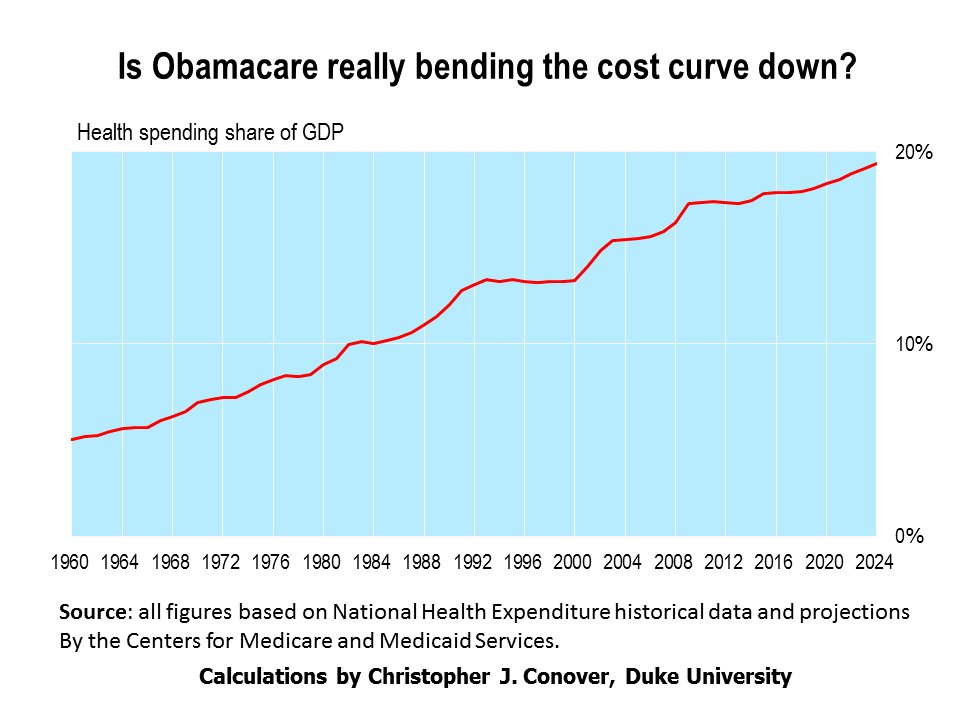
Yeah, about bending that cost curve. Something sure got bent:

"Consumers who signed up for Blue Cross Blue Shield health plans through the Affordable Care Act’s insurance marketplaces these last two years tended to be sicker and incurred greater medical costs than people with BCBS coverage through their jobs."

Surprise!

This is the manifestation of the insurance term "adverse selection." Briefly, adverse selection occurs when you encourage, and reward, riskier behavior, accomplished in this case by the implementation of guaranteed issue and immediate coverage of pre-existing conditions.

Folks with few or no health problems tend to shy away from buying insurance that they're pretty sure they won't need or use, while folks with chronic and/or expensive conditions tend to over-buy (which, of course, makes sense from their point-of-view). It's exacerbated, of course, when they're rewarded for doing so by premium subsidies.

But wait, there's more!

"Original CBO projections show 24 million fewer people have insurance today ... based on the CBO's own numbers, it seems possible that Obamacare has actually reduced the number of people with private health insurance."

That's right, not only are the newly-insured sicker, there are even fewer less-sickly folks signing up at all. In fact, the government's own  metrics belie the (always phony) claim that "If you like your plan, you can keep your plan." Obviously, that meme's been long and well debunked, but it bears repeating if only to underscore the whole train-wreck.

Cheerio!

Silly HSA Tricks

Over at LifeHealthPro, Michael Thomas reports on new legislation being proposed that seeks to update Health Savings Accounts. He does a great job of introducing the background and history of HSA's, and provides a helpful explication of this new initiative. It's a very well-done piece.

That being said, the legislation itself is stupid. It goes off in myriad directions, focuses on non-essential "benefits," and misses the opportunity to actually accomplish something useful.

The purported purpose is to expand eligibility for purchasing and definitions of acceptable distributions (expenses). As to the first, the law "allows Medicare recipients participating in Medicare Advantage MSAs to contribute their own money to Medicare Medical Savings Accounts" which they're currently prohibited from doing. Why is this stupid? Well, go find me an example of a carrier that currently even offers one of these plans.

I'll wait.

In a related section, the legislation "amends the existing law to reauthorize health opportunity accounts in Medicaid as a demonstration program." What, you didn't know that there was such a program in the first place? Don't feel too bad, the original pilot program was such a rousing success that "South Carolina was the only state applying for and approved to participate" in it, and at its peak had enrolled "only two adults and three children."

Winning!

There are a few decent ideas here: allowing one to buy over-the-counter meds with HSA funds, ducking some of the more onerous Cadillac tax issues. But they are far outweighed by the silliness of allowing "fitness programs" and dietary supplements as legit. I do recall, years ago, being asked if a hot tub qualified (the insured in question has back issues). Maybe this is the answer.

What does it miss? Access.

What do you mean, Henry?

Just this: why must HSA's be tied to a specific type of insurance plan? IRA's don't require you to have a certain job, or tie you to a specific investment plan. Why should HSA's (which are really just medical IRA's)? And why not expand the amount one can contribute? After all, if the idea is to really bend that health care cost curve down, doesn't it make sense to give folks even more opportunity to put their own skin in the game?

Sigh.

Tuesday, March 29, 2016

On "Losing" a Client

So I lost a client yesterday, and that's a good thing.

I wrote Sue's health insurance a year or so ago; her husband's on Medicare, so it was just her. She chose an Anthem Gold-level plan, and has been reasonably satisfied with it. A month or so ago she and her husband moved to Texas and asked me for help with notifying Anthem of their address change.

I pointed out that, although Anthem's BlueCard program would offer some relief, pretty much every claim she has going forward is going to be treated as out-of-network (at least initially). Plus, there may be better and/or less expensive options available in her new town. Finally, I'm a big believer in local agents, and so I offered to help her find one.

As usual, I turned to my "posse" (a loose-knit collection of fellow agents around the country whom I've been fortunate enough to "meet" over the years). Alas, I could find no one in her area. When I called to tell her this, she mentioned that her new auto/home insurance agent had recommended someone that he knew. I told her to jump on that right away: from the insured's standpoint, that's one of the very best types of referral.

Why's that, you ask?

It's a matter of simple self-interest: if the agent recommends someone whom he's not vetted and the client has a bad experience, that client's going to blame the initial agent. No one wants to take that chance, so these kinds of referrals are generally rock solid.

I offered to speak with the new guy to answer any questions about her existing coverage (it's what I do), and we did, in fact, touch base. He seemed like a nice, professional, knowledgeable guy, who'd actually found a comparable local plan with a lower rate for her.

So, a happy ending all around.

Monday, March 28, 2016

Monday LinkFest

■ First up, seven (just seven??) ways The ObamaTax has let us down. A sampling:
"1. Low enrollment. Many people would not have jumped on the Obamacare bandwagon if they had known the relatively small number of Americans who would actually be enrolled on the exchanges by 2016.

4. Lost plans. Speaking in the Rose Garden, on July 21, 2009, President Obama said, “If you like your current plan, you will be able to keep it."

Yeah, how's that working out?

■ Speaking of low enrollment, the Congressional Budget Office (CBO) has once again slashed its estimate for 2016 ObamaPlan enrollment:
"About 12 million people are now expected to have ObamaCare coverage by the end of 2016 ... Just three months ago, the office had predicted that 13 million people would have coverage."

Any bets on when it's revised downward again?

■ And now, 1,000 words neatly summarizing the two items above:


A Piping Hot Cup of ObamaCare


[Hat Tip: Ʀєfùsєηíκ]

Friday, March 25, 2016

When will they learn?

Of course, that question pre-supposes that ObamaTax proponents want to learn, of which there is scant evidence.

What makes me so skeptical?

Here:

"More people will get insured through the Medicaid expansion ... because they now see slower wage and salary growth in the future, meaning that more people will be eligible for the low-income health program."

See the problem here?

People do not "get insured" through Medicaid. They receive medical care entirely paid for by someone else. There are no deductibles, or co-insurance or premiums, and, to drive the point home, one cannot "buy" a Medicaid "policy."

It is simply income redistribution, period (NTTAWWT).

And there's a corollary effect:

"[M]ore will get insured through Medicaid, fewer are expected to get coverage through the exchanges."

As the insured population plummets, insurance companies are enrolling fewer and fewer paying customers, and of course those that do pony up are getting less and less bang for their buck as out-of-pocket costs continue to rise.

Happy days, indeed.

[Hat Tip: Ʀєfùsєηíκ]

Interesting point

Thursday, March 24, 2016

Health Wonk Review: ObamaTax Anniversary Edition

Charles Gaba makes his (impressive) hosting debut with this week's informative roundup of health care policy and policy. His very sly (and much appreciated) sense of humor is on display, as well; this one's just a joy to read.

Thanks, Charles, and kudos on a great 'Review!

Wednesday, March 23, 2016

Joe Garagiola 1926 - 2016

Baseball is a funny game.

But not today.

Happy ObamaTax-iversary!

In case you'd forgotten (heh!), today marks the 6th anniversary of the date on which ObamaCare began to be implemented.

'Nuff said.

UPDATE: via our friend Rich W, here are five charts showing ObamaCare's "success."

PARE-ing Back?

Our friend Louise Norris has written about the issue of balance billing, and advocates its (eventual) eradication. While she's a very thoughtful agent and writer, I take issue with her premise and her solution(s). Regular IB readers know all about PARE claims (these are typically the kinds of providers who join no networks and so bill pretty much whatever they want) and why they usually result in a balance due after insurance pays its part. What Louise and others advocate is forcing those providers to accept whatever an insurance carrier deems appropriate, and eat any difference.

Which sounds rather noble, until one looks at how that's handled currently, and what expansion would entail. Thanks to co-blogger Bob, we have access to a report from the Robert Wood Johnson Foundation (hardly a right-leaning outfit) which gives us an overview of how a handful of states currently handle the issue.

To our knowledge, balance billing isn't really an issue for life-threatening emergency claims; all 58 states offer at least some protection in that scenario. Where it gets dicey are non-emergency situations, and whether one's plan is a PPO or HMO model.

According to the folks at RWJF, there really isn't a lot of "there there" when it comes to how the states they surveyed handled these situations. All banned the practice for emergency situations (as do all the other states). Some applied this to both HMO's and PPO's; Florida really only locked down HMO's.

Interestingly, some states only apply the ban to providers that have previously agreed to accept assignment of benefits from the insurance carrier (which makes sense, really). If interested, details are available in that report.

But here's the rub: so what? Two things are in play here, neither of which are good: for one, as co-blogger Patrick notes "several states prohibit balance billing and we work with clients on claims where this occurs and used to have a 100% success rate of having these charges written off. Along comes ACA and now insurers say too bad."

Does anyone seriously think that's going to improve by extending it to non-emergency expenses?

And second, how do we force non-participating providers to accept less than what they've billed? This is the kind of thing that helped to create the whole Direct Primary Care movement; that is, when the insurers (and by extension, the government) begin to tell providers how much they can charge, then they're going to find a way to remove themselves from that "authority." Ever ask yourself why vets can charge pretty much what they want?

Be careful what you wish for: You might just get it.

Tuesday, March 22, 2016

Unusual Definition: Success

ObamaTax proponents like to tout its success in reducing the number of uninsured (using dubious metrics). The first problem with this, of course, is that health insurance ≠ health care . But that's only part of it:

The Bureauweenies in DC© claim that almost 13 million victims citizens enrolled in Exchange-based plans during the most recent Open Enrollment. That's up from an alleged 12 million last time 'round.

What they're not telling you is that this is basically meaningless.

Why's that, you ask?

Well:

"[O]nly 8.8 million people remained enrolled in Obamacare on December 31, 2015. That is a drop of almost one quarter from the end of 2015 open enrollment."

One step "forward," two steps back.

Funny way to define "success," no?

Monday, March 21, 2016

Apple Ooopsies

Runh ro:

So it turns out that one of the things Apple debuted today is a new medical-related app that grew out of its "ResearchKit framework," to be called CareKit.

There seems to be just one little problem:
 

Ka-ching!

Outstanding Customer Service Tricks

Every once in a while, we run into an extraordinary customer service experience, and appreciate the opportunity to publicize it. So often in life, we're quick to tell folks about poor service or rude service providers, so it seems appropriate to let others know when an experience exceeds all expectations:

Recently, a dear friend managed to screw up his computer "pretty good;" he'd been experiencing slow response times, maybe a virus or three. He made the (common and understandable) mistake of relying on one of those "let us dial in to your computer and fix it" services.

Yeah, he knows (now).

The result: not only was his computer freezing up, but he'd apparently lost (access to) his email, which was pretty critical. He called me for advice on what to do next; I recalled how glowingly my friend and colleague Roger D had spoken of DNA Computers (a local outfit) and suggested my friend seek their help.

Because he no longer drives, I picked him (and his wayward PC) up and drove him over, where he was met by several young, enthusiastically geeky young men. What was so impressive was how patient and understanding they were as he walked them through his travails, and reassured him that they were confident that they could repair most, if not all of the issues. They warned him upfront that the lost email might be unresolvable, but that they'd make every effort on its behalf.

They then quoted him a max, flat price, and told him that that would be the worst case scenario; if it turned out that they didn't need to do everything they'd laid out, they'd charge less, and if they needed additional time they wouldn't charge any more.

Over the next few days they kept in regular contact, and today I went over to help my friend hook his newly refurbished computer back up (he and his wife had already picked it up). He went on and on about how well he was treated, how happy he was with the service and attitude, what a terrific experience it was.

My friend can be fairly picky, and isn't afraid to speak his mind if wronged, so this is high praise indeed.

Kudos, DNA!

Friday, March 18, 2016

Hey, it's only (your) money

The folks at Guarantee Trust Life send along this helpful chart showing that even with (because of?) those shiny new ObamaPlans, folks are getting further and further behind the health care cost eight-ball:

As we've long noted (most recently here), it's not just the (outrageous) premiums, but the ever-increasing deductibles and co-insurance that are hurting our wallets.

And, of course, our health.

Thursday, March 17, 2016

Silly Section 125 Tricks

Sigh.

So yesterday, I got a call from a gentleman pushing a "very special Section 125 program" that basically wrapped a limited benefit ("mini-med") plan inside a group's Section 125. I'm not really sure why one would want to do that, but I didn't talk with him long enough to find out.

Why's that, you ask?

Because the first thing he said was "it's a 125 plan with a twist."

Which of course set my spidey senses tingling. And it went downhill from there:

I responded that I was concerned about the legality of such a thing, and he assured me that "oh, they've got lawyers who vetted it, and it's got a trust."

ProTip: Never - and I do mean never - use the terms "twist" and "trust" and "Section 125" together in the same month as the Internal Revenue Code, let alone conversation.

Needless to say, I bid the gentleman good luck and adieu.

Sigh.

Wednesday, March 16, 2016

Mid-week Potpourri

■ First up, Rich W warns that the new ObamaTax numbers are a lot more dangerous than we've been led to believe:

"[O]nly about 28 percent of enrollees, or 3.5 million, are between the ages of 18 and 34 -- the younger, healthier people needed to offset the costs of older, sicker ones."

That's bad news because it underscores just how unsustainable the whole system has become. Look for this number to get even worse as premiums and out-of-pockets continue to rise.

■ Talk about an understatement: FoIB Holly R sent us this link that starts out by noting that "[d]ifficult patients — those who are angry, abusive, or rude — may not get the best medical care." No kidding.

Click on through to see how patients that threaten to shoot their doctors fare.

■ This is actually two items in one. On the one hand:

"Maple syrup isn't just delicious, it could also cure Alzheimer's disease"

While you're pouring that tasty Grade A Amber on your flapjacks, don't forget to sprinkle some blueberries on 'em, too:

"Start munching on blueberries. Researchers at the University of Cincinnati say chowing down on the "superfruit" may help treat patients with cognitive impairments."

Yummy and helpful.

Tuesday, March 15, 2016

Self-service writ large

A while back, we noted with some disgust that "[t]he number of foreigners traveling to Switzerland to commit assisted suicide doubled over a four-year period." Seems that that enlightened country had made it even easier for folks to pull their own plugs.

Fortunately (for some values of "fortunate") the Golden State is making it unnecessary for those so inclined to have to book expensive airfare [ed: one way?]:

"Governor Jerry Brown signed a landmark bill into law ... [granting]terminally-ill individuals the right to die, or request life-ending medication from their physician."

He actually signed it this past fall; it takes effect early this summer.

There's a supposed "fail-safe" built into the law, requiring two doctors to agree that the "patient has six months or less to live and is mentally competent." There are some other caveats, as well.

Some folks are a bit leery that depressed patients might "doctor shop" to find providers more willing to participate. For what it's worth, California joins four other states that have legalized doctor-assisted suicide.

Yay?

[Hat Tip: Ace of Spades]

MVNHS© claims another one

It's almost as if nationalized health care schemes are designed to kill off their intended beneficiaries:

22-year-old dies of rare cancer after doctors mistook disease for pregnancy

To be fair, her initial pregnancy diagnosis was due to elevated hormone levels. But as time went by, and her pain continued unabated, one would think that her "care" providers would have at least tried to nail down a cause. By the time they finally got around to that, it was too late:

"[I]n February, doctors at Addenbrooke Hospital in Cambridge found Wright actually had adenocarcinoma— an aggressive form of cancer that affects multiple organs and was diagnosed as terminal. On Feb. 23, Wright passed away"

Well played, Much Vaunted National Health System©.