Thursday, June 14, 2018

A Midsummer Night's Health Wonk Review

Bill Shakespeare's classic wedding comedy is about the nuptials of the Duke of Athens and the (former) Queen of the Amazons, and has absolutely nothing to do with this month’s 'Review (I just liked the wordplay for the title).

Fortunately for our readers, we do have some amazing posts to share with you, so consider this your Playbill:

■ Roy Poses looks at CVS's recent "own goal" regarding donations to "a Sketchy Non-Profit."

Including exec's who (allegedly) made some pretty nasty remarks.

■ HWR newcomer Vincent Grippi offers us this interesting podcast with HWR veteran David Williams, discussing (prescription) drug pricing issues and challenges here in the US.

■ Fellow insurance blogger - and another longtime HWR favorite - Louise Norris explores the brave (not so) new world of Association Health Plans (AHPs), and what role (if any) they may play in reining in health insurance costs. As usual, Louise makes otherwise dry material quite interesting.

■ And speaking of our friend David Williams, his own submission is this fascinating post on whether or not the proposed merger between Partners HealthCare and Harvard Pilgrim Health Care is actually ready for prime time.

Will they or won't they? Time will tell.

■ Workers' Comp Insider's Tom Lynch has this take on GOP efforts to (finally?) take out ObamaCare, and what it means if their current efforts are successful. But the best part is his touchstone question: What happens if they "win?"

■ 'Review co-founder (and all-around nice guy) Joe Paduda offers a round-up of his own, including a report on Purdue Pharma's opioid issues and Medicaid's on-going problems with work requirements.

■ Friend Tinker Ready has news about the proposed CVS/Aetna merger, and the CVS plan to offer more than just urgent care services [ed: let's hope the plan is shorter than their typical receipt!]

■ Over at xpostfactoid, Andrew Sprung offers an "elastic idea" for Democrats looking to expand Medicare, from a buy-in option for near-seniors all the way to "Sanders' Big Rock Candy Mountain." Sweet.

■ And finally, our own entry, in which we offer a disturbing glimpse at the true, grisly human costs of nationalized health "care:" dismembered babies.

On a brighter note, please join us next month at Peggy's Place (on July 12th).

Wednesday, June 13, 2018

Interesting HSA news

Regular readers know that we're big fans of HSA's, primarily because they encourage more efficient use of healthcare-related dollars. After all, when one has skin in the game, one tends to be more careful about the use of resources.

One unfortunate canard, though, is that they discourage folks from spending their hard-earned savings on necessary care.

Well, thanks to the Association of American Physicians and Surgeons, we learn that this has (again) been debunked:

"Study: High-deductible Plans May Impede Preventive Care ... unless tied to HSA. "[W]e found reduction in the number of primary care visits among individuals with deductibles, particularly higher deductibles, except for those with health savings accounts."

The research, reported by the American Academy of Family Physicians, found that high deductible plans did, in fact, seem to undermine folks' use of primary and preventive care. The silver lining, though, is that those who couple those plans with Health Savings Accounts were more likely to seek out that care.

One can only imagine the (positive) effect that would redound to this were DPC subscriptions made HSA-eligible.

Tuesday, June 12, 2018

Vendor Kudos Two-fer

■ Once again, our friends at Cornerstone prove that they're not just great to work with, they're also great to work for:

"For the fourth consecutive year, Cornerstone has been awarded a 2018 Top Workplaces honor by The Cincinnati Enquirer."

In fact, they're ranked at number seven on the 2018 list, up five spots from last year.

■ Driverless vehicles have been much in the news of late. They promise to offer convenience and (perhaps) increased safety, but they also pose a challenge for the folks who insure them. The folks at Cincinnati Insurance provide some insight on this poser:


Charting the Future of Driverless Cars: Are You Ready? from The Cincinnati Insurance Company on Vimeo.

Monday, June 11, 2018

The Joys of Single Payer

Not to be outdone by the Brits, our friends (way) south of the border are bringing back the oldies:
[Hat tip: Mujahed]

LTCi News: Up & Up

As our population ages, Long Term Care insurance has become more and more popular as a cost-effective way to preserve one's hard-earned nest egg. After all, the cost of a nursing facility stay (or even at-home care) runs into the thousands of dollars a month, and can quickly eat up one's savings.

The challenge,of course, is that as we age we tend not to get healthier, and the odds of having such a claim increase each year. Which begs the question: how is this affecting carriers' bottom lines?

Well, we have one answer here, thanks to co-blogger Bob:

"Unum Falls as Long-Term Care Loss Ratio May Prompt Reserve Charge"

Um, Henry, what does this even mean?

Quite simply, their actual loss ratio was almost 10% higher than last year's (loss ratios are metrics of how much is paid out versus premiums paid). That's not exactly a prescription for long term financial stability. A big part of the problem is that those on claim for cognitive impairment (eg Alzheimer's and the like) are living longer, which is nice (kind of) for them, but a direct impact on the insurer's bottom line.

Which may mean another round of rate increases.

Or not:

Thursday, June 07, 2018

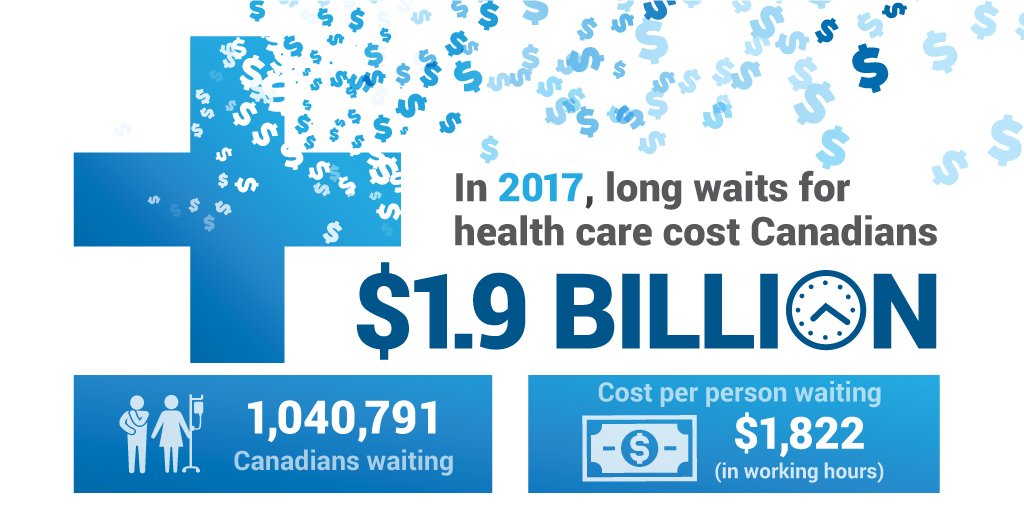
1,000 Words on Single Payer

Or, "How Much is that CanuckCare© in the Window?"

[click to embiggen]

Courtesy of the Fraser Institute.

Wednesday, June 06, 2018

Business, Interrupted

Recently FoIB tsrblke alerted us to this story:

"A fire destroyed The Southerner food truck at a charity concert Friday ... My truck caught on fire and is a complete loss"

Thank goodness the truck was insured, but as tsrblke notes, one wonders if the owners had thought to purchase business interruption coverage "to cover lost revenue."

Good question. But what,exactly, is business interruption (BI) coverage?

So glad you asked:

Briefly, when a business must temporarily close its doors due to damage to or destruction of business property, Business Interruption insurance coverage pays for business income lost while the property is rebuilt. This coverage is intended to help keep the company in business while recovery is underway.

But wait, there's more!

When Hurricane Harvey hit Houston, not just homes were damaged or destroyed. Many businesses had to close, at least temporarily, until power was restored, buildings repaired or replaced, and inventory re-stocked. Even just a few days of downtime can translate to thousands, perhaps millions of lost sales. Business Interruption coverage, generally available as part of a broader commercial policy, can help mitigate the loss.

■What's covered?
As the name implies, Business Interruption insurance reimburses losses when a covered peril forces a business to temporarily close its doors. For example, a major storm causes a power outage, and Joe's Grocery Emporium can't stay open for business. Joe is left wondering how to pay his employees and vendors, not to mention the rent and electric bills.

Business Interruption coverage is designed to help pay all of these items, for a limited time, to enable the business to re-open. The coverage is included in a BOP (Business Owner's Policy) but separate when written with a package plan.

■What triggers a claim?
Typically, there are three types of events that would result in a Business Interruption claim. First, physical damage to the business severe enough that it must temporarily close its doors.

Second, covered damage to another property which then results in preventing employees or customers from accessing the business itself.

And third, if the government closes off an area because of property damage caused by a covered risk (such as a fire or tornado).

■How does the coverage work?
First, the business owner must purchase the appropriate commercial insurance policy, which may include Business Interruption coverage or make the coverage available as a rider. Once a covered event occurs, the coverage generally requires a waiting period, often several days. Once the waiting period is satisfied, the plan will begin to pay for covered losses. The coverage is not infinite, however: typically expenses are paid for a maximum of a year. Of course, the business owner will have to provide the insurer with proof of his or her losses.

■What are the limitations?
Losses due to an unfavorable business environment aren't covered. The business owner's salary also isn't covered. It’s important to note that the policy is only going to cover actual losses sustained, and won’t pay more than the policy limits.

Now you know.

Friday, June 01, 2018

Global Insurance Alert

From our friends at Global Underwriters:

"In just a few short weeks in June and July, the 2018 FIFA World Cup is being hosted by Russia and the matches are scheduled to take place in various cities throughout the country. The excitement surrounding the every 4 year World Cup tradition, isn’t the only thing peaking interest globally. The world is closely watching as the heightened diplomatic tensions and geopolitical developments unfold in the coming weeks.

We’re starting to see more requests for International Travel Medical and Kidnap & Ransom coverage for travel to Russia. Now is the time to consider purchasing this valuable coverage, so you can have peace of mind and valuable protection while enjoying the games!
"

Global Underwriters are our go-to folks for clients traveling from, and to, the US. If you're planning a trip to the World Cup, or even just a European summer getaway, be sure to check out the various options available, all at very affordable rates.

Wednesday, May 30, 2018

More Egregious Agent Tricks

Sometimes I just have to shake my head at the lengths to which some folks will go to (try to) make a buck. Such is the case with these would-be Moriarty's:

"Southland agents arrested for fraud and ID theft in commissions scam ...  multiple felony counts of identity theft and grand theft after allegedly submitting fraudulent insurance applications with information from stolen identities"

Which netted them almost $125,000 in comp.

And a jail term.

The way it works is that some carriers offer "commission advances," whereby they pay (for example) a year's commission on a policy which has paid only a month's premium. This may be helpful to an agent's cash flow, but can come back to bite one in the tush if, say, that plan were to lapse in just a few months' time.

Or if the subsequent premiums aren't paid, which in this case they (obviously) wouldn't be.

It apparently didn't take long for the carrier to figure out the scam, and drop a dime on the perps, who look to be learning a whole new meaning to "prospecting."

I've never really understood why folks like this think these schemes will work out, long term. After all, if no one's paying the subsequent premiums, seems like the plans would lapse, and (as noted above) the advances would be forfeit. How does this make sense?

/sigh

[Hat Tip: FoIB David Fluker]

Tuesday, May 29, 2018

Tuesday Potpourri

■ First up, some interesting ways to use your HSA post-retirement, including:

• Qualified medical expenses
• Medicare premiums
• Qualified long-term care insurance premiums

And more!

■ ObamaCare's working, it's really working! And so much better than expected:


■ So how's that free health "care" working out for out Neighbors to the North
©?

Well, not so good for many of them. Via FoIB Chris we learn that:

"757 Patients Were Euthanized in Quebec Last Year, a 67% Increase"

To be fair: very effective cost control there.

Tres bon!

Friday, May 25, 2018

What's the Big Deal?

Our friend and colleague David Fluker tipped us to this Sunshine Golden* State news:


I replied that this was, indeed, a big deal, and several folks asked me why.

It's actually kind of interesting (well, to me, anyway):

Carriers in the group market - and particularly in the small group space - are often subject to something called "adverse selection." This occurs when a company buys a group plan, but only those with health issues actually sign up (or mostly those). As one can imagine, this isn't good for he carrier or,m really, the employer. A significant wand effective way to mitigate against that is to require that a minimum number (and/or percentage) of the employees sign up.

But what if Joe is already has coverage through his wife's employer, or the VA? Well, then he has what's called a "valid waiver;" essentially a "hall pass" to opt out, and not affect the group's eligibility.

But what if he has an individual medical plan instead. This gets tricky: depending on the circumstances, some carriers don't consider this a valid waiver and it does count, potentially threatening the group's eligibility (and thus whether or not the carrier will issue a plan).

So this decision by Anthem California could be a big boost to small employers looking for a group plan.

* Thanks, Bob!

Thursday, May 24, 2018

Under Pressure

Our house is on a slab, through which run the heating/air conditioning ducts. Several years ago, we experienced several days with substantial rainfall, and the ground became saturated. We were awakened one night to a series of horrific 'thumps,' which seemed to coincide with the cycling of the furnace. After groggily getting out of bed to determine the source, we determined that the groundwater had penetrated micro-cracks in the foundation and seeped into the ducts, almost filling them.

As the furnace cycled, it sent waves through the built-up water, which was the cause of the thumping. Eventually, we were able to bail out the ducts (thanks, Shopvac!) and return to normal.

Turns out, we had experienced the phenomenon known as "hydrostatic pressure." Thanks to our friends at the Cincinnati Insurance Company, here's a video explaining what that is, and its effects:


What is hydrostatic water pressure? from The Cincinnati Insurance Company on Vimeo.

Wednesday, May 23, 2018

PKD, Insurance, And You

Recently, I had the opportunity to speak with the local chapter of the PKD Foundation (PKD is Polycystic Kidney Disease, a genetically-based condition that causes cysts to grow uncontrollably on one's kidneys, to ill-effect). As one might imagine, this creates ...issues ... for folks who have the condition and would like to buy (more) insurance.

I was asked to speak to the challenges of procuring disability income and long term care insurance, so I came up with a short PowerPoint presentation: 

Take-away: Don't  assume - It costs nothing to ask!

[Special Thanks to FoIB Randy G]

Tuesday, May 22, 2018

Dental Insurance Basics

Recently, the dental insurance carrier we've linked to in our sidebar list of Product Links notified us that they're soon discontinuing new sales. Fortunately, we have a backup carrier with similar products, so no big deal. But it reminded me that we haven't talked about how individual dental insurance coverage works. Please keep in mind that this information is fairly generic, you should absolutely see your own plan documentation for specifics.

Dental insurance is a way to transfer some of the risk of tooth-related expenses to an insurance company. Be aware that this is often a dollar-for-dollar transfer, and may actually mean only a discount in actual dental fees.

Dental health often gets short shrift when discussing insurance. I once had a client that died of a toothache, so the subject is more serious than one might at first believe. There are generally two types of individual dental coverage: insurance plans and discount plans.

Full blown dental

Dental insurance plans are available from a number of carriers, all of which have their own plan design, network of providers (if applicable) and pricing strategy. But there are benefits that most (if not all) carriers cover, and we'll consider these.

Benefits tend to fall into one of three broad categories: preventive, basic, and major. Pricing is generally per person, with a maximum family premium.

■ Preventive services
These are generally covered at 100%, and include items such as semi-annual routine exams and cleanings, and fluoride treatments for juveniles. Sometimes, this category of benefits will include periodontal (gum health) exams, as well.

■ Diagnostic and Basic services
These services are often subject to a deductible, and are more intrusive than preventive care items. Fillings are generally considered in this category; one new technique is called "composite," which replaces older-fashioned metallic fillings with ones that more closely match actual tooth material and color.

X-rays are also often assigned to this category. Many practices have moved to digital versions of these cameras, meaning that results are available instantly.

Simple extractions can also fall under this definition of covered services.

■ Major services
In addition to a deductible, this level of services is usually subject to co-insurance (often 50%), which requires the patient to more directly share in the cost of care. Root canals are found in this category, as are dentures and crowns. Today, the latter may be fabricated in the dentist's office for immediate installation.

Onlays and space mantainers, surgical extractions and other dental surgeries would also fit in this category and are usually subject to an annual maximum benefit amount. They almost always require one to be insured for at least a year before these benefits are even available.

Discounts ahead

As one might imagine, dental plans such as those described above can be expensive, and may be off-putting to budget-conscious consumers who nonetheless acknowledge the value and importance of dental health. A dental discount plan may be the ideal product for people in that situation.

■ How they work
Dental discount plans generally have no waiting periods, deductibles or annual maximums. They are simple to understand because they're not truly insurance products, but offer access to dental care providers at a reduced cost.

Typically, one pays a fee for access to a network of dentists and other dental-related providers willing to provide service at a reduced rate. These services can range from simple cleanings to gum surgery and dentures. One thing to keep in mind is that, unlike a traditional dental plan, payment for services rendered is due at the time of the visit; there is generally no bill-me-later option (although payment plans may be available for major benefits).

One More Thing

Most of these plans don't cover orthodontia, but one may be able to use a Health Savings Account for those services. That means Uncle Sam is helping to pay for your son's or daughter's braces, which helps reduce your net cost.

Dental insurance isn't for everyone, but it can be a cost-effective way to shift at least some of the dental health burden to a third party. It's important to know, however, exactly what's covered, and at what level. Discount plans, while less comprehensive, may offer a value in reducing net out-of-pocket dental expenses.

Monday, May 21, 2018

Or Else ... What?

Our friend Jeff M sent us this intriguing (and, frankly, puzzling) item:

"Treasurer directs Blue Cross NC to cut state health plans’ rates by 15 percent"

As I mentioned in the title of this post, what possible stick could the Treasurer wield to enforce this edict? One supposes that he could direct his staff to simply not pay the premium - that'll show 'em! The problem there is that then the policy gets cancelled for non-payment, and suddenly there are a lot of newly uninsured  North Carolinians.

I reached out to FoIB Michael Bertaut, an economist with Louisiana Blue Cross, for his take:

"This is pretty fascinating....”oh every Doc and hospital is getting a 15% pay cut on the entire state group!, screw with us and we’ll pay you Medicaid rates!”

I just don't see this ending well.

Friday, May 18, 2018

CAHU Comes Through

Lord knows I've had my issues with agents' associations, but sometimes they really do get things right.

Case in point: the California Association of Health Underwriters.

Seems that CAHU [gezundheit!] is sponsoring  "a Health Insurance Awareness and Agent Awareness Campaign" to explain to people the folly of government-run health "care."

From CAHU:

"As the experts in our industry we have an obligation to educate consumers and employers regarding health insurance. This includes helping to shed light on what all of these terms in relation to “Single Payer” actually mean. The general public are hearing very different terms used interchangeably."

Absolutely spot on.

The event is next Tuesday (May 22nd) in Sacramento (click here for details).

[Hat Tip: FoIB Shari G]

Thursday, May 17, 2018

May Health Wonk Review is up

Jason Shafrin, our favorite health care economist, hosts this month's compendium of health care polity, policy and wonkery.

Instagram-style.

Really, and quite well done!

Wednesday, May 16, 2018

Midweek Trifecta

Trying out something new, a variation on our "LinkFest" posts. This time out, focusing on 3 new (well, to me, anyway) insurance products:

■ The folks at Pacific Life have rolled out an intriguing underwriting coup:

"Up to $500,000 Life Insurance Death Benefit with No Medical Exams"

Of course, there's still an application and, one presumes, medical records required, but a half million of cover without blood or urine (or more)?

Nice!

■ Our friends at the General Agent Center have a new "mini-med" plan available to supplement existing major med policies. What's interesting about this offering is that it covers:

"Office Calls -  ANY licensed practitioner of the healing arts (Physician's, Chiropractor's, Acupuncturist's, Naturopaths)"

Generally, plans like this require one to see an MD or similar, have never seen one that explicitly covers acupuncturists.

Cool.

■ I must admit, this one looks awfully familiar, but new packaging may do wonders:

"[T]here’s a different kind of plan that could solve problems for both fully-insured plans — which are better for large claims — and self-insured plans — which are better for small claims. It’s called a national plan."

By grouping together employers from all over the 58 states, they appear to stop-loss carriers as one mega-employer, with concomitantly lower rates.

Hunh.

Tuesday, May 15, 2018

LavaCare©

So it looks like even more fissures have opened up as Hawaii's Kilauea volcano continues to spew and smoke. More than a couple of dozen homes have already succumbed, and more are expected to be damaged or destroyed.

Here in Ohio, we get asked a lot about tornado, flood, and even earthquake coverage, but when it comes to volcanoes, well, let's just say that no one comes here for the tropical clime.

But that hasn't stopped FoIB Jeff M from helping out by tipping us to this:

"One possibility is the Hawaii Property Insurance Association, a nonprofit collection of insurance companies created by state lawmakers in 1991 to provide basic property insurance for people who are unable to buy coverage in the private market"

Turns out that lava insurance is a lot like flood insurance (and not just because they both "flow"). Turns out that:

"Few insurance companies will issue policies for homes in Leilani Estates because it is in an area deemed by the U.S. Geological Survey to have a high risk of lava."

Which sounds a lot like "flood plains," no?

And just as there are special plans available for flooding, it seems that the HPIA can help out with lava.

But, Aloha State citizens best not count on their regular homeowner's policies:

"If policies specifically exclude lava damage, the fire coverage will not apply."

As always, we strongly suggest consulting with your own agent to see if you're covered, or can be.

Oh! And:

Monday, May 14, 2018

Gruesome MVNHS© "Tricks"

[A rare content warning: The procedure described in this post is not for the faint of heart. HGS]

Britain's Much Vaunted National Health System© has a sordid history of baby-killing (most recently here), but these are children that have at least been born. This item, which I took a long time considering whether to even post, is egregious even by MVNHS© standards:

"A premature baby was decapitated inside his mom's womb when a doctor in Scotland detached his body from his head during a botched birth."

On the one hand, this is tragic, but it's probably very difficult to get just the right amount of force. And had the process stopped there, this would have been a horrible mistake, but at least understandable.

What happened next, though, is indefensible, and underscores the complete lack of compassion (let alone oversight) rampant in such national health "care" schemes:

"[T]he first-time mom was then forced to undergo a C-section to remove the head — which was sewn onto the tot's body so she could hold him and say goodbye."

The Political Hat (who tipped us to this travesty) paraphrased it thus: "Sorry I killed your baby, but here... I sewed its head back on so you can give it a kiss before we throw it in the furnace."

Indeed.

Friday, May 11, 2018

End o'the Week ThoughtLinks

For your intellectual consideration:

■ From FoIB Randy G:

"Louisiana's Department of Health is preparing to send eviction notices to about 37,000 nursing home and other long-term care residents who could lose Medicaid coverage under the current budget."

Turns out, the Pelican State Governor is looking for some significant budget cuts from state legislators, and this is one of the various tools he has available to pressure them to  make good.

Or is it?

Another FoIB, Michael Bertaut (one of our favorite health care economists) lives and works in Louisiana, and offers this counterpoint:

"Actually, those notices are required under federal law anytime a legislative budget stream is within 90 days of being exhausted. Everyone here knows a special session is less than a month away and it will all be fully funded. The letters are simply a CMS requirements."

Imagine that!

■ Next up, this item from FoIB Steve Downey (we are truly blessed to have so many friends):

"A new study finds that health insurance premiums have been undermeasured, which possibly helps explain at least part of the reason why wage growth has been so paltry with unemployment so low."

That is, there seems to be a correlation between the fact that, although unemployment is at an historic low, our paychecks don't seem to have been keeping pace.

As I pointed out to Steve, this is #OldNews - our readers have known this for a very long time:

"When Joe was hired, his employer budgeted $60,000 for Joe's compensation; $50,000 is paid to Joe as wages, and the other $10,000 is sent to the insurance company and various government agencies," etc.

When health insurance premiums eat up increasingly large fractions of that budgeted amount, Joe's going to feel that directly in his wallet.

■ I had lunch yesterday with some old (well, long-time) friends, one of whom is already retired (lucky her!) and one who's getting close. The talk turned, of course, to Social Security; Pam had recently consulted an outfit that counsels folks (for a fee, of course) on how best to "tune" their Social Security timing and amounts. As it turns out, she'd met with the folks at Social Security Solutions. You can read about them here (Hat Tip: Cornerstone).

Thursday, May 10, 2018

Bait & $witch, Part 2

In Part 1, we revisited the story of Sally and Dave, who had decided last summer to ditch their grandmothered major medical plan in favor of a Health Care Sharing Ministry. While searching for alternatives, they ran across a Texas-based agent with ... questionable ... claims and offerings. The first plan she offered turned out to be a standard issue Short Term Medical (STM) that didn't actually match what she'd originally promised.

But along with that product, she also sent along information on a mini-med (limited benefit) plan. Like the STM, this is also non-ACA-compliant, and once again she failed to mention this crucial fact. Here's part of her pitch:

"Philadelphia American Plan Level 2 Highlights ... Doctor's office visits are approximately $25... (plan pays $60 after PPO network discount) ... Plan pays for outpatient tests like blood tests, MRI's, immunizations, x-rays, etc. - (You receive the PPO discount plus plan pays $20 to $350 per test)" and the (impressive) list goes on.

I have no real objection to these cash plans (indeed, they used to be fairly popular), but again, she's pushing this as an ObamaPlan replacement without mentioning the pitfalls, or even that this is not a major medical plan at all. Yes, Sally should read the brochure that the agent attached, but therein arises another major problem: it also fails to disclose that it's not ACA-compliant (and remember, she'd becoming off a product that is).

Now here's where it gets really egregious: turns out that the brochure the agent sent was incomplete, and omitted two rather important caveats found on subsequent pages:

Pre-existing conditions are specifically excluded for the first year, and there's a laundry list of "Exclusions and Limitations."

This is beyond the pale.

Oh, just how do we know this? Because co-blogger Bob found the actual, complete brochure which included these rather significant items.

In fact, this story has actually evolved from "Bait-and-Switch" to "Egregious Agent Tricks."

How's that?

Well, the email also included the agent's "3 part guarantee:"
Part 1- Our 100% Satisfaction Guarantee: If you are not 100% satisfied with the company you select, we will gladly place you with another company of your choice and if there is an application fee, we will cover the cost up to $25.00.

Part 2- Meet or Beat Rate Guarantee: After we find a plan that meets your needs and budget, if you find another company offering the identical coverage for less, we will meet or beat any price.

Part 3- No Obligation Guarantee: All of our plans are month-to-month with no long-term contracts. So you can rest assured that you are never trapped in a long term agreement.
Co-blogger Patrick picked up on this right away:

"Did you see the "3 part guarantee" at the end of the email? Who can actually offer a meet or beat guarantee? And never mind the fact that every insurance contract I've written is always month-to-month based on paying on time."

Indeed. First, the promise to find alternate coverage is problematic: these are all medically underwritten, so if one develops a pre-existing condition in the meantime, what then? Also, the promise to pay any "fee" seems seems to be skating awfully close to the rebating line. And the "meet or beat" promise is silly: rates are rates (unless we're back to rebating...).

All in all, methinks that Sally and Dave dodged a major bullet.

Wednesday, May 09, 2018

Bait & $witch, Part 1

Regular readers may recall the story of Dave and Sally, (now former) longtime clients who ditched their Medical Mutual grandmothered plan for the (allegedly) greener pastures of a Health Care Sharing Ministry. As I told them last summer:

"Don’t blame you. I actually know someone who’s in one of these and is pretty happy with it."

So, fast forward 10 months, to yesterday:

"Medishare is not working out so well for us.  What are our healthcare insurance options?  I looked on Medical Mutual's site and it looked like they might not be offering individual policies anymore.  I'm hoping you have a good idea!! - Thanks, Sally"

Before I could reply, she followed up with a question about a plan she'd come across on-line. Well, actually, the plan came across her:

"Hi, I noticed that you were recently online looking for health insurance quotes. I have a much better way to obtain a low cost brand name major medical health insurance plan... with a low or zero net annual deductible!"

Wow, sounds great, and Sally wondered if I had access to it and what I thought of it.

Well, maybe, and I'm willing to take a look:

"United Healthcare currently has the best rates of any major medical carrier on their medically underwritten health plan. If you are in reasonably good health, this plan offers substantially better benefits at a much lower cost than any other health plan."

Oh, so a UHC plan. Okay, decent carrier, decent plans and prices in general, but no ObamaPlans, and this one sounds like a short term medical plan, which we do have access to and like. But then there's this:

"United Healthcare Major Medical Plan with Deductible Eliminator"

Hunh. I suppose one could call a Short Term plan "major medical," but that certainly implies a lot more than I would be comfortable with. But what's this "Deductible Eliminator?"

Ah:

"Deductible eliminator GAP supplement pays 100% of medical expenses subject to your deductible in the hospital, and 50% of expenses subject to your deductible on outpatient expenses."

Now that doesn't seem familiar, but maybe I missed a memo, so off to the UHC quoting site. Nope, no "Deductible Eliminator" here.

Hmmm, what to do now?

So, I reached out to our friends at Cornerstone, who took one look at the email and referred me to UHC's home office. Who were quite puzzled as well, since they had no idea what this agent was pushing, but it certainly wasn't one of their products. I thanked them, and promised to keep them in the loop.

By this time, I'd received a follow-up email from Sally:

"I am going to use the sharing plan more effectively.  I found that if I lower our deductible from $10,000 to $7,500 our premium only goes up $18 a month! I'm thinking this is a better option that anything else right now."

Okay, I get that. But I took a chance and asked if she'd mind asking for more details on this "other" plan, and she readily agreed to do so. Here's what the other agent sent:

"Hi [Sally], Here is the info about the United Healthcare major medical plan plus another popular plan from a top selling carrier ... United Healthcare Term Major Medical Value Select A."

So, just as I had suspected: a short term medical plan. I'd like to think that her misrepresentation of it was a typo rather than intentional.

Seems like there's something missing though, no? Where's that fantastic (literally, apparently) "Deductible Eliminator?"

And something I think is even more appalling: the lack of disclosure that this is, in fact, a Short Term Medical plan and thus not ACA-compliant. This is critical for a number of reasons:
■ The plan doesn't cover pre-existing conditions
■ It leaves them subject to the fine/penalty/tax (which is a double whammy in this case, since they'd be coming from an ACA-compliant Sharing Ministry, which exempts them)
■ These plans aren't renewable, and currently have a 3 month maximum term
There's actually more, but we'll cover that in Part 2.

Stay tuned....

Monday, May 07, 2018

Top o'the Week Linkfest

■ Back in March, we reported that the IRS had decreased this year's maximum HSA contribution, limiting families to $6,850 for 2018. Well, the folks at Ballard Sphahr tip us that:

"The IRS has announced that it will restore the family deduction limit for HSA contributions to $6,900 for 2018."

Hey, $50 is $50.

■ I've long had an issue with tying one's credit score to one's auto and home insurance (I know, whistling in the dark), but what can you do?

Well, the folks at The Zebra (seriously!) have "received a U.S. patent for their proprietary Insurability Score™ ... a free, first-of-its-kind score which decodes for consumers what is affecting their individual insurance risk, by how much, and what they can do about it."

Score one for the little guy.

■ Great news from FoIB Holly R:

"Israeli scientists at Ben-Gurion University of the Negev and Soroka University Medical Center in Beersheba announced that they have developed a new non-invasive method to detect early breast cancer more accurately, using commercially available breath and urine tests."

This seems significant, and potentially less expensive (and awkward) than current methods.

■ Over the years, we've blogged many times on so-called "Grandmothered" plans. I kinda liked that term, but it's a little unwieldy and not necessarily all that descriptive. Well, the good news is that I just learned a new term which solves that problem: "Keep What You Have (KWYH)" plans. Same concept, better descriptor.

The bad news is that it's about to become a moot point:

"After careful consideration, we will no longer offer Aetna and Coventry transitional relief plans (also known as Keep What You Have - KWYH - plans) after December 31, 2018. When we began offering KWYH plans four years ago, we did so understanding that these plans were to help ease the transition to Affordable Care Act (ACA) plans and not a permanent alternative."

/sigh

Thursday, May 03, 2018

May is DIAM

As in Disability Insurance Awareness Month:


[Hat Tip: Illinois Mutual]

Wednesday, May 02, 2018

Thought experiment

Is it possible, and bear with me now, is it possible that these two facts are (somehow, inexplicably) related?

Ca$h is King

So, last month we noted that New Hampshire was experimenting with a novel approach towards incentivizing price transparency. One of the challenges is that, absent skin in the game, a lot of folks just don't see the value, (or want to put in the effort). But Granite State employees now do have a reason to shop around:

"[A] school nurse who is covered through New Hampshire's state employee health plan, found that choosing a certain facility scored her a $50 check in the mail."

And the idea seems to be catching on:

"The Maine Right to Shop law begins by giving patients direct access to price information, enabling them to make informed decisions about costs of their care."

Actually, that's not true: it "requires health insurance companies offer plans that allow patients to shop for comparable services and provides incentive for them to peruse the healthcare market for treatment that best fits their budget." Plus, whatever savings are realized are split between the carrier and the insured.

This also has potential:

"[A] third key feature of the Maine law allows out-of-network providers to compete for patients on a level playing field ... you can see any provider you want out of network, as long as they are lower-cost."

I like the concept of this approach, but I wonder how carriers will be able to process these kinds of claims. That is, whatever is saved on care may be eaten up by admin costs (and thus) higher premiums. And I'm not the only skeptic:

"Until providers are incentivized to compete for patients based on both the cost and quality of care, the massive waste of resources produced by this predictable market failure is unlikely to be remediated."

Long time readers will recall that I've always been a fan of the 58-state laboratory model, so I'm very interested in seeing how this works out.

[Hat Tip: David Whelan]

Tuesday, May 01, 2018

What to make of this

Shot:

"ObamaCare Could be Driving People to Drink, Study Finds"

The study apparently found a strong correlation between the effects of ObamaCare and increased alcohol consumption.

Which is hardly surprising, really.

[Hat Tip: Ace of Spades]

Chaser:

"Georgia doctor allegedly threatened to 'slit' employees' throats, 'cut' worker's head off, 'roll it down hallway'"

In case you were wondering, it's R45.6.

I did not know this

We've blogged before about the blatant sexual discrimination inherent in the ObamaTax's EHB (Essential Health Benefits) schedule:

"So for all this talk about covering birth control convenience items and mammograms (to name but two), there is no corresponding requirement to cover, say, prostate exams or even STD screening for XY'ers."

This includes, by the way, male birth control items.

But in some states, that's changed. The folks at UnitedHealthcare inform us that:

"The IRS knows that several states have recently adopted laws that require certain health insurance policies and arrangements to provide benefits for male sterilization or male contraceptives without cost sharing [eg "free"]."

This was news to me (also, anyone know which states these would be? Apparently my google-fu is lacking today).

In the event, this created a problem for folks who had (what they thought were) HSA-compliant plans:

"A plan that provides male sterilization and male contraceptive benefits without cost sharing or with a deductible lower than required under Section 223, is not an HDHP, even if the coverage is required by a state." [emphasis added]

Which means that if you're fortunate(?) enough to live in one of these states, and own such a policy, you're prohibited from contributing to your HSA.

Ouch!

The good news is that the Bueauweenies in DC
© have graciously consented to (temporarily) waive that restriction, at least until 2020.

What would be even better would be to require that the ACA actually conform to the 4th Amendment, and either add male contraceptive (and other male-specific) coverage, or do away with such cover altogether.

Hey, a boy can dream, no?

Monday, April 30, 2018

Stunning LTCi News [UPDATED]

[Please scroll down for update]

Today's Long Term Care insurance (LTCi) plans generally max out at 5 or fewer years of claims, and at a certain dollar limit ("bucket of money" concept). But back in the day, one could buy a policy with no such limits; these were called "unlimited" plans.

We actually still have a couple of those on the books.

It's been a while since carriers have offered these, and one can imagine why.

But if you can't, then I recommend this item by FoIB Allison Bell over at ThinkAdvisor:

"[O]ne male policyholder who has received about $1.6 million in LTCI benefits, over a period of 9 years and 10 months."

This gentleman paid in about $56,000, and has (thus far) received almost 30 times that in benefits.

Heckuva deal.

UPDATE: I've been reliably informed in the comments that (at least) one carrier, National Guardian Life, still offers the "unlimited benefit" option.

Nice - Thanks, Scott and Tom!

Saturday, April 28, 2018

Baruch Dayan HaEmet

The Much Vaunted National Health Service© wins again.

For certain values of "win."

Alfie Evans dies after long-running legal battle as parents left 'heartbroken'


Friday, April 27, 2018

Customer Service ProTip

When you want/need customer service, don't curse at the agent.

One would think that this is obvious, but yesterday a former customer called asking/yelling/complaining about an older long term care policy. But he didn't make that clear to the receptionist, who transferred the "gentleman" to one of our auto/home agents, whom he began to berate and curse. She tried valiantly to ascertain what he needed, and finally understood that it was about his LTCi plan. She told him that he needed to talk to me, but that she wouldn't transfer him until he'd calmed down.

He continued to curse at her, so she hung up, and then buzzed me with a heads' up.

Sure enough, this rocket surgeon called back, and demanded to talk with me. I had already decided how to handle him. He immediately started in, insulting the CSR. I told him that I didn't appreciate his cursing my colleague, and that I would give him the phone number he needed and then I expected never to hear from him again.

At which point he very deliberately said "f*ck you" and hung up.

Without getting the information he needed.

Genius!

I have decided that if he calls back, he will be subject to my (just made up and completely arbitrary) $100 consulting fee, payable in cash, in advance.

Hope he calls.....

Thursday, April 26, 2018

Another $Million Patient

Last year, we reported on a Wellmark insured who was running through $1,000,000 a month in claims. In that case, the patient was a hemophiliac, and his treatment was obviously quite expensive.

It never occurred to me to consider the third party in that scenario: the drug company that made and sold the med(s) used in that treatment.

Flash forward (almost) a year, and FoIB Holly R alerts us to another, similar case:

"Olive-McCoy, 44, has hereditary angioedema (HAE), a life-threatening disease so rare that many doctors have only read about it ... the price of just one of Olive-McCoy’s drugs will be about $600,000 this year ... she has received hospital bills for more than $1 million"

Oy.

So first, we certainly wish Mrs Olive-McCoy well, and hope that her continuing treatments prove successful. But this post isn't really about her: it's about how "Big Pharma" actually engages in a win-win strategy with cases like this.

And yes, there certainly are other such cases:

"Pharmaceutical companies donate to independent charities that cover drug co-pays and, in some cases, health insurance premiums so that financially needy patients such as Olive-McCoy can afford the best health-care plans and get the treatment they need to survive."

Very generous of them, but one wonders "why?" Companies are in business to make money, and are accountable to their stakeholders. So why all this charity?

Well, one reason would be good will: folks like and admire companies that engage in this sort of behavior.

For another, it's good business:

"Patients such as Olive-McCoy are extremely valuable to drug companies. Costs of treating rare diseases averaged $140,000 a year in 2016 ... a pharmaceutical company’s $1 million donation to a charity for patients with rare diseases can generate up to a $21 million return in drug reimbursements."

That's a heck of an ROI, no?

But so what? If the patient gets the treatment they need, at little or no cost, then what difference does it make if the company that provides that treatment makes out, too?

Well, that's a pretty picture, but leaves out a critical detail: none of this is "free;" that is, someone pays that $21 million.

Care to guess whom?

Not saying that's necessarily "a bad thing," but it is something to consider.

Wednesday, April 25, 2018

Stupid DPC Tricks

I'm beginning to see why Direct Primary Care continues to remain a blip on the health care radar (comprising 3% of practices, it's basically a rounding error):
This is just silly: why would an insurer care how much that hypothetical MRI cost in this example? It's not like they're the ones paying for it. And if the insured has already met their deductible, the carrier has a vested interest in encouraging its insureds to find the lowest price.

I'm becoming less and less enamored of this health care delivery model every day.

Wednesday Weirdness

■ Shot:

Our friend Dr Emer Jose tips us to this breaking news:

"Drunk People Are Better at Creative Problem Solving"

That headline is, perhaps, a bit misleading, since the study sampled men exclusively. Still, interesting analysis.

■ Chaser:

From the "Where there's a will, there's a way" Department comes this heartwarming story of a vet whose male bits, which had been blown off by a roadside bomb while he was deployed in Afghanistan:

"Veteran receives penis and scrotum transplant in surgery doctors say is a medical first"

To be fair, this was the first surgery of its kind here in the US; nevertheless it's nice that, at least in this instance, our servicemembers are receiving decent care.

Tuesday, April 24, 2018

A Happy Camper

Well, patient, anyway:

Recently, I've had two occasions to be treated by Dr Nava at Medix Urgent Care here in Warm & Cheerful Centerville (Ohio).

The first, a few months ago, was flu-related; that is, I had it. I finally gave in to The Better Half's "suggestions" and headed over. I had never been there before (to the best of my recollection, I've never been treated at any urgent care before) so I didn't know what to expect. After signing in, filling out the intake form and a scan of my ID and insurance card (I could have opted for cash, but chose not to), I had a short (maybe half-hour?) wait until I was seen. Dr Nava was warm and caring, and when I explained that my wife's Primary Care had diagnosed her with the flu less than 24 hours earlier, she knew the score. I collected up my Tammiflu scrip, and headed off to the pharmacy.

All-in, maybe an hour-and-a-half's time and I was back at home, in bed and recovering.

Last week, I developed a rather ugly stye on my eyelid. I really didn't want to seek medical attention for such a trifle, so I tried the warm compress thing. And the warm teabag thing. And the antibiotic ointment thing. When I found myself reaching for the x-acto knife I knew the time had come to return to Dr Nava (yes, we have a Primary Care, but I really wanted to just get this done and over with as quickly as possible). She recognized me from my flu adventure, and took a look at the stye. When she learned that I'd been with the hot/warm compresses for at least 4 days with no noticeable results, she suggested we try brute force, and then a prescription anti-biotic.

A few seconds later, stye is mostly gone, and I have the ointment, and instructions to continue the compresses for a little while to make sure it's truly all cleared up.

I really can't say enough good things about Medix Urgent Care or Dr Nava. Great care, great folks.