Monday, April 23, 2018

Medi(s)care heads' up

Identity theft has become an ever growing problem; most folks think it pertains primarily to credit cards and the like. But your Visa info isn't the only valuable item in your wallet: in an effort to stem the tide of health care fraud, the folks in DC have (finally) followed their own rules and changed the face of Medicare ID cards:

"Millions of people 65 or older will soon get new Medicare cards to prevent identity theft ... Social Security numbers aren’t being printed on the new cards. Instead, they will contain 11-digit personal identifiers with numbers and letters"

Which makes sense: previously, one's social security number doubles as one's Medicare ID (which became a big issue, too). As co-blogger Kelley poijnted out several years ago:

"According to the article, doctors do not need your social security number to bill. That is correct; however, we do need your social security number if you choose not to pay your bill and we have to turn you over to collections."

Yeah, those pesky doctors and wanting to get paid for services rendered. The point, though, was that folks were concerned about identity theft being helped along by having one's social security number on their Medicare card.

So here, at least, the government is addressing the issue, however late to the game it may be.

That's the good news.

The bad news is that nogoodniks have already begun to find ways to exploit this new development:

"But now con artists are cold calling seniors around the U.S. about the new cards ... trying to steal seniors’ Social Security numbers, bank account numbers and credit card information."

So what's the best way to fight these crooks?

Well, Indiana’s Senior Medicare Patrol program director Nancy Moore says "People need to know Medicare won't call you. They only operate via U.S. mail, but the scammers are very persistent."

Looks like "Just hang up" is the new "Just say no."

Friday, April 20, 2018

The MVNHS© Giveth, and the MVNHS© Taketh Away

A few weeks ago, we reported that the Much Vaunted National Health Service© had granted not-quite-two-years-old Alfie Evans a (temporary) reprieve:

"Alfie Evans’ Life Support Won’t be Switched Off, Delayed After Pope Francis Intervenes on His Behalf"

And it's critical to remember that his parents were willing to foot the entire health care bill themselves (likely with a little help from their friends).

Well, it seems that the poor toddler's time has, in fact, now run out:

"UK Supreme Court declines appeal from parents of ill toddler"

And so the plug will be pulled, and little Alfie will be gone (but certainly not forgotten by anyone with a heart).

Here's the thing: while reasonable folks could disagree about the utility of further treatment (he's "in a "semi-vegetative state" as the result of a degenerative neurological condition"), and it could further be argued that public health care dollars pounds would be wasted, in this case it's actually cost the MVNHS© more money to fight his being flown elsewhere for treatment at his parents' expense.

But hey: Free health "care."

Case Study: Life plus LTCi

So, working on an interesting case for a long-time client. Doris is in her early 60's, has an existing Universal Life policy but is looking at replacing it with a new plan that would include both life and long term care coverage (please don't ask why she's replacing a perfectly good UL plan; she apparently has her reasons).

After some discussion, we've narrowed things down to 2 (well, technically 3) options. All include $250,000 of life insurance and $5,000/month of long term care benefits:

Option 1: Term life + Stand-alone Long Term Care (LTCi) plan

15 Year term + LTCi = $4,551/year, or
20 Year term + LTCi = $5,189/year

The stand-alone LTCi plan offers 3% inflation protection and is Partnership-compliant; benefits payable for up to 48 months.

Option 2: Hybrid Guaranteed Universal Life/LTCi has a 50 month benefit period, and is built on an indemnity chassis (no receipts or invoices to submit past the initial claim form). On the other hand, it has no inflation protection and is not Partnership-compliant. On the gripping hand, the life insurance pays someone if there's no long term care claim (to her age 120!). The annual premium for this plan is $5,000 (Thanks to commenter Scott O who pointed out this omission - Mea culpa!)

There are a few other details, of course, but that's the gist.

So which option will she pick? I have no idea, but would be interested in our readers' prognostications (and feel free to explain why in the comments section below):

Thursday, April 19, 2018

Spring has Sprung!

And so has this month's Health Wonk Review, with a wonderfully fresh variety of posts on health care wonkery.

Louise Norris hosts, offering items ranging from "rumblings at CMS" (yay Silver plans) to the horrendous opioid crisis, not to mention the state of Medicaid (oops, mentioned!).

Do head on over for a great bouquet of interesting topics.

Wednesday, April 18, 2018

Tort reform, MVNHS©-style?

As previously noted, government-run health care schemes like the Much Vaunted National Health System©  have never really managed to rein in health care costs:

"It's kind of funny that their data actually shows real socialized medicine (UK NHS) has annualized cost growth higher than that in the US."

But co-blogger Mike tells us that they're at least trying (for certain values of "try"):

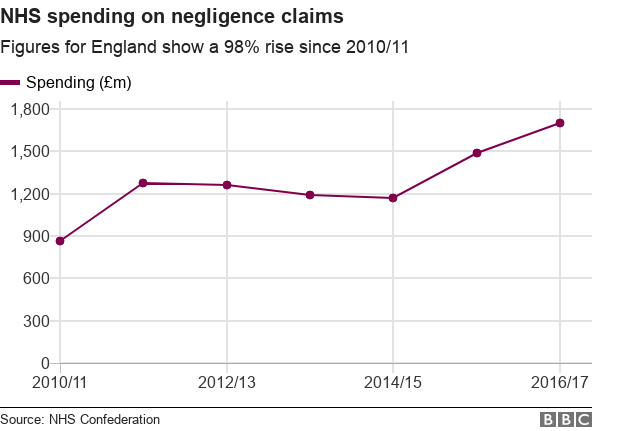
"Health leaders have written to Justice Secretary David Gauke urging him to reform the payout system for negligence claims against the NHS."

Seems that all those (costly) mistakes (such as leaving patients "dying prematurely in corridors") have begun to add up. A pound here, a pound there, and pretty soon you're talking real money:


[click to embiggen]

Yikes!

Monday, April 16, 2018

HHS makes its move

Via email from our friends at Cornerstone regarding next year's individual health insurance market:

The Bureauweenies in DC
© have published their "Notice of Benefit and Payment Parameters for 2019," which includes another reprieve for Transitional ("Grandmothered") plans for another year, as well as info on:
• Qualified Health Plan (QHP) Certification Standards
• Exemptions
• Risk Adjustment
• Advance Premium Tax Credit (APTC) Program Integrity
• Special Enrollment Periods (SEPs)
• Medical Loss Ratio
Among other items. There's also additional guidance on those underwhelming SHOP plans (oh, goody).

Interested (or insomnia-stricken) readers may click here for the not-so-gory details.

Wednesday, April 11, 2018

More Rocket Surgery from the MVNHS©

So, underscoring once again that ("free") coverage ≠ care, the Brits' Much Vaunted National Health System©, FoIB Sally Pipes tips us to this item:

"Megan flew to Istanbul for private surgery late last year, having been told she faced long delays for an operation to fix the deformation of her spine, which was causing her problems breathing."

As we know, the bureauweenies who run the MVNHS© aren't too keen on the next generation, so I was actually surprised that the young lady was allowed to travel elsewhere for potentially life-saving treatment. Perhaps this was due more to the fact that she's Irish, not English.

And adding insult to injury, we learn that these kinds of national health care schemes don't actually rein in costs:


Ooops.

Monday, April 09, 2018

Told ya so!

Back in late '16, we pointed out that "going bare" had begun to make sense since health insurance had become too expensive to use:

"It might be a ticket to get you into certain medical facilities, but in these days of narrow networks, it will keep you out of others."

Believe it or not, it's gotten worse:

"Obamacare is now so expensive it keeps patients away from their doctors"

And, I would add, their hospitals and specialists, as well.

As Heartland Institute's Justin Haskins points out:

"In a recent survey ... 47 percent of those surveyed said they chose within the past 12 months not to see a doctor or dentist for a routine checkup ... because of the high costs associated with healthcare."

But how could that be; after all, annual physicals are "free."

Well, except for that whole pesky thousands-of-premium-dollars-later thing.

And then there are the non-routine costs, with additional out-of-pockets in the thousands (often tens of thousands) of dollars.

The point, of course, is that the ultimate end-goal of ObamaCare has always been  Single Payer; by that metric, these unworldly prices are features, not bugs.

Definitely click through to read the whole thing.

[Hat Tip: FoIB David Fluker]

Friday, April 06, 2018

CanuckCare© Off the Rails

Back in Aught Nine, we noted that "[a] group in British Columbia has offered medical waiting-list insurance to members whose government treatment is on hold."

Well, turns out that the folks in charge of Canadian health "care" haven't taken too keenly to these kinds of work-arounds:

"The B.C. government has moved against doctors who engage in illegal extra billing, enacting a law that aims to end queue-jumping by patients who pay to fast-track access to publicly funded medical care."

What makes this so funny ironic is that the province leads the country in these types of practices.

For now.

Which may be good news for American providers, no?

[Hat Tip: Sally Pipes]

Thursday, April 05, 2018

BREAKING: What's it all about, Alfie - A Hopeful Update

Almost exactly a month ago, we reported on the Much Vaunted National Health Service©'s latest infanticide effort:

"Alfie Evans, a 21-month old Brit, has been fighting hard for his young life. But the Powers That Be at the MVNHS© are (literally) pulling his plug"

Now comes word that thanks (at least in part) to Pope Francis, he's been given a reprieve:

"Alfie Evans’ Life Support Won’t be Switched Off, Delayed After Pope Francis Intervenes on His Behalf"

Keep in mind, of course, that the MVNHS© has ultimate authority in these cases, even when the parents offer to pay for his care outside the system.

Let that sink in, Single Payer advocates.

[Hat Tip: FoIB Moxie Mom]

The check is in the mail (Seriously)

We've talked about transparency, Direct Primary Care, and other strategies to try to rein in health care costs. But this item, tipped to us by FoIB Holly R, may just be the most effective method yet:

"Need a medical procedure? Pick the right provider and get cash back"

Most of us are likely familiar with the "Find a Provider" button on our carrier's website, or a referral from one's Primary Care doc, and these can indeed be money savers. But until now, I'd never heard of a plan that actually pays you cash on the barrel-head to choose a specific facility.

Now, there's always the question of quality vs cost, and that's a valid concern. But one would think that negative feedback about any given provider would be taken into consideration buy the insurer (or not).

Nice to see more outside-the-bun thinking.

Wednesday, April 04, 2018

Wednesday Links-a-lot

■ We've made the case that "going bare" can certainly be a rational choice:


But what's it like actually making (and living with) that choice?

Well, FoIB Bill M points us to this rather interesting (and, I must say, relatively balanced) article on just that:


Interesting and thought-provoking.

■ Second up, FoIB Jeff M (no relation) seems to have problems with the idea that health insurance rates have decreased buy some 3000%:


And by stabilization, of course, they mean "throwing more money at it."

■  I can see no possible way for this to go wrong:


■ BONUS ITEM: Co-blogger Bob V tips us to this interesting story on why folks choose - often at their own peril - not to buy whole life plans. What's special about this is that Burt is an industry giant, and knows whereof he speaks:


Spoiler Alert: He tried.


Tuesday, April 03, 2018

Let's make a (Health Care) Deal!

So, an interesting confluence of seemingly disparate health care financing lawsuits. First, the Golden State is suing an outfit called Sutter Health for a number of issues, including "[g]ag clauses on hospital prices, 'All-or-nothing' contracts, [and] 'Punitively high' out-of-network charges."

I think it's safe to say that other provider networks and hospitals are watching this case very carefully, since it's likely that Sutter isn't a "lone wolf" in this. And of course, with all the mergers and hospital acquisitions the past few years, there are quite a few communities that have only one or two such organizations, and thus little (or no) competition to keep their prices in check.

Speaking of hospitals and pricing, our second story involves a concept called "reference-based pricing." Briefly, this is where an employer enters directly into a contract with a hospital (or other health care provider, one supposes, including DPC). This has some important advantages for the employer (else why would they bother?), but can carry additional risks, as well, namely balance billing. This is where the provider charge the patient/insured the balance between what's billed and the amount the insurance company pays. In a regular PPO-model insurance plan, this is verboten, but since this is a direct relationship  between the employer and the provider, it's perfectly legal (although apparently frowned upon).

And here's where that risk can become a real problem:

"The conventional wisdom is that this is rare ... And if balance billing does occur, it is easily resolved via a little back-and-forth negotiation between the hospital and the third-party administrator or employer. "

And that, your honor, is when the fight started.

[ed: one wonders, also, if that backroom "negotiating" isn't full of potential pitfalls and perils as well, including anti-trust and discrimination issues]


The thinking had been that no provider is going to risk the bad press that would come with suing a patient. But in this case, that thinking is wrong. Now it may have something to do with the size of the (balance) bill: over $80,000. But it also may be related to the phenomenon we noted above: that is, if you're the only game in town, then why would you care about bad PR?

Something to consider, no?

Monday, April 02, 2018

Re-writing History

I'd forgotten this:


Nice.

Friday, March 30, 2018

Chag Pesach Sameyach!

Tonight begins this year's celebration of Passover, as we join with family and friends to retell (once again) the story of our People's redemption and the beginning of Judaism.

A Joyous Pesach to all of our readers and your families.

Wednesday, March 28, 2018

DI vs Med BK

That is to say, Disability Insurance versus Medical Bankruptcy.

The other day, we discussed the myth of widespread medical bankruptcies:

"Study: Medical Expenses Cause Close to 4% of Personal Bankruptcies — not 60%"

In the comments, it was pointed out that the most prevalent cause of medical-related financial troubles wasn't the cost of care itself, but the lack of income while one was receiving - and then recovering from - that care. Co-blogger Patrick took it a step further by explaining that this is where a disability income insurance plan could have saved the day.

Since DI is one of the most complicated - and misunderstood - products in our quiver, I'm going to take this opportunity to reprise a post from my old Answers.com gig to explain the basics of this type of insurance:

Disability, or Paycheck, insurance helps pay the bills if one is out of work due to an injury or illness. Although many employers offer it as an optional benefit, it's also available to those without access to an employer-based plan.


Of all the various types of insurance products we sell, disability income insurance is one of the two or three most complicated. That's because there are so many variables involved in identifying the appropriate product, determining how much one can and should buy, and how one's avocation affects one's rate.


What Are The Basics?

There are three main components to disability insurance: how much, how long, and when. How much of one's income, and therefore how much disability insurance one can buy, is a function primarily of one's job and one's wages.


What’s A Rate Class?

So-called "white collar" professions, such as doctors and accountants, will generally be eligible for higher benefit levels because they make more and their work environment is generally not very dangerous.


People in, for example, retail sales and management, won't generally qualify for as much of a benefit due to the nature of their work and their income level.


Those who toil in the blue collar arena, such as a taxi driver or mechanic, may have trouble finding coverage at all, and when they do, can expect somewhat lower benefit levels due to their job requirements.


What Are Waiting Periods?

This is how long one must wait from the time of claim until the time one actually receives a check. Think of it as a deductible, such as when you wreck your car or hail damages your roof. Typically, this can be anywhere from a month to a year or more; the longer the time that one is willing to wait, or self-insure, the lower one's rate will be.


What is A Benefit Period?

Once one has satisfied the waiting period, the insurer will begin sending checks, and will continue to do so as long as one remains disabled, up to a previously agreed to cut-off date. This can be as short as a year, or as long as until one reaches retirement age.


What About Social Security?

Most working people have access to at least some paycheck insurance through the Social Security Disability benefit (SSDI). This is administered by the Social Security Administration, and is based on one's income, how long one's been in the workforce, and the nature of the disability:


As a result, many people who think they'll be eligible for disability benefits from Social Security are disappointed to find out that they aren't, or that it will take a lot of time and effort to receive any financial assistance.


Conclusion

Even though a portion of your paycheck goes to pay into the Social Security Disability system, it may not be wise to rely on SSDI in case of a major illness or injury. Individual disability insurance can help provide peace of mind, and money for food and shelter, and can be configured to meet your own specific needs.

Monday, March 26, 2018

Myth Status: Busted (Again)

We first blogged about the myth of widespread medical bankruptcy over 10 years ago:

"There is little evidence that medical debt is a major causal factor in bankruptcy filings."

Turns out, even under the train wreck that is ObamaCare, little has changed:

"Study: Medical Expenses Cause Close to 4% of Personal Bankruptcies — not 60%"

Ooops.

Now, one thing I truly admire about the cited article's author is this caveat:

"Keep in mind this study does not show the overall personal bankruptcy rate is lower than believed. It shows only that the share attributable to medical expenses is lower than believed." [emphasis in original)

My own take-away is that of course medical bankruptcy is bad, but if we're truly going to have a "conversation" about health care financing, we need to avoid inflated numbers and false premises.

[Hat Tip: FoIB Michael Cannon]

Thursday, March 22, 2018

Thursday LinkFest

■ First up, this warning to "Beware the employer-paid COBRA continuance bear trap."

What's that, you ask?

Well, to be fair, I'd never heard of it, either, but apparently some folks can elect to have their former employers actually pay for their COBRA plans (nice!). The downside is that when COBRA runs out, it's not considered a Special Open Enrollment trigger.

Heads' up.

■ From our friends at Cornerstone, the newest info on this year's HSA contribution limits, which basically decrease the max effect family maximum $6,900 to $6,850. Not necessarily the end of the world, but every dollar counts.

■ FoIB Holly R alerts us that Badger State governor Scott Walker has signed "SB770, intended to control health insurance costs by implementing a state reinsurance plan that would pay as much as 80 percent of insurance claims of individuals with high medical bills."

Details here.

I'll just remind folks that government actions pretty much never "control health insurance costs."

Tuesday, March 20, 2018

Much ado about ... What, exactly?

Health Agents for America (HAFA) president Ronnell Nolan produces a series of vlogs (basically video blogs) about various issues that we deal with every day. Recently, she posted this one. Please watch (it's only a few minutes long) and then I'll share our discussion about it:


She linked the video on Twitter, with the warning that "one of HAFA's Agents from New Hampshire with a large book of business lost their Anthem contract. Basically, they were told because they could! READ YOUR CONTRACTS!!"

This agency, which had apparently brought a lot of business to Anthem's table, was summarily excused from it. This is not in dispute. Where Ms Nolan and I part ways is in her characterization:

I pointed out that Anthem was well within its rights to execute the contract's cancellation clause, as would be any carrier (and, of course, agents are also free to bail at their discretion). To which Ms Nolan replied:

"Most Agent/Brokers do not know contracts can be cancelled at will. Goes back to the question....whose customer is it. After I bring the company to you....you have a right to discard me?"

Well, yeah.

As I responded, when I request appointment with a carrier I also agree to abide by the terms of their contract (which is supplied to me and which I of course read from cover to cover). And yes, I did bring them my customer/client. Which client, by the way, I am free to move to another carrier in the future, and there's nothing that Anthem (et al) can do about that.

Understandably, Ms Nolan wasn't entirely satisfied with this take, and pointed out that it's "Not wrong by contract you are right. But morally wrong."

Perhaps, although as I just pointed out, it's a two-way street: am I "morally wrong" when I move clients from one carrier to another?

The bottom line is that while I in no way condone Anthem's actions here, I'm not seeing anything illegal or even "wrong" in what they've done. Reprehensible, probably, but not wrong.

Monday, March 19, 2018

From the P&C Files: AirBnB Issues

Several years ago, my daughters traveled to Vancouver (because reasons) and stayed in an AirBnB. What I most recall about the experience was that the hostess insisted upon "meeting" them on Skype and interviewing them to see if they'd be a 'fit.' Having stayed in numerous traditional Bed & Breakfasts myself, this struck me as both odd and sensible.

Apparently, not every such host goes that extra mile, and to their detriment. FoIB Tsrblke alerts us:

"An Airbnb host claims that a nightmare guest left $18,000 worth of damage in her home"

After some 300 people trashed their house (invited by her client, no less), the owner admits that there were some "red flags", but it appears that the "green dollars" overcame them.

Ooops.

The corporate folks at AirBnB HQ offer a cool million dollar "guarantee" for hosts, but so far this one's not seen a dime.

So why doesn't she just claim it on her homeowner's policy?

We reached out to our regular Guru of P&C, Bill M, who told us that:

"The use of your home for commercial purposes is typically excluded.  Some companies are coming out with a business endorsement for “air b&b” type exposures.

The biggest thing is to communicate with your agent to discuss challenges and how best to solve them.

And by the way, traditional B&B's can have some of the same issues, especially if the owners/hosts live in the home
."

As Tsrblke reminds us:

"Nobody in the "sharing economy" is taking basic steps to protect their assets. The company "guarantees" aren't insurance and shouldn't be treated as such."

Yup.

Friday, March 16, 2018

Willfill Blindness or Simple Fanatacism?

There is no question that insurance companies, primarily as a result of the politics and economics of ObamaCare, contribute less value and drive more out-of-pocket than ever before. And it's also true that Direct Primary Care (DPC) continues to offer a viable alternative method of health care delivery and (to a much lesser extent) health care financing.

But I'm concerned that DPC proponents are, as the saying goes, becoming the abyss:


To which I replied:


And this is becoming a real problem. Regular readers know we have no compunction about calling out Stupid Carrier Tricks, but the fact is, insurance can (and does) play a uniquely vital role in most people's ability to afford catastrophic health care expenses.

Yes, re-introducing true Cat plans would be a tremendous step in the right direction, but we don't have that yet, and aren't likely to any time soon (more's the pity).

But the fanatical DPC Brigade risks losing whatever credibility it's built up by ignoring the actual costs of major claims and presuming that regular folks can bear the brunt of them.

#Sad

Thursday, March 15, 2018

Ides of March Health Wonk Review

Our good friend David Williams hosts this month's round-up of all things health wonkery.

Do check it out.

Tuesday, March 13, 2018

Another opinion survey

Civis Analytics (CA), a firm started by 2012 Obama campaign veterans, conducted a telephone opinion survey February 28 about American policy priorities.  Powerline reported their results here, and Vox here.

Powerline excerpts two charts from the CA survey.

The first chart shows responses of likely Democratic voters - of whom 45% give top priority to “health care”!  Whut!? Because Obamacare didn't work?  Because this time, they’ll get it right fer shur?  

Reminds me of an old Flip Wilson punch line:  “Hell no, you broke yours off already!” 

The second chart shows responses to the same questions, only this time the sample group is all likely voters – in other words, not just Democrats.  Notice how the percentages change from the first chart to the second.  The second chart reveals far less less support to “health care”.

Yet Civis Analytics has this to say:  “Democratic voters, and voters in general, seem very clear in their preference that health care come first.”  Vox opines that “the numbers are strikingly similar, with answers more concentrated around health care and guns”.   Really? Voters in general?  Strikingly similar??

I don’t think so.  I say CA and Vox have it wrong.  I say Powerline has it right: “the results skew when all likely voters—not just Democrats—are reported”.  How much does it skew?  Assuming CA surveyed roughly equal numbers of likely Democratic and non-Democratic voters, the results in the two charts imply about 17% support for “health care” among likely non-Democratic voters. Do 45% and 17% seem strikingly similar to you?   Do 45% and 17% mean underlying agreement?   

Of course not.  CA and Vox both err in looking at the average of the combined surveys as though that average reflects unified public opinion. It’s an error because the responses of the two survey populations show a clear and sharp difference of opinion about “health care”.  Therefore it’s false to claim the overall average represents any general preference.   CA’s conclusion is like claiming that, on average, Americans have one testicle and one ovary.  It’s only “true” when you ignore the reality underneath the average. 

Yet despite Civis Analytics’ (and Vox’s) equivocations, I think the CA survey does reveal two important truths – (1) “health care” remains a divisive issue among Americans and (2) the division still appears to have more to do with politics than with the actual substance of “health care”.  

Low Opinion or Xenophobia (or both?)

Well, have to do the (stupid) Anti-Money Laundering course again (don't ask). Each time I do so, I find something else that's ironic and/or humorous (or, more often:  dumb).

[click to embiggen]
So what are they saying here, exactly?

And aren't the folks who actually write and enforce this material in an "elected or appointed government position?"

Oy!

Monday, March 12, 2018

On Severability

We first noted this issue way back in 2010:

"[A] federal judge in Virginia has ruled the (Evil) Individual Mandate unconstitutional ... Since the judge has ruled that the precept of "severability" does not attach"

Um, Henry, what's your point?

Well, it actually involves The Lone Star State (and 19 of its closest buds), The Constitution, and the law. Severability simply means that if one part of a particular law is deemed unenforceable, the rest of it could still be fine. But its absence would mean that if one part is tossed, then the rest is, too  (baby, bathwater, you understand). Most legislation includes a "severability clause" that essentially says "hey, even if Part 2 is deemed non-enforceable, the rest of this law still stands." It's pretty standard wording.

Unless you're the Party in Power
©, in which case you ram through a hastily written revampling of our entire healthcare financing and delivery system, and decide one's not necessary [ed: we would also accept "You're the Party in Power© and are too stupid to catch its absence"]. And here's where it gets .... interesting:

The theory behind the suit is that, since Justice Roberts (et al) deemed the Mandate 'kosher' as a funding mechanism, and since  the  Tax Cuts and Jobs Act of 2017 explicitly set that funding at $0, the entire platform on which ObamaCare was built is null-and-void.

Whoa there, Henry, went a little fast there, didn't you?

Okay, remember that "severability clause:" we discussed? Well:

"Once the heart of the ACA — the individual mandate — is declared unconstitutional, the remainder of the ACA must also fall."

Of course, the Supremes will do what the Supremes will do, but this seems like at least a viable argument.

Sunday, March 11, 2018

'Nuff said


[Hat Tip: tsrblke]

Friday, March 09, 2018

Breaking: CMS puts kibosh on Gem State ACA plans

Back in January, we reported on Idaho's decision to circumvent the #ACA by allowing carriers "to sell cheap policies that ditch key provisions of the Affordable Care Act."

At the time, we wondered how that would play out from DC's perspective.

Well, now we know:

"CMS Rejects Idaho Proposal for non-Affordable Care Act Plans"

Ooops.

CMS honcho Seema Verma [ed: which would be a great name for a rock band] points out (correctly) that ObamaCare "remains the law, and we have a duty to enforce and uphold [it]."

So that's that.

For now, anyway.

InsureBlog meets Mercatus

Yesterday, I had the distinct privilege of meeting longtime Friend of InsureBlog Bob Graboyes, Senior Research Fellow and Health Care Scholar at the Mercatus Center at George Mason University, and esteemed co-blogger Patrick Paule. Bob was in Columbus for a speaking engagement, and so Patrick and I drove in so that we could all meet, break bread, and shmooze:


[click to embiggen]

It never fails to amaze me that one can develop such strong bonds over these electronic tubes, and what a delight it is to actually meet "in the real world." Our conversation ranged from family, to background, to policy (of course!), and it was just a great opportunity to share ideas and get to know one another on a more personal level.

Thanks, Gents!

Wednesday, March 07, 2018

Triumph of Socialized Health "Care"

For certain values of "triumph," of course.

First up, the caring, compassionate folks at the Much Vaunted National Health Service© seem to really enjoy killing newborns:

"The parents of a seriously ill toddler have lost their appeal against a High Court decision to end his life support."

Alfie Evans, a 21-month old Brit, has been fighting hard for his young life. But the Powers That Be at the MVNHS
© are (literally) pulling his plug, even though his parents have requested to send him abroad for treatment.

And I'm sure that there's no irony ion the fact that the hospital he's being treated at, well, was being treated at, is in Liverpool.

Interesting Pathway, nyet?

But we really shouldn't be that surprised, since we see similar results here in our own version of government-run healthcare:

"Obamacare Medicaid expansion is causing more disabled people to die on waitlists."

Shades of the VA, no?

Again, what good is having "insurance" if you can't actually access care?

Inquiring minds....


[Hat Tip for Baby Alfie story:  NDH]

Monday, March 05, 2018

Latest #ACA Winners and Losers

■ Last time we checked, Blue Cross/Shield of North Carolina had just "filed for a 22.9 percent rate increase."

So how'd that work out?

Well, FoIB Jeff M alerts us that the carrier - the largest in The Tar Heel State - appears to have done okay for itself, as it:

"[H]as reported a higher than anticipated net income margin in 2017 at 7.8 cents for every dollar of revenue."

I bet.

■ Over on The Twitter, Dr Ari Friedman warns us about the dangers of ObamaCare's Medicaid expansion:

"Declining Medicaid Fees and Primary Care Appointment Availability for New Medicaid Patients"

To be fair: someone has to pay the piper.

■ Finally, longtime FoIB Holly R tips us to this bit of non-helpful rhetoric from the anti-ACA side:

"Sen. Orrin Hatch calls Obamacare supporters 'stupidest, dumbass people'

The Senator may not be wrong, but this kind of inartful, divisive and insulting characterization does not help out the good guys. In fact, it cheapens and denigrates the anti-ObamaCare argument.

Respectfully: Zip it, sir.

Friday, March 02, 2018

More Great News from the MVNHS©

Free health care rocks!

Wait, what?

The Much Vaunted National Health System© strikes again:

Not So Open Enrollment

I've been working with a referral over the past few days. This young man works for a regional retail store, and thought he'd enrolled for the group health insurance during their most recent Open Enrollment period (he was a relatively new hire at the time), but found out unexpectedly (at the provider, natch) that he had not, and was currently uninsured.

So he went to HR to try to get back on-board, but his appeal was denied. Ken was told that he'd have to find another health insurance plan, "any plan," in fact, and then cancel it to be eligible (yeah, didn't track for me, either, but there it was).

Over the course of several emails and phone calls, Ken shared with me this little tidbit that seemed to confirm what he was being told:


[click to embiggen]

Eagle-eyed readers will note the two rather glaring problems here. First, does no one use spell-check any longer? Second - even more egregiously - as I pointed out to Ken, "Credible" coverage would mean any ID card I successfully PhotoShopped together. And it's not like "Creditable" coverage is a new term, it's been around for at least 20 years.

In the event, we still had to get him something for a month, but with ObamaCare's Open Enrollment in the rear-view, and no Special Open Enrollment triggers available, what to do?

Of course, this is a perfect use of Short Term Medical (I mean, how much shorter of a term could there be?), so we got Ken signed up for March, and we'll cancel it at the end of the month so he can qualify for group coverage.

What's that? "Playing chicken, you say?"

Yup:

My concern is that we'll get to the end of the month, cancel the STM, and then find out that it wasn't "Credible" coverage, after all. All we could do then, of course, would be to look at another STM, or perhaps explore other options for the balance of the year.

I'm not happy about this, but at least we've bought him some time.

Thursday, March 01, 2018

"Duty of Care"

Our friend Peter Shulteis at Global Underwriters wants folks to be aware of some critical issues related to working in distant lands:

"The number of people driving and flying for business purposes each year is astounding. The Global Business Travel Association counts over 488 million trips taken annually. Each year business travelers take an average of 12 trips, typically lasting at least 5 days. An estimated 1.3 million business trips occur daily in the U.S. alone. These figures are expected to grow another 7% this year.

Even with video conferencing, webinars, and daily conference calls business travel continues to increases and is vital to the success of your clients company. Hectic schedules, missed flights, transportation issues, and hotel problems are the least of employees' worries. Many employees are citing concerns related to personal security, terrorism, political unrest and infectious disease epidemics.

It's crucial that companies and organizations embrace Duty of Care obligations [ed: about which we've previously posted] and take the necessary steps to reduce potential dangers or problems that could occur while employees travel. Employers need to have a well communicated plan in place and part of this plan is providing Business Travel Accident (BTA) insurance for their employees. BTA insurance is an inexpensive benefit that supplements any employee benefit program. This World Class Protection is designed to offset the risk and potential loss of a key employee(s) and to compensate families of employees for their loss of income due to accidental death or permanent disability of a loved one
."

So, what is Business Travel Accident (BTA) insurance? Basically, it "provides protection for employees who travel on business domestically and / or internationally."

By the way, this is available both for American companies sending folks abroad, and for business travelers coming to our fair shores.

Peter goes on to note:

"Most companies and organizations are innocently unaware of potential hazards that exist for employees that travel on behalf of the company or organization. Employers need to know how a Business Travel Accident (BTA) policy can mitigate risk for both the company and employee(s). Serious consequences can be levied against companies or organizations that neglect to properly insure or protect their employees when they travel."

Thanks, Peter!

And readers interested in more detailed info on BTA should click here.