Monday, September 30, 2013
On ObamaCare Messaging and Strategy
It's no secret that, like most Americans, we're no fans of Obamacare. So it's frustrating to see the political party that did not ram it down our throats being so weak-kneed in its opposition as it's being rolled out.
The latest tactic would delay the Exchanges for a year. How stupid is this? The administration is already accusing the Republicans of everything short of murdering people by not wanting them to have insurance. The one aspect of Obamacare that gets positive polling is people getting covered. Delaying that a year would be terrible press going into an election year, press the Media will heap on them gleefully. In the end they aren’t going to win that fight.
So what should they do? I have some suggestions:
1 - Waive the individual mandate for 1 year after the employer mandate is enforced
2 - Allow exchange subsidies but fund it with;
a. Elimination of government contribution to Congress and staff premiums
b. Force executive & Judicial branch and all staff to buy their coverage through the exchange with no subsidy from the tax payors
c. Require passage of Keystone pipeline immediately with small small tax on oil passing through it earmarked for exchange subsidies
d. Eliminate PCORI and allocate all collected money to exchange subsidies
Now instead of Republicans not wanting people to have insurance it will be on the administration to give up graft or shut down the government. None of the items are meaningful to the public; the majority of people would argue they should be sacrificed to fund the subsidies.


ObamaTax Eve: MVNHS© and CanadaCare© edition

While legacy media reports that the ObamaTax rolls out tomorrow aren't quite accurate (various portions have been implemented over the past 3 1/2+ years), the opening of the Exchanges is certainly a high- (or low-, depending on one's perspective) watermark. And so in that spirit, let's see what our Friends Across the Pond© and Neighbors to the North© have wrought, in order to better understand the future of health "care" in America.
■ Reader Peter K tips us to this little gem from Merry Olde England:
"A teenage girl died after doctors failed to carry out basic checks that may have revealed she was suffering from life-threatening brain damage"
15-year-old Amie Miller had been suffering from headaches and nausea, and couldn't even open her eyes. Some very simple tests might have revealed the extent of the damage, and saved her life.
But that's not the best part. This is:
It took 5 years for the Royal Rocket Surgeons to figure this out.
■ It's probably a good thing that little Amie didn't smoke, or things could have gone even worse:
"Patients are being denied minor treatments because they smoke ... a healthy middle-aged man was told he could not have a ten-minute operation to cut a small benign growth off the side of his head, because of his habit."
One might endeavor to argue that smokers who develop lung-cancer ought to pay some penalty at claim time. But the Much Vaunted (and Totally Compassionate) National Health System© has begun denying actual care for non-smoking-related health problems to those who choose to light up.
Death Panels IPAB at its finest.
■ Meanwhile, our Neighbors to the North© prove that, when it comes to denying care to those most in need, they're no slouches, either:
"The daughter of a 67-year-old woman is planning to sue Pierre-Boucher Hospital in Longueuil [in Quebec] after her mother spent 13 hours in the emergency room without being seen by a doctor."
The good news is that Mom's health care was "free."
The bad news is that Mom's free health care killed her.
The ObamaTax Exchanges (are scheduled to) open tomorrow.
■ Reader Peter K tips us to this little gem from Merry Olde England:
"A teenage girl died after doctors failed to carry out basic checks that may have revealed she was suffering from life-threatening brain damage"
15-year-old Amie Miller had been suffering from headaches and nausea, and couldn't even open her eyes. Some very simple tests might have revealed the extent of the damage, and saved her life.
But that's not the best part. This is:
It took 5 years for the Royal Rocket Surgeons to figure this out.
■ It's probably a good thing that little Amie didn't smoke, or things could have gone even worse:
"Patients are being denied minor treatments because they smoke ... a healthy middle-aged man was told he could not have a ten-minute operation to cut a small benign growth off the side of his head, because of his habit."
One might endeavor to argue that smokers who develop lung-cancer ought to pay some penalty at claim time. But the Much Vaunted (and Totally Compassionate) National Health System© has begun denying actual care for non-smoking-related health problems to those who choose to light up.
■ Meanwhile, our Neighbors to the North© prove that, when it comes to denying care to those most in need, they're no slouches, either:
"The daughter of a 67-year-old woman is planning to sue Pierre-Boucher Hospital in Longueuil [in Quebec] after her mother spent 13 hours in the emergency room without being seen by a doctor."
The good news is that Mom's health care was "free."
The bad news is that Mom's free health care killed her.
The ObamaTax Exchanges (are scheduled to) open tomorrow.
Friday, September 27, 2013
Cavalcade of Risk #193: Call for Submissions (And A Special Note)
Dennis Wall hosts
next week's Cav, and he's chosen to build it around a rather interesting (and provocative) theme:
The Rich Get Richer from the Great Recession, The Unemployed Stopped Looking.
So, please try to submit a post that fits this theme (of course, non-themed posts are also welcome).
Submissions are due by Monday the 30th.
To submit your risk-related post, just click here to email it.
You'll need to provide:
■ Your post's url and title
■ Your blog's url and name
■ Your name and email
■ A (brief) summary of the post
PLEASE remember: ONLY posts that relate to risk (not personal finance tips and the like unless directly theme-related). And please only submit if you are willing to link back to the carnival if your submission is accepted.
The Rich Get Richer from the Great Recession, The Unemployed Stopped Looking.
So, please try to submit a post that fits this theme (of course, non-themed posts are also welcome).
Submissions are due by Monday the 30th.
To submit your risk-related post, just click here to email it.
You'll need to provide:
■ Your post's url and title
■ Your blog's url and name
■ Your name and email
■ A (brief) summary of the post
PLEASE remember: ONLY posts that relate to risk (not personal finance tips and the like unless directly theme-related). And please only submit if you are willing to link back to the carnival if your submission is accepted.
Thursday, September 26, 2013
Cute vs Real
This is how Ms Shecantbeserious sees the ObamaTax:
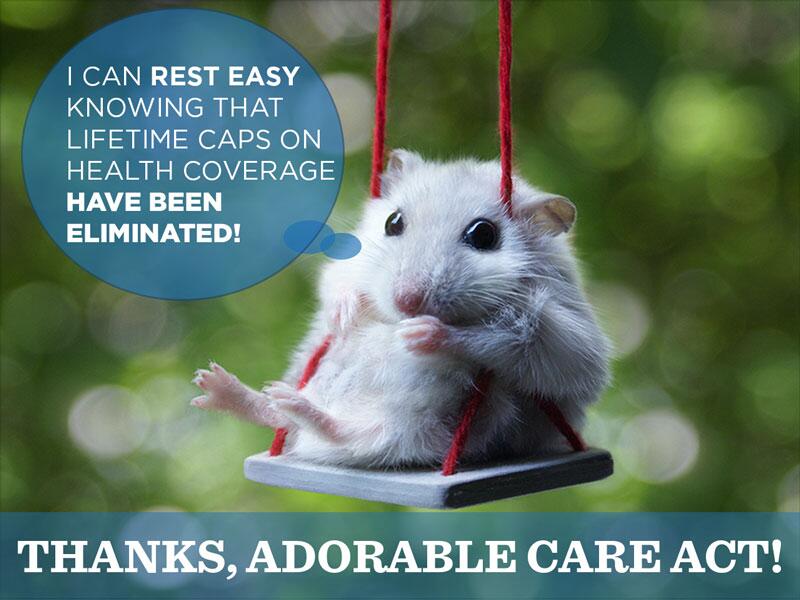
And this is reality, barking back at her:

[HatTip: Ace of Spades]
ObamaTax Exchange Crunch-Time edition
Poor Ms Kathy: the clock keeps on tickin', and her pet project keeps getting a lickin'.
To wit:
■ Capital City itself
"The ObamaCare exchange serving Washington, D.C. is delaying important parts of its operations less than a week before it is scheduled to open for enrollment"
Not only won't potential enrollees be unable to calculate their subsidies (if any), but they can't even determine whether or not they're eligible for Medicaid.
■ Colorado
"Colorado exchange managers revealed Monday ... that customers who want tax credits to make health insurance more affordable will have to call for help, rather than navigating the multi-million dollar computer system on their own."
I'm sure that'll go over big with the 20-somethings that hold the key to the whole train-wreck's "success."
■ Utah
"Obamacare’s insurance marketplace was supposed to have “no wrong door ... Consumers will need to find the right door ... or they will possibly face delays in obtaining coverage"
The whole "No Wrong Door" meme was heavily promoted in the Exchange Certification training. Why am I not surprised that it's DOA?
■ Oregon
When it rains, it pours:
"Oregon ... won’t meet all the requirements for its health-insurance exchange when the online marketplace opens Oct. 1 ... For at least two weeks, people using Cover Oregon won’t be able to complete their purchase without help from a certified insurance broker or community group"
Feature or bug? What difference, at this point, does it make?
To wit:
■ Capital City itself
"The ObamaCare exchange serving Washington, D.C. is delaying important parts of its operations less than a week before it is scheduled to open for enrollment"
Not only won't potential enrollees be unable to calculate their subsidies (if any), but they can't even determine whether or not they're eligible for Medicaid.
■ Colorado
"Colorado exchange managers revealed Monday ... that customers who want tax credits to make health insurance more affordable will have to call for help, rather than navigating the multi-million dollar computer system on their own."
I'm sure that'll go over big with the 20-somethings that hold the key to the whole train-wreck's "success."
■ Utah
"Obamacare’s insurance marketplace was supposed to have “no wrong door ... Consumers will need to find the right door ... or they will possibly face delays in obtaining coverage"
The whole "No Wrong Door" meme was heavily promoted in the Exchange Certification training. Why am I not surprised that it's DOA?
■ Oregon
When it rains, it pours:
"Oregon ... won’t meet all the requirements for its health-insurance exchange when the online marketplace opens Oct. 1 ... For at least two weeks, people using Cover Oregon won’t be able to complete their purchase without help from a certified insurance broker or community group"
Feature or bug? What difference, at this point, does it make?
A Gentle Reminder...
For HHS Secretary Shecantbeserous:
This word "start" - I dunna think it means what you think it means:
"In response, Joel Ario, a former HHS official who oversaw health exchange matters at the agency, told The Washington Post’s Sarah Kliff that “nobody is going to say we’re not starting on October 1, but in some situations, you may see a redefinition of what ‘start’ means.”
"In response, Joel Ario, a former HHS official who oversaw health exchange matters at the agency, told The Washington Post’s Sarah Kliff that “nobody is going to say we’re not starting on October 1, but in some situations, you may see a redefinition of what ‘start’ means.”
Health Wonk Review is up!
Peggy Salvatore presents this week's terrific Health Wonk Review, celebrating blogger Brad Wright's 700th post (Mazel Tov, Brad!). The main theme of this week's collection of wonky posts is (no surprise), the ACA. Lots of quality entries this week - enjoy!
Bonus: Mike's post (about how the ACA is playing out in the Golden State) got top billing - go Mike!
Bonus: Mike's post (about how the ACA is playing out in the Golden State) got top billing - go Mike!
Tuesday, September 24, 2013
Euthanasia in Netherlands up 13% in 2012. Aren't the Dutch happy?
“The number of Dutch people killed by medical euthanasia has more than doubled in the 10 years since legislation was changed to permit it, rising 13 per cent last year to 4,188 . . . One explanation for the steep rise of Dutch cases is the introduction last year of mobile euthanasia units allowing patients to be killed by voluntary lethal injection when family doctors refused.”
Is this bad news or good news? Does the growing use of euthanasia mean the Dutch are actually becoming less happy? Could it be the Dutch are less happy than Americans - even though - on the prestigious, European-based "Happy Planet Index" - Netherlands ranks 67th while the U.S. ranks only 105th?
Even after 10 years, I still think it's not yet possible to know the answers to these kinds of questions. We can measure transactions and form opinions, but can those tell us whether the Dutch are doing the right thing? I think not. And besides, what does euthanasia have to do with happiness?
Decisions about caring for people at the end of life remain among the most significant and difficult decisions facing families today. The Dutch model for euthanasia is a meaningful effort to help families deal with these decisions and therefore deserves the careful observation and analysis that it is receiving.
Officially the Dutch model relies on families and family physicians to reach decisions about euthanasia. That does not entirely avoid the future possibility that someday, the Dutch national health care program, or some other government's program - say, in the U.S. - may actually prescribe euthanasia as a matter of law or regulation, in order to save money. That’s my idea of the ultimate death panel. Brave New World indeed.
History shows that governments insist on participating in financial decisions when they are paying for the outcomes. In other words, a government health care program cannot pretend to be a fair and impartial third-party, because it is an interested participant in the outcome. It's a conflict of interests that won't go away.
How can America avoid that possible future? For one thing, the public cannot afford to rely on lawmakers; we must do our best to watch what other governments - such as the Netherlands - are doing. And for another, we must watch what our own government is doing.
Is this bad news or good news? Does the growing use of euthanasia mean the Dutch are actually becoming less happy? Could it be the Dutch are less happy than Americans - even though - on the prestigious, European-based "Happy Planet Index" - Netherlands ranks 67th while the U.S. ranks only 105th?
Even after 10 years, I still think it's not yet possible to know the answers to these kinds of questions. We can measure transactions and form opinions, but can those tell us whether the Dutch are doing the right thing? I think not. And besides, what does euthanasia have to do with happiness?
Decisions about caring for people at the end of life remain among the most significant and difficult decisions facing families today. The Dutch model for euthanasia is a meaningful effort to help families deal with these decisions and therefore deserves the careful observation and analysis that it is receiving.
Officially the Dutch model relies on families and family physicians to reach decisions about euthanasia. That does not entirely avoid the future possibility that someday, the Dutch national health care program, or some other government's program - say, in the U.S. - may actually prescribe euthanasia as a matter of law or regulation, in order to save money. That’s my idea of the ultimate death panel. Brave New World indeed.
History shows that governments insist on participating in financial decisions when they are paying for the outcomes. In other words, a government health care program cannot pretend to be a fair and impartial third-party, because it is an interested participant in the outcome. It's a conflict of interests that won't go away.
How can America avoid that possible future? For one thing, the public cannot afford to rely on lawmakers; we must do our best to watch what other governments - such as the Netherlands - are doing. And for another, we must watch what our own government is doing.
Feature or Bug?

Yesterday's McPaper characterized one aspect of the ObamaTax pricing regime as the "Family Glitch:"
"Congress defined "affordable" as 9.5% or less of an employee's household income ... the "error" was that it only applies to the employee — and not his or her family. So, if an employer offers a woman affordable insurance, but doesn't provide it for her family, they cannot get subsidized help through the state health exchanges."
Why is this both an "error" and a "glitch?" And why presume in the first place that it was not, in fact, intentional? After all, even the folks in Capital City had to foreseen how many employers would bedumping shifting their employees (and retirees) onto the Exchanges in an effort to gain some control over the financial hurdles being placed before them.
Our Elected Betters© wouldn't have done something stupid, right?
Right?
"Congress defined "affordable" as 9.5% or less of an employee's household income ... the "error" was that it only applies to the employee — and not his or her family. So, if an employer offers a woman affordable insurance, but doesn't provide it for her family, they cannot get subsidized help through the state health exchanges."
Why is this both an "error" and a "glitch?" And why presume in the first place that it was not, in fact, intentional? After all, even the folks in Capital City had to foreseen how many employers would be
Our Elected Betters© wouldn't have done something stupid, right?
Right?
Patient Protection Act - Cause it isn't Affordable
With insurance Exchanges Marketplaces nearing their grand opening HHS has released another issue brief on the "low rates" people will pay after subsidies. In one of the examples they use a 27 year old in Texas who makes $25,000 per year. This person will pay $145 for the second lowest cost silver plan or $83 for the bronze plan after the subsidy.
HHS is so focused on premiums and making this trainwreck look affordable that they are missing the boat on a key component, the benefits. Without knowing the health history of the individual they may in fact be promoting the exact opposite of what the person is looking for: the greatest value for their dollar.
If I am a 27 year old with diabetes, am extremely obese, and suffer from Crohn's disease would I want to purchase a plan with a $5000 deductible and $6350 out of pocket maximum? That is what I will likely get for $83 per month.
From a financial standpoint:
Income: $25,000
Premiums: $996
OPM: $6350
Net Income: $17,654
30% of income for insurance and health care costs. This is what HHS considers "affordable".
Monday, September 23, 2013
Alzheimer's Update: Good news (for once)
SoIB Gail S tips us to this recent story in the Dayton Daily News, recounting an award-winning therapy that's deceptively simple:
"Three years ago, Wright State University professor Dr. Govind Bharwani was given a challenge: Find a way to help people living with Alzheimer’s disease so they are less prone to becoming confused, agitated, withdrawn and falling."
And it appears that he has, in fact, succeeded:
"The therapy works by providing each person with their own “memory box” filled with family photos, books and movies they love and other special items."
Once you think about it, it's kind of intuitive: one of the reasons that Alzheimer's patients become so frustrated is that loss of "connection" to the world. I recall that, with my mother, I eventually realized that she wasn't having "good" days or "bad" ones, so much as "today she's in her own world" versus "our world" days. What better way to restore (or at least enhance) that connection than re-establishing treasured experiences?
Another benefit is that this is all done with no drugs, which can be expensive and often have undesirable side effects. Research is now continuing to see how (or if) this can be applied to those living at home with this dread condition.
Kudos to WSU and Dr Bharwani.
"Three years ago, Wright State University professor Dr. Govind Bharwani was given a challenge: Find a way to help people living with Alzheimer’s disease so they are less prone to becoming confused, agitated, withdrawn and falling."
And it appears that he has, in fact, succeeded:
"The therapy works by providing each person with their own “memory box” filled with family photos, books and movies they love and other special items."
Once you think about it, it's kind of intuitive: one of the reasons that Alzheimer's patients become so frustrated is that loss of "connection" to the world. I recall that, with my mother, I eventually realized that she wasn't having "good" days or "bad" ones, so much as "today she's in her own world" versus "our world" days. What better way to restore (or at least enhance) that connection than re-establishing treasured experiences?
Another benefit is that this is all done with no drugs, which can be expensive and often have undesirable side effects. Research is now continuing to see how (or if) this can be applied to those living at home with this dread condition.
Kudos to WSU and Dr Bharwani.
Take two apps and call me in the morning
Introducing the iDoc® (not really, but we're getting close):
[Hat Tip: FoIB Jeff M]
[Hat Tip: FoIB Jeff M]
Saturday, September 21, 2013
How uninformed can NYT readers, commentors possibly be?
Every once in awhile you see a comment that just makes you stop and ask how clueless and misguided people can be, then you remember they are allowed to vote.
Your typical NYT tripe from some blowhard that doesn't understand 90% of what he is talking about. The real gem is down in the comments though;
Your typical NYT tripe from some blowhard that doesn't understand 90% of what he is talking about. The real gem is down in the comments though;
Friday, September 20, 2013
ObamaTax Health Exchange (Marketplace) news

So yesterday, I did my Exchange training and exams. Started at about 9:30 in the morning, finished about 4:30 in the afternoon.
I understand Pat completed this in just a few hours, but he's a lot younger (and apparently smarter) than I am. And I also took the liberty of saving all the training material for future reference (which no doubt added some time, as well)
I'll have a more complete report soon, but here are some of my initial impressions fresh off the training and exams:
I'll just say this: if you're comfortable having ALL your personal medical, financial, tax and what-all info being zipped around between SSA, IRS and DHS (Department of Homeland Security?? Really??), then by all means head right for 'em on 10/1 (assuming they're actually online then).
I'm pretty knowledgeable about this stuff (really!) and even I was amazed and appalled at the level of intrusion this train-wreck has wrought. Oh, and you'll be pleased to know that as taxpayers, you'll have the double-mitzvah of paying through the nose not just for your own health care, but for all those wonderful "others" who qualify for premium and "cost-sharing" subsidies.
Here's my favorite part, though:
"QHPs [Qualified Health Plans] in a Marketplace must also provide coverage that meets one of five levels of generosity ... It is important to emphasize that AV is an average measure of generosity ... the percentage of medical costs the plan will cover after premium payments."
And just who's being generous with MY money? Oh, yeah.
And to top it off, this just in at the WSJ:
"Less than two weeks before the launch of insurance marketplaces created by the federal health "overhaul, the government's software can't reliably determine how much people need to pay for coverage"
Yeah, this is going to end well....
I understand Pat completed this in just a few hours, but he's a lot younger (and apparently smarter) than I am. And I also took the liberty of saving all the training material for future reference (which no doubt added some time, as well)
I'll have a more complete report soon, but here are some of my initial impressions fresh off the training and exams:
I'll just say this: if you're comfortable having ALL your personal medical, financial, tax and what-all info being zipped around between SSA, IRS and DHS (Department of Homeland Security?? Really??), then by all means head right for 'em on 10/1 (assuming they're actually online then).
I'm pretty knowledgeable about this stuff (really!) and even I was amazed and appalled at the level of intrusion this train-wreck has wrought. Oh, and you'll be pleased to know that as taxpayers, you'll have the double-mitzvah of paying through the nose not just for your own health care, but for all those wonderful "others" who qualify for premium and "cost-sharing" subsidies.
Here's my favorite part, though:
"QHPs [Qualified Health Plans] in a Marketplace must also provide coverage that meets one of five levels of generosity ... It is important to emphasize that AV is an average measure of generosity ... the percentage of medical costs the plan will cover after premium payments."
And just who's being generous with MY money? Oh, yeah.
And to top it off, this just in at the WSJ:
"Less than two weeks before the launch of insurance marketplaces created by the federal health "overhaul, the government's software can't reliably determine how much people need to pay for coverage"
Yeah, this is going to end well....
Thursday, September 19, 2013
Wednesday, September 18, 2013
I've been remiss....
In case you missed it, I'm the newly-installed Content Expert Writer (Insurance) for Answers.com. It occurs to me that IB readers might be interested in some of my work in that venue, so here are some free samples:
Part 1 of a 3-part series on Universal Life
An explication of Insurable Interest
Enjoy!
Part 1 of a 3-part series on Universal Life
An explication of Insurable Interest
Enjoy!
But it's a nice hat. That's because the people paid for that hat.
Remember the President's assurances that his ACA would finally “bend the cost curve”?
Despite a determined rear-guard media that clings to Obama's every word as universal truth, evidence accumulates that the President was talking thru his hat.
On September 17, 2013, CBO released it's most recent Long-Term Budget Outlook.
According to CBO, in 20 years, “major health care programs” will be the largest component of federal spending.
CBO expresses its estimate relative to GDP - which is also growing. CBO's estimate is that federal health care spending will increase from roughly 3% to north of 8% of GDP. That's almost tripling the share of a base number that is itself growing every year. CBO thus anticipates federal dollar spending growth for health care more like 4X's to 5X's its level in 2013.
Bend the cost curve, indeed.
Talking thru his hat.
(btw, the same CBO estimate finds that within the next 25 years, federal debt held by the public will be 100% of America’s entire GDP "without accounting for the harmful effects that growing debt would have on the economy." The corresponding percentage as late as 2007 was less than 40% of GDP. This administration's failure to bend the federal spending cost curve is clearly a serious problem that extends well beyond "health care".)
Despite a determined rear-guard media that clings to Obama's every word as universal truth, evidence accumulates that the President was talking thru his hat.
On September 17, 2013, CBO released it's most recent Long-Term Budget Outlook.
According to CBO, in 20 years, “major health care programs” will be the largest component of federal spending.
CBO expresses its estimate relative to GDP - which is also growing. CBO's estimate is that federal health care spending will increase from roughly 3% to north of 8% of GDP. That's almost tripling the share of a base number that is itself growing every year. CBO thus anticipates federal dollar spending growth for health care more like 4X's to 5X's its level in 2013.
Bend the cost curve, indeed.
Talking thru his hat.
(btw, the same CBO estimate finds that within the next 25 years, federal debt held by the public will be 100% of America’s entire GDP "without accounting for the harmful effects that growing debt would have on the economy." The corresponding percentage as late as 2007 was less than 40% of GDP. This administration's failure to bend the federal spending cost curve is clearly a serious problem that extends well beyond "health care".)
Cavalcade of Risk #192: Galloping Into View edition
Nancy Germond hosts this week's romp through the wilds of risk, a maze of medical
conditions, and a not-so-*fowl* post on chickens (cluck all you want).
Tuesday, September 17, 2013
Layers and Layers of Fact-Checkers

The Lame Stream Media prides itself on its unerring accuracy and commitment to getting the facts straight. As it turns out, at least when it comes to life insurance, this pride is, in fact, unjustified. As we pointed out almost 4 years ago, they can't even get the relatively simple suicide exclusion correct:
"...it appears that this may well have been an elaborately staged suicide, the point of which was to leave the proceeds of a life insurance policy to the victim's son ... “There’s no such thing as suicide insurance."
Which is true, but as we pointed out, irrelevant. It would have taken the reporter five minutes to interview a life insurance agent to provide clarity and context (not to mention accuracy).
And now we see the same shoddy reporting in another tragic case:
"... for Cindy Karlsen, there was the $1.2 million policy that her husband had now taken out on her life ... She learned Karlsen had invested some of the insurance money from his son's death into a life insurance policy on her."
And how did the erstwhile Mrs Karlsen learn this? Apparently it came as a big surprise to her that she had applied for life insurance, but some simple fact-checking by the (so-called) reporter might have revealed that it's almost impossible to buy life insurance on another person without his or her consent, let alone knowledge. And a policy with over $1 million on the line is going to require not just a physical examination, but (at least according to the carriers I represent), a telephone interview with the prospective insured.
So we are left to believe one of two things is true:
1) A life insurance company issued a million dollar policy strictly off an application - no exam, no blood or urine draw, no interview - and no effort to confirm the information on the application.
or
2) She agreed to complete and sign a lengthy life insurance application, take a fairly invasive physical exam - including, depending on her age, a stress-test and the release of her medical records - and do an exhaustive telephone interview, without the slightest clue that this was for a ... wait for it .... life insurance policy.
How dumb does the LSM think we are?
[Major IB Thanks to Jeff M for helping me noodle through this post]
"...it appears that this may well have been an elaborately staged suicide, the point of which was to leave the proceeds of a life insurance policy to the victim's son ... “There’s no such thing as suicide insurance."
Which is true, but as we pointed out, irrelevant. It would have taken the reporter five minutes to interview a life insurance agent to provide clarity and context (not to mention accuracy).
And now we see the same shoddy reporting in another tragic case:
"... for Cindy Karlsen, there was the $1.2 million policy that her husband had now taken out on her life ... She learned Karlsen had invested some of the insurance money from his son's death into a life insurance policy on her."
And how did the erstwhile Mrs Karlsen learn this? Apparently it came as a big surprise to her that she had applied for life insurance, but some simple fact-checking by the (so-called) reporter might have revealed that it's almost impossible to buy life insurance on another person without his or her consent, let alone knowledge. And a policy with over $1 million on the line is going to require not just a physical examination, but (at least according to the carriers I represent), a telephone interview with the prospective insured.
So we are left to believe one of two things is true:
1) A life insurance company issued a million dollar policy strictly off an application - no exam, no blood or urine draw, no interview - and no effort to confirm the information on the application.
or
2) She agreed to complete and sign a lengthy life insurance application, take a fairly invasive physical exam - including, depending on her age, a stress-test and the release of her medical records - and do an exhaustive telephone interview, without the slightest clue that this was for a ... wait for it .... life insurance policy.
How dumb does the LSM think we are?
[Major IB Thanks to Jeff M for helping me noodle through this post]
Monday, September 16, 2013
Monday Afternoon LinkFest

Lately, we've had an embarrassment of riches concerning the ObamaTax and other related news. Because there are only 24 hours in a day, it's not really possible to give each one the blog-space it probably deserves, but at least we can give our readers a heads' up on what's hot:
1 - We've been warning folks about the very real probability of fraud in the new Navigator program. From FoIB Holly R here's the latest:
"...officials are watching for look-alike websites that could lead consumers to be the victims of fraud or simply confuse people ... States are on the lookout for websites created by interest groups, private insurance companies and sometimes scammers that have similar web addresses and the appearances of the official state exchange websites."
So-called "phishing" sites have been around for a long time, this seems to be the latest iteration of that phenomenon.
2 - Holly also tips us to this story - surely only one of many to come - about pushback on so-called "wellness" programs. In this case, certain employees at Penn State University are protesting a new requirement that they either participate in one of these, with the added benefit that they'll get to divulge some very personal information, at least some of which seems pretty intrusive (and doesn't seem to be particularly "health"-related):
"The plan requires nonunion employees, like professors and clerical staff members, to visit their doctors ... and submit to an extensive online health risk questionnaire that asks, among other questions, whether they have recently had problems with a co-worker, a supervisor or a divorce"
Cost for declining to participate? $100 a month (or $200 if they're married and have their spouse on the plan).
Potential solution (and probably rationale for the whole exercise): opt out of the Penn State plan and onto the Exchange.
3 - We've noted before that the Public Exchanges seem to be having a problem attracting (and keeping) carriers. Our Friend Jeff M reports from North Carolina that the Tar Heel State is no exception:
"FirstCarolinaCare Insurance abruptly pulled out of the North Carolina market, saying there are too many unknowns about how the Affordable Care Act will play out here."
So what if they gave an Exchange and no carrier came?
We may find out.
4 - And circling back around to Navigators and the likelihood of shenanigans, Florida has banned them from county health departments:
"Local health departments can accept public exchange brochures and other exchange outreach material, but they can distribute the materials only if consumers ask for information"
Florida heath officials wanted to make sure that they're agencies know that Navigators "aren't acting on behalf of the state."
Gee, one wonders why anyone would think that.
1 - We've been warning folks about the very real probability of fraud in the new Navigator program. From FoIB Holly R here's the latest:
"...officials are watching for look-alike websites that could lead consumers to be the victims of fraud or simply confuse people ... States are on the lookout for websites created by interest groups, private insurance companies and sometimes scammers that have similar web addresses and the appearances of the official state exchange websites."
So-called "phishing" sites have been around for a long time, this seems to be the latest iteration of that phenomenon.
2 - Holly also tips us to this story - surely only one of many to come - about pushback on so-called "wellness" programs. In this case, certain employees at Penn State University are protesting a new requirement that they either participate in one of these, with the added benefit that they'll get to divulge some very personal information, at least some of which seems pretty intrusive (and doesn't seem to be particularly "health"-related):
"The plan requires nonunion employees, like professors and clerical staff members, to visit their doctors ... and submit to an extensive online health risk questionnaire that asks, among other questions, whether they have recently had problems with a co-worker, a supervisor or a divorce"
Cost for declining to participate? $100 a month (or $200 if they're married and have their spouse on the plan).
Potential solution (and probably rationale for the whole exercise): opt out of the Penn State plan and onto the Exchange.
3 - We've noted before that the Public Exchanges seem to be having a problem attracting (and keeping) carriers. Our Friend Jeff M reports from North Carolina that the Tar Heel State is no exception:
"FirstCarolinaCare Insurance abruptly pulled out of the North Carolina market, saying there are too many unknowns about how the Affordable Care Act will play out here."
So what if they gave an Exchange and no carrier came?
We may find out.
4 - And circling back around to Navigators and the likelihood of shenanigans, Florida has banned them from county health departments:
"Local health departments can accept public exchange brochures and other exchange outreach material, but they can distribute the materials only if consumers ask for information"
Florida heath officials wanted to make sure that they're agencies know that Navigators "aren't acting on behalf of the state."
Gee, one wonders why anyone would think that.
Not just No, but Heck No!

As Bob noted last month, the grand folks in Capital City aren't too keen on rubbing elbows with us rubes waiting on line at the Health Insurance Exchange. Far beneath their stations in life, don'tcha know.
Well, it should probably comes as no surprise, then, to learn that Federal "workers" really don't want to give up their gold-plated (but Yugo-priced) health insurance. After all, they were promised that "if they liked their insurance, they could keep their insurance."
[Ironic, I know]
But if you'd really like to know just how much they don't want to forced off those great/affordable plans, "[a] new survey of 2,500 federal employees and retirees found that 92.3 percent believe federal workers should keep their current health insurance and not be forced into ObamaCare."
Frankly, I'm surprised that number's so low.
Well, it should probably comes as no surprise, then, to learn that Federal "workers" really don't want to give up their gold-plated (but Yugo-priced) health insurance. After all, they were promised that "if they liked their insurance, they could keep their insurance."
[Ironic, I know]
But if you'd really like to know just how much they don't want to forced off those great/affordable plans, "[a] new survey of 2,500 federal employees and retirees found that 92.3 percent believe federal workers should keep their current health insurance and not be forced into ObamaCare."
Frankly, I'm surprised that number's so low.
Exchange THIS
The LA Times reports some major California insurers have built "narrow networks" of doctors and hospitals for plans that will be offered thru the State's Obamacare Exchange.
Insurance companies (and consultants and many large employers) say that these narrow networks reduce costs by increasing the insurers' ability to negotiate price discounts. Physicians and hospitals say they oppose these narrow networks because they fear patients won't be able to find the doctor or hospital they like, in the plan they like.
As for the State, Peter Lee - executive director of Covered California [the State's Obamacare Exchange] - says "Our interest is in assuring everyone enrolled in a plan has ready access to the clinicians they need . . . That means if a plan can't serve patients, we'll close it down from taking new enrollment"
So if a plan doesn't provide what the Exchange deems sufficient access, the Exchange will make sure the plan can't provide ANY additional access.
Is that a solution?
The Times goes on to say "Consumers could see long wait times, a scarcity of specialists and loss of a longtime doctor."
Isn't that exactly what people say who worry about rationing under Obamacare - and have been relentlessly ridiculed for saying it?
Insurance companies (and consultants and many large employers) say that these narrow networks reduce costs by increasing the insurers' ability to negotiate price discounts. Physicians and hospitals say they oppose these narrow networks because they fear patients won't be able to find the doctor or hospital they like, in the plan they like.
As for the State, Peter Lee - executive director of Covered California [the State's Obamacare Exchange] - says "Our interest is in assuring everyone enrolled in a plan has ready access to the clinicians they need . . . That means if a plan can't serve patients, we'll close it down from taking new enrollment"
So if a plan doesn't provide what the Exchange deems sufficient access, the Exchange will make sure the plan can't provide ANY additional access.
Is that a solution?
The Times goes on to say "Consumers could see long wait times, a scarcity of specialists and loss of a longtime doctor."
Isn't that exactly what people say who worry about rationing under Obamacare - and have been relentlessly ridiculed for saying it?
Sunday, September 15, 2013
Water, water, everywhere - Are YOU covered?

With the horrific flooding going on in Colorado, folks may be wondering how (or even if) their homeowner's insurance policy will cover them. The folks at the National Flood Insurance Program have a neat little widget that helps you determine your home's risk of flooding, and how much flood insurance coverage might cost.
As always, it's best to check with your professional, independent homeowner's insurance agent.
As always, it's best to check with your professional, independent homeowner's insurance agent.
Friday, September 13, 2013
This Sceptered Isle, Part DCIV
From the Telegraph of London on 9/11:
"Death rates in NHS hospitals are among the highest in the western world, shock figures revealed yesterday. British patients were found to be almost 50 per cent more likely to die from poor care than those in America."
Hat tip to Tim Worstall's enjoyable blog, which generally focuses on economics.
The Telegraph article also cites this comment from a U.K. Professor Sir Brian Jarman, who is considered a globally-recognised expert on hospital performance:
"I expected us to do well and was very surprised we didn’t do well – but there is no means of denying the results as they are absolutely clear."
Paul Krugman famously attempted to pre-empt this kind of factual finding several years ago, when he declared "In Britain, the government itself runs the hospitals and employs the doctors. We’ve all heard scare stories about how that works in practice; these stories are false."
Shucks, a school child knows facts cannot be both absolutely true and absolutely false. Facts are facts, and in that sense are not political.
Yet in real life the debate over centralized government control of the medical care system rages on, in many cases fueled by expert disagreement over whether facts are true or false.
"Death rates in NHS hospitals are among the highest in the western world, shock figures revealed yesterday. British patients were found to be almost 50 per cent more likely to die from poor care than those in America."
Hat tip to Tim Worstall's enjoyable blog, which generally focuses on economics.
The Telegraph article also cites this comment from a U.K. Professor Sir Brian Jarman, who is considered a globally-recognised expert on hospital performance:
"I expected us to do well and was very surprised we didn’t do well – but there is no means of denying the results as they are absolutely clear."
Paul Krugman famously attempted to pre-empt this kind of factual finding several years ago, when he declared "In Britain, the government itself runs the hospitals and employs the doctors. We’ve all heard scare stories about how that works in practice; these stories are false."
Shucks, a school child knows facts cannot be both absolutely true and absolutely false. Facts are facts, and in that sense are not political.
Yet in real life the debate over centralized government control of the medical care system rages on, in many cases fueled by expert disagreement over whether facts are true or false.
HHS Wants You to Meet Jamie
Continuing their ongoing effort to "educate" people on PPACA, HHS has introduced us to Jamie. Jamie is a 27 year old college graduate. She has been working at the coffee shop for four-and-a-half years and has never made more than $20,000 in a year.
Self admittedly, she really "has no plan...but that's just how her life has worked out." She hasn't been to the doctor since her junior year of high school. If she ever got really ill or injured she couldn't afford to pay for treatment. She doesn't have any savings and struggles to get by with all of her current bills.
For Jamie life with health insurance will provide her with "comfort and stability and safety". She's very eager to sign up for subsidized insurance.
Starting October 1st (maybe?) Jamie will be able to get the health insurance she so desires. Here is her scenario after running through the Kaiser Family Foundation subsidy calculator:
Self admittedly, she really "has no plan...but that's just how her life has worked out." She hasn't been to the doctor since her junior year of high school. If she ever got really ill or injured she couldn't afford to pay for treatment. She doesn't have any savings and struggles to get by with all of her current bills.
For Jamie life with health insurance will provide her with "comfort and stability and safety". She's very eager to sign up for subsidized insurance.
Starting October 1st (maybe?) Jamie will be able to get the health insurance she so desires. Here is her scenario after running through the Kaiser Family Foundation subsidy calculator:
- Purchase a Silver Plan: Cost to Jamie is $1,021 per year. She will also qualify for MOOP (Max Out Of Pocket) assistance under this plan which will lower her worst case scenario to $2250.
- Purchase a Bronze Plan: Cost to Jamie is $480 per year. However, if she takes this option she will not qualify for MOOP assistance and will face a worst case scenario of $6350.
- Stay without insurance and pay Uncle Sam a "shared responsibility payment" of roughly $200 and role the dice that she will stay healthy.
Unusual and Interesting Insurance News
Over the years, we've chronicled such things as virginity and alien abduction insurance (different posts), the risk posed by superheroes simultaneously destroying much of a city while trying to save it, and hole-in-one coverage for sporting events.
And now for more:
■ Terrorism Risk insurance - Back in 2009, we interviewed Chris Klein, Global Head of Business Intelligence for Guy Carpenter (major risk and reinsurance specialists), who explained why government involvement was necessary in providing reinsurance for major terrorist acts.
Four years later, The Cato Institute argues that the Federal Terrorism Risk Insurance Act (TRIA) has passed its sell-by date:
"... the Terrorism Risk Insurance Act of 2002 to create a “temporary” federal backstop against catastrophic losses. This program subsidized private risk with public funds through a cost-sharing program for which the government does not receive any compensation ... The private market is capable of underwriting this risk."
Interesting analysis.
■ On a brighter note, MassMutual recently kicked off a campaign to get parents looking at the topic of life insurance through the eyes of their children. Through a series of cute and compelling videos, MassMutual hopes to get this conversation kickstarted.
Here's a sample:
■ Finally, I know we've never blogged on this one before:
"The Mid-Autumn Festival (scheduled on Sept. 19), is one of China's biggest holidays and features a lantern festival, the exchange of mooncakes and dining with family and friends while gazing at the harvest moon."
Very interesting Henry, and now I'm hungry for some fried won-tons. But what's that got to do with insurance?
Ah, so:
"Residents of three cities—Shanghai, Guangzhou and Shenzhen—can buy insurance online for 20 Yuan (about $3) and be compensated for up to 50 Yuan if clouds obscure moon-viewing between 8 p.m. and 12 a.m. on Sept. 19. The plan is being offered by Alibaba Small and Micro Financial Services Co. and Allianz Insurance China."
The plan's being offered in 41 other cities, as well, but at a higher premium. Still, this may be a true insurance bargain.
So if you're headed to China for this annual event, be sure to stop by the insurance counter (and bring a sweater).
And now for more:
■ Terrorism Risk insurance - Back in 2009, we interviewed Chris Klein, Global Head of Business Intelligence for Guy Carpenter (major risk and reinsurance specialists), who explained why government involvement was necessary in providing reinsurance for major terrorist acts.
Four years later, The Cato Institute argues that the Federal Terrorism Risk Insurance Act (TRIA) has passed its sell-by date:
"... the Terrorism Risk Insurance Act of 2002 to create a “temporary” federal backstop against catastrophic losses. This program subsidized private risk with public funds through a cost-sharing program for which the government does not receive any compensation ... The private market is capable of underwriting this risk."
Interesting analysis.
■ On a brighter note, MassMutual recently kicked off a campaign to get parents looking at the topic of life insurance through the eyes of their children. Through a series of cute and compelling videos, MassMutual hopes to get this conversation kickstarted.
Here's a sample:
■ Finally, I know we've never blogged on this one before:
"The Mid-Autumn Festival (scheduled on Sept. 19), is one of China's biggest holidays and features a lantern festival, the exchange of mooncakes and dining with family and friends while gazing at the harvest moon."
Very interesting Henry, and now I'm hungry for some fried won-tons. But what's that got to do with insurance?
Ah, so:
"Residents of three cities—Shanghai, Guangzhou and Shenzhen—can buy insurance online for 20 Yuan (about $3) and be compensated for up to 50 Yuan if clouds obscure moon-viewing between 8 p.m. and 12 a.m. on Sept. 19. The plan is being offered by Alibaba Small and Micro Financial Services Co. and Allianz Insurance China."
The plan's being offered in 41 other cities, as well, but at a higher premium. Still, this may be a true insurance bargain.
So if you're headed to China for this annual event, be sure to stop by the insurance counter (and bring a sweater).
Cavalcade of Risk #192: Call for submissions
Nancy Germond hosts
next week's Cav. Entries are due by Monday (the 16th).
To submit your risk-related post, just click here to email it.
You'll need to provide:
■ Your post's url and title
■ Your blog's url and name
■ Your name and email
■ A (brief) summary of the post
PLEASE remember: ONLY posts that relate to risk (not personal finance tips and the like). And please only submit if you are willing to link back to the carnival if your submission is accepted.
To submit your risk-related post, just click here to email it.
You'll need to provide:
■ Your post's url and title
■ Your blog's url and name
■ Your name and email
■ A (brief) summary of the post
PLEASE remember: ONLY posts that relate to risk (not personal finance tips and the like). And please only submit if you are willing to link back to the carnival if your submission is accepted.
Thursday, September 12, 2013
What a Waste of Time
For the last several months agents have been working on educating ourselves and our clients on the various administrative atrocities of PPACA. The latest one is the so called "Notice of Exchanges". The notice is a three page document that essentially all employers must provide all employees about the Health Insurance Marketplace. The notice is to "assist" people as they evaluate options for health insurance products they are being forced to purchase in 2014.
My guess is that I have over 40 hours put into developing a plan of action for distributing the notices to my clients. Even yesterday Hank and I were exchanging emails on this topic. On top of my time, many hours have been put in across our professional organization in determining and defining things like minimum value standard and affordability.
According to the original draft, the notice was supposed to be sent out by March 1, 2013, but then there was a delay. So, now the notice must be distributed no later than October 1, 2013. The DOL guidelines state that non compliance will result in a $100 per employee per day fine. So you can see why we have such a sense of urgency behind this matter.
This came September 11, 2013 at 4:55PM. In a frequently asked questions release the DOL determined that while the notice should be distributed there are no fines or penalties for failing to provide the notice. So in the course of a couple of months the government has gone from "we will fine you" to "meh, no big deal".
Just another one of our great government efficiencies...
My guess is that I have over 40 hours put into developing a plan of action for distributing the notices to my clients. Even yesterday Hank and I were exchanging emails on this topic. On top of my time, many hours have been put in across our professional organization in determining and defining things like minimum value standard and affordability.
According to the original draft, the notice was supposed to be sent out by March 1, 2013, but then there was a delay. So, now the notice must be distributed no later than October 1, 2013. The DOL guidelines state that non compliance will result in a $100 per employee per day fine. So you can see why we have such a sense of urgency behind this matter.
This came September 11, 2013 at 4:55PM. In a frequently asked questions release the DOL determined that while the notice should be distributed there are no fines or penalties for failing to provide the notice. So in the course of a couple of months the government has gone from "we will fine you" to "meh, no big deal".
Just another one of our great government efficiencies...
Chickens, Roosting

Although the ObamaTax was heavily promoted by various unions, it appears that buyer's remorse is inexorably setting in:
"The AFL-CIO on Wednesday approved a resolution critical of parts of [the ObamaTax] ... The strongly worded resolution says ... will drive up the costs of union-sponsored health plans to the point that workers and employers are forced to abandon them."
Oh, methinks that ship sailed some time ago.
But not to worry, the new health insurance Exchanges will provide a safe landing for union members (and regular folks), so there's a silver lining.
Or maybe not:
"Obamacare is likely to have a "rocky" enrollment start on October 1 in some U.S. states, because of ongoing technology challenges facing new online health insurance exchanges"
Oh.
According to consulting firm Leavitt Partners (a Utah-based consulting firm that "has been involved in the design and development of some state exchanges and tracks exchange progress nationwide"), "not a single state appears to be completely ready" for the roll-out, scheduled to begin in less than 3 weeks.
And remember, final security testing has been put off until (literally) the last minute, so October 1st should prove, um, interesting.
"The AFL-CIO on Wednesday approved a resolution critical of parts of [the ObamaTax] ... The strongly worded resolution says ... will drive up the costs of union-sponsored health plans to the point that workers and employers are forced to abandon them."
Oh, methinks that ship sailed some time ago.
But not to worry, the new health insurance Exchanges will provide a safe landing for union members (and regular folks), so there's a silver lining.
Or maybe not:
"Obamacare is likely to have a "rocky" enrollment start on October 1 in some U.S. states, because of ongoing technology challenges facing new online health insurance exchanges"
Oh.
According to consulting firm Leavitt Partners (a Utah-based consulting firm that "has been involved in the design and development of some state exchanges and tracks exchange progress nationwide"), "not a single state appears to be completely ready" for the roll-out, scheduled to begin in less than 3 weeks.
And remember, final security testing has been put off until (literally) the last minute, so October 1st should prove, um, interesting.
Obama to blow up cost of Drug Plans

Large Employers and self funded plans must comply with the out of pocket (OOP) cap. For 2014 they can have separate caps if, for example, an Rx plan is administered separate from a medical plan; in 2015 they must be combined. Currently that cap is $6,350 for an individual.
Lets look at a real world situation: we have a client with a member taking Xyrem. It cost $9,000 per month or $108,000 per year. Plan has a 20% co-pay currently so the plan pays $86,400 and the member pays $21,600.
Except the member doesn't really pay $21,600. Like most Brand name drugs Xyrem has an assistance program, the manufacturer increases the price then refunds the member some portion of their liability. In this case the member pays $35 per month; that is correct, they only pay $$420.00 a year of their $21,600 co-insurance. The pharmaceutical company writes off the rest.
Under Obama's ingenious plan though, once we show the member was liable for $6,350 we need to start paying it at 100%. Now my client will be spending $101,650 per year. That extra $15,250, is pure profit to the pharmaceutical company. In Obama's world that apparently translates into affordability.
And for the member, their OOP for the year, thanks to Pharmaceutical games, is a whopping $35.
In case you think this is an isolated problem: while not all Rx cost this much, almost every brand name drug has a similar program.
Health Wonk Review - Big Data edition
The delightfully-named Tinker Ready hosts this week's round-up of wonky posts, with a major emphasis on the role of data, its collection and application. As always, you're sure to find something interesting and new.
Wednesday, September 11, 2013
Alphabet Soup Update: Why Local Matters
As we've noted time and again, having a local expert to administer Flex Spending Accounts and Health Reimbursement Arrangements is ideal. Our local gurus, FlexBank, just proved that again. Via email, they've tipped us to a little-known - but potentially major - option for groups utilizing Section 125 plans (so-called "POP Plans").
Premium-only plans are the vehicles by which companies make it possible for employees to pay their portion of health insurance premiums pre-tax. This can be a major cost-saver for both the employee and the employer. But there are rules for these plans, one of which is that mid-year changes are verboten (unless there's a "qualifying event").
The new Exchange policies, which many employees may wish to purchase, go into effect on January 1. If your employer has a calendar-year POP plan, no problem, you make the change. But what if your employer's plan isn't on a calendar-year basis? Some employees may elect to drop their current group coverage in favor of an Exchange-based individual plan, but that's not one of the recognized "qualifying events."
Until now.
Thanks to the folks at FlexBank, we learn that the folks in Capital City have heard those pleas, and are offering a one-time only "out" for employees in this situation. The IRS has stated that employers with non-calendar year based POP plans may amend them to allow employees to drop off of (or join!) these "cafeteria" plans effective January 1, 2014.
Good news indeed.
Another One (Thousand) Bites the Dust
As Nate noted some months ago, the Medical Device Tax has put a crimp in the medical R&D sector. The latest casualties of this component of the ObamaTax are the 1,000 soon-to-be-former employees of Michigan-based Stryker.
Adding insult to injury, the beleagured firm also owes Uncle Sugar some $100 million just from this year, and it's estimated to "cost the company fully 20 percent of its total research and development investments."
Train. Wreck.
Adding insult to injury, the beleagured firm also owes Uncle Sugar some $100 million just from this year, and it's estimated to "cost the company fully 20 percent of its total research and development investments."
Train. Wreck.
9/11, 12 Years On
Seven years ago, we participated in the
"Project 2,996" campaign to remember and honor those killed in 9/11.
Today, on the 12th anniversary of that terrible day, we reprise our
original post, to which I will append this prayer:
Baruch atah Adonai, dayan ha-emet ... Blessed are you, oh G-d, the righteous judge.
[Originally posted 9/11/2006]
 As regular InsureBlog readers know, my better half has long maintained that “there are no coincidences.” That is, she believes that everything happens for a reason, although we may not be aware just what that reason is.
As for me, I’ve gradually become 90% convinced that she’s right on this (in everything else, of course, she’s 100% right). But one evening, a few weeks ago, that all changed.
I have a confession: My name is Henry, and I’m a news junkie. It is my habit to stay up way too late reading news blogs. Which I was doing several weeks ago, when I came across an item about one man’s extraordinary effort to harness the power of the blogosphere, in tribute to our fellow Americans who died in The Towers, exactly five years ago today.
The concept was deceptively simple: 2996 victims, 2996 blogs, each one remembering a single person. Bloggers were invited to sign up, and each was assigned – at random – one name.
Stop for a moment, and consider this: one blogger, reading one news item, decides it’s the right thing to do, signs up, and is assigned the name of a person he’s never even heard of, let alone met. We’ll come back to this shortly.
And so I was assigned the name of Jerome Robert Lohez, given a photo of him, and told the briefest of biographical information: age 30, lived in Jersey City, New Jersey.
That was it. A name, a face, a place.
The assignment was simple: On September 11, post his name and picture.
But I’m a news junkie, and that wasn’t good enough. I had to know more about Jerome. So I Googled his name (hey, why not?) and came across a site that CNN put together in December of ’01. It had pictures and names, of course, but I also learned that Jerome, born in France, married Dening Wu some three years before The Towers fell.
One month before The Towers fell, Jerome got his Green Card, and the happy couple flew to Europe to celebrate with his family. When they got back, two days before The Towers fell, Jerome told Dening “Only in New York do we have so much sunshine."
That was Sunday, September 9, 2001.
On Tuesday morning, he left for work. And The Towers fell.
And now we've come full circle: One. Random. Name.
Jerome didn’t just work in The Towers. He worked for Empire Blue Cross and Blue Shield. He worked in the insurance industry.
90% doesn’t cut it anymore.
Thank you, Jerome, for the lives you touched, the joy you brought, your love for New York and America, and for the privilege of paying you tribute.
Au revoir, Monsieur Lohez, au revoir.
Baruch atah Adonai, dayan ha-emet ... Blessed are you, oh G-d, the righteous judge.
[Originally posted 9/11/2006]
 As regular InsureBlog readers know, my better half has long maintained that “there are no coincidences.” That is, she believes that everything happens for a reason, although we may not be aware just what that reason is.
As for me, I’ve gradually become 90% convinced that she’s right on this (in everything else, of course, she’s 100% right). But one evening, a few weeks ago, that all changed.
I have a confession: My name is Henry, and I’m a news junkie. It is my habit to stay up way too late reading news blogs. Which I was doing several weeks ago, when I came across an item about one man’s extraordinary effort to harness the power of the blogosphere, in tribute to our fellow Americans who died in The Towers, exactly five years ago today.
The concept was deceptively simple: 2996 victims, 2996 blogs, each one remembering a single person. Bloggers were invited to sign up, and each was assigned – at random – one name.
Stop for a moment, and consider this: one blogger, reading one news item, decides it’s the right thing to do, signs up, and is assigned the name of a person he’s never even heard of, let alone met. We’ll come back to this shortly.
And so I was assigned the name of Jerome Robert Lohez, given a photo of him, and told the briefest of biographical information: age 30, lived in Jersey City, New Jersey.
That was it. A name, a face, a place.
The assignment was simple: On September 11, post his name and picture.
But I’m a news junkie, and that wasn’t good enough. I had to know more about Jerome. So I Googled his name (hey, why not?) and came across a site that CNN put together in December of ’01. It had pictures and names, of course, but I also learned that Jerome, born in France, married Dening Wu some three years before The Towers fell.
One month before The Towers fell, Jerome got his Green Card, and the happy couple flew to Europe to celebrate with his family. When they got back, two days before The Towers fell, Jerome told Dening “Only in New York do we have so much sunshine."
That was Sunday, September 9, 2001.
On Tuesday morning, he left for work. And The Towers fell.
And now we've come full circle: One. Random. Name.
Jerome didn’t just work in The Towers. He worked for Empire Blue Cross and Blue Shield. He worked in the insurance industry.
90% doesn’t cut it anymore.
Thank you, Jerome, for the lives you touched, the joy you brought, your love for New York and America, and for the privilege of paying you tribute.
Au revoir, Monsieur Lohez, au revoir.
Tuesday, September 10, 2013
What Will Congress Do?
 By now we all have heard about Congress and their staffers being removed from the Federal Health Plan and being placed into
 Here is another BFD that hasn't gotten any attention.
Monday, September 09, 2013
But Will You Like The [Private Exchange] Insurance You Keep?
I recall hearing Obama say a couple of different things about "keeping your insurance" - -
--"if you like your insurance plan you can keep it". That's true if your plan claimed grandfathered status so that essentially current coverage is locked into place until the end of time. And it's only true after including the additional coverage (and cost) that ACA requires all health plans to include - even those claiming grandfathered status. So the law does not in fact grant an unfettered choice to "keep" the plan you like. My opinion: Obama's statement was carefully crafted to misdirect people about the intended effects of the law.
--"nothing in the law will require you to change your insurance". I think narrowly and technically that may also be true. What Obama left unsaid is that the law does place requirements on insurance companies and other plan sponsors that may oblige them - or incentivize them, or permit them the latitude - to alter offerings or policy terms that WILL result in losing your current coverage, even if you like it. My opinion: Obama's remark was another carefully crafted statement designed to misdirect people about the intended effects of the law.
Those are some of the reasons I think few people will be able to keep their existing insurance for long, even if they like it.
So what will eventually replace your insurance? Today Federal and State Exchanges are getting all the attention. But will they replace group insurance? That is, will they replace the coverage most people have now? Maybe not. Maybe new entities, the so-called private exchanges, will become major players.
Recently IBM announced that it intends to adopt Towers-Watson's private exchange "ExtendHealth" for some of its retirees. GE, Time-Warner and other large employers are doing, or considering doing, the same thing.
At the same time a number of insurance companies have announced they intend to form their own private, proprietary insurance exchanges. How might these private exchanges transform group insurance for employees and retirees ?
For example, Aetna "[President Mark]Bertolini is pushing Aetna down the ice to where he believes the company and the industry are headed. Employers may eventually stop providing insurance, he predicts, and Americans, whether they like it or not, will have to shop for, buy, and manage their own health policies"
The consulting firm Accenture predicts that
"Private health insurance exchanges will rapidly upend insurance purchasing for many of the 170 million people who receive benefits through their employer. "
For private exchanges to become major players, private businesses, Taft-Hartley plans, and other group insurance sponsors would have to transfer their benefits administrative duties to the private exchanges. Based on reports so far, it appears a safe bet that many, if not most would be willing to do just that. I think it's likely that the private exchanges will become major players.
So it seems to me the game may already be in the late innings while most people are still milling around buying their popcorn and scorecards, and looking for their seats.
--"if you like your insurance plan you can keep it". That's true if your plan claimed grandfathered status so that essentially current coverage is locked into place until the end of time. And it's only true after including the additional coverage (and cost) that ACA requires all health plans to include - even those claiming grandfathered status. So the law does not in fact grant an unfettered choice to "keep" the plan you like. My opinion: Obama's statement was carefully crafted to misdirect people about the intended effects of the law.
--"nothing in the law will require you to change your insurance". I think narrowly and technically that may also be true. What Obama left unsaid is that the law does place requirements on insurance companies and other plan sponsors that may oblige them - or incentivize them, or permit them the latitude - to alter offerings or policy terms that WILL result in losing your current coverage, even if you like it. My opinion: Obama's remark was another carefully crafted statement designed to misdirect people about the intended effects of the law.
Those are some of the reasons I think few people will be able to keep their existing insurance for long, even if they like it.
So what will eventually replace your insurance? Today Federal and State Exchanges are getting all the attention. But will they replace group insurance? That is, will they replace the coverage most people have now? Maybe not. Maybe new entities, the so-called private exchanges, will become major players.
Recently IBM announced that it intends to adopt Towers-Watson's private exchange "ExtendHealth" for some of its retirees. GE, Time-Warner and other large employers are doing, or considering doing, the same thing.
At the same time a number of insurance companies have announced they intend to form their own private, proprietary insurance exchanges. How might these private exchanges transform group insurance for employees and retirees ?
For example, Aetna "[President Mark]Bertolini is pushing Aetna down the ice to where he believes the company and the industry are headed. Employers may eventually stop providing insurance, he predicts, and Americans, whether they like it or not, will have to shop for, buy, and manage their own health policies"
The consulting firm Accenture predicts that
"Private health insurance exchanges will rapidly upend insurance purchasing for many of the 170 million people who receive benefits through their employer. "
For private exchanges to become major players, private businesses, Taft-Hartley plans, and other group insurance sponsors would have to transfer their benefits administrative duties to the private exchanges. Based on reports so far, it appears a safe bet that many, if not most would be willing to do just that. I think it's likely that the private exchanges will become major players.
So it seems to me the game may already be in the late innings while most people are still milling around buying their popcorn and scorecards, and looking for their seats.
Kiddie Dent

One of the ObamaTax core benefits is pediatric dental care. As we've pointed out, at least some of that care is ripe for abuse, but at least some carriers are looking for ways to minimize the damage.
Superior Dental Care is a regional dental carrier with whom we have a few cases; they've just announced their new "kids' plans" which are designed to "help clients that are domiciled in Ohio fulfill Affordable Care Act (ACA) requirements by covering the dental Essential Health Benefits (EHB's)."
These plans, available for covered "children" through age 18, are available for small groups (under 50 lives) that have opted to carve out the pediatric dental requirement from their group medical plan.
It's nice to see carriers "thinking outside the bun" on these types of benefits. Whether or not these plans will be of value remains to be seen (they're still in development, but expected to be on the street by October 1st), but at least we're seeing some positive reactions to the train wreck.
Superior Dental Care is a regional dental carrier with whom we have a few cases; they've just announced their new "kids' plans" which are designed to "help clients that are domiciled in Ohio fulfill Affordable Care Act (ACA) requirements by covering the dental Essential Health Benefits (EHB's)."
These plans, available for covered "children" through age 18, are available for small groups (under 50 lives) that have opted to carve out the pediatric dental requirement from their group medical plan.
It's nice to see carriers "thinking outside the bun" on these types of benefits. Whether or not these plans will be of value remains to be seen (they're still in development, but expected to be on the street by October 1st), but at least we're seeing some positive reactions to the train wreck.
Sunday, September 08, 2013
Blue Grass Blues
Our friend David Adams reports that Kentucky's Insurance Department has approved Humana's 80% rate hike on individual plans. Of that, 60% is directly related to the ObamaTax Guaranteed Issue requirement.
But remember, rates will decrease by 3000%.
But remember, rates will decrease by 3000%.
Saturday, September 07, 2013
Bay State Irony
From the home of RomneyCare (which begat the ObamaTax), we see the effects of the train wreck:
"New ACA Medicare Payroll Tax Hits Massachusetts, $1.7 Billion Over 10 Years"
According to a new report from the folks at the Pioneer Institute, some Bay Staters will see their annual Medicare payroll tax burden jump over 60%. They've even figured out how the new taxes will affect famous (and not-so-famous) Massachusetts sports figures. For example, Tom Brady will pay an additional half-a-million dollars in new taxes, while David Ortiz can anticipate an increase of almost $130,000.
Talk about a foul ball.
Oh, the folks at the PIU also point out that, starting this year, "the federal government will require all employers to withhold an additional 0.9 percent in Medicare payroll tax (increasing the tax rate from the current 1.45 percent to a permanent 2.35 percent). Unlike "basic" Medicare taxes, this additional tax is paid solely by the employee."
But I'm sure we'll get our money's worth, right?
Right?!
"New ACA Medicare Payroll Tax Hits Massachusetts, $1.7 Billion Over 10 Years"
According to a new report from the folks at the Pioneer Institute, some Bay Staters will see their annual Medicare payroll tax burden jump over 60%. They've even figured out how the new taxes will affect famous (and not-so-famous) Massachusetts sports figures. For example, Tom Brady will pay an additional half-a-million dollars in new taxes, while David Ortiz can anticipate an increase of almost $130,000.
Talk about a foul ball.
Oh, the folks at the PIU also point out that, starting this year, "the federal government will require all employers to withhold an additional 0.9 percent in Medicare payroll tax (increasing the tax rate from the current 1.45 percent to a permanent 2.35 percent). Unlike "basic" Medicare taxes, this additional tax is paid solely by the employee."
But I'm sure we'll get our money's worth, right?
Right?!
Thursday, September 05, 2013
Exchange Subsidy: Feature or Bug?
FoIB Brian D offers this poser:
Many "mature" workers have resisted early retirement because it's been so difficult to find health insurance due to age and/or pre-existing health issues.
Given that the ObamaTax premiums are required to be lower for older workers (and higher for young'uns), and since ObamaTax-compliant plans are guaranteed issue, how many folks in their early 60's will now feel comfortable bailing out of the workforce, taking their experience and institutional memory with them?
Many "mature" workers have resisted early retirement because it's been so difficult to find health insurance due to age and/or pre-existing health issues.
Given that the ObamaTax premiums are required to be lower for older workers (and higher for young'uns), and since ObamaTax-compliant plans are guaranteed issue, how many folks in their early 60's will now feel comfortable bailing out of the workforce, taking their experience and institutional memory with them?
Wednesday, September 04, 2013
A Half-Finding about Physician Incomes
“Female
physicians in the U.S. continue to earn less than their male counterparts, with
the pay gap widening during the past two decades to more than $50,000 annually
in 2010, researchers said.”
The
article suggests that because of limitations in the source data the researchers
“couldn’t adjust for a physician’s specialty or practice type.” Thus the study would seem fatally
flawed.
But then the researchers go on to conjecture:
".
. . or do female physicians have less opportunity to enter higher paying
specialties despite having similar preferences as male physicians?”
I think that's a reasonable conjecture, yet I wonder.
For one thing, what incentives are there for hospitals and group
practices to hire male physicians at substantially higher compensation than
equally-qualified female physicians? For another, doesn't managed care in fact provide pretty much the opposite incentive?
I also wonder
because worry has been expressed for years about a growing shortage of
physicians in the U.S. This shortage will become much worse if
predictions turn out to be true that the ACA substantially increases the number
of patients (by increasing the number of insured people) while the number of
physicians increases only nominally. This implies a lot more physicians will be needed than are likely to be in
practice over the next few years, so
demand for physicians would soar. Don’t these circumstances actually
increase women physicians’ bargaining power?
So I wonder - what's
the mechanism, exactly, under which equally-qualified female physicians are being denied opportunities
that exist, and that the female physicians seek?
As it
stands, the article reports only a half-finding: it's certainly true that there's an overall gap in median incomes. But the research does not explain why this might be so. Clearly more research is needed.
Keep in mind that statistically, it’s
treacherous to rely on an overall result, be it median or average. My favorite example is that, on average, Americans have
one testicle and one ovary. While that's certainly true, don’t expect to meet any such American right soon.
Rosh Hahannah 5774
Tonight marks the beginning of the 10 Days of Awe, as we welcome the New Year. Although this is a very serious time, it's also an opportunity to celebrate and have a little fun.
One enduring tradition is dipping apples in honey; the apple represents the world, the honey represents sweetness. Typically, apple slices and a bowl of honey are passed around; everyone takes a slice, takes a dunk, recites a prayer and takes a bite.
And then there's this:
Cavalcade of Risk #191: Death by Shower edition
Julie Ferguson hosts
this week's clean - but potentially deadly - roundup of risk-related bloggetry.
Bring a fresh towel.
NB: We've still got some Fall hosting slots available - just email us to claim yours!
Bring a fresh towel.
NB: We've still got some Fall hosting slots available - just email us to claim yours!
Tuesday, September 03, 2013
About that Union label...
Back in the Spring, we noted that "some unions leaders have grown frustrated and angry about what they say are unexpected consequences of the [ObamaTax]."
Unexpected. Heh.
Fast forward a few months, and we learn that this anger and frustration has brought forth this result:
"[T]he 40,000 members of the International Longshore and Warehouse Union (ILWU) announced that they have formally ended their association with the AFL-CIO, one of the nation's largest private sector unions. The Longshoremen cited Obamacare" as one of the two primary rationales (the other being immigration "reform" which, perhaps not coincidentally, will heavily impact the train-wreck, as well).
Never say die, though, exclaims HHS Secretary Shecantbeserious, and out come the big guns:
"[A]ccording to a report from InsideHealthPolicy, the Obama administration is considering offering insurance subsidies—intended for the uninsured—to labor union members who already have employer-sponsored coverage."
As the indispensable Avik Roy points out, folks covered under their employer's group plan aren't eligible for subsidies (although I would add that, technically, no one in states with Federally-run Exchanges are, either, but that hasn't stopped Ms Kathleen from handing them out willy-nilly).
The upshot is that funds that were earmarked for those previously unemployed will now be diverted to the more favored constituency (union members). Seems fair, no?
And it what is certainly "coincidental," grocery behemoth Krogers is following the UPS route [ed: very funny] and cutting off health bennies to its employees' spouses. But remember, "if you like your plan, you can keep your plan."
Or not.
Unexpected. Heh.
Fast forward a few months, and we learn that this anger and frustration has brought forth this result:
"[T]he 40,000 members of the International Longshore and Warehouse Union (ILWU) announced that they have formally ended their association with the AFL-CIO, one of the nation's largest private sector unions. The Longshoremen cited Obamacare" as one of the two primary rationales (the other being immigration "reform" which, perhaps not coincidentally, will heavily impact the train-wreck, as well).
Never say die, though, exclaims HHS Secretary Shecantbeserious, and out come the big guns:
"[A]ccording to a report from InsideHealthPolicy, the Obama administration is considering offering insurance subsidies—intended for the uninsured—to labor union members who already have employer-sponsored coverage."
As the indispensable Avik Roy points out, folks covered under their employer's group plan aren't eligible for subsidies (although I would add that, technically, no one in states with Federally-run Exchanges are, either, but that hasn't stopped Ms Kathleen from handing them out willy-nilly).
The upshot is that funds that were earmarked for those previously unemployed will now be diverted to the more favored constituency (union members). Seems fair, no?
And it what is certainly "coincidental," grocery behemoth Krogers is following the UPS route [ed: very funny] and cutting off health bennies to its employees' spouses. But remember, "if you like your plan, you can keep your plan."
Or not.
HHS wants you to meet Lupita
[In case you missed it, HHS also wants you to meet Howard]
Lupita and her nine year old daughter are uninsured. She works at a dental office as a dental assistant. She scrapes by every month trying to earn a few extra dollars by staying late just to make sure she and her daughter "have enough" at the end of the month. According to her story over at hhs.gov, she is really looking forward to the value Obamacare will bring to she and her daughter.
According to the Bureau of Labor Statistics, the average income for a dental assistant is $33,470. Assuming she is making this amount, the cost for her to purchase insurance through the
There is an alternative: continue to go bare and only have to pay a
Monday, September 02, 2013
Interesting Life Underwriting news
Little did I realize when I recently posted about a client that I was on the bleeding edge of a potential revolution in life insurance underwriting. But that seems to be the case, as "new research by Timetric [shows that] three key technological developments have had a substantial impact on life insurance underwriting: automation, social media and big data."
[ed: gotta love "Big Data." Brent Spiner must be jealous]
Two items caught my eye:
First, that social media seems to be playing a larger role in detecting insurance fraud (we tend to see this more in the disability and workers comp fields, of course). But it strikes me as a little creepy that underwriters access FaceBook, Twitter and the like as part of their process. On the one hand, this makes sense: you checked "non-smoker," but there you are, tagged at a party, with a joint or a Marlboro. On the other hand, it seems to me that this comes awfully close to cyber-stalking. One supposes that the message is to be careful regarding your on-line presence.
The second is the idea of "Big Data." As we've seen from the recent NSA scandal(s), the idea that you have any real data privacy is quaint. Unlike Facebook posts, though, there's little you can do to control what's in your "file." And of course, to the extent that the privacy notice you signed allows, most of that info is legally accessible by the folks who are, after all, potentially on the hook for major dollars.
Brave new world, indeed.
[ed: gotta love "Big Data." Brent Spiner must be jealous]
Two items caught my eye:
First, that social media seems to be playing a larger role in detecting insurance fraud (we tend to see this more in the disability and workers comp fields, of course). But it strikes me as a little creepy that underwriters access FaceBook, Twitter and the like as part of their process. On the one hand, this makes sense: you checked "non-smoker," but there you are, tagged at a party, with a joint or a Marlboro. On the other hand, it seems to me that this comes awfully close to cyber-stalking. One supposes that the message is to be careful regarding your on-line presence.
The second is the idea of "Big Data." As we've seen from the recent NSA scandal(s), the idea that you have any real data privacy is quaint. Unlike Facebook posts, though, there's little you can do to control what's in your "file." And of course, to the extent that the privacy notice you signed allows, most of that info is legally accessible by the folks who are, after all, potentially on the hook for major dollars.
Brave new world, indeed.
Subscribe to:
Posts (Atom)


 Posts
Posts


- mikeoshea
- Hadley, NY
"All Republican Congresspeople - except those on Medicare - should be required to buy their own and their family's health care BY THEMSELVES, just as I must buy my wife's (I'm on Medicare, thank the gods) health insurance by myself."Odd, I thought that is exactly what the law (ACA) required.....until a Democrat President ordered OPM to ignore the law and subsidize it. I also have seen only Republicans fighting to undo the waiver.
In a news report today, Rep. Phil Gingrey, M.D., expressed his opposition to the Obamacare exemption for Members of Congress and their congressional staffs.
“This is yet another example of the Obama administration changing the law for political gain,” Gingrey said. “The exemption for members of Congress and their staffs must be rescinded. Between increased health care costs, scores of missed deadlines and political handouts to friends, this is further proof that Obamacare must be repealed.”
Lets all just hope this Mike O'Shea idiot doesn't vote. And to the NYT, great job informing your readers there paper of record!