Showing posts sorted by date for query Bill M. Sort by relevance Show all posts

Monday, June 08, 2020

Clickbait or Fact: Riots and Your Health (and maybe life)

So here's a pretty relevant question:

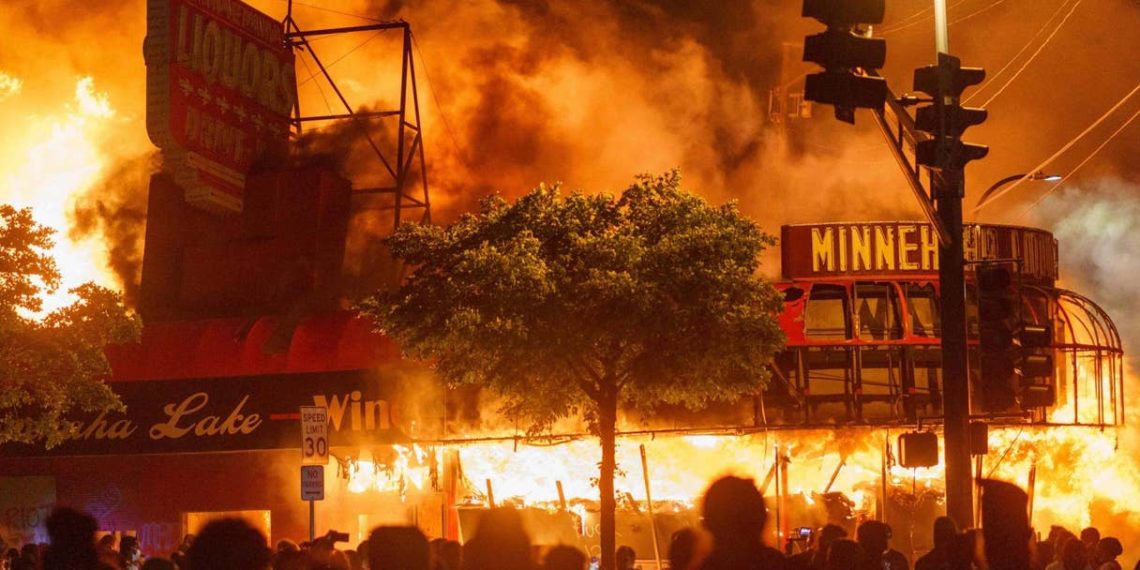
Does your health insurance cover your expenses if you're injured in a riot?

And what, precisely, does "in" mean here?

As we learned from last week's post on homeowner's insurance, the definition of a word is often (usually? always?) relevant when we're speaking of what's covered and what's not.

Okay Henry, what's your point?

Well, FoIB Bill M sent along a link to this little item:


And indeed, this appears to be very much the case.

In researching this post, I learned a few things, myself:

First, as usual, consulting the exclusions of a policy is generally pretty helpful in determining whether or not you have a valid claim (we'll circle back to this).

Second,the type of plan you have matters: individual versus group plans, even from the same company, may treat the issue differently (and indeed, one such carrier's individual plan has no exclusion for riot-related claims, while their group plans do).

Third, and I think this may the be the most important distinction of all: among those plans which exclude riots (and/or civil unrest), some exclude only those injuries resulting while an active participant, while others just exclude any and all riot-related expenses. This is important, as we've seen innocent folks pulled from their cars and others hit in the head by bricks thrown at them from yards away.

Oh, and what about other kinds of insurance? Well, turns out that, in general:


·         Life insurance (no longer) has no such exclusion, but Accidental Death riders may
·         Some individual disability plans do exclude riots/civil unrest, and some don't
·         Group plans seem to ...


And what about the Big Daddy, Medicare? Well, that also kinda depends. According to Kaiser Health News, "Medicare, the insurance program for people age 65 and older and people with disabilities, doesn’t have these exclusions."

BUT: Medigap policies (Supplements) typically follow Medicare's lead on what's covered or not, but that doesn't seem to be universal. For example, Viva Medicare Select Plus says:

"... the following items and services are not covered by ViVa Medicare Plus Select:47. Services required as a result of participation in a riot"


Hunh.

As usual, check with your own agent or carrier (or simply look up the exclusions in your policy itself). In this case, it really does pay to be informed.

[Special IB thanks to Brian D, Tana H, Beth D, Fred W, Michael B, Roger D, and co-blogger Bob V]

Friday, June 05, 2020

Homeowner's Heads' Up

Many of us have relatives who've been moved, for whatever length of time, into a nursing home.

Or, for estate planning purposes, put our home in a trust.

Or taken a new job in a new city three states away.

Yes, Henry, this happens all the time. What's your point?

Well:

"A couple in Georgia bought a “fixer upper” home that was being renovated by their contractor son before their occupancy began. During this three to four month period, they stayed in an apartment. Near the end of the renovation, the house suffered a $186,000 fire loss. The insurance company denied the claim under the homeowners policy."

All of these examples, both hypothetical and real-life, involve a little-known, and even lesser understood, insurance policy phrase "residence premises." And just what is "resident premises?" Well, it's typically defined as "the dwelling “where ‘you’ reside.” Okay, that seems straightforward enough, as long as we all agree on what "reside" means.

Hunh?

Well, when I leave for work in the morning on my long, arduous 6 minute commute, I may not be present in the house for the next few hours, but I still reside there. Likewise, when we take a week-long family road trip, we still technically reside there. It becomes a little fuzzier for snowbirds, but this is common enough that it's not really an issue.

As FoIB (and P&C Guru) Bill M advises, we begin to run into problems when we look at the terms terms 'occupancy' and 'ownership:'

When we assign ownership of our home to the Smith Family Trust, even though we still live (reside) there, we need to notify our insurance company, because the ownership has changed (although I would note that the risk has not, but then, one should never conflate 'common sense' with 'insurance'). When we maintain ownership, but actually move out and far away, this changes the nature of the risk, and we need to - you guessed it - notify our insurance carrier, or at least have a genuine heart-to-heart with our agent about what they advise.

What one should not do is simply pretend there's no issue or potential problem, because it's a lot easier (and cheaper) to address it before a claim and potential lawsuit.

#WordToTheWise

Thursday, June 04, 2020

Sigh: Another Riot-related P&C Post

So we know that our homeowner's and business insurance policies likely cover damage from the on-going riots, but what about all those cars we've seen being bashed and burned?

Well, we reached out to FoIB (and P&C Guru) Bill M for the skinny on that:

First, this is a covered claim, assuming that you have comprehensive coverage (comp, as opposed to collision or liability), and of course subject to the deductible.

And I found this interesting: if you have rental reimbursement coverage on the vehicle, that comes into play, as well, so that you're not even further inconvenienced.

Bill also confirmed that a business auto policy would also cover this, as long as one had the aforementioned comp coverage.

If the damage appears to be minor, it may make sense to get an estimate before turning in a claim, especially oif it's under (or just over) your deductible.

Thanks, Bill!

Tuesday, June 02, 2020

Our Friend and Erie Insurance doing good


We've posted before about how carriers are giving back to their clients:

"In general, insurers that represent four out of five auto insurance policies sold in the United States have offered to refund some portion of driver premiums."

But Erie's taken it up a notch, by partnering with local agents to support communities. In this case, FoIB (and resident P&C Guru) Bill M has chosen KIND (Kinds in New Directions) as his worthy cause:

"KIND is a free, inner-city, after-school and summer learning program."

As Bill explains, KIND provides young people with help and guidance with academic classes and life-skills (such as sewing and nutrition). Kudos!

If you'd like to help, just click here.

Monday, June 01, 2020

Riots, Unrest, and Insurance: What Gives? [UPDATED]

Given the current circumstances, it seems valuable to revisit a post we did a half-decade ago when Baltimore went up in flames. The question then, as now, was whether or not the property destruction would likely be covered under one's insurance. Of course, it gets a bit more nuanced, as coverage will differ slightly by locale and policy form. I reached out to FoIB (and P&C Guru) Bill M, who reminded me that a key distinction lies with the difference between terrorism (generally excluded) and civil unrest (generally covered).

He also confirmed that coverage is likely under both homeowners and commercial lines policies. As he so often instructs us: look to the exclusions for the best answers.

And with that out of the way, here's what we wrote in '15, and which applies today, as well:

Homes, businesses and cars have been burned, looted and otherwise damaged, leaving owners wondering what, if any, insurance payments they can expect.

The Insurance Information Institute (III) has helpfully published a media advisory confirming that, generally speaking, such damage is considered a covered event, and claims will likely be honored:

"Auto, homeowners, and business insurance policies generally include coverage for property losses caused by riots and civil commotions, such as those occurring this week in Baltimore ... Standard business property insurance policies provide coverage for the structure of the building as well as the contents inside"


Whew!

As always, be sure to check with your own carrier to confirm whether or not these exposures are, in fact, covered.

UPDATE: The folks at the Insurance Information Institute (III) have this timely update:

"Standard homeowners policies will cover damage to the property caused by fire, an explosion, a riot or civil commotion, vandalism or malicious mischief. This would include coverage to the structure of the home, as well as any personal possessions."

"Damage to the physical plant of a business and its contents that is caused by fire, riots, civil commotion or vandalism is covered under a Business Owners Policy (also known as a BOP). However, coverage for plate glass windows is often sold separately."

Tuesday, May 05, 2020

Carrier Kudos

A few weeks ago, we posted on efforts being made by various insurance carriers to ease the premium burden during the pandemic:

"Amica: 20% credit on April and May premiums

The Hartford: 15% refund on April and May premiums (but only for policies in effect as of April 1)"

And others. But FoIB Bill M alerts us to a unique effort being made by Erie Insurance to help promote local businesses, and particularly restaurants, during the lockdown:

"Want to buy a restaurant or store gift card but fear being stuck if the business never reopens after the coronavirus pandemic?In a generous move in these uncertain times, Erie Insurance will add gift card and gift certificate reimbursement coverage to its 2.2 million homeowners’ policies at no cost."

Well first, who doesn't like free? And  more important, what a generous and useful gesture: the plan covers up to $500 in gift cards - that's a lot of take-out (and coffee, and knick-knacks).

Nice job, Erie!

Wednesday, April 22, 2020

One more on BI vs CV

So yeah, we've been spending a lot of time blogging on this issue, but each week, it seems, brings a new facet. For those just tuning in, Business Interruption coverage "is supposed to help reimburse lost revenue due to a covered, physical loss (such as a fire, or a flood, etc). The issue at hand is whether or not a business forced to close because of the current pandemic is entitled to such reimbursement, since the physical structure remains intact (and distinct from a claim arising from actual contamination)."

There has been a growing chorus calling for the government (whether at the state or national level isn't always quote clear) to force carriers to provide this coverage and begin processing, and paying, BI claims based on mandated closures, but no actual physical loss.

One can see the problem here, of course: this coverage was never offered, underwritten, or issued by the carriers, and no premium for it was ever collected by them. In this case, truly free coverage.

It's not hard to imagine the consequence:
"Chubb Ltd. Chief Executive Officer Evan Greenberg has a stark warning for policy makers pushing insurers to pay out some uncovered business-interruption losses.

“The insurance industry is a fundamental part of the economic plumbing of this country,” Greenberg said in an interview Thursday. Forcing insurers to foot the bill for losses not covered by policies “would do great damage. It would bankrupt the industry.” [emphasis added]

Well, that certainly gets one's attention.

But surely there must be a middle ground between this all or (literally) nothing conundrum, and indeed there may well be:

"[Two leading industry groups] are calling on our federal lawmakers to adopt the COVID-19 Business and Employee Continuity and Recovery Fund (the “Recovery Fund”). The Recovery Fund would establish a streamlined and tailored federal fund to provide rapid liquidity to small businesses and commercial sectors impaired by COVID-19 through a business interruption claims adjudication process."

While I am generally not a fan of "may I have some more" from the Feds, this seems like the most judicious approach: after all, as we noted in the post at that first link, this is exactly the type of role government should be playing in this kind of situation.

Will it be enough?

Well, only time will tell, but this is the first reasonable proposal I've seen so far.

FWIW.

[Hat Tip for Chubb link: FoIB Bill M]

Friday, April 17, 2020

Refund Update [UPDATED]

As we noted the other day, many auto insurance carriers have installed discount/refund programs as a result of the pandemic's stifling effect on driving:

"In general, insurers that represent four out of five auto insurance policies sold in the United States have offered to refund some portion of driver premiums."

But that was just a small sampling. This time, FoIB Bill M tips us to a comprehensive list of many (most?) such programs. For example:
■ Amica: 20% credit on April and May premiums

■ The Hartford: 15% refund on April and May premiums (but only for policies in effect as of April 1)

■ Mercury Insurance: 15% credit on April and May premiums

And of course many others. Do click on over to see what your carrier's offering.

UPDATE: One carrier that didn't make the list is Western Reserve Group, which has just announced:

"[W]e are adjusting discounts and reducing rates for our personal lines auto policyholders, once we receive regulatory approval which we are expediting for review. By reducing rates, we are lowering premiums by more than $3.7 million for personal auto policyholders in addition to the almost $2.0 million in rate reductions offered to policyholders effective March of this year."

Wednesday, April 15, 2020

Winners from the P&C World

One of the side effects of the forced shut-down is that folks are driving less - a lot less. And this, in turn, has given auto insurers a good reason to refund at least some of our premiums (less driving = fewer accidents). As we've noted previously, some carriers have been pretty good about this:

"Allstate and American Family Insurance have begun discounting car insurance premiums since many drivers aren’t using their cars as much due to stay-at-home policies aimed at slowing the spread of the coronavirus."

But they're not the only ones and, in fact, some are even better about how they're handling this opportunity. FoIB (and P&C Guru) Bill M tips us to this list of the 10 Best such:

"In general, insurers that represent four out of five auto insurance policies sold in the United States have offered to refund some portion of driver premiums."

Nice!

Leading off in the #10 spot is MapFre, a carrier I've only recently heard of (our eldest is insured with, and speaks very highly of, them). I definitely recommend clicking through to see if your carrier is listed (and in what spot).

Tuesday, April 07, 2020

The more things change: CV-19 & BI

I know, I know, another Business Interruption post - enough, enough!

Except, well, not really:

To recap, Business Interruption coverage is supposed to help reimburse lost revenue due to a covered, physical loss (such as a fire, or a flood, etc). The issue at hand is whether or not a business forced to close because of the current pandemic is entitled to such reimbursement, since the physical structure remains intact (and distinct from a claim arising from actual contamination). As we've previously mentioned, the answer would presumably be 'No,' but that has since morphed to 'potentially Maybe.'

/sigh

So there's been a loud hue and cry from affected businesses that are facing significant cash flow (as in, zero or very little) problems because they've been forced to close (or drastically pull back). And of course there's increasing pressure on The Powers That Be© to "do something."

But is this wise, let alone appropriate? What should the government's role in this conundrum be (if any)?

Well, let's set the Wayback Machine to almost eleven years ago:

"It’s still far from the norm, but governments around the world are becoming increasingly involved in providing terrorism reinsurance. In addition to catastrophe cover, some are addressing business interruption ... Government involvement has become necessary ... as private insurers and reinsurers would otherwise step back from these risks – either by reducing their exposure or eliminating it completely."

Please note that last: "eliminating it completely."

But is that what really happened?

Well, as our friend and P&C Guru Bill M tips us, pretty much:

"[M]ost companies will probably find it difficult to get an insurance payout because of policy changes made after the 2002-2003 SARS outbreak ...  led to millions of dollars in business-interruption insurance claims ... As a result, many insurers added exclusions to standard commercial policies for losses caused by viruses or bacteria."

With the (predictable) result that carriers have what appears to be a bullet-proof claims-denial capability.

So, as with the airline and travel industries (among others), there's a concerted, vocal effort for government intervention:

"[P]roperty and casualty insurance companies are facing growing pressure to tap the industry’s $822 billion in cash reserves.

Lawmakers in New Jersey, Massachusetts and Ohio are considering forcing retroactive policy changes to cover coronavirus business-interruption claims
."

Counter-balanced against that, of course, is the (inconvenient?) fact that such coverage was never underwritten, and for which no premium has ever been paid.

#WhatCouldGoWrong?

But is this actually necessary? That is, what if there already existed a policy to cover these circumstances? Surely these would sell like corndogs at the state fair, right?

"Pandemic business insurance — complete with virus coverage — is offered by the broker Marsh."

Oh, that's great! So problem solved, right?

Turns out, not so much:

"It launched its outbreak insurance in 2018.

A few companies in the hospitality and gaming industries showed interest.

But not a single policy was sold
."

So, given that, is there some role for government here?

One more trip in the WBM:

"[T]he Terrorism Risk Insurance Act of 2002 to create a “temporary” federal backstop against catastrophic losses. This program subsidized private risk with public funds through a cost-sharing program for which the government does not receive any compensation."

So, government as BI backstop may yet be "a thing."

Guess we'll just have to wait and see.

Tuesday, March 24, 2020

From the P&C Files: More CV-19 News

I think we've had more P&C-related posts the past week or so than the past year combined. But it is Insureblog, so...

■ From one of our carriers (and, I'm sure, we'll see others following suit):
"Billing

Policyholders are understandably concerned about their ability to pay premiums as government mandated closures continue to increase. To help, we’re suspending all property casualty cancellations due to nonpayment from March 16 to April 30 – or later if required by an individual state.

While we hope that most policyholders can stick with their current payment arrangements, if you have a standard lines commercial, personal or life policyholder asking about alternative payment arrangements our billing associates are authorized to adjust the customer’s current bill and to waive any late fees for any premium payments due between March 16 and April 30. This is not a waiver of payments during the suspension period, but an extension or grace period for those directly impacted by this pandemic. Please have them contact our billing departments"

■ We've discussed Special Event coverage before:

"World Furniture Mall "promised that if the Bears shut out the Packers in the season opener at Lambeau Field in Green Bay, Labor Day weekend shoppers would get their furniture free."

And of course there's so-called 'Hole-in-one' cover and the like, as well.

Typically, these cover unforeseen issues like weather or the like, but what about the current situation? Well, our friends at the Ohio Insurance Agents association offer this heads' up:

"Read the policy language. Every policy is different. Prepare yourself by reading the policy language and specific exclusions on the Special Event Policies that you have issued. In addition, contact your underwriters for clarification on the exclusions to ensure you have a thorough understanding and will be able to communicate it back to your clients."

Always good advice.

Monday, March 16, 2020

From the P&C Files: CV-19 Exclusions

The other day, we learned that Business Interruption coverage is unlikely to extend to business that (temporarily) close their doors while the pandemic plays out. Turns out, there's likely a few more lines of coverage that will likely exclude CV-1-related claims.

Our good friend (and P&C guru) Bill M tips us to this item:

"U.S. P&C insurers face 'limited exposures' from coronavirus"

"While the virus will undoubtedly impact the health and life insurance markets, the U.S. property & casualty (P&C) sector may emerge relatively unscathed once the pandemic subsides."

Okay, I'll bite: why is that?

Well, it comes back to something we've seen before:

"Bill taught me a new phrase, and suggested I use it whenever I'm looking at these kinds of (potential) claims: "cause of loss." That is, which circumstances are specifically covered, and which are specifically excluded."

And here's where that phrase comes into play, CV-19-wise:

"However, if a factory closes because of fears that an infected worker contaminated equipment, BI coverage could be triggered. “But even in this case,” Fitch says, “claim exposures would likely be limited by policy sub-limits.”

This is different from the situation we discussed this past Friday: in this case, there seems to be an actual physical cause; but again, even that claim will probably be limited in scope.

This would also apply, for example, to supply chain disruptions and even travel interruption plans.

We  discussed this a couple of weeks ago:

"Plans where the Cancel for Any Reason upgrade has been purchased allows travelers to decide for themselves whether to travel or cancel their trip according to the terms of the plan."

One can imagine there's been a substantial uptick in interest in those kinds of plans, but as the article notes, "the adverse impact insurers will likely face will be from a decrease in demand" as folks decide to maybe trade in a staycation for that cruise (at least for the nonce). And it doesn't have to be international travel, either:

A colleague told me the other day about a friend of his who had tickets for the A-10 (?) basketball tourney in New York. He cabbed from the airport to his hotel, checked in, and learned that the event ha been canceled. Okay, disappointing, but we'll just take in a show, right?

Ummm:

"Broadway Shuts Down: Performances Canceled Through April 12 Due to COVID-19 Pandemic"

/sigh

Now, one area where carriers may see specific exposure is event cancellation (see above). When basketball and now even golf tournaments are canceled (or postponed), there may well be valid claims, depending on what type of coverage the organizers bought (if any). For example, "if the Olympics were to be canceled, Moody’s asserts that “losses could become material for some insurers,” with industry experts estimating insurance coverage for the games to be around $2 billion."

That's a lot of gold.

Friday, March 13, 2020

Business: Interrupted (COVID-19 edition) [Updated]

[Scroll to bottom for update]

We've blogged on the subject of Business Interruption coverage before, most recently here:

"[W]hen a business must temporarily close its doors due to damage to or destruction of business property, Business Interruption insurance coverage pays for business income lost while the property is rebuilt. This coverage is intended to help keep the company in business while recovery is underway."

In that case, it was a burned up food truck, but we've also addressed weather and even civil unrest-related cases. But what about health-related ones, specifically as they may arise from businesses deciding to (temporarily?) close their doors "out of an abundance of caution?"

Well, got this from one of my P&C gurus:

"In the event of my absence, if anyone for commercial lines calls and asks if there is any business income coverage due to their business shutting down during the Coronavirus outbreak, the answer is "No"."

And why is this?

"No direct physical loss."

Which makes sense, since the physical premises haven't actually been affected.

But what if the government mandates that your business close up (at least temporarily)?

Still outta luck.

Why?

Same reason.

The key is that the coverage is tied to the physical premises, not the business itself.

Caveat: This is true at least in Ohio; as always, consult with your own agent about your specific coverage.

UPDATE: I asked my two gurus "if BI coverage doesn’t extend because no physical loss, is there some kind of policy/coverage an owner can but that would?"

Both told me no.

I did point out to a Twitter follower that perhaps such coverage might be available through a Lloyd's syndicate, but that it would likely be prohibitively expensive (especially now, in the middle of the pandemic).

[Hat Tip: FoIB Teresa S and Bill M]

Thursday, August 22, 2019

Telemedicine in the News

We last blogged on telemedicine last Fall:

"[U]nlimited same-day/next-day doctor appointments for acute issues at $10 a visit and around-the-clock telemedicine for no out-of-pocket cost."

It was in that post that we first learned the newest buzz-phrase "Virtual Primary Care."

Anyway, fast forward a bit, and now the feature will be a required benefit in health insurance plans marketed here in The Buckeye State:

"Private insurance companies in Ohio are now required to cover doctor visits over the phone or on the computer."

The new reg is touted as a benefit to both consumers (for convenience) and providers (who will now be assured of reimbursement):

"Doctors have been anxious to include telemedicine in their practice but until law guaranteed insurance payments, some were reluctant to purchase equipment and learn how to do it."

Quite so.

Of course, no one's addressing the actual elephant in the room: who pays for this?

If you guessed "I, the policyholder, will be paying for it with increased premiums," please collect your winnings at the ticket window to your left.

[Hat Tp: FoIB Bill M]

Thursday, July 25, 2019

Bond, College Bond

Readers may recall our post last month regarding the plight of Oberlin College in Ohio. At the time, they had just lost a lawsuit brought against them by a local bakery that the college had apparently victimized. As we noted at the time, the institution's insurers may balk at covering it at all:

"[I]t appears that the insurer, Lexington Insurance Company, is likely to disclaim coverage for the intentional torts which gave rise to the verdict."

But wait, it gets better (well, for certain values of "better"):

"Will Oberlin College be able to secure a bond? Probably, but it might not be as easy as you would think."

What's this about a bond, you ask?

Well, as expected, the college is appealing the rather large judgment; the challenge is that such appeals take a while, and the interest alone on that sum is over $4,000 a day. The Gibson family is concerned that Oberlin might metaphorically "bleed out" and have nothing on which they can collect:

In Ohio, folks (and institutions) that wish to appeal an award are free to do so, but must post a bond which essentially guarantees that the amount will be paid if the appeal is lost. It's important to note that, as our good friend and guru of P&C Bill M points out, a bond is not an insurance policy, but a 'financial instrument.'

Okay, so what?

Well, in the post we excerpted above, it's claimed that the carriers "writing these appeal bonds want to take zero risk."

Which is kind of the anti-thesis of insurance, which is acknowledging and underwriting for a specific risk. In this case, the carrier(s) will want to have some pretty substantial collateral to back up their guarantee of such a large sum. This could be in the form of cash (as in the school's endowment), and/or buildings and equipment. The point is that, unlike a typical insurance policy, these plans are not risk-based.

That may yet prove to be critical.

[Special IB thanks to Bill M for taking the time to help us understand this]

Friday, July 05, 2019

Sidebar News: Life Happens

Been meaning to do this for a while, but was challenged finding "just the right one."

People often ask me "how much life insurance do I really need?" I have a special form that I give these folks to do their own assessments (lest they think I'm "goosing" the numbers). But in this digital age, I realized that it may be preferable to offer an online tool, preferably one that keeps such information anonymized.

A friend suggested that I have a gander at the Life Happens site, and sure enough, there's a very nice, intuitive, anonymous widget that I think fits the bill quite nicely. Available now in the sidebar, under "Resources."

Check it out!

Monday, June 24, 2019

Howdy Gramps, great to see ya!

We've written before about (so-called) Grandfathered Plans, most recently here:

"... as frustrating as it is, their current policy is the least bad alternative (at least until the next Open Enrollment period)."

A good blog-friend of mine recently wrote about her experience with her own grandfathered plan. She's a long-time MS patient, and had this to say:

"I finally received the hospital bill for my Feb 4th Rituxan infusion. That was my 36th infusion since Nov 2009. At first we tried stretching out the time between infusions, but I was still relapsing. After a relapse in Nov 2011, we went to the every-6-month schedule. I didn't relapse again until Feb 2016.

That's amazing!

So back to the bills. I'm a number cruncher and keep track of all sorts of things. For those 36 infusions, the hospitals have charged $539K in total. More than half a million dollars, folks! Insurance okayed charges of $458K of which $399K was for the Rituxan itself. Because of having a grandfathered individual insurance policy, my copay for infusions/drug has been limited to $22,857.24.

This is what I need to remember to appreciate my current monthly insurance premiums of $1028 (which will certainly go up again after my annual renewal in September). So from 2009-2019 (11 years), I will have paid at least $87,732 in insurance premiums, BUT my out-of-pocket maximum has been limited to $27,500, the most of which has been allotted to Rituxan infusions. (Vision, dental, and other prescriptions not included.)

So..... for $115,232, I have received half a million dollars worth of medical care for a single pharmaceutical treatment and have spent only about $5000 OOP for doctors, MRIs, or ER visits.

MOST IMPORTANTLY.......I'M STABLE!!

That's my gratitude thought of the day. The same day I worked outside in the yard for at least 4.5 hours this morning and experienced difficulty walking and gripping at times and really only want to sleep right now. Stable does not mean no symptoms or never any problems
."

Well first: Baruch HaShem that she's not getting worse (which is always a danger with MS).

It also puts into perspective something that doesn't always get much play regarding ACA plans: not only do they tend to have very narrow provider networks, they also typically include restrictive formulary benefits for meds. As we've long noted:

"The stated reason for this business model is that it helps carriers to rein in the cost of medications, which make up a disproportionate percentage of claims."

But it presents a major challenge to folks with, for example, MS (let alone cancer or diabetes).

My friend continues:

"I'm very fortunate that my current treatment is an infusion therapy, otherwise it would be a very different story.

It does support the extra cost of keeping that grandfathered PPO plan tight within my grasp for as long as possible. The $100 deductible, 10% co-insurance, and $2500/year OOP max (for med coverage) are priceless. Good thing I'm not taking any expensive oral or self-injectable drugs; $1500 max coverage for pharmacy drugs doesn't go very far. All generics for me
."

Bottom line: keep that legacy plan for as long as you can.