Friday, October 23, 2015

Interesting $Rx develpment:

For those folks following the saga of the $750-per-dose Daraprim kerfluffle, there's been a rather dramatic new development:

Now that's a bargain!

And it proves (again) the power of the free market. In fact, the company plans to expand this effort to other "sole-source generic" meds. So the market self-corrects without heavy-handed government intervention.

Gee, wonder if this could apply to other sectors, as well.

Wednesday, October 21, 2015

The 97% "Solution"

The ObamaTax continues its run as a rousing success (for certain values of "success"). The stated premise was to get more people insured; most folks quite reasonably understood that to mean "buy health insurance." As with most endeavors driven by good (?) intentions rather than sound economics, of course this proved not to be the case.

Want proof?

Here ya go:

"Health insurance enrollment data for 2014 shows that ... the vast majority of the increase was the result of 8.99 million individuals being added to the Medicaid rolls."

Medicaid is most assuredly not "insurance," thereby putting the lie to claims of record-breaking enrollments. But even that fails to properly describe the utter failure of the train-wreck:

"[T]he net increase in private health insurance in 2014 was just 260,000 people."

Yup, when you add up all the folks who actually lost the coverage they (presumably) liked, plus all those folks now on the dole, just over a quarter of a million people actually gained coverage.

Somewhat short of that multi-million person goal, no?

Our Betters in DC vs Reality

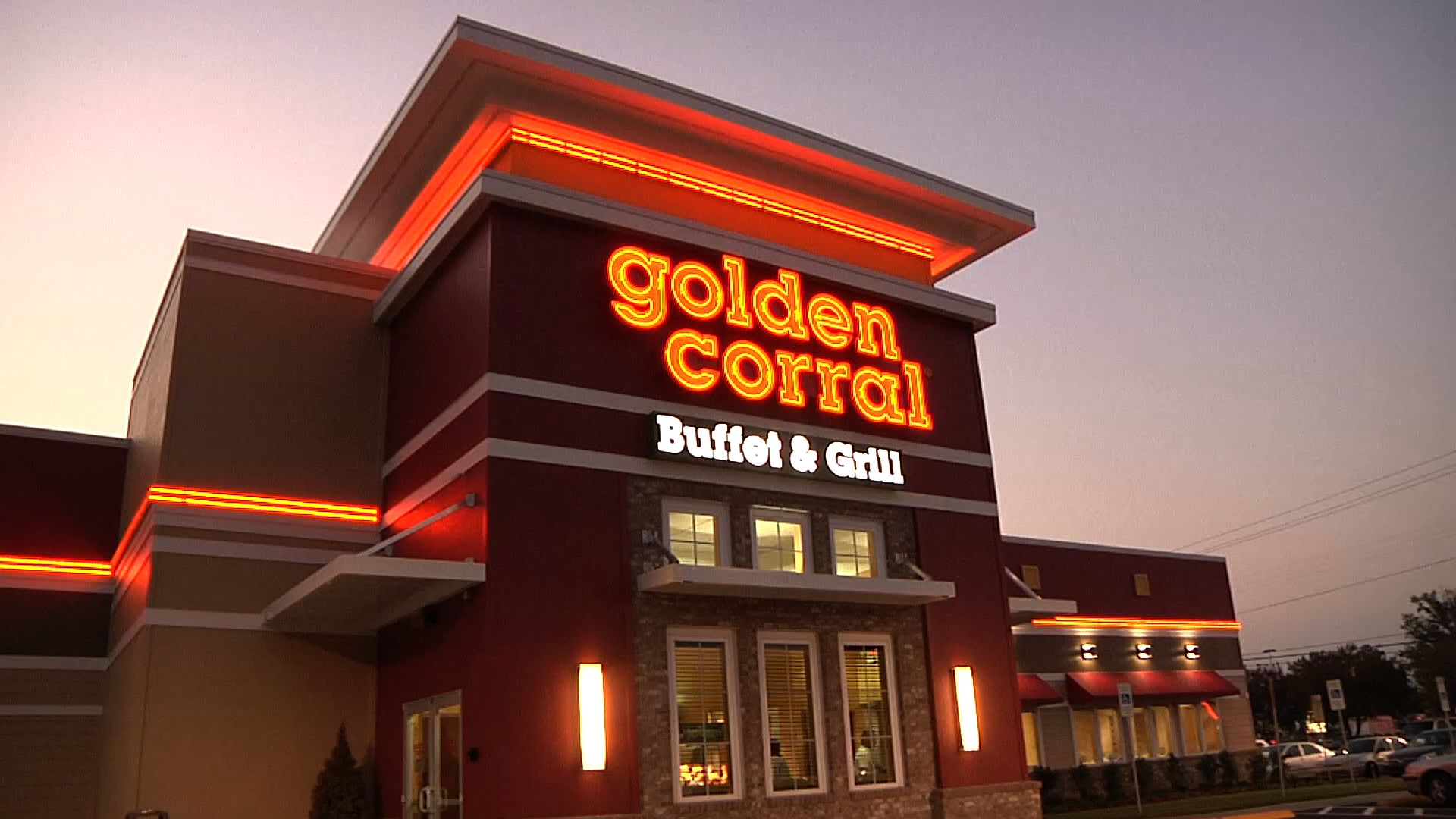
As we've said before, Americans aren't as stupid as the rocket surgeons in DC seem to believe. Case in point: Billy Sewell, head honcho of Golden Corral. Because of the (evil) Employer Mandate, and although concerned about the cost, he started offering employees access to his company's group health plan.  Depending on participation, this move could cost him over a million dollars.

Fortunately for him, his employees knew that actually enrolling would be a sucker move on their part:

"His actual costs, though, turned out to be far smaller than he had feared. So far, only two people have signed up."

But hey, rousing success.

[Hat Tip: FoIB Holly R]

Tuesday, October 20, 2015

CO-OP Secrets and Suits [UPDATED]

Lawsuits, that is. Seems that our post yesterday about how the Centennial State CO-OP was circling the drain has some pushback:

"Colorado HealthOP [has] sued the state's Division of Insurance in response to the agency's action Friday that in effect will shut [it] down."

And they're serious, too: they're asking for an injunction to keep the state from booting them off its Exchange. Interesting development.

UPDATE: Wow, that was fast:

"Colorado HealthOP CEO Julia Hutchins said after Monday’s unsuccessful challenge that she was barred by law from describing it."

We could tell you, but then....

[Update Hat Tip: Charles Gaba]

Obviously, it's no secret that HealthOP is on the ropes, and Pat's post from this past Saturday named quite a few others. But (and this is a big but) we may still not have the whole story: there's apparently a secret list of 11 such entities "on the verge of failure." Since all 11 of those on the list are alleged to be on "enhanced oversight," I may end up eating my words (metaphorically, of course) regarding Ohio's own InHealth (also on enhanced oversight):

Monday, October 19, 2015

Two more CO-OPS down the tubes

So when the dust (finally) settles, will there be any left?

One wonders:

"The Colorado Division of Insurance today announced that it will decertify the Colorado Health Insurance Cooperative"

The Centennial State CO-OP will be enjoined from offering coverage to new victims enrollees, although it will be allowed to help its existing client base (as things wind down). With Open Enrollment around the corner, current policyholders will (presumably) at least have a place to land.

A bit to the west, folks in the Beaver State face a similar fate:

"Health Republic Insurance of Oregon, has also announced plans to wind down its operations by the end of the year."

Interestingly, that endeavor was masterminded by the same rocket surgeons responsible for the now shuttering New York state CO-OP.

Failure theatre tickets now on sale.

#LIAM2015 Epilogue

So, last week I met with George's widow here at the office, and handed her the $250,000 check that had been faithfully delivered, as promised, by the insurance company. I always take these occasions very seriously; I had been entrusted by the insured to do so.

It's become fashionable in the past few years for companies to mail checks directly to beneficiaries, at the request of the agent.

I find this appalling.

A dear friend says - and I wholeheartedly agree - that delivering the check, in person, is the final step in the promise an agent explicitly makes to his insureds. Now, when the beneficiary lives several states or hundreds of miles away, then I understand the need to use the Post Office, but only after connecting with him or her.

But for any and all local clients (and most of mine are within an hour or so drive), I will relinquish this duty only at the request of the beneficiary himself. I'd like to think that most of us do likewise, but am beginning to fear that this is not the case.

And that's pathetic.

Unexpected! Dismal ACA enrollment ahead


It will come as no surprise to regular IB readers that the outlook for Open Enrollment v3.0 isn't bright. What may be a surprise is the magnitude of the train-wreck:


"[W]hen the law was passed, the Congressional Budget Office projected that enrollment would grow by 8 million in 2016, and reach a total of 21 million effectuated enrollees. In other words, Obamacare’s exchanges are on track to achieve less than half of the enrollment that was originally predicted."

Now one might do well to ask just how the rocket surgeons in DC could miss the mark by so much. The answer to that is revealing (and more than a bit disturbing): According to HHS Secretary Burntwell, "our target assumes something that is pretty challenging, which is that more than one out of every four of the eligible uninsured will select plans.”

That is, despite all the hype, all the hoopla, and the billions of subsidy dollars being doled out, the folks at CMS still can't entice even a quarter of uninsureds to sign up. And why is that? Perhaps it's the fact that, despite Washington's assumptions, Americans aren't that terrible at math, and can see the value in paying (perhaps) the fine penalty tax, vice thousands - or even tens of thousand - of dollars in total out-of-pocket.

But hey, Ms Sylvia, by all means go with "challenging."

Saturday, October 17, 2015

Now for some Co-op Bad News

Another two Co-ops have called it quits. Several of these closings are directly related to not receiving funds from the risk corridor program.

Here's a summary of federal loans they received and the number of people who will not be able to keep the insurance plan that they liked.


Two takeaways:  count on seeing more co-ops closing and never count on what the Government promises - especially when they are giving away other people's money.


Friday, October 16, 2015

Finally: Some *Good* CO-OP news

With all the disheartening CO-OP news lately, it's rather refreshing to find a reasonably sound one. And even better, one that I've been fortunate enough to recommend to some of my clients.

Headquartered near Columbus (OH), InHealth Mutual is a product of the ObamaTax, and, like its brethren, it relies on more than a few shekels from Uncle Sugar. This of course leads to sometimes problematic outcomes; for example, the company's currently under what's called "enhanced oversight" due to some rather substantial losses. As a result, they're "one of about two dozen ... co-ops nationwide that are receiving a combined $2.4 billion in loans" from the Feds.

On the other hand, head honcho Jesse Thomas is convinced that they can ride this out, and end up in the black. One reason he's so bullish on the company's future is that its "financial health ... remains higher than required" by both the state's Department of Insurance and the Feds. They're not out of the woods yet, of course; one way they're hoping to increase that cash flow is by convincing providers to accept lower reimbursements (that's probably easier said than done).

Time will tell, of course.

[Hat Tip: FoIB Colleen G]

User Error: HIX Mea Culpa

And now, the final (one hopes) chapter in my Exchange Training Saga 2016.

The good news is that I heard back from CMS, and the issue is resolved.

The bad news is that this was operator error (mine, to be precise). Apparently I missed 4 additional modules (I'm still not clear on how I missed them, but miss them I did), and that was why I couldn't generate certificates. In email from Kurt at CMS:

"My apologies – your record does show Agent/Broker, and for some reason I wrote Navigator.  However, the information is still correct.  Agent/Broker has 14 courses.  I have added the Agent/Broker curriculum to your record, and enrolled you in the remaining 4 course (011, 012, 013 and 014).  Once those are completed, you should be able to print your certificates."

So, my apologies to the folks at CMS for impugning their competence (well, at least in this instance), and my gratitude to them for helping me get it resolved.

Now, off to complete the rest of my training.

Thursday, October 15, 2015

One Step Forward, 2+ Million Steps back

Let's see: even with skyrocketing rates, CO-OPS closing, policies cancelled and networks shrinking, at least we can say that the ObamaTax has met its primary goal of insuring more folks. After all, prior to its passage there were billions and billions of uninsured Americans, now that it's been the law for years, all of that's behind us.

Um....

"A full 32.3 million non-elderly people do not have health insurance despite the costly health reform act and the individual mandate tax penalty"

But how can that be? After all, these new plans are perfect: free birth control, guaranteed issue and immediate coverage of pre-existing conditions - including pregnancy! What's not to love?
Lots, apparently.

Oh, and about that lede:

"A full 32.3 million non-elderly people do not have health insurance despite due to the costly health reform act and the individual mandate tax penalty"

Fixed for accuracy.

Wednesday, October 14, 2015

TN CO-OP assumes Room Temperature

And 27.000 people just lost the insurance they (presumably) liked.

Something about dominoes falling?

Tuesday, October 13, 2015

LTCi in the News

Item the 1st:

Northstar State bureaufolks are contemplating how they'll respond to recent (and often dramatic) Long Term Care insurance rate hikes. The good news?

"Over 99 percent of the policyholders have kept the policies, even with the increases"

On the other hand, venerable insurance wonk Joseph Belth castigated the industry, remarking that "there are many reasons why private insurance cannot be a good solution for handling LTC risk ... the probability of loss is high, knowing whether a covered loss has occurred is open to debate"

Um, not really, Doc: the contracts (and insurance policies are contracts) specifically identify triggers, and there's no evidence of widespread bad-faith claims denial.

Item the 2nd:

Meanwhile, in California, Gov Jerry Brown has signed off on legislation that tweaks how non-forfeiture benefits are handled. LTCi plans allow policyholders faced with rate increases to elect alternate benefits, such as a shorter payout timeline, or lower daily benefit amounts. The new law tightens up insurers' notification obligations.

Item the 3rd:

FoIB Jeff M alerts us to this report on the causes behind many policy lapses:

"Cognitively impaired individuals are more likely to allow a long-term-care insurance policy to lapse even though they're more likely to need long-term care ... less wealthy households allow their LTC policies to lapse more frequently, due in part to inability to continue paying insurance premiums"

As to the first, this is puzzling: all LTCi applications include the name of a 3rd party who would receive notification if a policyholder was behind on premiums. I can't imagine a scenario where that would be left blank (although, I could see where a change might not be communicated to the carrier).

The second is more nuanced: yes, premiums increase. But (as noted above), policyholders are offered various premium reduction options. Still, there's no perfect answer.

Monday, October 12, 2015

Cancer Walk 2015

Time's running out on this year's Making Strides Against Breast Cancer campaign: the walk is  just a few days away, and you can participate without even taking a step:

Just click here to make your donation, secure in the knowledge that you're helping to bring a cure one step closer.

Thank you!

An unCO-OPerative season

When they were first introduced via the ObamaTax, "Consumer Operated and Oriented Plans (CO-OP's) were ... an alternative to private health plans that are being offered to individuals and employer sponsored plans." They were touted as "start up insurance companies funded with taxpayer money that was set aside in the law. Each state was to have at least one or two of these not-for profit operations that would keep "profit mongering" private health insurance companies from paying extreme salaries to executives and huge dividends to wealthy investors."

As with most such initiatives based more on good intentions than sound economics, that hasn't worked out so well in practice. For example, as Patrick mentioned earlier this morning, the Blue Grass State's incarnation of this program has assumed room temperature (no surprise, as it's due to receive less than 12% of the risk corridor funds it was promised).

But it gets worse (depending on one's perspective, I suppose). Co-blogger Bob tips us to this disturbing (but inevitable) news:

"Half of Obamacare co-ops have eroding financial health."

The WashPo folks have even included a handy table to track these oncoming train-wrecks; it's not a pretty sight. If one were a betting person, I'd recommend $20 on Louisiana to go next.

But hey: rousing success.

Another One Bites The Dust (Part 5)

The Kentucky Health Cooperative announced it will be ceasing operations December 31, 2015 leaving 31,000 without their current health insurance plan. The federal government had funded them with approximately $58 million for start up and reserves. How much of that taxpayer money is given back is anyone's guess.

In it's announcement Kentucky Health stated that a big reason why it is closing is due to the fact that under the Risk Corridor program they are only receiving $9.7 million dollars instead of the $77 million they thought they were going to receive.

This theme is beginning to sound like a broken record.

WINhealth Loses

WINhealth, a Wyoming based insurance company announced that it will not be participating in the federal exchange this upcoming year. The decision is directly tied to the federal government's failure to have a timely, effective, and stable risk corridor program. Didn't Hank just mention this?

This shouldn't come as a surprise. When the government can't tell you how much you are owed and when/if you will be paid, even a risk based industry is unable to manage.

Friday, October 09, 2015

Training Day Update 2

Sigh.

Figured I'd update readers who've been following the saga of my 2016 Exchange training travails.

So, received this from the CMS folks:

"Thank you for contacting the Marketplace Learning Management System (MLMS) Helpdesk.

When you enrolled, you were not assigned the curriculum for Navigator – it was not added to your record.  The Navigator curriculum has 14 courses.  You still need courses 011, 012, 013 and 014
."

Only one problem, which I quickly pointed out to the rocket surgeons at CMS:

"I am NOT a Navigator, I am a licensed insurance agent."

That was Tuesday; I re-sent it an hour or so ago.

And the wait continues....

BREAKING: Mid-sized Groups dodge a bullet

President Obama has signed into law the PACE Act, which allows each state to continue to determine the definition of "small" group. Without it, the definition would become 2-100 lives nationally.

It's expected that Ohio will continue to define "small" as between 2 and 50 employees.

About that 3000% rate decrease: Part 6,549

Bill and Susan have a grandfathered HSA-compliant health insurance plan which covers them and their three children. Because it's Grandfathered, it's immune from some ObamaTax requirements (such as maternity coverage), but it also means that they can't make any changes (such as increasing the deductible to save premium dollars).

Their December renewal landed on my desk the other day, and it's a doozy. Their plan has a $6,000 family maximum out-of-pocket (MOOP), and their rate jumped 30% to just under $1,000 a month. They're not subsidy-eligible, so no help there.

Of course, I suggested that we shop around, but (as usual nowadays) I warned them not to get their hopes up.

Which turned out to be good advice:

Company A offered a plan which doubled their family MOOP to over $12,000, and cost $15 a month more than their renewal, Yippee!!

Company U had a slightly better "deal:" Bill and Susan could shave $20 a month off their premium, and only double their out-of-pocket.

Or they could choose a plan with only $1,300 additional exposure, and a slight premium increase of only $200 more than their renewal.

Such a deal!