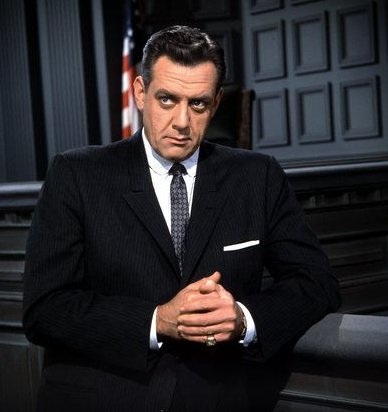
We note the passing of former life insurance agent Robert Craig Knievel, Jr, who passed away today at the age of 69. He represented the Combined Insurance Company for several years; in one week, he sold what may be a record 271 life insurance policies.
Mr Knievel left the insurance business in the 1960's, apparently to pursue other career opportunities.
He leaves behind 10 grandchildren and a great-grandchild, as well as longtime SO Krystal Kennedy-Knievel.
Rest in Peace, Robert.
Friday, November 30, 2007


VERY Long Distance
As previously noted, we do get quite a bit of email from various folks ("regular" readers, home office critters, and sometimes even trolls), but the other day I received a phone call from a distant land, one which poses some interesting challenges. I post it here in the hopes that one or more of our readers will have some solutions to share.
A couple of days ago, I received a call from Sweden. The caller was a 37 year old young lady pregnant with her first child. She and her husband plan to move to Florida in the next few weeks, and has been unsuccessful in her quest to find health insurance.
Small wonder.
She kept hitting brick walls until she googled "special risk insurance," and found us.
Very cool.
But also very challenging.
Here are the facts:
Sandra is a 37 year old female, 4+ months pregnant. Dual citizenship (US & Sweden), but her husband is a Swedish national. She works for a Swedish company, and will basically be a manufacturer's rep once she gets here. She could potentially qualify for a one-life group, if she ends up in a state where that's relevant. This past summer, she and hubby bought a home in Florida, but she could also land in either North Carolina or Tennessee.
Hey, if it was easy, anyone could do it!
She may also qualify for Medicaid (based on the pregnancy), but that seems a bit murky. I also directed her to the Coverage for All site (in the sidebar) in the hopes that there might be something relevant there.
But what I'm really counting on is the goodwill and immense knowledge-base of our readership.
Suggestions?
Cavalcade #40: Submissions Due
Just a reminder that submissions for next week's Cavalcade of Risk are due this Monday (the 3rd). Our host, Joe Paduda, asks that you PLEASE include:
■ Your blog's url
■ Your post's url
■ The post's trackback URL (if available)
■ A (brief) summary of the post
Friday Odds & Ends
■ This past summer, Bob had a series of posts on the TB-infected Atlanta attorney-cum-world traveler who seemed oblivious to the danger he potentially created. According to the CDC, "(t)ests on hundreds of airline passengers show that no one caught tuberculosis" from Mr Speaker.
On the one hand, we're grateful for the positive turn of events.
On the other, it doesn't absolve him from putting other folks' lives in jeopardy.
■ Apparently, the "graveyard shift" is aptly named; turns out, "scientists suspect that overnight work is dangerous because it disrupts the circadian rhythm, the body's biological clock. The hormone melatonin, which can suppress tumor development, is normally produced at night."
This can lead to an increased risk of cancer among those who work such hours.
■ About a year ago, we blogged on the surprisingly low participation in Flexible Spending Accounts. Now, USA Today reports that "la plus ca change:" only 1 in five "of workers in large companies that offer FSAs actually enroll in them."
Unfortunately, it seems to be a simple matter of education; when folks truly understand the tremendous benefits, and relatively low risk, of participating, FSA's become more attractive.
But who, exactly, is going to provide that education?
And some critics (myself included) believe that the major problem with these "use it or lose it" arrangements is that they encourage more health care spending, which in turn drives up costs. Others (myself not included) complain that they "simply encourage overspending on discretionary medical care, at a cost to taxpayers."
On the one hand, we're grateful for the positive turn of events.
On the other, it doesn't absolve him from putting other folks' lives in jeopardy.
■ Apparently, the "graveyard shift" is aptly named; turns out, "scientists suspect that overnight work is dangerous because it disrupts the circadian rhythm, the body's biological clock. The hormone melatonin, which can suppress tumor development, is normally produced at night."
This can lead to an increased risk of cancer among those who work such hours.
■ About a year ago, we blogged on the surprisingly low participation in Flexible Spending Accounts. Now, USA Today reports that "la plus ca change:" only 1 in five "of workers in large companies that offer FSAs actually enroll in them."
Unfortunately, it seems to be a simple matter of education; when folks truly understand the tremendous benefits, and relatively low risk, of participating, FSA's become more attractive.
But who, exactly, is going to provide that education?
And some critics (myself included) believe that the major problem with these "use it or lose it" arrangements is that they encourage more health care spending, which in turn drives up costs. Others (myself not included) complain that they "simply encourage overspending on discretionary medical care, at a cost to taxpayers."
Wednesday, November 28, 2007
Health Wonk Review: The Early Edition
Master wonk Dr Roy Poses hosts this week's edition of the Health Wonk Review. It's chock full of interesting and insightful posts on health care policy and polity, with helpful summaries of each post.
As regular IB readers know, we are major proponents of transparency in health care, including little things like "does this procedure work, and is it really necessary?" Over at Gooznews, blogger Merrill Goozner [ed: what a cool name!] takes a look at the latest cancer screening test being touted by Medicare and the VA, and asks "(d)oes screening actually save any lives?" The answer may surprise you.
As regular IB readers know, we are major proponents of transparency in health care, including little things like "does this procedure work, and is it really necessary?" Over at Gooznews, blogger Merrill Goozner [ed: what a cool name!] takes a look at the latest cancer screening test being touted by Medicare and the VA, and asks "(d)oes screening actually save any lives?" The answer may surprise you.
Doing Right...
As I've noted before, I have a little sticker on my phone as a constant reminder to always do what I think is in my clients' best interest (not that I need constant reminding, but it keeps me humble). Today I had another opportunity to take it for a spin, and I'd like to share that with you. A caveat, however: the story you're about to read is true, the names have been changed to protect private information, and I share it with you as an example of how I believe most professional agents would handle the same circumstances.
The gentleman who founded this agency almost 40 years ago is semi-retired, but keeps his hand in (mostly so his wife has an excuse to get him out of the house). One of his friends and long-time clients called him with a problem, and he referred this gentleman to me for assistance.
It seems that this gentleman, we'll call him Tom, has a 55 year old daughter, Susan. Susan was widowed some 20 years ago, and raised her two children by herself. The eldest has recently married and moved away to another city, and the youngest is in college away from home, as well. She has found herself becoming more and more depressed, and has found (as so many have) solace in a bottle. This has reached the point that her employer had to let her go this past summer, but continued to pay for her health insurance through the end of this year. At that time, she's on her own; worse, because of her health history (which include the alcoholism and other issues), she is uninsurable in the "regular" market.
I would like to point out that she chose to adopt that bottle, and that most of her other issues stem from that decision. We are all responsible for the decisions that we make.
In the event, I agreed to meet with her, primarily because of that sticker, but also out of loyalty to the retired gentleman. I was also intrigued by some of the side issues, which included an employer exemption from COBRA compliance. Something not widely known is that some organizations aren't required to offer COBRA continuation even though they might otherwise fit the requirements. She had worked for one such, so COBRA was not an option.
Believe it or not, there were others.
One was the state-mandated guaranteed option route. This is the same plan one would buy once one had exhausted COBRA (were it available and elected). The benefits of this plan were the low qualification threshold (doesn't get much easier than "guaranteed issue") and the fact that it would cover her pre-existing conditions. On the down side, it's rather mediocre coverage, but it is expensive. For Susan, the rate would be well over $1,000 a month.
I understand and believe in the value of insurance. But I also try to live in "the real world." So I absolutely understand if someone says "12 thousand dollars a year?! Plus deductibles and co-insurance? Are you kidding?!" So I can certainly understand someone who decides to roll the dice. And I can't say that I blame them, or even disagree.
Heresy!
Not at all. Insurance is about risk assessment ("I'm uninsurable") and risk management ("this stuff is expensive!"). If one can't justify the premium based on the cover, then that's a legitimate conclusion.
So I also proposed a limited benefit (or mini-med) plan as an alternative to the state-mandated one. My thinking was that it would serve to mitigate the damage should there be a large claim. Again, it's a question of risk management.
Finally, I also printed out the Ohio grid from Coverage for All (on our sidebar). The idea was that, even if she decided not to buy any insurance to offset her increased risk, at the very least I could help her find some way to soften the blow as she received the treatment she needs.
This is a sad situation, with no real "happy ending." But I was awfully proud to have been able to help in some small way.
Now that's a good day.
What if?
Okay, I need to work on that title, but here's the gist: If we agree that health insurance has more in common with Property/Casualty than Life insurance, then perhaps we can learn a lesson from our friends in the Sunshine State:
"Last January, Floridians decided they'd had enough of rising homeowners' insurance rates. Tallahassee allowed a state-run company called Citizens Property Insurance to expand its coverage of private homes and businesses against damages from hurricanes and other disasters."
And that's worked out pretty well: Citizens is now the biggest writer of property insurance in Florida, eclipsing even our friends The Good Neighbors.
In fact, Citizen's has become so successful that it currently has over $400 billion (yes, billion with a "b") in liabilities. Which is only a problem insofar as it's currently collected something like $3 billion in premiums.
Ooops.
But that's not really a problem, you see, because -- worst case scenario -- if there is a devastating storm that wipes out Citizens' (and you just have to love the irony of that name here) meager assets, all they have to do is go back to the actual citizens (note the lower case "c") and make them pony up. They can do that, you see, because they've got the power of the government behind them.
Sweet.
Until you start calculating the costs: "Andrew, in 1992, caused $23 billion in damage," or about 7 years worth of premiums. And that was 1992 dollars. Do the math.
Now, what does this have to do with health insurance? Well, it seems to me that this P&C scheme quite accurately models what we've seen proposed in the way of gummint-run health insurance (and please note the very purposefully chosen terms). That is, the government decides what's (and who's) covered, sets the premiums, and (if they're too low), comes back for more (see Bob's post below). With the power of the federal government. And what happens if (or when) there's a major problem (MRSA, anyone?)?
Hey, I'm just supposin'.
Tuesday, November 27, 2007
A Generic Update
[Welcome Industry Radar readers!]
About a month ago, Mike wrote about the disconnect between reality and prescription drug co-pays. Under Mike's current health plan, if a med costs $10, and the co-pay is $15, he actually has to part with the extra $5 if he uses his card. So of course, he simply says "nope" when asked about insurance, and gets that med for $10. He (and apparently lots of others) have also found the $4 deals (WalMart, Target, etc) to be a boon in this regard, as well.
About a month ago, Mike wrote about the disconnect between reality and prescription drug co-pays. Under Mike's current health plan, if a med costs $10, and the co-pay is $15, he actually has to part with the extra $5 if he uses his card. So of course, he simply says "nope" when asked about insurance, and gets that med for $10. He (and apparently lots of others) have also found the $4 deals (WalMart, Target, etc) to be a boon in this regard, as well.
One of our faithful readers took issue with Mike's assertion that he'd have to pay the full co-pay even if the med actually cost less. This reader (who wishes to remain anonymous, but for whom I can vouch credibility) wrote to let us know that his company, United Healthcare, generally doesn't ding their members in this way:
"I have now confirmed that UnitedHealthcare (my employer) IN FACT DOES only assume member responsibility up to the contracted cost of a covered service for BOTH medical and pharmacy claims. In short, we do not attempt to charge members a full copay for covered services like those involving $4 generic drugs at Walmart and Target when the contracted rate is less than the copay on covered services."
He adds that their most recent pharma contract language says:
"For Prescription Drug Products at a retail Network Pharmacy, you are responsible for paying the lower of:
• The applicable Copayment and/or Coinsurance or
• The Network Pharmacy's Usual and Customary Charge for the Prescription Drug Product."
Which would seem to indicate that under those plans, if the scrip was $10, you'd pay $10.
Of course, these all apply to commercial, insured plans, not ERISA (self-funded) ones. Generally, ERISA plans can include pretty much any language the employer wants, which means that the minimum co-pay amount charge could be required in such a plan.
I'd really like to Thank our anonymous source, and would challenge other carriers (we know you read us!) to chime in.
A Truly Grand Rounds
Dr Prudence, writing at her eponymously named blog, presents an outstanding 'Rounds this week. This marks her debut hosting GR. She starts with her five favorite (and, we're proud to say, our entry claims the Top Spot), and then another 28 entries, all are categorized and include helpful context.
Regular readers of IB know that we are major proponents of personal responsibility. So it's especially gratifying to read ER Nursey's post that begins "I think there are too many people who don't have anything to do every day but sit and think about their problems." Read the whole thing.
Monday, November 26, 2007
Carnival of Personal Finance is up...
And it's a doozy! Host Blain Reinkensmeyer, blogging at Stock Trading To Go, has this week's passel of personal finance posts, all helpfully categorized and summarized. There's even an interesting factoid for each category (did you know that Bill Gates makes $30 million every night - in his sleep?!).
This week's Carnival offers a Top Five, and our friend SVB from The Digerati Life has a helpful and timely post on how to be a safe, careful consumer. Some good advice, especially at this time of year.
Thursday, November 22, 2007
Happy Thanksgiving!

[Photo courtesy Lake Junalaska]
Bob, Bill, Mike and I extend to all our readers and guests a wonderful, joyous, and safe Thanksgiving.
And building on Bob's post below, there's a concrete way to say Thank You to those who spend the holiday guarding the freedoms for which we're so grateful: most cell phone companies are participating in the Giving Thanks Campaign, through which you can text your own, personal Thank You to our men and women in uniform. Just text your message to 89279 and bring a smile to a soldier's face.
Wednesday, November 21, 2007
Cavalcade of Risk #39 is up!
Jay Norris hosts the Thanksgiving edition of the the Cavalcade of Risk. Please be sure to check it out.
Tuesday, November 20, 2007
Mass Ooops
Previously on IB: Massachusetts implements a new mandatory health insurance scheme. It is projected to cost $(fill in the blank), and to (eventually) cover everyone in the state.
Fast forward to reality...er, today:
Well why not? When "someone else" (i.e. the taxpayer) is picking up the tab, it's not too difficult to see the attraction. But that $147 mil is only the beginning; we have to wait for the second page of the article to learn that the true liability is over $600 million, more than 4 times the current shortfall.
And since the plan does absolutely nothing to control the cost of health care, expect those numbers to climb even (ever?) higher.
One bright spot: by treating the various states as independent laboratories for these experiments, we're able to contain the damage, yet still learn a little bit more about which kinds of plans will work, and which ones not so much.
Monkey See...
So we received the following email:
"We would like invite you to participate in a study of health bloggers, "From My Experience to Yours: Taking the Pulse of Health Care Blogs in the Blogosphere," administered by Brown University. The study assesses the use of blogging in the area of health and medicine."
They're targeting "health-related" bloggers; of course, if they truly understood the genre, they'd call us "medbloggers." Still, it's interesting that they're trying to quantify our little corner of the blogosphere.
The survey's hosted by a site called, of course, "SurveyMonkey." It was pretty well done (took me about 5 or 6 minutes to do). They asked questions about how long I'd been blogging, and (more importantly) why. What they didn't ask was also interesting: no questions about blogging for money, or awards, for example. There were some demographic questions (age, household income, etc). They specifically asked if I was Hispanic (I'm not, but my daughter's in Honors Spanish).
At the very beginning, they said this:
"This survey is part of a research study at Brown University of health-related blogs, covering such topics as health policy, research and news, specific illnesses or diseases, and personal experiences of doctors, students, and patients. Our research examines the ways in which blogging has impacted discussion of health topics, information dissemination, and community-building."
The email promised me "a summary of the responses." One supposes that this is remuneration enough.
IB: Legal
Legal information biggie Lexis-Nexis has dropped us a line:
Gentlemen:
I am happy to let you know that your blog has been selected to be included in the "Top Blogs" section of LexisNexis' Insurance Law Center.
We take pride in associating with the best talent in the legal world, so we are thrilled to include you as part of this dynamic new platform that features commentary from experts, and gives visitors to the site the ability to interact with the content and one another. Also featured on the site is real-time insurance news, blogs from internal teams at LexisNexis, news about attorneys, firms and insurance companies, plus several delivery options, including RSS feeds, Podcasts and email alerts.
The selection of your blog was made by insurance editors at Matthew Bender and LexisNexis Mealey's Insurance publications as one that can be relied upon to provide its readers with timely review and analysis on insurance and insurance related topics.
We are thrilled and honored to be selected, and just a bit stunned, as well. Thanks to our readers for helping to move us "up a notch."
Monday, November 19, 2007
Moron or Fraud: Update and Conclusion
Last week, we discussed the curious case of the gentleman who submitted multiple applications to the same carrier, both of which contained fraudulent information. I spoke this morning with the underwriter, and then with the Department of Insurance.
The underwriter is well aware of the facts in this case, because he is the underwriter for both myself and the other agent. We had a rather lengthy conversation, wherein I reiterated that the only correct course of action was to decline both applications for material misrepresentation. He disagreed, but offered no rationale for that decision. He is going forward with the underwriting.
I told him that I had no intention of withdrawing my application, and he responded that it didn't really matter, because the applicant was providing the other agent with an Agent of Record letter. This is a means by which an insured can specify his "official" agent in these matters. At that point, I begged off the conversation before I said something regrettable.
I really had only one option at that point, which was to contact the Department of Insurance, Fraud Division, and discuss this with them. After laying out the whole story, the gentleman from the DOI explained that there really wasn't anything that they could do, and that I had done my due diligence in this matter. Since I had informed the carrier of the fraud (actually, they already knew, I simply confirmed it), there was nothing more for me to do. If the carrier was so inclined, they could notify the state, but that was entirely in their hands.
I explained to the DOI rep that in addition to selling insurance, I'm also a licensed CE provider, and even teach a course on ethics. To which he replied (correctly) that I teach agent ethics, not consumers'. That's really only half right: the course also includes carrier ethics (an oxymoron, of course), but I didn't think that bringing this up would move the ball forward.
At this point, there's really nothing more for me to do with this case. I will not withdraw the application, but I won't pursue it, either. Of course, I now have to rethink my relationship with Carrier C. I have printed out a copy of both these posts and added them to this client's file; in addition, I've sent a note to the underwriter confirming the facts of the case (a copy of which is also in that file).
There are a number of issues that follow from this, of course, and perhaps these would be worth exploring in the comments section. In the meantime, I'll consider the matter closed, and try to move on (although I'm not really sure that I can).
The underwriter is well aware of the facts in this case, because he is the underwriter for both myself and the other agent. We had a rather lengthy conversation, wherein I reiterated that the only correct course of action was to decline both applications for material misrepresentation. He disagreed, but offered no rationale for that decision. He is going forward with the underwriting.
I told him that I had no intention of withdrawing my application, and he responded that it didn't really matter, because the applicant was providing the other agent with an Agent of Record letter. This is a means by which an insured can specify his "official" agent in these matters. At that point, I begged off the conversation before I said something regrettable.
I really had only one option at that point, which was to contact the Department of Insurance, Fraud Division, and discuss this with them. After laying out the whole story, the gentleman from the DOI explained that there really wasn't anything that they could do, and that I had done my due diligence in this matter. Since I had informed the carrier of the fraud (actually, they already knew, I simply confirmed it), there was nothing more for me to do. If the carrier was so inclined, they could notify the state, but that was entirely in their hands.
I explained to the DOI rep that in addition to selling insurance, I'm also a licensed CE provider, and even teach a course on ethics. To which he replied (correctly) that I teach agent ethics, not consumers'. That's really only half right: the course also includes carrier ethics (an oxymoron, of course), but I didn't think that bringing this up would move the ball forward.
At this point, there's really nothing more for me to do with this case. I will not withdraw the application, but I won't pursue it, either. Of course, I now have to rethink my relationship with Carrier C. I have printed out a copy of both these posts and added them to this client's file; in addition, I've sent a note to the underwriter confirming the facts of the case (a copy of which is also in that file).
There are a number of issues that follow from this, of course, and perhaps these would be worth exploring in the comments section. In the meantime, I'll consider the matter closed, and try to move on (although I'm not really sure that I can).
Carnival Monday!
This week's Carnival of Personal Finance is now available at Moolanomy. It includes over 80 posts, in the now-familiar Top-10-then-the-rest format (which, for the record, I really prefer for these larger efforts). The "and the rest" posts are divvied up into helpful categories, and include summaries.
FIRE Finance's contribution is about disaster preparedness, and was inspired by the recent California wildfires. Good pointers.
Leprechauns Amok
Today, we turn our sights on the Irish National Health Service (which is apparently not all that "vaunted"). It seems that they have a little problem of their own:
Now, it may not seem like 7 out of 3,000 is that big a deal (after all, it's less than 2/10's of 1%). Of course, it's certainly a big deal for those women who were given the incorrect results, but taken as a whole, it wouldn't seem that significant.
Except for this:
"Then as the situation further evolved, we learned how there were problems with dirt, with 16-year-old machines."
As Bill has noted before, sanitation is not a high priority in these kinds of systems, so it's not necessarily a big surprise that the equipment is ill-maintained. But if the machines are dirty, the folks who run them are filthy:
"(A) surgeon in the hospital had expressed concerns about radiological service as far back as July 2005. He had particularly pinpointed inexperienced staff."
And it gets worse:
"Patients are devastated and are getting it from every angle; overcrowded Accident and Emergency (A&E) departments, patients on trolleys, hygiene problems...we still get calls every day from patients about things as basic as dirty bathrooms, handwashing facilities and towels."
By all means, let's do that here.
Friday, November 16, 2007
MVNHS©: Like a Virgin
While the Much Vaunted NHS© has no compunction about withholding potentially life-saving cancer treatments, it's less sanguine about denying other "medically necessary" procedures:
"Women are being given controversial "virginity repair" operations on the NHS, it emerged last night.
Regular IB readers may recall our IVF "kerfluffle" a few years ago: I fail to see where this process crosses the "medical necessity" threshold, either. It boggles the mind that this procedure costs upwards of $8,000 a pop.
The catalyst, and rationale, behind this sudden burst of medical activity appears to be cultural rather than medical. I have nothing against most religious practices, but I don't see why the taxpayer is required to fund them.
The MVNHS© has a history of acquiescing to a specific cultural bloc, which may explain why they've rolled over so easily on this issue, as well.
Cavalcade #39: Submissions Due
Just a reminder that submissions for next week's CoR are due this Monday (the 19th). Our host, Jay Norris, asks that you PLEASE include:
■ Your blog's url
■ Your post's url
■ The post's trackback URL (if available)
■ A (brief) summary of the post
Bringin' Home the Bacon
Once in a while, one comes across a particularly well-reasoned post that seems to just pop out of the screen. Perusing our referral log, I noticed a site with which I was not familiar, and clicked over to it.
And wow, am I glad I did.
Although The Happy Hospitalist has only been blogging for about a month, it's clear that he (she?) brings a unique and valuable perspective to the medblog world. In a post dated yesterday (the 15th), we are treated to a comparison of currency values to the delivery of health care. And it makes sense!
By leveraging a brief explanation of how the US dollar is falling relative to the Canadian "Looney," THH is able to demonstrate how Medicare artificially inflates the cost of medical care for everyone.
Thursday, November 15, 2007
Stupid Agent Tricks
[Welcome Industry Radar readers!]
We've blogged before about Agents Behaving Badly©, but here's a new twit, er, twist:
We've blogged before about Agents Behaving Badly©, but here's a new twit, er, twist:
Mr Knowlin apparently pled guilty this past summer to conspiracy charges. They arose as a result of a "kick-back scheme" relating to coverage he was assigned to secure for a Magnolia State county. In a rather novel turn of events, Mr Knowlin claims that since he did, in fact, secure said coverage, there were no damages, so nothing to be repaid.
Un-hunh.
I'm not holding my breath awaiting his exoneration.
Health Wonk Review!
First time hostess Maggie Maher hosts this week's assortment of posts on health care policy, funding and tech. Instead of the usual "list of posts" format, though, she weaves disparate posts into an interesting and compelling narrative. Ingenious, and unique.
Kudos, Maggie!
The folks at Workers Comp Insider never fail to impress me with their ability to take a potentially uber-wonky subject and make it accessible to the rest of us. This week's HWR features such a piece, written by WCI's Jon Coppelman, about an otherwise model employee fired for tardiness. But there's a twist.
Wednesday, November 14, 2007
Some for Thee, None for Me (The MVNHS©)
So you're an Englishman suffering from debilitating arthritis. You've just been told by the Much Vaunted NHS© that you can't have "a drug that is widely available in Scotland" that's deemed to be quite effective.
Across the Pond, they've taken to calling this "public services apartheid." Ouch.
In addition to the arthritis meds, there's a whole raft of cancer treatments available to Scotsmen but offlimits to the English. These include lung cancer treatment tablets, implants to fight brain tumors, and osteoporosis treatments.
The problem is exacerbated by the fact that Scotland receives some 11 billion pounds (almost $23 billion) in "financial aid" from London, which serves to stoke the flames of resentment.
So, is the MVNHS© coming apart at the seams?
Time will tell.
Big Sticks, Mouths
We don't generally engage in partisan politics here at IB, but this one is just too juicy to pass up (and besides, we've blogged on this very subject before):
That'd be some trick.
If he could actually pull it off:
Seems that this little-known piece of paper (aka The Constitution) has a troublesome little clause in it about "separation of powers."
In other words, an empty threat (if not an empty suit).
Tuesday, November 13, 2007
Moron or Fraud: You Make the Call
[Updated - see bottom of post]
Okay, let's set the stage:
When completing an application for life insurance, one is required to answer all of the questions "to the best of one's knowledge."
One of the questions on ALL life insurance app's is: do you currently have any other applications pending (or words to that effect)?
So about a month or so ago, I get a call from Ben, who's looking to purchase some life insurance. He'd tried to do so this past summer, but was turned down by Company H due to "recent open heart surgery." Which would have made sense, except that (Ben claims) that he never had any such surgery, recent or otherwise.
In fact, he'd been in contact with Company H attempting to "set the record straight," but had had no success. I explained that this was not surprising: he needed to be working with the MIB, not the carrier. He and the Missus apparently appreciated my advice, and we went about completing his application with Company C. I also contacted our paramed service to schedule his exam (which was required due to his age and the requested face amount).
About 10 days ago, I received a note from the underwriter asking about a "plethora of activity" in Ben's MIB file. I reiterated the story of the non-surgery, and put the file aside, awaiting a decision.
Today, my Company C field rep called with an interesting development: it seems that they have received a second application for Ben, from another agent, for the exact same face amount and policy type.
Ooops.
Since my app had hit the home office first, I had dibs on the case, but they really wanted to know what was going on. I called Ben and got his voice mail; after leaving a message, I also called Mrs Ben and got hers, as well. This afternoon, Ben called back, said he was just trying to get a policy, and said he'd work with the other agent.
Not so fast, fella.
So I called my field rep back, and told him that I was not too happy about the whole situation: I had already spent considerable time, and helped resolve a problem that I hadn't even created (Company H's decline), and I wasn't too happy about just stepping aside. I also pointed out that Company C now had a major problem:
One of those two app's is fraudulent.
Hunh?
Well, let's go back to our initial stage-setting: depending on with whom he had first met, Ben lied to either me or the other agent. That is, he told us both that he had no other application pending. Since he couldn't have been at both places at the same time, one of those statements was a lie.
Now, I could agree to withdraw the app which I submitted, or the other agent could. But that would not obviate the fact that Ben had willingly and knowingly submitted a fraudulent application. And both to the very same carrier.
Had he submitted app's to two different carriers, it still would have constituted fraud (assuming the same facts), but it would be very unlikely to have been caught.
So, is Ben a fraudster, or a moron?
I have my own opinion, of course, but I'd really love to hear our readers'.
UPDATE (11/15/07): My field rep called late yesterday afternoon with more information. Turns out that my application did indeed hit the home office first, and was dated the 23rd. The other agent's app arrived a few days later, dated the 26th. While this serves to confirm my place as 1rst in line (a rather dubious distinction in this case), it also underscores something else: while it's certainly reasonable that one might forget a few stitches received 15 years ago, how does one forget completing another insurance application (not exactly the world's shortest form) three days before?
And there's this:
There has apparently been a lot of MIB activity on Ben in recent weeks, not all explained by the alleged error regarding the heart surgery. If I had to guess (and it is just a swag), I'd say ol' Ben's got more apps out there than just the two we currently know about.
My next step is the DOI, to explore the process of "dropping a dime."
Sickening Developments
Last spring, we reported on Paid Time Off Banks, where employees could treat their sick days as commodities. Of course, this was predicated on the assumption that employers voluntarily allot a certain number of those days.
But what happens when the gummint mandates that employers provide paid time off for illness?
Well first, as we've seen in every other area of the benefits equation, people will lose benefits (days).
Hunh?
Well, if the gummint mandates that employers must provide, for example, 8 such days a year, what employer would voluntarily offer any more than that?
And, of course, jobs will be lost.
What?!
Well, one proposal would require "five to seven sick days annually for full-time workers at firms that employ 25 or more people." So what do you think's going to happen to employees #25, 26 and 27? At least they'll have COBRA benefits.
And, of course, many companies will either close, or scale back significantly:
"For every $1 spent on wages, he already pays another 43 cents for vacation, health care and other benefits."
How much more will the sick time cost?
But hey, it's free, right?
Grand Rounds is up!
Dr Anonymous hosts this week's edition of the venerable medblog roundup. I think the new "Top 10 and Then the Rest" model is becoming the "new normal" (although the Doc actually has a Top 5). "The rest" includes some 38 posts, so there's bound to be something to pique your interest.
We are major advocates of transparency in health care, so I especially liked this post at Running a Hospital. It's actually the personal blog of the "CEO of a large Boston hospital," which is pretty cool in itself. The CEO, Paul Levy, posts on his hospitals venture in publicy disclosing outcome rates for infections (and yes, it's a bit dated, but still relevant).
Monday, November 12, 2007
Not to Brag, But...

We may have to work on lowering that, though: all the really cool bloggers are in Junior High.
Over There, Over There
It's not so much that "the Yanks are coming" as it is, what do they do with their group health insurance while they're "over there?"
That's a question I hadn't really considered until recently, when a client of mine called seeking an answer. Seems one of his employees has been called up, and is headed to Iraq for the next year.
Of course, we wish him God Speed and a safe return.
But my client wanted to know how to handle the group coverage for his employee. And that's where I came in.
Thanks to a buddy, I'm clued in to the USERRA (Uniformed Services Employment and Reemployment Rights Act), which states:
■ If you leave your job to perform military service, you have the right to elect to continue your group insurance
and
■ Even if you take a pass, you can get back on when you get back "over here"
Intrigued? You can download the details, in pdf form, here.
Transparency on Parade
Last week, at the invitation of the practice manager, I attended the gala Grand Re-Opening of a local medical practice. It was a very nice affair, complete with sushi & fresh veggies, yum!
But not nearly as nice as the the pricing list prominently posted by the receptionist's window.
Yes, a pricing list, including all the services available. Right out in the open. In plain English (not "medspeak").
WooHoo!
Yes, it's been a long time coming, and we still have a way to go (after all, this currently represents cutting edge, not ubiquitous). But what a great start!
IB Kudos to Pain Alternatives!
Carnival Monday
The Carnival of Personal Finance is up, hosted this week by Million Dollar Journey. It's in the "Top 10. and then all the Rest" model. With almost 90 submissions, it's an amazing effort.
I love to play Scrabble (the word game), but never thought of it as a metaphor for financial decision-making. At Bargaineering, host Jim brings the two together.
Saturday, November 10, 2007
Felony or Fundraising?
Seems the Florida Atlantic University (FAU) has a problem: not enough money.
Now, granted, that's not a situation unique to FAU, but they've proposed a somewhat unusual (but not unheard of) fundraising scheme:
"(T)he school pays the premiums on life insurance policies for select boosters, who then name the university as beneficiary. The booster eventually shuffles off this mortal coil, leaving behind an endowed chair."
I recall some years ago a similar program at one of our state universities: in exchange for lifetime 50-yard line tickets, alumni bought life insurance policies naming the school as the beneficiary.
And churches (and, of course, synagogues) do this all the time. It's an inexpensive, guaranteed way to build a nice endowment. Using life insurance for charitable purposes goes back a long way, and is perfectly legit.
In fact, I also mind a time where I proposed a slightly more grandiose scheme: buying group term life policies on the entire membership, and including the premiums in the annual statements. Alas, I got no interest from any of the carriers I approached (which was probably just as well; there are a number of ancillary issues that accrue to this idea).
But this is different. It seems to me that it's much more analogous to Stranger Owned Life Insurance (aka "Dead Peasant Insurance"), which I had thought had already met its own demise. In the typical case, one applies for a life insurance policy, naming the charity as the owner, premium payor and beneficiary. This is important, because one wants to avoid any "incidents of ownership," which would negate the tax benefits of the arrangement. Each year, one donates to the charity an amount equal to the premium; the charity then cuts a check to the insurer. At one's demise, the proceeds go directly to the charity.
Win, win, win.
But it looks like the FAU model (which, in turn, is based on one "pioneered by Oklahoma State University") has the university simply paying the premiums without any such donation to cover the cost. In a way, it's a good deal: the premiums should amount to a fraction of the death benefit. One supposes that there is some kind of quid-pro-quo tax break for the insured, but that's beyond my purview.
Jac Wilder VerSteeg, deputy editor of the Palm Beach Post, has another concern:
"But hold up. There is a real risk that the designated donors would be inconsiderate enough to live so long that the university would pay more in premiums than it would recover upon the donor's death. Before undertaking the life insurance scheme, FAU officials want to satisfy themselves that the risk of losing money is minimal."
It is minimal; in fact, it is non-existent: properly structured, the sum of the premiums paid can never equal (let alone exceed) the face amount of the policy. All the university needs to do is to make sure that the folks designing the plans know what they're doing.
I wonder if Bob or Bill are Florida licensed.
Now, granted, that's not a situation unique to FAU, but they've proposed a somewhat unusual (but not unheard of) fundraising scheme:
"(T)he school pays the premiums on life insurance policies for select boosters, who then name the university as beneficiary. The booster eventually shuffles off this mortal coil, leaving behind an endowed chair."
I recall some years ago a similar program at one of our state universities: in exchange for lifetime 50-yard line tickets, alumni bought life insurance policies naming the school as the beneficiary.
And churches (and, of course, synagogues) do this all the time. It's an inexpensive, guaranteed way to build a nice endowment. Using life insurance for charitable purposes goes back a long way, and is perfectly legit.
In fact, I also mind a time where I proposed a slightly more grandiose scheme: buying group term life policies on the entire membership, and including the premiums in the annual statements. Alas, I got no interest from any of the carriers I approached (which was probably just as well; there are a number of ancillary issues that accrue to this idea).
But this is different. It seems to me that it's much more analogous to Stranger Owned Life Insurance (aka "Dead Peasant Insurance"), which I had thought had already met its own demise. In the typical case, one applies for a life insurance policy, naming the charity as the owner, premium payor and beneficiary. This is important, because one wants to avoid any "incidents of ownership," which would negate the tax benefits of the arrangement. Each year, one donates to the charity an amount equal to the premium; the charity then cuts a check to the insurer. At one's demise, the proceeds go directly to the charity.
Win, win, win.
But it looks like the FAU model (which, in turn, is based on one "pioneered by Oklahoma State University") has the university simply paying the premiums without any such donation to cover the cost. In a way, it's a good deal: the premiums should amount to a fraction of the death benefit. One supposes that there is some kind of quid-pro-quo tax break for the insured, but that's beyond my purview.
Jac Wilder VerSteeg, deputy editor of the Palm Beach Post, has another concern:
"But hold up. There is a real risk that the designated donors would be inconsiderate enough to live so long that the university would pay more in premiums than it would recover upon the donor's death. Before undertaking the life insurance scheme, FAU officials want to satisfy themselves that the risk of losing money is minimal."
It is minimal; in fact, it is non-existent: properly structured, the sum of the premiums paid can never equal (let alone exceed) the face amount of the policy. All the university needs to do is to make sure that the folks designing the plans know what they're doing.
I wonder if Bob or Bill are Florida licensed.
Thursday, November 08, 2007
"Universal Coverage:" A Most Brilliant Analysis
[Welcome Industry Radar and City Journal readers!]
No, not ours: Peter Huber's. IB readers may recall our last post about one of his articles, "Cherry Garcia, Lipitor & You (and me, too!)." Well, as terrific as that article was, his recent IBD piece on Universal Care is even more insightful (and that piece is actually a shortened version of one in City Journal).
No, not ours: Peter Huber's. IB readers may recall our last post about one of his articles, "Cherry Garcia, Lipitor & You (and me, too!)." Well, as terrific as that article was, his recent IBD piece on Universal Care is even more insightful (and that piece is actually a shortened version of one in City Journal).
Since starting this blog (coming up on 3 years in a coupla months), I've read literally hundreds (if not thousands) of articles and blog-posts on health care and health insurance. Some have been really, really good. And some have been, well, awful.
This, though, may be the most brilliant, perfectly crafted, well-reasoned article on the folly of "universal care" yet. Now, with a set-up like that, there's a real danger that any given piece will fail to meet one's expectations. But having re-read it now for a fourth time, I really doubt that will happen.
Okay, to the chase:
One of the most important observations that our Mike Feehan has made, and which has become something of a mantra for us here at IB, is that "health insurance costs increase because health care costs increase." While this may seem self-evident, many people continue to conflate the two, and others still believe (erroneously) that health insurance drives health care. The point of Mike's assertion is that, unless and until we find a way to control health care costs, we're never going to rein in health insurance costs.
And that is completely of a piece with Peter's observation that "(t)he cost of health care has a big, direct impact on both the cost of labor and the marginal tax rate. If California defies the new medicine's economics by requiring insurers to ignore everything but age and geography, firms can flee to Texas or Shanghai." Think of health care costs as a balloon: squeeze it at one end, and the air moves to the other. Squeeze it in the middle, and the air moves to the sides. But it's still the same volume of air: you've done nothing to shrink the size of the balloon (or the amount of air inside of it, for that matter).
What Universal Coverage (UC) doesn't do is to contain costs; it simply controls access. Anyone who's bought gloves knows that "one size fits all" is only half a sentence: the rest is "but not very well." And so it is with UC, or socialized medicine, or whatever the current buzzword happens to be. Put more simply, "universal health requires steadfast public support...[but] you have the pedestrian problem of costs that rise forever."
A key element in Peter's deconstruction of UC is that it fails to take into account "the human factor." That is, the choices we make, and whether or not we're ready and/or willing to live with the consequences of those choices. An example: "For health-conscious people, skipping the Cherry Garcia may be difficult, but it's cheap, and Lipitor at almost any price is much cheaper than a heart attack."
The point is, it costs very little (in fact, it's a net savings) to just not buy (or eat) a carton of ice cream (I prefer Graeter's), and the cholesterol pill is relatively inexpensive. Of course, downing the whole pint (or quart) isn't terribly expensive either, but the results are part of what continues to drive up health care (and hence health insurance) costs. But unless we pass laws banning ice cream ("if double-fudge swirl is outlawed, only outlaws will have double-fudge swirl"), folks who don't think these things through, or have direct costs (like higher deductibles and/or premiums) aren't going to be motivated to change their behavior. It will fall to the rest of us to "rescue" them.
The problem with that, of course, is that, as Peter observes, "(t)he health-careless skip only the pill, not the ice cream, and end up in desperate need of what helps the least and costs the most." And, eventually, those who are what Peter calls "health-healthy" will begin to resent, and resist, paying for the poor choices their less responsible fellows make.
In short [ed: yay!], a Universal Care system must find a way to control the costs of care, or risk major shortages (which we've documented many times here at IB). But such a system, which is mandated to cover everyone, simply can't do that by fiat, and so costs will continue to rise. Again, think of the balloon. And it affects other segments of the economy, as well: "Efficient labor markets require efficient health insurance, which will be found only where actuaries are allowed to find out as much as the rest of us can, and craft policies accordingly."
But in a nationalized system, where does one go? Well, those that can afford to will take advantage of the burgeoning world of "medical tourism." But what of those who can't?
In the insurance business, we see a certain phenomenon play out over and over again: XYZ Mutual sells health coverage. Thousands of folks (most of whom are reasonably healthy) sign up. As the years go by, people have claims, and the rates go up. Pretty soon, the rates go up enough that most (if not all) of the healthy folks find cover elsewhere, leaving the sickest (who can't move) in an ever-shrinking pool with ever-increasing claims. We sensitively call this the "Death Spiral."
Is that what awaits us at the end of the UC tunnel? Peter has some thoughts on this, as well (although he doesn't use that particular term). As they say, read the whole thing.
Webbies '07 (Yay!)

After a one year hiatus, InsureBlog once again made the cut. We are thrilled to have been one of 10 Finalists, out of some 1700+ eligible blogs.
Voting has ended, and it looks like we ended up in 6th place. Not bad for a "niche" blog on insurance.
Thank You to all of our great readers and supporters. But most of all, Thank You to my talented and prolific co-bloggers: Bob Vineyard, Mike Feehan and Bill Halper.
Wednesday, November 07, 2007
Cavalcade of Risk #38 is up!
Finance-blogger SuperSaver hosts this week's edition of the Cavalcade of Risk. Please be sure to check it out.
And please consider hosting a Cav yourself: it's fun & easy, and a nice traffic bump (really!).
Medical Tourism in the Sceptered Isle
A recurring topic at IB over the past couple of years is a phenomenon known as “medical tourism” – basically, patients who seek medical care outside their own country. Medical tourists take advantage of the high-quality care, and the technology for delivering such care, that is increasingly available around the world - including many so-called third world nations – at a fraction of its cost at home. Not a surprise that up to now, medical tourists tend to be wealthier patients and tend to come from wealthier nations.
Some nations – especially Jordan, Bahrain, Qatar – are spending billions to construct first-class medical facilities, and have contracted with high-profile U.S. health care organizations – Harvard and Johns Hopkins Medical schools, for example, and Cleveland Clinic – to help equip and staff the facilities, and ensure the delivery of a “world-class” level of care. Nations such as India, Thailand, South Africa, and others too have built a fair number of truly excellent health care facilities that also cost far less than in the U.S. and perhaps surprisingly, less than in Western Europe as well. And they deliver arguably equivalent care.
Medical tourism among Americans has been steadily growing even though it still represents a tiny fraction of total Ameerican spending on health care.
But now comes news that medical tourism is rapidly growing in the U.K.
As reported in the London Daily Mail, there seem to be two main reasons. First reason: to escape the waiting list for service. The average waiting time for specialist or hospital care, after one has seen one’s GP, is more than 4 months. In the U.S. we hear a lot of objection that the queues are imaginary. But medical tourists suggest that the queues in the U.K. are not imaginary after all. Second reason – and more recently: to escape superbug infections in NHS hospitals. Both reasons involve, at least as reported in the Daily Mail, the desire to “escape” the NHS.
The head of a British patient advocacy group believes that Medical tourism reflects “shrinking public faith in the Government's handling of the NHS”. The shadow health secretary (the shadow knows) says the growth in medical tourism figures are “a terrible indictment of government policies” that were “undermining the efforts of NHS staff”. In other words, the blame is being aimed directly at the government – not at doctors or hospitals, or other clinical staff for that matter.
And this is a very important distinction. Brits are not afraid of their doctors. But they seem to be losing confidence in their health care system. More people seem to believe their government is mismanaging NHS and this naturally leads to fear of NHS. So the growing phenomenon of medical tourism may well reflect the growing dissatisfaction with government mismanagement of the health care system. Voting with your feet, I guess you could say.
One department of health official stated that “almost half of patients were treated within 18 weeks of seeing a GP.” Almost half, eh? So the median wait is even longer than 18 weeks? The same official added “Most people who had hospital care did not contract infections.” Is it reassuring to be told that "most” people won't be infected by the hospital they are in? Government statements like these make it easy to understand why people are mistrustful.
The incidence of medical tourism in the U.K. is still quite small but I think the important questions are: how soon can the government restore public confidence in their ability to manage NHS? And how exactly will they go about it?Monday, November 05, 2007
Monday Health Roundup
■ What do chicken wings, red beans and rice, and gall bladder surgery have in common? Well, they all go better with capsaicin.
So what's capsaicin?
It's only the hot new wonder drug [ed: "hot?" Ugh!]
The product that actually makes hot wing sauce hot may have other uses, as well:
Ouch!
Well, not really. The thinking is that it actually acts to numb the nerve endings, and thus reduce (or even eliminate) the pain. And it's not just for knee surgery, either:
"Harvard University researchers are mixing capsaicin with another anesthetic in hopes of developing epidurals that wouldn't confine women to bed during childbirth, or dental injections that don't numb the whole mouth."
I'm sure there are a lot of great lines there, but we'll take a pass.
■ We shift our attention now from chili peppers to Tar Heels, as we learn that North Carolina has taken the lead in successfully, and quickly, treating heart attack victims:
Turns out, it's speed, not drugs, that can often make the difference between survival and death. Angioplasty is the procedure of choice, but is often unavailable in rural areas, or at least in a timely fashion. So almost 5 dozen smaller hospitals agreed to forward their heart attack patients to larger ones, which could more easily and quickly perform the life-saving procedure.
Wonder if they used chili peppers to ease the pain?
■ Thinking about a move? Well, if you like your maple syrup real, and your health terrific, then The Green Mountain State is the place to be:
The ranking's based on a number of criteria, including obesity rates, infant mortality and high school graduation rates (although it's unlcear what that last has to do with overall health). Vermont spokescritter Sharon Moffatt credits her state's high score on such things as anti-smoking programs, among others.
Kudos to our 14th state!
Sunday, November 04, 2007
Stupid Association Tricks
Recently, I was invited to give a presentation to a group of professional medical office managers (and some of their physician-employers). This was part of a conference on health care in general, and I was tapped to discuss the future of health care financing. For those who are interested, the presentation (in .pdf form) is available here.
As part of the arrangements, I agreed to forego my normal fee for such events for the opportunity to sup with other speakers and the association's leadership at their pre-conference banquet. When that offer was withdrawn, I agreed (perhaps foolishly) to reduce my fee, motivated primarily by the opportunity to network with what I was told would be over 200 office managers. This seemed to be a good way to meet decision-makers and advisors.
Alas, this "golden opportunity" turned out to be more of a lead balloon:
Once I arrived at the conference center (which was quite nice), I wandered around for a few minutes, trying to find the folks in charge. I finally met up with a couple, who seemed to have no idea what was going on. I was invited to attend the keynote presentation (where I did sit in for a bit), and finally found the room where I was to give my presentation (again, the facilities were first-rate).
I should have known something was amiss when I saw that the signs which announced the topics of the break-out sessions had mine completely wrong, as was the notice outside "my room."
Nonetheless, I had a nice crowd (maybe 30 attendees), and the session seemed to go quite well (in fact, the keynote speaker herself stopped in, and ended up staying for the whole thing). We actually ran long, because there were a lot of (good) questions and discussion. I stayed for lunch, and departed.
And that was the last I ever heard from the "leadership" of the association.
Well, that's not quite right: the professional who had invited me in the first place sent me a very nice email, apologizing for the lack of professionalism, and informing me that the folks in charge had decided not to pay me for my services.
Or send me the results of the evaluations.
Or even a Thank You note.
I did send them a follow-up letter, asking for payment, but have received no reply.
There's not much I can do about any of this, of course. One supposes that there are legal remedies available, but I'm reluctant to go that route (who has the time?). So, I'll chalk this up to "lessons learned" and move on.
One bright spot: the luncheon was delicious.
Piling on the MVNHS©
Quick, to which health care system is this quote referring:
If you answered "England's," you win a valuable prize.
We've long referred to the British healthcare system as the Much Vaunted NHS©, and watched as it slowly (but surely) disintegrates. There are, of course, those who think such a system would be just peachy here in the former colonies, but we have our doubts.
Latest case in point:
"The survey comes as new figures reveal that last year about 70,000 Britons spent more than £315 million paying for treatment in overseas hospitals and clinics to escape long NHS waiting lists and high rates of infection."
Ooops.
Granted, we recently blogged on this phenomenon, as a sort of counter-point to those who pooh-pooh our own system as somehow "broken." There's no question that our system is far from perfect, but a move to gummint-run healthcare is apparently no panacea.
As Keith Pollard, blogging at Treatment Abroad, observes:
"Despite huge investment in the NHS over the past 17 years, patients from the UK are voting with their feet and travelling abroad."
And there's this: almost a quarter of those surveyed support "a tax deductible insurance policy as a way of paying for treatment."
Well heck, so do we!
But that's another post.
Friday, November 02, 2007
Soylent Green Redux?
Fans of the cult 70's sci-fi "hit" may recall that one of the plot points was euthenizing senior citizens. While the Much Vaunted NHS© may not espouse that most literal solution, it certainly sent a powerful, difficult-to-miss message that its seniors are "expendable:"
The MVNHS© determined that Edward Crane actually needed the surgery, and went so far as to refer him to Queen's Hospital (a figure of speech, almost certainly: I doubt Her Highness was actually on tap to perform the procudure). But the facility kept cancelling and rescheduling, until Mr Crane was left with no choice but to self-finance the entire cost of the operation.
I think his daughter said it best when she observed "(h)e has nothing left now. It's not fair how the NHS treats old people."
Will our politically-savvy and active senior class (as in "mature") stand for such treatment as part of a gummint-run system here?
Only when we pull the scalpel from their cold, dead hands.
Cavalcade #38: Submissions Due
Just a reminder that submissions for next week's CoR are due this Monday (the 5th). Our host, SuperSaver , asks that you PLEASE include:
■ Your blog's url
■ Your post's url
■ The post's trackback URL (if available)
■ A (brief) summary of the post
Don't forget: we still have hosting slots available. Please drop us a line to reserve yours.
BTW: Law-blogger Eric Turkewitz presents the Personal Injury Law Round-Up #35. Interesting stuff.
BTW: Law-blogger Eric Turkewitz presents the Personal Injury Law Round-Up #35. Interesting stuff.
Thursday, November 01, 2007
Captain Obvious to the Rescue
Okay, I admit it: I listen to the Bob & Tom Show on my way in to work most mornings. For those unfamiliar with B&T and the crew, suffice it to say that they are irreverent, not-quite-obscene, and (usually) hilarious. One of their on-going "bits" is a call-in show whose host, Mr Obvious, has to deal with the same dense, utterly clueless caller every time. From how to cook a Thanksgiving turkey ("first, it must be a dead turkey") to an errant garbage disposer, it's fun to hear his exasperation.
But it's not so fun when we have to actually pay for answers that Mr Obvious could easily have handled for free. Recently, Bryce Edmonds wrote about 10 such studies for MSN. It's a veritable "who's who" of misguided studies that ostensibly rational scientists undertook (and for which they were paid). Among their brilliant findings:
■ "Scientists have proven that, yes indeed, air pollution is bad for you."
■ "In the September Emergency Medicine Journal, researchers reported that traveling longer distances in an ambulance meant you were more likely to die before you got to the emergency room."
And this gem:
■ “It is a matter of common sense that a person is easier to recognize when close than when far away.” (But that didn't stop the National Institute of Mental Health from underwriting a study to test that)
In case your blood pressure is running a little low today, go take a gander.
But if it's on the high side, you should know that "(m)eetings stress out employees," so you should probably skip the next one. Really!
Subscribe to:
Posts (Atom)


 Posts
Posts