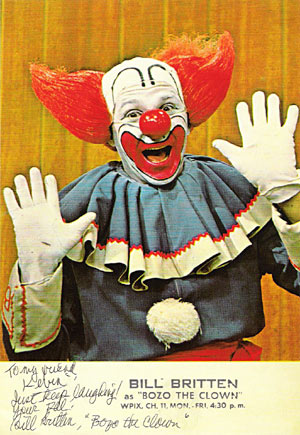
Medical student and medblogger Jeffrey Leow hosts this week's roundup of the best medblogs around. Jeffrey's theme is "War;" and it's pretty intense. Interspersed among the terrific posts are haunting photographs that remind us why medicine and war go together.
Tuesday, September 30, 2008


Monday, September 29, 2008
L'Shannah Tova 5769
 According to Jewish tradition, the world was created almost 6,000 years ago (of course, in those days, years were apparently a lot longer than they are now. Go figure). And so we celebrate the passing of another year, while welcoming the fresh start offered by the new one.
As with any holiday, there are associated traditions, customs and activities. When our family transitioned to Conservative Judaism some eight years ago, we adopted the practice of attending synagogue services for two days, not just one. It sounds counter-intuitive, of course: New Year's Day would seem to be, by definition, just the one day. But there's actually a very good reason for such an expansion: the opportunity for more food.
No, not really:
May the New Year be one of blessing, peace and health for all of our readers.
L'Shannah Tova!
Just What the Doctor (Val) Ordered
We're indeed honored to have Dr Val Jones guest-blogging here at IB. In Part 1, she identified some of the wasteful expenditures to which health insurance companies are prone. Now, we'll learn about some possible alternatives and solutions:
Unfortunately, the cognitive therapy- compliance solution hasn’t been sufficiently incentivized. Physicians are poorly compensated for teaching patients how to stay well, and highly compensated for performing procedures. Primary care physicians in particular are struggling to cover their office overhead as their work is undervalued and underpaid in comparison to their peers.
What should we do? Third party payers should fight the urge to reward care that can be quantified with spreadsheets and check boxes (e.g. procedures) and compensate cognitive services at a rate that would improve behavior modification and treatment compliance. That $50/visit that insurance companies are saving by low-balling PCP visits may be costing them 177 billion/year.
Do I think that (given enough time) a primary care provider could help their patients achieve a 100% compliance rate? No way. But I bet they could improve it by 20-30%. And that would save lives, reduce complication rates, decrease costs, and improve the health of many with chronic diseases.
Improving medication compliance, combating chronic disease, and helping America become a “wellness culture” begins with a solid primary care base. The health of the insurance industry (and pharmaceutical industry) rests in the hands of the very physicians who are currently being run out of business with decreasing reimbursements and increasing overhead.
Let’s change that.
Thanks to Dr Val for stopping by, and sharing with us a vision from inside the health care side of the table. We'll let our readers know right away when her new blog goes live.
Food Pyramid Alert: Cocoa No-No
Last Spring, Bob touted chocolate's many benefits for expectant mothers, and a year earlier I reported on its ability to lower blood pressure. There's a fine line though, between low BP and no BP:
Turns out, some of the "milk" in Cadbury's "milk chocolate" came from China, and has been found to be tainted with melamine, "which is used to make plastics and fertilizer," but doesn't seem to have a place in candy-making.
The British sweets giant isn't alone in its concern: "(T)wo U.S. food makers were investigating Indonesian claims that high traces of melamine were found in Chinese-made Oreos, M&Ms and Snickers."
Cookies and candy bars? I may have to switch to 'Nilla Wafers and Marshmallow Fluff.
Sunday, September 28, 2008
Some futures are not much fun to contemplate - IX
A few days ago I read that ‘socialized medicine’ is when the doctors are employees of the state and the hospitals, drugstores, home health agencies and other facilities are owned and controlled by the government.
That's as good a definition as any.
But most people don't care about definitions like this because they already know what they want.
And IMO most people already know that they want a single-payer health care system, even though what most people really mean, but don't know that they mean it, is a single-payer health-insurance system but never mind that technicality because everyone knows that our health care delivery system is, like, broken, and everyone also knows that a single payer whatever-it-is will fix our broken health care delivery system and, even if it doesn't, people won't need to worry any more that health care is expensive because the government or someone else will pay for it, so when anyone wants any kind of health service it will promptly be provided to them by the world's best professionals and paid for without serious challenge at nominal or zero personal cost to them, and that will mean we all live longer, healthier lives, we can drink and eat whatever we wish, infant mortality will disappear and, oh yeah, all our children will grow up handsome and above average, and even though the experts disagree sometimes sharply over the impact of single-payer whatever-it-is, and, even though people don't really care to know the whole truth about other countries’ experience with single-payer whatever-it-is, that doesn't, like, matter because everyone knows single-payer whatever-it-is works better than whatever it is we have now because Michael Moore told us so, and therefore it’s obvious that we need to change the old whatever-it-is to the new whatever-it-is as soon as possible and the problems are all George Bush’s fault anyway.
Something like that.
So I think there is no doubt that socialized something-or-other is coming to the U.S.
And that right soon.
That's as good a definition as any.
But most people don't care about definitions like this because they already know what they want.
And IMO most people already know that they want a single-payer health care system, even though what most people really mean, but don't know that they mean it, is a single-payer health-insurance system but never mind that technicality because everyone knows that our health care delivery system is, like, broken, and everyone also knows that a single payer whatever-it-is will fix our broken health care delivery system and, even if it doesn't, people won't need to worry any more that health care is expensive because the government or someone else will pay for it, so when anyone wants any kind of health service it will promptly be provided to them by the world's best professionals and paid for without serious challenge at nominal or zero personal cost to them, and that will mean we all live longer, healthier lives, we can drink and eat whatever we wish, infant mortality will disappear and, oh yeah, all our children will grow up handsome and above average, and even though the experts disagree sometimes sharply over the impact of single-payer whatever-it-is, and, even though people don't really care to know the whole truth about other countries’ experience with single-payer whatever-it-is, that doesn't, like, matter because everyone knows single-payer whatever-it-is works better than whatever it is we have now because Michael Moore told us so, and therefore it’s obvious that we need to change the old whatever-it-is to the new whatever-it-is as soon as possible and the problems are all George Bush’s fault anyway.
Something like that.
So I think there is no doubt that socialized something-or-other is coming to the U.S.
And that right soon.
Saturday, September 27, 2008
It's Actually a "Good Thing"
[Welcome Kaiser Network readers!]
At a consumer bulletin board that Bob and I frequent, a commenter posted a recent NYT article on Presidential contender Sen John McCain's health care proposal. A key point made in the column, which was penned by Bob Herbet, was that "the radical changes that John McCain and Sarah Palin are planning for the nation’s health insurance system...set in motion nothing less than the dismantling of the employer-based coverage that protects most American families."
At a consumer bulletin board that Bob and I frequent, a commenter posted a recent NYT article on Presidential contender Sen John McCain's health care proposal. A key point made in the column, which was penned by Bob Herbet, was that "the radical changes that John McCain and Sarah Palin are planning for the nation’s health insurance system...set in motion nothing less than the dismantling of the employer-based coverage that protects most American families."
For some unknown reason, Mr Herbert seems to think that this would be a bad thing, and I responded to the poster that this was unfortunate. I'd like to share with our readers an expanded version of that response, including a few points that also seem relevant.
First, it's important to note that such a substantive change is unlikely to occur any time soon. It would, however, be a good thing.
To understand why, it's necessary to understand that employer-based coverage is a relatively recent development. It came about during WWII, when wages were frozen, and employers sought ways to increase workers' compensation through non-cash means.
It is essentially a destructive influence:
Employers do not pay for employees' health insurance. Never have, never will. They simply redirect a portion of their employees' wages directly to the insurance company. They receive a tax benefit for doing so, and the employee is none the wiser.
Employers don't pay for our home or auto insurance, either, but no one complains about that. They don't provide our groceries or house, and again, no one complains. An employer pays one a wage, from which one buys appropriate auto and home insurance, chooses which groceries to buy, and whether to buy a house or rent an apartment.
Why, then, should health insurance be any different?
In point of fact, there are some very good reasons why our employers don't buy our groceries for us: for example, Bob enjoys seafood, whereas I'm enjoined from eating it at all (not that I didn't enjoy it, back in the day). If an employer attempted to satisfy all his employees' food needs and preferences, imagine the accounting mess that would ensue. Likewise with cars: Bill's Porsche Boxster suits him fine, but we really need the mini-van. And while Mike's penthouse condo is spacious enough, I really like sitting out in the backyard, enjoying an adult beverage and the nocturnal symphony provided by the crickets, et al.
For some reason, though, the one-size-fits-all (but, of course, not very well) theory behind group insurance is deemed satisfactory. Yes, large corporations can set up "cafeteria plans," offering a variety of optional benefits. But what if the coverage I need is not among the handful available? Wouldn't it make more sense for me to buy the coverage I need and want, rather than the one "forced upon" me by my employer?
[ed: Of course, no one is "forced" to buy insurance in this fashion; but there are substantial economic costs in failing to do so.]
There are, of course, several challenges to moving away from employer-sponsored, or "group," plans, not least among them being underwriting and coverage of pre-existing conditions. But these are not insurmountable problems, and would have to be addressed in such a transition.
Still, I believe that the basic idea is sound, and attractive.
Friday, September 26, 2008
La Plus ca Change...
Recently, I was cleaning out an overstuffed filing cabinet, and came across an Op-Ed I'd written for the Dayton Daily News some time ago.
Over 15 years ago, in fact.
Re-reading it, I was struck by just how little has changed in the past decade-and-a-half; and, of course, by some of the progress we've made. It occurred to me that our readers might find it interesting, as well.
Oh, and see if you can spot the sentence that would one day become the overarching meme of InsureBlog:


[Click article to enlarge]
Thursday, September 25, 2008
Political Insurance
We are not a poli-blog (political blog), but occasionally politics intrudes on insurance.
Or insurance intrudes on politics:
In health insurance (which is probably the most common subject on which we post), risk is based on morbidity: the chances that one will become ill or injured. Life insurance risk is predicated on something called mortality: the chances that someone will die in a specified period of time. Thus we have "mortality tables;" essentially spreadsheets that presume that a certain number of people will die at a certain age, or how long folks of a certain age are likely to live.
Given that one of the contenders for President of these United States is 72 years old, and has had previous brushes with cancer, it seems relevant to ask whether that person is likely to die while in office (of course, there's a 100% chance that any person will die, eventually).
It's said that the difference between an extroverted accountant and an extroverted actuary is that the actuary, as he walks along, looks at other people's feet. In the event, an actuary's job is to help the insurance company "evaluate the likelihood of events and quantify the contingent outcomes in order to minimize losses, both emotional and financial, associated with uncertain undesirable events." These folks enable the insurer to appropriately "price the risk."
Since the younger candidate has a history of smoking (and, of course, inhaling), there is some question about his expected health, as well. Most life insurers charge much higher premiums for smokers than non-, a reflection of the increased risk of that person dying "on the company's dime."
The good news is that, health histories notwithstanding, it appears that neither candidate is likely to die (of natural causes) while in office. Since an actuary literally puts the insurance company's money where his (or her) own mouth is, that seems pretty final.
Oh, probably need to find a better way to put that.
Dr Val Pays a Housecall (to IB)
Medblog maven Dr Val Jones is a graduate of Columbia University College of Physicians and Surgeons, and completed her residency in Physical Medicine and Rehabilitation at Saint Vincent's Hospital in New York City. Formerly blogging at Revolution Health, she's recently "gone Indie." Her new blog isn't online yet, but we're expecting great things from her there.
In this first of a two-part guest-blog series, Dr Val asks if perhaps there might be some wasteful spending in the health insurance arena:
Are Health Insurance Dollars Being Wasted Due To Medication Non-Compliance?
In case the answer to that question isn’t obvious, it is a resounding “yes.” Non-compliance costs the health insurance industry a staggering 177 billion dollars a year. It is estimated that fifty percent of patients forget to take their meds and over 30 percent don't refill their prescriptions. Twenty percent say they don't take the full course of treatment and fifty percent of patients don't take drugs as directed. So much for preventing that heart attack, stroke, or limb amputation.
The health insurance industry (as well as pharmaceutical companies) have invested heavily in patient compliance initiatives, most of which have failed to produce substantially improved outcomes. The reason? Although there are quite a few variables here, I believe that the common denominator is that medication reminders, text messages, automated emails, online educational materials, brochures and handouts are all missing the human element. The most dramatic power of persuasion rests with the patient’s healthcare provider – when a caring physician takes the time to look their patient in the eye and carefully explain why missing that medication could result in them eventually missing a limb, patients often take heed. This is the kind of conversation that galvanized Governor Mike Huckabee into losing 110 pounds through diet and lifestyle changes, and probably saved his life.
Of course, behavior modification may not require a face-to-face encounter, though it still needs a caring connection. I’ve had great success with an online weight loss initiative where I offer guidance and information to those seeking healthy weight loss strategies. Because I’m regularly present in the group, genuinely concerned, and offer accurate and helpful information as a credible source – my membership is 10 times larger than any other expert-led group. Although I can’t confirm the weight loss reported by the members since I don’t see them in my office, I believe that there are substantial health improvements occurring.
In Part 2, Dr Val will offer some possible solutions to this dilemna.
Wednesday, September 24, 2008
Cavalcade of Risk #61 now online!
American Consumer News' Debbie Dragon hosts her debut edition of the Cavalcade of Risk. As usual, there are lots of great choices, from health care to Fannie & Freddie.
Don't miss it!
And don't be afraid to host your own Cav, just drop us a line to reserve your slot.
Vindicated!
[Welcome Kaiser readers!]
Many times over the years, we've debunked "The Myth of the 47 Million" uninsured. Many of these folks can afford at least catastrophic coverage, while many others are eligible for government-sponsored plans but choose not to enroll. Still others are illegal aliens who access our first-class health care system at no (or little) cost to themselves.
Now, DC Examiner columnist Sally Pipes has startling new evidence busting this myth. According to the most recent Census figures, that "47 million" has dropped almost 3%, to just over 45 million. While that in itself is, of course, good news, it's her analysis of that 45 million that really illustrates the nature of the problem.
First, she divvies the total into 4 distinct sub-groups: the "invincibles;" young people who choose not to spend their hard earned cash on frivolous items like health insurance, opting instead for iPhones and DirectTV. Second, over 30% make over $50,000 a year. While that's not knockin' on T Boone Pickens' door, it's certainly not peanuts. Third, over 20% are, in fact, in this country illegally. One supposes a national health plan would have to cover these folks, as well. Lastly, 14 million, or another third, of the total are eligible for programs such as S-CHIP, but fail to take advantage of them. Again, that's a choice, folks, not a plight.
In fact, Ms Pipes sites a recent Georgetown University Health Policy Institute study that found that over 70% of uninsured kids are eligible for one or more government-sponsored health care programs, but their (irresponsible) parents choose not to enroll them. Whose fault is that?
At the other end of the spectrum, the Urban Institute reports that over a quarter of Americans eligible for Medicaid choose not to sign up, and go naked (well, at least as regards health insurance). Again, if folks choose to be irresponsible, how is that "the system's" fault?
Add to this the fact that many of the folks who are without health insurance at a given time later pick up coverage. This is called a "rolling population," and represents another chunk of the total. In fact, when one digs deep enough, one finds that only 8 million folks can be classified as "chronically uninsured;" that's still a problem, of course, but a much more manageable one, and puts the lie to the canard that our system is irretrievably broken.
As they say, read the whole thing.
[Hat Tip: Power Line]
Tuesday, September 23, 2008
5th Anniversary Grand Rounds
Dr Val Jones, currently "between blogs," hosts this week's compendium of all that's good from the medblogs. Grand Rounds founder KevinMD has graciously allowed Dr Val to guest-blog at his site, and the results are spectacular. If you're not familiar with the 'Rounds, it's really worth your time to see how many great health bloggers are out there.
And if you're a "regular," you'll be impressed with the scope of this one.
Monday, September 22, 2008
Bueller? Bueller?
An article in the September 22nd Wall Street Journal commented on the effect the economy is having on some medical utilization – especially prescriptions and doctors’ visits.
One of the most worrisome phenomena of the U.S. health care environment has been high utilization and even over-utilization of health care services. So it’s not immediately clear that a reduction in utilization is ipso facto a bad thing. For some people, it surely is – and a few of those people were interviewed for this article. But is all reduction in utilization a bad thing? At best, that is an open question.
Two charts accompany the WSJ article. One shows that the rate of increase in prescriptions filled has steadily declined since 1999, and is now negative. The other shows that doctors visits have declined in absolute numbers by about 4% since 2007.
These charts got my attention.
One frequently hears the argument, both implicitly and explicitly, that fewer prescriptions filled and fewer physician visits must result in worsening health condition for our population. However, both charts show very sharp increases in prescriptions filled 1998-1999 and in physician visits 2003-2005. I seem to have missed the reporting of correspondingly sharp improvements in the health of our population during those periods.
Anyone have those stories that I missed? Anyone? Bueller?
One of the most worrisome phenomena of the U.S. health care environment has been high utilization and even over-utilization of health care services. So it’s not immediately clear that a reduction in utilization is ipso facto a bad thing. For some people, it surely is – and a few of those people were interviewed for this article. But is all reduction in utilization a bad thing? At best, that is an open question.
Two charts accompany the WSJ article. One shows that the rate of increase in prescriptions filled has steadily declined since 1999, and is now negative. The other shows that doctors visits have declined in absolute numbers by about 4% since 2007.
These charts got my attention.
One frequently hears the argument, both implicitly and explicitly, that fewer prescriptions filled and fewer physician visits must result in worsening health condition for our population. However, both charts show very sharp increases in prescriptions filled 1998-1999 and in physician visits 2003-2005. I seem to have missed the reporting of correspondingly sharp improvements in the health of our population during those periods.
Anyone have those stories that I missed? Anyone? Bueller?
Top 100: Another Resource & Accolade
The folks at RN Central have compiled a list of top Health Care Policy blogs, everything from Pediatrics to Politics. We're honored to be listed at the top of the Health Insurance and Coverage category.
Carnival of Personal Finance is up
Hosted this week by Aryn at Sound Money Matters, the venerable Carnival of Personal Finance is all about your wallet, and how to keep it full.
Saturday, September 20, 2008
Stupid Regulator Tricks
Let's say that you're the Utilities Commissioner of your state, responsible for overseeing the conduct of the electric and phone companies. Would it not be an insurmountable conflict of interest for you to resign your post to become president of your local electric company?
Of course it would, and there are laws against it.
Same thing with insurance commissioners, right?
Sadly, no:
Walter Bell was, until last month, the Insurance Commissioner for the state of Alabama, and the immediate past president of the National Association of Insurance Commissioners. One would think that a person in this position would be enjoined from leaving one's post to take a job with an insurance company which does business in one's state.
One would be wrong.
Oh, sure, both the state and the NAIC have rules against this sort of thing, but these rules apparently read:
"Thou shalt not jump directly from thy high and exalted regulatory position to become an executive of an insurance company."
(I'm paraphrasing, of course: "high and exalted" would really read "reasonably but not extravagantly compensated.")
Quick: what's missing from that little law?
If you said "or else what?" you win a cheroot.
Absent any "teeth," such rules are meaningless, a fact which apparently did not escape the notice of the aforementioned Mr Bell. He's now the Chairman of Swiss Re, a large reinsurance carrier which is connected to many insurers which do business in the Yellowhammer State.
In fairness, his response is along the lines of "well, I'm not working for the companies I regulated, just the company that owns the companies I regulated. Big difference, bub."
Well gee, kinda hard to argue with logic like that, right?
And it's not as if his job entails any kind of lobbying on behalf of Swiss Re with his erstwhile colleagues: he'll only "oversee and direct regulatory and public affairs for all of Swiss Re’s North America businesses."
Nope, no conflict of interest there, nothing to see, move along.
And folks wonder why the insurance industry is held in such low regard.
AIG UPDATE: Meanwhile, several days in, neither of the primary life or health insurance agents associations have anything on their sites relating to the recent AIG debacle. Of course, this is no surprise: they're most likely still trying to figure out how to spin this as "a good thing."
And the PIA (which is geared more toward P&C agents) has a news release announcing the acquisition, but no official statement regarding it. Again, why would this obscure, indeed trivial story be of interest to insurance agents?
Friday, September 19, 2008
Cavalcade of Risk #61: Submissions Due
Debbie Dragon makes her CoR debut next week. Please help her out by submitting your post by Monday (the 22nd), and be sure to include:
■ Your blog's url
■ Your post's url
■ The post's trackback URL (if available)
■ A (brief) summary of the post
■ Your post's url
■ The post's trackback URL (if available)
■ A (brief) summary of the post
You can submit your post via Blog Carnival or email.
We're scheduling mid-Fall Cavs, so please drop us a line to reserve yours.
Collateral Damage: AIG and A M Best
A M Best is dead to me. The venerable (if not venerated) insurance rating service has lost whatever credibility it may have had.
Gee, Henry, what brought that on?
I'm so glad you asked. Propitiously, this morning's mail brought the September issue of Best's Review (a magazine published by the company), and a bonus booklet explaining how carrier ratings are assigned. "The Guide to Understanding Insurance Ratings" is chock full of interesting and potentially useful facts, figures and anecdotes, and provides a glimpse "behind the scenes" of how Best ratings are determined.
The Guide walks folks through the rating process, explaining various tests and thresholds that ultimately determine whether a carrier's an A or an F (or somewhere in between).
Problem is, as late as this summer, Best rated AIG as A+ (Superior). In contrast, as of last December, Weiss Ratings had AIG as a B+; they actually downgraded the carrier some 5 years ago. AIG's problems didn't happen overnight, yet they continued to enjoy one of A M Best's top ratings. Talk about asleep at the switch.
But wait, it gets worse:
Near the beginning of the guide, there are stories of some of the most spectacular and well-known carrier failures in the past 3 decades. The Guide does an admirable job describing the events and factors contributing to these massive failures, but never once mentions the carriers' A M Best rating at the time of, um, fizzlement.
I know, though, that at least two of those listed were A or A+ at the time of their demise.
And what was the most common cause associated with these failures? If you guessed "risky investments" and "too much real estate" you win a cheroot.
Sound familiar?
Believe it or not, it gets even more egregious. See if this rings a bell (from "The Guide to Understanding Insurance Ratings"):
"During the last decade of the ... Century, leading life insurers were enjoying a great accumulation of capital as many smaller rivals went under ... soon the insurance companies were flowing assets ... for large scale ... projects. This move essentially put the insurance companies into the banking business, corrupting the nature of what historically had been a conservative industry.
This relationship between the executives of big life insurance companies and ... Wall Street ... did not go unnoticed ... an investigative committee was formed to examine ... insurance companies and make recommendations for regulatory reform."
Sorry for all the ellipses, but I wanted to make this point: all of the above took place in the early 20th Century, over a hundred years ago. Has anything really changed? Has A M Best learned nothing?!
It would seem so.
Thursday, September 18, 2008
Quick Note on Comments
With the power and connectivity issues we're dealing with here in Southwest Ohio, it's challenging for me to get comments approved quickly. We appreciate your patience on this, and rest assured that it's not a content issue, just availability.
UPDATE: All good now.
Well, except for the siding that blew off the blogroll. But I'm pretty sure we're covered.
Some Thoughts on AIG
Inasmuch as this is a blog about insurance, it seemed obvious that we'd want to comment on the recent events surrounding our acquisition of the largest American insurance company. The issues are, of course, complex and somewhat disturbing. I've asked Bob to put together a more comprehensive piece, so I don't want to step on any toes (no pressure there, Bob). But I have some preliminary observations that I'd like to share.
Oh, you're wondering about that first sentence: our acquisition of AIG.
Like it or not, you and I just bought an insurance company. As we've repeatedly pointed out here at IB, the gummint has no money. It has the power to take money from thee and me, which is how it pays its bills (or not). So while it's convenient to say that the Fed has "bailed out" a massive financial institution, it's more accurate to say that you and I just bought it.
Did we get a good deal?
At this point, it's impossible to say. For one thing, it seems to me that although this looks like Fannie and Freddie, it's really not. Those were quasi-government entities to begin with, while AIG is - or was - a publicly traded company wholly in the private sector. It seems to me that there are a number of issues; I'll touch on just a few:
First, insurance is a highly competitive business. Carriers often operate on razor-thin margins, and try very hard to build market share with the resources available to them. But that's all they have: the resources on hand. AIG, however, now has the ultimate reinsurer: the US Government. Or, to be more precise, the US Taxpayer.
Second, what kind of signal does this send to the rest of the market? It's no great stretch to say that carriers can now comfortably take even more substantial risks, secure in the belief that, should they not pan out, you and I will step up to the plate for them, as well. That doesn't bode well, particularly when one stops to think about the nature of risk itself. The message here, whether intentional or not (and I'm reasonably certain that it wasn't), is that carriers are now free to assess risk with a much more liberal attitude.
Finally, it bothers me that an industry that has long fought to keep regulation at the state level isn't screaming out loud at federal intervention. Yes, a carrier failure of this magnitude would send major shockwaves through all kinds of financial sectors, but ultimately, state guaranty funds are there for a reason. As are state regulators. I think the industry is making a very big mistake by accepting this situation with nary a whimper.
Okay, that's where I am right now, and I suspect that my co-bloggers will be sharing their thoughts, as well. Obviously, there's nothing we can do about this except to deal with the new paradigm.
I just think that this particular change was ill-advised.
Subscribe to:
Posts (Atom)


 Posts
Posts