From CNBC:
"Harris, a 22-year-old smoker, was set to see his cost per paycheck rise
to $29.60 from $25.40. He says he has decided not to sign up for
coverage. Given his low income, as Harris foregoes coverage any major
medical bills could potentially fall to taxpayers through the
government's Medicaid program."
$4.20, a pack a week? Maybe three packs a month and he drops insurance. Because he is busy engaging in activity that makes him more expensive to insure he can't afford insurance so the rest of us that are working get to pick up the tab.
Welcome to the Welfare State, get comfortable.
Tuesday, November 13, 2012


Vikings and The NSVHS©

Back in the day, Norway was known for Edvard Munch, Sonja Henie and Leif Ericson. But even the reviled Vidkun Quisling is most likely whirling in his grave over the current state of Norway's "health care" system:
"A man – let’s call him Joseph K. – is slicing up a cucumber when he suddenly cuts off the tip of his thumb. He hastens to the E.R., where a doctor clips off the finger of a plastic glove, pours antibiotic into it, slips it over the thumb, then wraps a bandage around the entire finger."
Ouch, but it gets worse. Fast forward a couple days:
"A man – let’s call him Joseph K. – is slicing up a cucumber when he suddenly cuts off the tip of his thumb. He hastens to the E.R., where a doctor clips off the finger of a plastic glove, pours antibiotic into it, slips it over the thumb, then wraps a bandage around the entire finger."
Ouch, but it gets worse. Fast forward a couple days:
"...the E.R. is simply not open at this hour. Until 3:30 P.M., the E.R. operates out of another location in the small, relatively remote town ... make an appointment if you insist, but you should know – there’s not always a doctor here!”
“What? There’s not always a doctor at the E.R.?”
“Yes, there’s not always a doctor here!”
Such is care under the Norwegian government-run health care system. Regular IB readers won't be surprised to read this, but it's what we have to look forward to under the recently affirmed NSVHS© (Not So Vaunted Health System©), formerly known as ObamaCare. When the government runs things, there are always shortages - of doctors, medicines, hospital beds, you name it.
Well, to be fair, not everything is in short supply: nameless, faceless, unaccountable bureaucrats are rife (if not readily accessible). As Bob's noted on many occasions, this kind of system is a real bargain - until you need it.
[Hat Tip: Joe B]
Well, to be fair, not everything is in short supply: nameless, faceless, unaccountable bureaucrats are rife (if not readily accessible). As Bob's noted on many occasions, this kind of system is a real bargain - until you need it.
[Hat Tip: Joe B]
Monday, November 12, 2012
Shecantbeserious backpedals

Hurry up and wait:
"Health and Human Services Secretary [Shecantbeserious] said in a letter to governors Friday that she still wants to hear by the end of next week if states will be setting up new health insurance markets under the law ... states can now take another month, until mid-December, to submit detailed blueprints."
Those of the 58 states that are looking to partner up with DC for their Exchanges have until next February. Or later, one supposes, since there's really very little Mme Secretary can do to make them fall in line.
Which is perhaps a good thing, since at least one state (and likely several others) are going to find it, um, challenging to comply.
How's that, Henry?
Well, as Cato's Michael Cannon reports, "operating an ObamaCare exchange would violate [Ohio's] constitution."
This would seem an insurmountable problem, but there may be more to it. As it's Veteran's Day, I've had to put off until tomorrow my call to the Ohio Insurance commish asking about how this might play out. Looking forward to posting any results forthwith.
"Health and Human Services Secretary [Shecantbeserious] said in a letter to governors Friday that she still wants to hear by the end of next week if states will be setting up new health insurance markets under the law ... states can now take another month, until mid-December, to submit detailed blueprints."
Those of the 58 states that are looking to partner up with DC for their Exchanges have until next February. Or later, one supposes, since there's really very little Mme Secretary can do to make them fall in line.
Which is perhaps a good thing, since at least one state (and likely several others) are going to find it, um, challenging to comply.
How's that, Henry?
Well, as Cato's Michael Cannon reports, "operating an ObamaCare exchange would violate [Ohio's] constitution."
This would seem an insurmountable problem, but there may be more to it. As it's Veteran's Day, I've had to put off until tomorrow my call to the Ohio Insurance commish asking about how this might play out. Looking forward to posting any results forthwith.
Medicaid solution for State Finances
As I am stuck doing all too often these days, I was reviewing some segments of PPACA for clients. An idea struck me on how to solve State spending and budget issues. Now that 1 in 5 people are covered by Medicaid, States are going to be forced to spend more of their limited finances on this healthcare plan.
According to Kaiser State Health Facts Ohio spent around $6,116 per Medicaid Enrollee in 2009.
http://www.statehealthfacts.org/profileind.jsp?sub=47&rgn=37&cat=4
Drop Medicaid. Before anyone screams how unfair and cruel that is I'm not saying leave them without coverage, Obama said PPACA will make HealthCare affordable, so take him up on it.
"The Premium Credit" is available to people with incomes up to 400% of the Federal Poverty Level (FPL). For 1, 2, or 3 person households that is $44,680, $60,520, and $76,360 respectively. They would be required to pay between 2% and 9.5% of their income. Using 400% FPL and 9.5% maximum sharing cost the individuals would be responsible for;
# Max Cost Current OH Cost Savings to the State
1 = $4,244.60 $6,116.00 $1,871.40
2 = $5,749.40 $12,232.00 $6,482.60
3 = $7,254.20 $18,348.00 $11,093.80
The State could turn around and give vouchers to the residents to cover their liability under the exchange. It would cost the resident nothing. The resident would have considerably better coverage than Medicaid. The State would save billions. Doctors and Hospitals would be reimbursed at Private Insurance rates instead of Medicaid rates. There is enough savings left over they could even give employers $2,000 tax credits to offset their penalties, assuming anyone even employs more then 50 people come 1/1/2014.
Everyone is a winner...well except the Federal Government, but they'll just print more money anyways so it doesn't really even affect them.
According to Kaiser State Health Facts Ohio spent around $6,116 per Medicaid Enrollee in 2009.
http://www.statehealthfacts.org/profileind.jsp?sub=47&rgn=37&cat=4
Drop Medicaid. Before anyone screams how unfair and cruel that is I'm not saying leave them without coverage, Obama said PPACA will make HealthCare affordable, so take him up on it.
"The Premium Credit" is available to people with incomes up to 400% of the Federal Poverty Level (FPL). For 1, 2, or 3 person households that is $44,680, $60,520, and $76,360 respectively. They would be required to pay between 2% and 9.5% of their income. Using 400% FPL and 9.5% maximum sharing cost the individuals would be responsible for;
# Max Cost Current OH Cost Savings to the State
1 = $4,244.60 $6,116.00 $1,871.40
2 = $5,749.40 $12,232.00 $6,482.60
3 = $7,254.20 $18,348.00 $11,093.80
The State could turn around and give vouchers to the residents to cover their liability under the exchange. It would cost the resident nothing. The resident would have considerably better coverage than Medicaid. The State would save billions. Doctors and Hospitals would be reimbursed at Private Insurance rates instead of Medicaid rates. There is enough savings left over they could even give employers $2,000 tax credits to offset their penalties, assuming anyone even employs more then 50 people come 1/1/2014.
Everyone is a winner...well except the Federal Government, but they'll just print more money anyways so it doesn't really even affect them.
Sunday, November 11, 2012
Debate on Gov role in Healthcare already gone?
Many people disagree with the current and further intrusion into our healthcare by Government. They say government is taking too active of a role in what should be a personal matter. On my way to the office this morning I had the realization this argument might already be long gone.
For a brief moment driving to the office I was stuck behind the town leaf vacuum. For those not living in parts of the country with lots of trees, there is a city truck that drives around vacuuming leaves from people's yards. If we have outsourced such trivial matters as raking leaves to the government, managing our own health must no longer be possible.
In an ironic twist healthplans now pay us to exercise, i.e. to do something like raking the leaves. I think it is a short matter of time until we have cap and trade for calories. Don't worry I'm sure for a small fee we will be able to buy burned calorie credits from someone more willing to rake the leaves.
For a brief moment driving to the office I was stuck behind the town leaf vacuum. For those not living in parts of the country with lots of trees, there is a city truck that drives around vacuuming leaves from people's yards. If we have outsourced such trivial matters as raking leaves to the government, managing our own health must no longer be possible.
In an ironic twist healthplans now pay us to exercise, i.e. to do something like raking the leaves. I think it is a short matter of time until we have cap and trade for calories. Don't worry I'm sure for a small fee we will be able to buy burned calorie credits from someone more willing to rake the leaves.
Friday, November 09, 2012
Fraudulent Agent Tricks

While most insurance professionals are just that, it's not always the case. As we saw not long ago, there are unethical agents out there, and sometimes they make the news.
Of course, it takes a special kind of stupid to defraud one of the best-known names in American culture, but that apparently didn't stop California insurance agent Jerry Goldman from trying:
"A Southern California insurance broker was arrested Wednesday on allegations he overcharged Tom Hanks, musician Andy Summers and others hundreds of thousands of dollars for insurance premiums."
Generally speaking, only the US Government is allowed to overcharge folks for insurance premiums.
According to the story at the link, this little game has been going on for over 13 years. It appears that he overcharged his clients, remitting the actual premium due to the carrier(s) while keeping the difference for himself.
One rarely (if ever) sees this on the life and health side, since the premiums for these types of plans are almost always submitted directly to the carrier, or at least with checks made payable to them. On the P&C side, though, this isn't always the case, which is why this kind of mischief can occur.
Credit where it's due, however: at least the agent submitted the proper premiums, so that the coverage was (presumably) in force had a claim occurred. The coverages ran the gamut from cars and property to worker's comp and fine art.
Of course, it takes a special kind of stupid to defraud one of the best-known names in American culture, but that apparently didn't stop California insurance agent Jerry Goldman from trying:
"A Southern California insurance broker was arrested Wednesday on allegations he overcharged Tom Hanks, musician Andy Summers and others hundreds of thousands of dollars for insurance premiums."
Generally speaking, only the US Government is allowed to overcharge folks for insurance premiums.
According to the story at the link, this little game has been going on for over 13 years. It appears that he overcharged his clients, remitting the actual premium due to the carrier(s) while keeping the difference for himself.
One rarely (if ever) sees this on the life and health side, since the premiums for these types of plans are almost always submitted directly to the carrier, or at least with checks made payable to them. On the P&C side, though, this isn't always the case, which is why this kind of mischief can occur.
Credit where it's due, however: at least the agent submitted the proper premiums, so that the coverage was (presumably) in force had a claim occurred. The coverages ran the gamut from cars and property to worker's comp and fine art.
Health Wonk Review: Post-election edition
HWR co-founder (and all around good guy) Joe Paduda hosts this post-apocalyptic election round-up of posts from around the health wonkosphere. There's a lot of information, speculation, adulation and frustration, but well worth clicking through for an idea of what's in store health policy-wise.
Cavalcade of Risk #170: Call for submissions
Jay Norris next
week's Cavalcade of Risk - Entries are due by Monday (the 12th).
To submit your risk-related post, just click here to email it.
To submit your risk-related post, just click here to email it.
You'll need to provide:
■ Your post's url and title
■ Your blog's url and name
■ Your name and email
■ A (brief) summary of the post
PLEASE remember: ONLY posts that relate to risk (not personal finance tips and the like). And please only submit if you are willing to link back to the carnival if your submission is accepted.
Thanks!
And that's that: Introducing....
 According to erstwhile House Speaker John "Boom Boom" Boehner:
"It's pretty clear that the president was reelected, Obamacare is the law of the land."
Fine.
So begins a new chapter here at IB, as The ObamaTax becomes the Not So Vaunted Health System©. The NSVHS© is characterized by guaranteed issue insurance, which guarantees only that rational people will wait to buy their policy until they're in the ambulance. It means that rational people will look at the
Rational people will understand, of course, that actual health care will, of necessity, become rationed as a direct consequence of other folks being subsidized to buy new policies, creating ever more increasing demand, even as provider reimbursements falter (a consequence of the $700+ billion Medicare cut).
Rational employers will understand that the $2000 per employee
It means that health care quality will decline, as will new medical tech. It means that seniors will have fewer choices, perhaps not even the choice of whether to live.
Over the next few weeks and months, Mme Secretary Shecantbeserious will begin to roll out all the new rules and regs that will dictate how the government will direct
Not with a bang, but a whimper...
Thursday, November 08, 2012
And so it begins...

As we've long predicted, the ObamaTax has begun its march towards higher unemployment:
"A Las Vegas business owner with 114 employees fired 22 workers today ... the regulations for Obamacare are gonna hurt our business, and I’m gonna have to make provisions to make sure I have enough money to cover the payroll taxes, the additional health care I’m gonna have to do"
Tipping point.
"A Las Vegas business owner with 114 employees fired 22 workers today ... the regulations for Obamacare are gonna hurt our business, and I’m gonna have to make provisions to make sure I have enough money to cover the payroll taxes, the additional health care I’m gonna have to do"
Tipping point.
Wednesday, November 07, 2012
From the P&C files: BizInt coverage
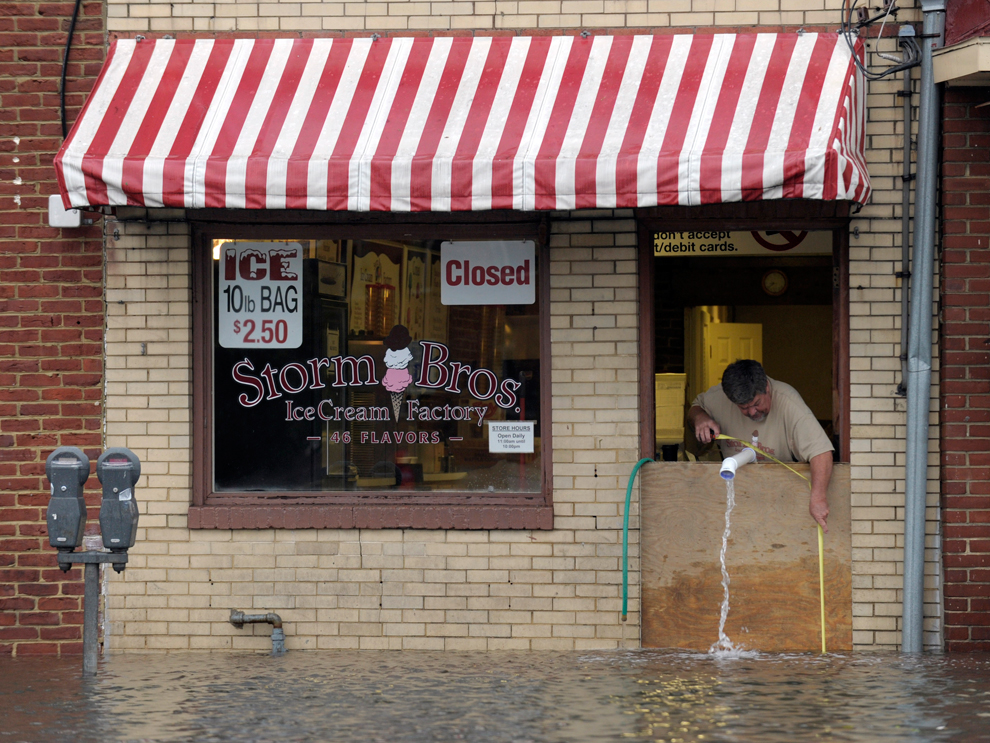
Business Interruption coverage helps pay the bills when your store or plant are shut down because of some natural or other disaster. When we think about business insurance, we usually think about fire damage, or flooding, that kind of thing. And of course that's important. But what we may not think about is how the business itself can continue as a result of a catastrophe.
Hurricane Sandy provides an excellent object lesson in how this important coverage works. The folks at Allianz Global Corporate & Specialty has come out with a new study - “Managing Disruptions” - that "explores how businesses and insurers are re-examining their exposures to business interruption and supply chain risk."
As a friend of mine is fond of saying, we are all connected. So it's not just about a given business, but its place in a supply chain and how that can disrupt other businesses up and down that chain.
It's an interesting subject, and a glimpse into an area of risk assessment and management that we don't often get.
[Hat Tip: Annika Schuenemann]
Hurricane Sandy provides an excellent object lesson in how this important coverage works. The folks at Allianz Global Corporate & Specialty has come out with a new study - “Managing Disruptions” - that "explores how businesses and insurers are re-examining their exposures to business interruption and supply chain risk."
As a friend of mine is fond of saying, we are all connected. So it's not just about a given business, but its place in a supply chain and how that can disrupt other businesses up and down that chain.
It's an interesting subject, and a glimpse into an area of risk assessment and management that we don't often get.
[Hat Tip: Annika Schuenemann]
Medical Tourism and the ObamaTax

Now that the ObamaTax has been affirmed, it's time to look ahead. This means a shortage of providers and major increases in both premiums and health care costs. There's not much one can do about the increased premium side of the equation, but there are indeed ways to mitigate both the provider shortage and increased cost of care.
While medical tourism has been around a while (we first posted on the phenomenon over 6 years ago), it seems poised to really take flight under the ObamaTax regime:
"US patients obtain health care treatment in foreign countries well below US rates. Treatments include dental implants, hip and knee replacements or bariatric surgeries. Americans also go abroad for more complicated procedures such as heart operations and cancer treatment, or alternative therapies such as stem cell treatment unavailable at home."
And that's already occurring. As folks begin to see hospital waits getting longer and longer, and the costs of care getting higher and higher, it doesn't seem far-fetched that those who can will opt for a short (or long) plane ride, the expenses of which are potentially more than offset by the savings (and, of course, the actual delivery of care).
Pipe dream much, Henry?
Perhaps, but then again:
"Some US businesses already persuade employees to travel for treatment. Medical tourism experts see that becoming more common in the future. With incentives like deductible waivers, the plan saves money for the insurance company, the business and the employee."
And there's nothing preventing carriers from offering optional med-tourism riders or supplements. And competition among foreign providers for American patients may also prove enticing.
Time will tell.
ADDENDUM: Can't believe I missed something so obvious, but of course theIndependent Payment Advisory Board (IPAB) Death Panels will also be a major driver of MedTourism. After all, if you or your loved one (or ones) face a literal death sentence, then a quick jaunt to (say) Costa Rica may seem pretty reasonable.
While medical tourism has been around a while (we first posted on the phenomenon over 6 years ago), it seems poised to really take flight under the ObamaTax regime:
"US patients obtain health care treatment in foreign countries well below US rates. Treatments include dental implants, hip and knee replacements or bariatric surgeries. Americans also go abroad for more complicated procedures such as heart operations and cancer treatment, or alternative therapies such as stem cell treatment unavailable at home."
And that's already occurring. As folks begin to see hospital waits getting longer and longer, and the costs of care getting higher and higher, it doesn't seem far-fetched that those who can will opt for a short (or long) plane ride, the expenses of which are potentially more than offset by the savings (and, of course, the actual delivery of care).
Pipe dream much, Henry?
Perhaps, but then again:
"Some US businesses already persuade employees to travel for treatment. Medical tourism experts see that becoming more common in the future. With incentives like deductible waivers, the plan saves money for the insurance company, the business and the employee."
And there's nothing preventing carriers from offering optional med-tourism riders or supplements. And competition among foreign providers for American patients may also prove enticing.
Time will tell.
ADDENDUM: Can't believe I missed something so obvious, but of course the
Tuesday, November 06, 2012
Speaking of pains in the...
Although the new ObamaTax rules require health insurance policies to pay for routine colonoscopies (YMMV), that may turn out to be not much of a big deal:
"For some people, one colonoscopy at age 50 may be enough for their whole lives, a new study suggests."
The study found that folks who got a "clean bill" from their first procedure turned out to live just as long as those who repeated the process a few more times. Which isn't to say that no further effort's required:
"[F]or people who received a negative result on their first colonoscopy, it is reasonable to switch to other, less invasive methods for subsequent screenings."
Whew!
"For some people, one colonoscopy at age 50 may be enough for their whole lives, a new study suggests."
The study found that folks who got a "clean bill" from their first procedure turned out to live just as long as those who repeated the process a few more times. Which isn't to say that no further effort's required:
"[F]or people who received a negative result on their first colonoscopy, it is reasonable to switch to other, less invasive methods for subsequent screenings."
Whew!
Monday, November 05, 2012
Ca$h for (Annuity) Clunkers

Fortunately, this isn't a government-run program:
"Hartford Financial Services Group Inc. has offered some of its annuity clients cash for their contracts."
As regular readers know, Variable Annuities can be solid financial vehicles (they can also be dangerous, but that's another post). When the stock market takes a dive, insurers who issued the policies can find themselves "upside down" because of guaranteed payouts in the contract.
So Hartford's looking to get out ahead of the problem by buying out policyholders who themselves might be feeling a financial pinch. So if you're a Hartford Variable Annuity owner, best be watching your mailbox.
"Hartford Financial Services Group Inc. has offered some of its annuity clients cash for their contracts."
As regular readers know, Variable Annuities can be solid financial vehicles (they can also be dangerous, but that's another post). When the stock market takes a dive, insurers who issued the policies can find themselves "upside down" because of guaranteed payouts in the contract.
So Hartford's looking to get out ahead of the problem by buying out policyholders who themselves might be feeling a financial pinch. So if you're a Hartford Variable Annuity owner, best be watching your mailbox.
Shecantbeserious keeps flailing away

Mme Secretary just can't seem to help herself:
"The Obama administration is relying heavily on outside contractors to implement a core component of [the ObamaTax[ as it races to set up a federal health insurance marketplace before 2014."
When you have to pass it to learn what's in it, hilarity ensues.
And by "hilarity," I mean "incompetence:" in the rush to set up phony Exchanges, Ms Shecantbeserious has continued to spread her largesse to her cronies, including a subsidiary of United Healthcare.
But wait, weren't we told that private insurance companies were evil, and at the root of all of our health care problems? Apparently that hasn't fazed the Secretary, who's contracted with Quality Software Services, Inc. (QSSI) to build and maintain the databases that will form the backbone of the Exchanges.
All of this took place, of course, with no oversight or input from the Securities and Exchange Commission, which would seem to be an indication that all is not aboveboard. But of course, this hasn't stopped Ms Shecantbeserious before.
After all, what could go wrong?
[Hat Tip: Hot Air]
"The Obama administration is relying heavily on outside contractors to implement a core component of [the ObamaTax[ as it races to set up a federal health insurance marketplace before 2014."
When you have to pass it to learn what's in it, hilarity ensues.
And by "hilarity," I mean "incompetence:" in the rush to set up phony Exchanges, Ms Shecantbeserious has continued to spread her largesse to her cronies, including a subsidiary of United Healthcare.
But wait, weren't we told that private insurance companies were evil, and at the root of all of our health care problems? Apparently that hasn't fazed the Secretary, who's contracted with Quality Software Services, Inc. (QSSI) to build and maintain the databases that will form the backbone of the Exchanges.
All of this took place, of course, with no oversight or input from the Securities and Exchange Commission, which would seem to be an indication that all is not aboveboard. But of course, this hasn't stopped Ms Shecantbeserious before.
After all, what could go wrong?
[Hat Tip: Hot Air]
Obamacare to create Millions more working poor
Obamacare penalizes employers for full-time (FT) employees that are not insured if they don't offer affordable and essential coverage. Employers will obviously look for ways to minimize this damage. One way is by turning FT workers into part-time (PT) employees.
http://nrn.com/article/restaurants-mitigate-health-care-costs-cutting-hours
Darden Restaurants runs over 2000 restaurants, they are testing working employees 29 hours. I have heard of nursing homes in OH that are also moving their FT to PT.
You would think this is a problem for employees, having their hours cut, are they going to have to find second jobs? Turns out it might be win win for everyone but the taxpayors.
Someone working full time making $9.50 per hour makes $1646.92. If they have their hours cut to 5 3/4 a day they would make $1,183.72, a pay cut of $463.20...or is it.
With two people in the household working full time they do not qualify for Food Stamps. Working 2.25 hours less they qualify for $367 a month in benefits.
Once you qualify for food stamps you automatically qualify for a free lifeline cell phone, worth about $30 per month.
They would also now qualify for utility assistance.
Instead of paying 9.5% of their income to be on their company plan they pay 2% under the exchange saving an additional $88.78 per month.
Not counting any other additional programs and assistance, by working fewer hours these employees gain $485.78 in taxpayor funded benefits to offset $463.20 in lost wages. The employer also avoids any taxes for not offering coverage.
Besides all of the problems Obamacare creates for the insurance industry it is likely to push millions more into poverty with even fewer chances to get out.
http://nrn.com/article/restaurants-mitigate-health-care-costs-cutting-hours
Darden Restaurants runs over 2000 restaurants, they are testing working employees 29 hours. I have heard of nursing homes in OH that are also moving their FT to PT.
You would think this is a problem for employees, having their hours cut, are they going to have to find second jobs? Turns out it might be win win for everyone but the taxpayors.
Someone working full time making $9.50 per hour makes $1646.92. If they have their hours cut to 5 3/4 a day they would make $1,183.72, a pay cut of $463.20...or is it.
With two people in the household working full time they do not qualify for Food Stamps. Working 2.25 hours less they qualify for $367 a month in benefits.
Once you qualify for food stamps you automatically qualify for a free lifeline cell phone, worth about $30 per month.
They would also now qualify for utility assistance.
Instead of paying 9.5% of their income to be on their company plan they pay 2% under the exchange saving an additional $88.78 per month.
Not counting any other additional programs and assistance, by working fewer hours these employees gain $485.78 in taxpayor funded benefits to offset $463.20 in lost wages. The employer also avoids any taxes for not offering coverage.
Besides all of the problems Obamacare creates for the insurance industry it is likely to push millions more into poverty with even fewer chances to get out.
Sunday, November 04, 2012
Taxes and Fees and Penalties - Oh my!
FoIB Bob D sends us this report from Aetna enumerating the new taxes on tap for us under the ObamaTax.
Here's a taste:
■ Health Insurer Fee
■ Transitional Reinsurance Program Contribution
■ Patient-Centered Outcomes Research fee
■ High Value Plan tax (aka **BMW** Cadillac Tax)
But wait! There's more!
New annual taxes on "Big Pharma," new annual taxes on medical device manufacturers, and the list goes on.
Download the report here.
Here's a taste:
■ Health Insurer Fee
■ Transitional Reinsurance Program Contribution
■ Patient-Centered Outcomes Research fee
■ High Value Plan tax (aka **BMW** Cadillac Tax)
But wait! There's more!
New annual taxes on "Big Pharma," new annual taxes on medical device manufacturers, and the list goes on.
Download the report here.
Friday, November 02, 2012
E&Oxchanges

Because we already know just how efficient government bureaucracies are (*cough*), the latest anticipated problem with the ObamaTax Exchanges should come as no surprise:
"The [ObamaTax] could create new opportunities for employers to get health insurers to compete for their business -- and new opportunities for health insurance exchanges to mess up enrollment."
Think about it: these are the folks who run the Post Office and the DMV, and they're going to be in charge of making sure that employees are properly enrolled when employers begin to shed group health plans.
This is pure wishful thinking:
"[B]rokers have to think just as hard about how the enrollment process will work when they are placing business through an exchange as when they are dealing with one of the "back end" companies that handles enrollment data or send enrollment data directly to insurers"
Um, no, they're not, because no professional agent is going to touch an Exchange-based product with a 10 foot Czech. And those dumb enough to go that route have bigger problems than Errors and Omissions coverage.
And woe to the employer that thinks going through an Exchange is a good idea:
"An enrollment system may greatly increase the employer's risk ... by letting employees sign up for coverage they are not eligible to buy."
Why would any reasonably intelligent employer even bother? Much more cost effective to delete the group plan and take the (nominal)fine tax hit. After all, choosing to use an Exchange means that the employer is trusting a government bureauweenie to get things right and if they don't, well, good luck holding them accountable.
But hey, it's a Brave New World.
"The [ObamaTax] could create new opportunities for employers to get health insurers to compete for their business -- and new opportunities for health insurance exchanges to mess up enrollment."
Think about it: these are the folks who run the Post Office and the DMV, and they're going to be in charge of making sure that employees are properly enrolled when employers begin to shed group health plans.
This is pure wishful thinking:
"[B]rokers have to think just as hard about how the enrollment process will work when they are placing business through an exchange as when they are dealing with one of the "back end" companies that handles enrollment data or send enrollment data directly to insurers"
Um, no, they're not, because no professional agent is going to touch an Exchange-based product with a 10 foot Czech. And those dumb enough to go that route have bigger problems than Errors and Omissions coverage.
And woe to the employer that thinks going through an Exchange is a good idea:
"An enrollment system may greatly increase the employer's risk ... by letting employees sign up for coverage they are not eligible to buy."
Why would any reasonably intelligent employer even bother? Much more cost effective to delete the group plan and take the (nominal)
But hey, it's a Brave New World.
Thursday, November 01, 2012
ObamaTax legal update
Early last month, we noted Liberty University's pending ObamaTax lawsuit challenging the Employer Mandate. Today comes word that the Justice Department apparently has no objections to the lawsuit going forward [ed: I'm not a lawyer - and I didn't stay in a Holiday Inn Express last night - but who cares if the DoJ objects?]:
"In a brief filed with the Supreme Court late Wednesday, the Justice Department said the court should clear the way for a possible new hearing in the lawsuit filed by Liberty University."
It's still a long way from a "done deal" but at least there's progress.
"In a brief filed with the Supreme Court late Wednesday, the Justice Department said the court should clear the way for a possible new hearing in the lawsuit filed by Liberty University."
It's still a long way from a "done deal" but at least there's progress.
LTCi November

November's been designated as
national Long-Term Care Awareness Month. We've blogged on Long-Term Care
insurance (LTCi) often here; my favorite post on the subject (and one I send to
pretty much every prospective LTCi client) is this one from LTCi guru Herman Bruns.
Another LTCi expert is Christine van Breukelen, who alerts us to these "fun" facts:
Another LTCi expert is Christine van Breukelen, who alerts us to these "fun" facts:
■ Most long-term care is received at home; not in a nursing home. In fact, 43% of long-term care insurance claim benefits paid to individuals covered home care (and only 24% paid for nursing home care.)
■ One of the significant ways to save on long-term care insurance protection is to take advantage of available discounts. People in good health can save. You can lock in these savings even when your health changes. Less than half (44%) of people between 50 and 59 qualify though and that percentage declines at older ages. Why not see if you qualify.
■ Married couples can save on long-term care insurance, sometimes even when only one person is protected. And with new "shared care" options, two people can actually share each other's coverage. Less money … more benefit … worth considering.
And Chris adds: There's
a great saying; Failure To Plan is a Plan For Failure. Your first step should
be getting the information you need to protect yourself, your family and your
loved ones.
Subscribe to:
Posts (Atom)


 Posts


