Monday, July 22, 2013

A disturbing ObamaTax thought...

"House Republicans received a boost from Democrats on Wednesday during votes to delay ObamaCare’s individual and employer mandates ... Twenty-two Democrats joined Republicans in a vote to delay the individual mandate"

This in response to the Obamastration's unilateral suspension of the (Evil) Employer Mandate a few weeks ago. The premise seems to be "if employers are off the hook, why shouldn't individuals be off it, as well?"

Which may well be "fair," but it raises a disturbing point: having looked high and low, I can find no evidence that either side is also proposing a moratorium on the Guaranteed Issue provisions of the ObamaTax.

Now you may be wondering, why is this a big deal, Henry?

Here's why: as of January 1, insurers will no longer be able to decline coverage to unhealthy people. In fact, they must write anyone and everyone who applies, regardless of health status. But if no one is required to "buy in," it seems likely that only the least healthy among us will do so. After all, absent the (evil) individual mandate, healthy folks have no real incentive (other than personal responsibility) to sign up. But "sick" people have ample motivation, and will likely do so in droves, further driving up rates for those already insured, and presumably causing some (many? most?) to drop their increasingly unaffordable coverage.

ObamaTax supporters, of course, consider this a feature, not a bug.

Monday Morning ObamaTax News

■ Late last month, the 10th Circuit Court of Appeals gave Hobby Lobby a temporary reprieve from the birth control convenience item mandate. Last Friday, "U.S. District Judge Joe Heaton ... stayed the case until Oct. 1 to give the federal government time to consider filing an appeal with the U.S. Supreme Court." So for now, at least, the owners of Hobby Lobby can enjoy their 1st Amendment rights (until SCOTUS rules it a tax, one supposes).

■ FoIB Holly R alerts us that Anthem Blue Cross will not be participating in the California small business health insurance Exchange:

"The company said it still intends to sell policies outside of the small-business exchange ... so its decision to stay out of the exchange could hamper the state's ability to make the marketplace attractive to businesses."

What does this mean? It means that Golden State businesses will have even fewer SHOP choices than they'd thought. Less competition means higher prices (compared to off-Exchange plans).

Econ 101.

■ And speaking of fewer choices:

"Nearly half of America’s brokers (45 percent) say they’re considering exiting the health insurance business altogether, with the majority (51 percent) saying they are only slightly or not at all confident about the future of their firm and their industry"

So if you like your agent, you can keep your agent.

Or not.

Friday, July 19, 2013

Fees, Glorious Fees (continued)

As Nate reported earlier this week, the ObamaTax Patient-Centered Outcomes Research Institute (PCORI) fees taxes are due this month.

Despite the conventional wisdom (and official line) that carriers pay the fee for fully insured plans, we know that's not the case. They simply pass them along to their customers (policyholders). Self-insured plans already understand this, because the employer (plan sponsor) has to pay the fee directly.

For plan years ending last October through this September, the fee is $1 per covered life; for plan years ending this coming October through September of '14, they take a modest 100% increase (to $2). After that, the sky's the limit (technically, they'll increase as a function of medical inflation, but we'll stand by our characterization).

Yippee!

[Hat Tip: Cornerstone]

Easy Peasy, Lemon Sqeezey

Behold, the ObamaTax, simplified: 


[Hat Tip: Heritage]

Meantime, FoIB David Adams reports that Blue Grass State health insurance premiums are set to rise a modest amount.

And by "modest" he means upwards of 80%.

Hunh.

CoBlogger Kudos!

To our own Bob Vineyard, runner up in this year's National Underwriter Industry Elite Awards (for Industry Awareness):


Congratulations, Bob!!

Cavalcade of Risk #188: Call for submissions

Nina Kallen hosts next week's Cav. Entries are due by Monday (the 22nd).

To submit your risk-related post, just click here to email it.

You'll need to provide:

■ Your post's url and title
■ Your blog's url and name
■ Your name and email
■ A (brief) summary of the post

PLEASE remember: ONLY posts that relate to risk (not personal finance tips and the like). And please only submit if you are willing to link back to the carnival if your submission is accepted.

Thursday, July 18, 2013

MVNHS©: If You See Something, Shut Up

Well, this is hardly a surprise:

"Any organisation that is treated as being beyond reproach is bound in time to become flabby ... When I pointed out that the NHS fared badly by most international comparisons three years ago, my since-deceased mother was harassed by Left-wing journalists"

No, the "journalists" didn't kill his mum, but they'd certainly like to kill any dissension, as would the folks at the top of the MVNHS© food chain:

"[O]f course, this isn’t about different policy options. It’s about preventing any serious discussion from beginning."

Sound familiar?


ObamaTax Exchange Setup Running at Peak Efficiency

Well, peak government efficiency:

"Two U.S. government officials warned on Wednesday that the launch of new state healthcare exchanges could potentially be delayed"

No kidding?

Why is that, do you suppose?

Oh:

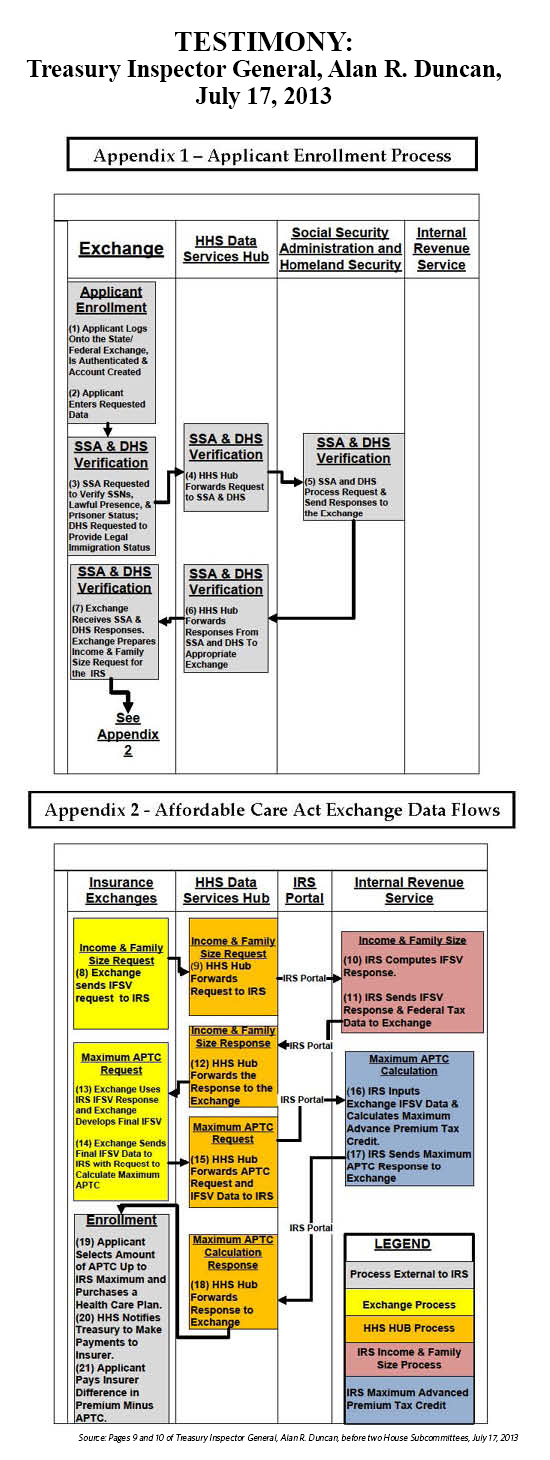
"[A]n auditor with the Treasury Inspector General for Tax Administration, an Internal Revenue Service agency that monitors performance, said testing the systems needed to implement the exchanges "will be difficult to complete" by the October 1 start date."

I bet.

Not a big deal though, right Mr Taxman?

Well....

"The lack of adequate testing could result in significant delays and errors in accepting and processing"

The good news is that all is proceeding according to plan:

"Obamacare, the president said, is "doing what it's designed to do"

Indeed.

ObamaTax stormin'

It ain't sci-fi:

Health Wonk Review: The Bard's edition

Louise Norris presents this week's intellectually stimulating ode to Billy Shakespeare, aka the Health Wonk Review. What makes Louise's HWR's so great is the time and care she puts into making sure each post includes context that shows she's read each and every one.

Kudos, Louise!

Wednesday, July 17, 2013

Burying the Lede

In newspaper parlance, "burying the lede" means to "begin a news story with nonessential details," or to obfuscate the actual "news." In this case, the New York Times lauds the ObamaTax, quoting sources in New York that claim it will reduce premiums in the individual market by 50%.

[ed: Gosh, whatever happened to the president's promise that they'd plunge 3000 percent?]

To hear Gov Cuomo tell it, "New York’s health benefits exchange will offer the type of real competition that helps drive down health insurance costs for consumers and businesses"

There's just one little problem:

It's a meaningless claim.

How's that, you ask?

Simple, but it takes 12 paragraphs to get to the real reason rates may be lower:

"While the rates will fall over all, apples-to-apples comparisons are impossible from this year to next because all of the plans are essentially new insurance products."

The new "metal" plans have much higher out-of-pocket exposures than plans currently allowed to be marketed in the Empire State; it's really not difficult to understand why Kia's cost less than BMW's.

But that doesn't fit the meme.

Tuesday, July 16, 2013

Scamster Tricks

So I return from lunch to find a voicemail from a distraught young lady. Seems she had bought health insurance this morning (or so she believed) but didn't have sufficient funds in her checking account to cover the premium, and wanted to make sure that, once that was fixed, her coverage would begin tomorrow, as agreed.

What makes this interesting is that I had no idea what she was talking about. I am a relatively successful agent, but I don't have so many clients that I can't remember one from a few hours earlier (more's the pity, one supposes).

After some probing, it turned out that the young lady had spoken with - and given all her private health, checking account and other personal information to - an agent who shares my last name but is no relation. The more I asked, and the more she shared, the more alarm bells were going off in my head. For one thing, I explained to her, the company from which she purportedly bought her policy does not sell health insurance.

For another, no professional agent is going to take an application over the phone (too easy to claim fraud, and where, exactly, does one "sign" over the phone line?). Add to that the fact that the call-back number she'd been given appeared to be non-functional and, well, we have a problem.

Based on recent ObamaScam stories, I asked her if perhaps the gentleman had mentioned the "new health care law." She told me that the agent had called her husband, who'd directed him to call her.

So much of this screams "scam" that I gave her two pieces of advice: first, that she should call her bank to determine whether her account had, in fact, already been dinged, and that if it hadn't, she should freeze the account. I also gave her the consumer hotline number for the Florida Department of Insurance (she's a Sunshine State resident), and suggested that she share her entire story with them as soon as possible.

Fingers crossed hopefully for a happy ending to this one.

5 Years in the Making: An OmniCare Update

We first started covering the OmniCare prescritpion drug whistleblower/kickback debacle just over 5 years ago; our most recent update was early last year, when we noted that the government's position on the whole mess was, erm, equivocal.

And now, thanks to tenacious FoIB Holly R, we (seem to) have resolution:

"A federal judge in Chicago has approved a settlement between Omnicare Inc., the U.S. government and two states, bringing an end to a whistleblower lawsuit filed under the False Claims Act"

Whew.

Cost of PCORI tax

This week we are gathering data for clients to file their PCORI Tax payment, and explaining it to them. Between our time, the groups' time, the Broker, and CPA it takes hours and cost at least a couple hundred dollars per group.

The tax on the first three groups I have done this AM;

$11
$8
$15

And they wonder why wages stagnate, small businesses don't hire or offer insurance, and the economy doesn't grow....

Monday, July 15, 2013

Friends with Benefits

It appears that those who are benefitting most from the financial side of the Patient Protection Act have been engaged with the Administration in some capacity over the years. Here's a short list of who has been "rewarded".

Sara Horowitz - Her organization, The Freelancers Union, was chosen to receive a $340 million loan to start a new insurance CO-OP in New York. She led one of George Soros' organizations who also was linked to President Obama back when he was in the Illinois legislature.

Anne Filipiac - She served in the White House as Deputy Director of Public Engagement and had a prominent leadership role in the 2008 Obama for America campaign. She also worked at HHS. Now she is President for Enroll America. We all know how much the administration and HHS admire her organization, right Kathleen?

Planned Parenthood will be serving as navigators. They will be receiving grants to help educate and enroll consumers into the very services they provide. Seems like a pretty sweet deal.

Trevor Neilson - Former member of the Clinton Administration who is now president of Global Philanthropy Group has been targeted by the White House to get celebrity endorsements from the likes of his client list that includes: Eva Longoria, John Legend, and Madonna to name a few. Mr. Neilson served as one of President Obama's surrogates during the 2012 campaign.

The advertising firm Porter Novelli was founded by William D. Novelli, who was the CEO of  AARP from 2001-2009. Catherine “Kiki” McLean is a senior partner and managing director of Porter Novelli.  She is a Democratic Party operative who worked for the campaigns of Al Gore, John Kerry, and Hillary Clinton, as well as the 2008 presidential campaign of Barack Obama.  McLean was hired by Porter Novelli in June of 2009. Since 2010, Porter Novelli has been awarded $49 million in HHS contracts.

Must be nice knowing your time and donations can come back tenfold.

Your receiptionist will be verifying subsidy eligibility...?

Received this notice from an association we belong to, not much more to be said


“solution” CMS has for random checking the subsidy eligibility for Exchanges starting 1/1/14. The CMS July 5th announcement that the fancy data-hub verification system will not be used the first year, so they’ll just accept whatever income the person verbally says.  This seems like a huge invitation for lying & fraud.  So, what is CMS’ “solution”?  They’ll make random calls to employer firms, and ask whoever answers the phone, “Is John Doe employed here, and does he or his family make $X thousands of dollars?”  Not only will the random person who happens to pick up the phone not know such very personal details, but also this will be a crisis for company morale & privacy.  (This is yet another reason why your clients & prospects need to have the P-or-P data & system in place for such calls.)"

Reminds me of when my high school would call home to verify absences, all legit of course, and how well that system worked. 2 years from now I bet we hear stories about 10,000 employers linked to a single phone number.

The IRS sent more than $46 million in tax refunds to 23,994 “unauthorized” alien workers who all listed the same address in Atlanta, Ga., in 2011, according to an audit report by the Treasury Inspector General for Tax Administration (TIGTA).

Gee, Ya Think??

As we've repeatedly pointed out, the whole ObamaTax Exchange roll-out is a magnet for fraud. And the evidence for that continues to pile up:

"As California prepares to launch its health care exchange, consumer groups are worried the uninsured could fall victim to fraud, identity theft or other crimes at the hands of some of the very people who are supposed to help them enroll."

No kidding.

Here's the problem (well, one of them, anyway): the Golden State is on course to"register" some 21,000 Navigators, most of whom will have no prior insurance background. But that's not the best part: the Feds require no background checks on would-be Navigators, and the rocket surgeons in charge of Cover California (the state's health insurance Exchange) confirm that they don't "have a plan for investigating any complaints that might arise once the counselors start work. That means consumers who might fall prey to bogus health care products, identity theft and other abuses will have a hard time seeking justice if unscrupulous counselors get hold of their Social Security number, bank accounts, health records or other private information."

Gee, what could possibly go wrong?

The Exchange has adopted new rules which would require fingerprinting and background checks, but how likely is it that these will actually be implemented?

Yeah, that's what I thought, too.

Too little, too late?

The good news is that the MVNHS© has apparently come to its senses, and is planning to shut down the Liverpool Pathway:

"...the Government will announce today the end of the deeply controversial Liverpool Care Pathway ... relatives and patients claimed that the LCP was being used to accelerate death, or even to kill patients who were not dying at all by starving and dehydrating them until they did, in fact, die."

The question then becomes whether or not this step is, in fact, enough:

"The NHS’s medical director will spell out the failings of 14 trusts in England, which between them have been responsible for up to 13,000 “excess deaths” since 2005."

That's roughly 2,000 per year, certainly a great savings on health care for the Much Vaunted National Health System©, but not necessarily the outcome many families (let alone patients) would have preferred.

What's striking about this is that it appears that what we saw with the Stafford fiasco was not an isolated event, but a function of MVNHS© culture. We in the States should be taking careful note of these events, since they're likely to play out very much the same way here under the ObamaTax.

As is this:

"Thousands of people are being put at risk of losing their sight unnecessarily due to variations in rates of cataract operations across England ... More than half the country’s Clinical Commissioning Groups, organisations set up by the health service to organise and buy treatment, restrict access to operations."

These are essentially mini Death Panels, and they seem to operate on the "lottery system;" that is, depending on where you are, you may or may not receive care in time, or even at all. And if you think this is happening just with eye care, I've got a bridge to sell you.

Did Obama waive employer mandate to save the rest of ObamaCare?

CATO had an interesting write up on the Liberty University v. Lew case, Liberty lost the battle but it could have been a victory in the War.

http://www.cato.org/blog/fourth-circuit-deals-hidden-blow-obamacare
"The plaintiffs in both Pruitt and Halbig claim, correctly, that Obamacare forbids the administration to issue the law’s “premium assistance tax credits” in the 34 states that have refused to establish a health insurance “exchange.” The Pruitt and Halbig plaintiffs further claim that the administration’s plans to issue those tax credits in those 34 states anyway, contrary to the statute, injures them in a number of ways. One of those injuries is that the illegal tax credits would subject the employer-plaintiffs to penalties under Obamacare’s employer mandate, from which they should be exempt. (The event that triggers penalties against an employer is when one of its workers receives a tax credit. If there are no tax credits, there can be no penalties. Therefore, under the statute, when those 34 states opted not to establish exchanges, they effectively exempted their employers from those penalties.)"

If the Obama Admin fears the entire law could be struck down the knee jerk reaction would be to remove the penalty. With no employer penalty the plaintiffs would have no damages.  

"Third, shortly after announcing it would effectively repeal the employer penalties until 2015, the administration wrote the Liberty, Pruitt, and Halbig courts to argue that the delay should (at the very least) delay the courts’ consideration of those cases. In Liberty, the Fourth Circuit rejected all of those claims."

What the removal of the penalties would do to the cost would be horrific from a budget standpoint, but Obama has never really been shy of trillion dollar budgets anyways. 

Sunday, July 14, 2013

Early look at Community Rating

A broker I work with passed on an analysis from Humana comparing a December renewal to community rating. 5 cases, 2 would see similar rates from Community rating, possibly a slight savings, 1 would see a 17 to 27% savings. If your one of the three flat to slight savings sounds great.

At what cost to the other two...?

23% increase minimum for 1 and 43% increase for the other. Neither of those are young and healthy groups. The test and success of ObamaCare will be how many groups eat their cost sharing for the good of the pool.

ObamaTax Bar Tab

Your ObamaTax dollars at work:

"I briefly scanned a schedule of upcoming mobile tour events ... That’s no fewer than three bourbon festivals on the Kentucky marketplace’s agenda."

That's right: in their efforts to trick entice young people into signing up for the ObamaTax, the rocket surgeons running the Blue Grass State's Exchange roll-out (get it?) are encouraging them to 'drink up and sign up.'

Maybe they know something....

Friday, July 12, 2013

Friday LinkFest

■ First up, not sure whether this is good news or not, but "Dr" Theodoric of York may be re-opening his practice:

"Trauma doctors at Johns Hopkins, the University of Maryland and other U.S. hospitals routinely use leeches as a temporary measure to keep blood flowing as new vessels grow in a damaged area."

Turns out, the little guys are helpful in more ways than one: they can help get blood flowing back into damaged areas, and their saliva "has a natural anesthetic."

■ Um, you know how we're supposed to be cutting out salt? Well apparently this is not necessarily such a hot idea. According to the CDC, "major reductions is no longer considered a substantial health hazard. The CDC even reported that reducing salt intake to below 1 tsp per day may be dangerous to your health."

We're still waiting on the report that low cholesterol causes AIDS.

■ It's not just senate staffers and movie theater ushers losing benefits. Venerable northeast grocery chain Wegman's has long provided part-time workers with access to health insurance benefits. Thanks to the ObamaTax, though, those days are coming to an end:

"Several Wegmans employees confirmed part-time health benefits had been cut and said the company said the decision was related to changes brought about by the Affordable Care Act."

Clean up on aisle 4.

■ This has been making the rounds for a few days now, an interactive explanation of how the ObamaTax will affect most people. It's not perfect - for one thing, there's a real possibility that the Exchanges won't be up and running by October, and of course the (Evil) Employer Mandate has been delayed - but it's a reasonable facsimile of the train wreck as it looks today.

[Thanks to Holly R and Gail S]

Thursday, July 11, 2013

Finally, an appropriate ObamaTax ad venue

So it's not enough to enlist Matlock and Michael Jordan to tout the train-wreck, now the brain trust at HHS has finally embraced honesty in advertising:

"Marchand has been thinking up all sorts of ways to make sure young people hear about the new health program ... We’ve talked about everything we could use, even whether we could do some branding on porta-potties"

Well, the ObamaTax does stink, so there's that.

[Hat Tip: HotAir]

Her lips are moving...

Heh:

"The Department of Health and Human Services (HHS) is on track to open the health insurance exchange on Oct. 1 despite “mischaracterization” and “confusion”

So sayeth Marilyn Tavenner, chief administrative minion to Ms Shecantbeserious.

This despite on-going - and very public - acknowledgements by Ms Kathleen (et al) that the train wreck continues apace.

Ms Marilyn purports to "clear up myths  ... in the wake of the employer mandate postponement and coverage about final regulations it released Friday on eligibility for the exchanges."

While we do appreciate the great comedic material here, is it really appropriate for her to be joking around at a time like this?

Wednesday, July 10, 2013

Fees, Glorious Fees

So you think many of us dodged a bullet when the (Evil) Employer Mandate got pushed off a year?

Not so fast there, pardner.

Assurant's sent out an interesting FAQ (fact-sheet) about just what fees are due next year, exclusive of the employer reporting requirement. Lets take a look at some of the wonderful new expenses that will cause your insurance premiums to decrease 3000% next year:

1 - Annual Fee on Health Insurance Providers

Well first, let's make clear that this is a misnomer: insurers don't pay any fees, their insureds do. What's funny (ironic, not comedic) about this is that this fee is "to help fund the cost of PPACA." So it's a fee to pay for collecting itself.

Very meta, that.

2 - PPACA Transitional Reinsurance Fee

This one "is an annual per capita fee that funds a temporary reinsurance program" that lasts for 2 years ('14 to '16). It's essentially a pay-off to carriers involved in the now-defunct high risk pool program [Correction: this fee is designed to subsidize carriers as they take on higher risk individuals, and to "stabilize insurance premiums in the individual market" Thanks to Bob H in the comments for pointing this out!]

3 - Patient-Center Outcome Research Institute Fee (PCORI)

We've discussed this one before. Basically, it's a slush-fund for the benefit of a "not-for-profit corporation created by PPACA to give patients a better understanding of prevention, treatment and care options available."

You know, WebMD.

All of these fees go into your next renewal regardless of your company's size (or even if you've got an individual plan - remember, carriers don't pay these fees, you do).

[Hat Tip: Assurant's Jeremy F]

Cavalcade of Risk #187 now online

Bob Wilson makes his CavRisk hosting debut with a knockout effort, featuring risk-related posts on "hunger, health care, health care delayed, obesity and everything in between."

Out. Standing!

And a great big Thank You for all the fine folks who stepped up for hosting duty - we're set for the summer thanks to you.

Tuesday, July 09, 2013

The ObamaTax hits just keep on coming

As we noted earlier, "[m]illions of smokers could be priced out of health insurance because of tobacco penalties in [The ObamaTax]."

Typically, insurers ding smokers (well, tobacco users, really) 30% or more. Under the ObamaTax, this is likely to rise to 50% over non-smoker rates.

That is, they were supposed to.

But just like the (Evil) Employer Mandate, this integral part of the ObamaTax is is coming up short:

"The Obama administration ... has quietly notified insurers that a computer system glitch will limit penalties that the law says the companies may charge smokers."

Actually, given that Ms Shecantbeserious (et al) can't confirm employer group eligibility, and will rely on the "honor system" for subsidies, how many folks would admit to tobacco use anyway? And since plans are guaranteed issue, who cares how accurately an application is completed?

After all, who's to know?

Monday, July 08, 2013

Of COURSE your sensitive, PRIVATE health info is safe....

And speaking of the soon-to-be-online (maybe) Data Hub, isn't it nice to know that all your info is totally secure?

Totally:

"The IRS Mistakenly Exposed Thousands of Social Security Numbers


The incident involves the unwitting exposure of "tens of thousands" of Social Security numbers"

Doesn't that just make you feel so secure?

Health Care Good News, and Bad....

■ Japanese scientists have begun growing a liver:

"A group in Yokohama reported it has grown a primitive liver in a petri dish using a person's skin cells"

It's not a complete liver, but it's a big step forward in organ replacement. What will be very interesting is the race between the organic "growers" and the 3D printer folks.

■ Sadly, not all of these efforts work out:

"A toddler who in April became the youngest person ever to receive a bioengineered organ has died ...  implanted a bioengineered windpipe made from plastic fibers to which the girl’s own cells, taken from her bone marrow, were added"

There have been only a handful of these procedures done at all, and little Hannah Warren (who would have turned 3 next month) was the first here in the States.

[Hat Tip: FoIB Holly R]

Sunday, July 07, 2013

Lack of Employer Reporting bogus excuse

The inability to get employer reporting up and running is the excuse De Jour for waiving penalities and not substantiating income when it comes to subsidies. It is also BS and a great example of poorly written bill by people with no clue what they are doing. ACA was passed in 2010. Prior to that;

As an employer I report quarterly to my State everyone I employee and how much I pay them for unemployment benefit purposes. When someone files a claim I promptly get notice, or multiple, requesting that I verify this information.

As an employer SS and Medicare taxes are paid monthly or quarterly for all employees.

When it comes to verifying income the States and Federal government are already sitting on the vast majority of this info. There is no need to create any employer reporting or new process to accomplish this. They have had this info for decades and well before the bill was written or passed. If the government can't pass this data between buildings with a 3 year advance notice then trying to collect it a second time from employers is going to really be a disaster.

In regards to other coverage, as a payor we are already required to report our population of insured over 55 to CMS. I rather we report everyone as it is easier than parsing member roles and hoping you don't miss someone. Creating an extract to send everyone is much easier than an extract to send only certain people CMS wants some of whom must be manually identified.

So here now is the federal government perplexed about how they are going to get data on those privately insured, as they continue to tell us to not send everyone privately insured under the current reporting mechanism. To remove the filters that limit what is sent now is a very easy process. To send the file more frequently is an easy process.

To create an entirely new process with new data set and reporting requirements....not so easy.

You can't help but ask, did they write this bill trying to fail or are they really this inept?

Saturday, July 06, 2013

ObamaTax: Not Ready for Prime Time

Fresh on the heels of the ObamaTax (Evil) Employer Mandate Reprieve comes this news:

"The Obama administration announced Friday that it would significantly scale back the health law’s requirements that new insurance marketplaces verify consumers’ income and health insurance status."

Hunh?!

The plan is that, for the 16 states (plus DC) that have opted to run their own Exchanges (as opposed to the other 42 who've tasked Ms Shecantbeserious and her minions with that job), the gummint will rely on its citizens' sacred honor as to whether or not they're eligible for their employer's group plan, and thus (subject to income requirements) eligible for subsidies.

Which is, in the words of St Homer of Simpson, a great big "D'oh!"

As co-blogger Bob pointed out, when Ms Shecatbeserious relaxed the employer reporting regs, she made it impossible for the folks in capital City to cross-check this information in the first place. And I'm sure that folks will be just as honest regarding their income eligibility.

Turns out that the ObamaTax is quite the fiscal fiasco.

Gee, who'da thunk it?

Friday, July 05, 2013

And Anthem joins in...

As we noted the other day, some carriers are looking for creative ways to help their clients forestall at least some of the train-wreck:

"If we would like, UHC would change our renewal date to December 1 ... The primary benefit in taking this offer would be to delay the impact of the major rate increases due after January 1 ... A secondary benefit accrues to us due to the nature of our plan: we currently have an HSA-compliant plan"

Many (most?) high deductible health plans (eg Health Savings Accounts) will have to be re-negotiated next year since they won't be ObamaTax-compliant. By putting off the renewal an extra few months, employers buy time to figure out what to do about that.

In the meantime, Anthem has now joined United Healthcare in offering renewal date changes to its existing small group clientele (via email):

"Clients on our non-grandfathered Small Group (2-50) plans ... will be offered a December 2013 off-cycle policy effective date. If they accept the off-cycle policy effective date change offer, they will keep their current plan until November 30, 2014"

They point out several advantages:
• Ease into the new market and delay potentially higher rate increases
• Have more time to work with you to decide what coverage best meets their needs
• Keep their current plan through November 30, 2014
• Lock in a new premium through November 30, 2014

One thing they do note is the very real possibility that this means an extra 2013 rate hike (something our UHC rep assured us would not be the case for their clients). This could just be standard CYA verbiage, but who knows.

One thing Anthem's doing which I haven't seen (yet) from UHC is that they're sending out notices to its eligible groups, and that the "offer letter will illustrate their current rate, their off-cycle policy rate and their estimated 2014 ACA compliant plan rate."

So it's not a complete shot in the dark for small employers.

Cavalcade of Risk #187: Call for submissions

Bob Wilson hosts next week's Cav. Entries are due by Monday (the 8th).

To submit your risk-related post, just click here to email it.

You'll need to provide:

■ Your post's url and title
■ Your blog's url and name
■ Your name and email
■ A (brief) summary of the post

PLEASE remember: ONLY posts that relate to risk (not personal finance tips and the like). And please only submit if you are willing to link back to the carnival if your submission is accepted.

Thursday, July 04, 2013

What should they have done?

With the latest delay in implementing ACA seeing the employer mandate pushed back a year we should start asking if there might not be a better way to accomplish the goals of ACA. As commenter Jardinero1 pointed out;

http://insureblog.blogspot.com/2013/07/why-obamacare-delay-because-hhs-and-irs

this is not the first failure of ObamaCare nor is it likely to be the last. Some failures, such as LTC insurance, were so obvious and colossal, you have to wonder if they even attempted for them to be viable.

The tough part of the question is even trying to figure out the purpose of ObamaCare in the first place. What did they really intend to accomplish with this bill?

Lower the uninsured rate - Young healthy people make up a disproportionate percentage of the uninsured. They can already buy decent polices for well under $100 per month. I don't think anyone can argue honestly that doubling or tripling the cost of a policy would get them to buy. If they wont pay $70 per month they aren't going to pay $200, even if you do tax them $95 per year.

The number of people that wanted insurance and either couldn't qualify or truly could not afford it was only four to six million. If the goal was to cover those four to six million completely overhauling systems that cover 200 million people makes no sense. What was spent in regulation cost, compliance, advertising, etc etc would have insured those  four to six million. Tweaks to Medicaid and Medicare would have accomplished that without disturbing 200 million other people.

If you want to force people to make the smart financial decision either require they carry insurance or refuse to treat those that don't. Either way keeping insurance as affordable as possible lowers the uninsured rate, using insurance as wealth redistribution only encourages people to exit the system.

Lower the cost of healthcare - An obvious non solution is a huge insurance bill. Insurance is the cost of healthcare plus administrative and risk fees. You might be able to squeeze 5% out of that additional cost but if your goal was to only reduce our healthcare cost 5% again this bill was overkill. Not only does ObamaCare not do anything to lower the cost of healthcare it has numerous provisions that have and will increase the cost of healthcare. Compliance cost being just one of them.

If you want to lower the cost of healthcare that can be done in 6 months and generate revenue for the government. Rent the Medicare network. There is roughly 100 million employees with group insurance most of whom pay a PEPM access fee of $5 to $20. Rent Medicare's network and the federal government is now making $500 million to $2 billion per month. This would also immediately accomplish most of the EDI goals of HIPAA and ACA as well. 

Redistribute wealth - If the intent was to force the haves to pay for the have notes a couple simple taxes could have accomplished that. In fact the bill contains a number of taxes to do just that, but it doesn't explain all the other changes and intrusions.

Taxes already fund Medicaid and thus redistribute wealth. Open Medicaid up to those that have catastrophic healthcare expenses and make them  pooled cost to the nation not a small group of unlucky co-workers or fellow policy holders. The poor quality of Medicaid should be enough to motivate people off of it when better options are available.

It's no wonder so many pieces of this reform are falling apart, they never made sense in the first. It is a bill of multiple actions but no solutions.


Wednesday, July 03, 2013

Question of the day

In response to my post last night, co-blogger Bob posed this doozy:

"Employers are exempt from reporting and will not be subject to fines.

But . . .

The individual mandate is still in play.

Subsidies require proof that you do not have an employer plan that complies with the guidelines, and if you do have a plan, is it affordable?

But if employers are not reporting this information, how will HHS know if you qualify for a subsidy?
"

Indeed.

An offer you can't refuse?

Our group health insurance plan is with UHC; we currently have a March 1 renewal date. Recently, UHC made small group clients an interesting offer:

If we would like, UHC would change our renewal date to December 1.

While that seems rather innocuous, there are a number of implications. First, why would we want to do this? Second, what affect would this change have on our current 2013 rates (since we've already taken the renewal "hit")?

The primary benefit in taking this offer would be to delay the impact of the major rate increases due after January 1 (due to  Community Rating and the like). In effect, we'd be locking in our rates from March 1, 2013 to December 1, 2014. Pretty decent.

A secondary benefit accrues to us due to the nature of our plan: we currently have an HSA-compliant plan with a $3,500 individual deductible. As of next year, these are 'verboten,' and we'll have to either lower that below the $2,000 threshold or find a different configuration altogether [ed: remember when the President promised that "if you like your plan, you can keep your plan?" Good times, good times].

By electing to change our effective date, we also delay making that decision until late next year.

Other carriers have followed suit, of course; via email, Medical Mutual of Ohio offered this:
Q. Can non-grandfathered small group (1-49) or individual customers get an early renewal on December 1, 2013?

A. Yes. We recognize customers have valid business reasons for requesting changes to their coverage period. Just as we have in the past, we will continue to accommodate these requests.
That offer, by the way, doesn't apply to 50+ groups.

Oh, and it's worth noting that it doesn't appear that these renewal date changes will impact calendar year deductibles and co-insurance accumulations.

Why Obamacare Delay? Because HHS and IRS Fumbled Rollout

Oh, but that's not exactly what the headline says in this Forbes article:

Why Obamacare Delay? Because Half Of EmployersAren't Ready for Rollout

Half of employers not prepared to administer the employer mandate starting in January? Yeah, probably true.  But - the headline says the delay is because of employer unreadiness.  I think the headline is misleading; it promotes a superficial reason and ignores meaningful underlying reasons for why so many employers are not ready.

What meaningful, underlying reasons?

For starters, the reason many employers are not prepared is because of late-issued HHS and IRS regulations.  Over the past 3 years the agencies often missed their target dates for release of proposed regs, while employers waited.  Add to that the sheer length and typical bureaucratic opacity of the proposed regs when they did emerge, which required lengthy analysis by employers to determine just what the proposed regs asked them to do.

Another factor affecting employer readiness has been legitimate debate over the proposed regs when they were eventually released. As employers began to realize the profound impact on their businesses, they have appealed, demanded hearings, and filed suits to get the proposed regs withdrawn or substantially modified. The obvious example is the ongoing outcry against the requirement to cover contraception (which is nowhere found in ACA) - and there are other examples as well.

Keep in mind this is not the first time HHS was forced to interrupt the planned progress of ACA implementation. Just one example: new enrollment in the individual high-risk pools was stopped because HHS ran out of money (even though only a fraction of the expected population actually enrolled).

On balance therefore it seems to me the principal reasons HHS and IRS are forced to defer the employer mandate comes right back to their own front doors.  Employers were not ready largely because HHS and IRS did not perform their responsibilities in a timely manner.

As to the political convenience of avoiding controversy for the 2014 elections – if ACA implementation were going smoothly and on plan, that would be a political plus, not a minus. So I don’t see politics as fundamentally driving the decision to defer the employer mandate.   Politics plays its part, but I think  the underlying reason is the inability of HHS and IRS to issue timely regs, and otherwise to implement ACA as required by the legislation in the first place.

In my book, this latest decision to defer a key part of Obamacare is just more evidence of an ongoing bureaucratic mismanagement debacle.  And little anyone has seen can give confidence that HHS and IRS will be able to manage Obamacare any better, once it is, finally, implemented. Whenever that happens.

Tuesday, July 02, 2013

What the...? (Breaking)


So The ObamaTax Man has unilaterally decided to put the metaphoric brakes, at least temporarily, on the (Evil) Employer mandate:
"Businesses won’t be penalized next year if they fail to provide workers health insurance after the Obama administration decided to delay a key requirement under its signature 2010 health-care law."

So a couple of questions off the top of my head:

This was legislation he wanted passed, in fact rammed through, and which he signed, and he's only just now figuring out that it's a stink bomb?

Not the brightest light in the harbor, is he?

More to the point, it is the law, how can he just unilaterally suspend it?

Sheesh.

UPDATE: Mike has more:

"Keep in mind this is not the first time HHS was forced to interrupt the planned progress of ACA implementation. Just one example: new enrollment in the individual high-risk pools was stopped because HHS ran out of money (even though only a fraction of the expected population actually enrolled)"

Click through to read the whole thing.

In the news....

■ Is one ever too young to buy life or disability insurance? There are certainly some compelling reasons to do so: depending on the policy type, one can lock in much lower rates for a long period of time. And of course, it guarantees that you have at least some protection in place should your health go south. The WSJ has more.

■ Back in the day, President Obama promised that rates would decrease by 3000%. As we now know, that was, um....optimistic to say the least. Blue Grass blogger David Adams reports that "the Kentucky Department of Insurance has leaked data showing health insurance premiums under ObamaCare will increase by an average of eighty percent at the start of 2014"

■ And speaking of the WSJ, they also report something we've noted for a while now:

"The long-term-insurance industry now is shrinking, premiums are soaring and there is no fix in sight."

There are, of course, a number of contributing factors at work here, most notably retention and claims.

Hunh?

Here's the thing: Long Term Care insurance (LTCi) is most similar to disability insurance in terms of complexity and benefits. So it stands to reason that many (most?) carriers who've been in the market for a while based at least some of their rate structure on assumptions carried over from the DI side. One of those is "retention;" that is, how many policies stay in force over the long haul. It appears that many more folks have kept their LTCi plans than the carriers had anticipated.

Which sets up the next problem: claims. If more folks are holding onto their policies, then more folks than expected are experiencing claims. And the cost of care isn't abating, either, which tends to create a vicious cycle.

■ And finally, a while back we brought you the news that 3d printers were helping to fashion new organs. Apparently, that was only the beginning:

"Damaged bones could be fixed with a new technique that involves 3D printing ... if a child had a jawbone defect, you could take an image of the defect, feed it into a computer and print a replacement to precisely fill the defect using the patient's own cells"

Very cool.

[Thanks to FoIB Holly R and Gail S for their news tips]

What if your carrier exits the market and there is no exchange to fall into?

United Health just announced they are exiting the CA individual market.

http://www.latimes.com/business/la-fi-unitedhealth-insure-calif-20130702,0,4370321.story

"The nation's largest health insurer, UnitedHealth Group Inc., is leaving California's individual health insurance market, the second major company to exit in advance of major changes under the Affordable Care Act.

UnitedHealth said it had notified state regulators that it would leave the state's individual market at year-end and force about 8,000 customers to find new coverage. Last month, Aetna Inc., the nation's third-largest health insurer, made a similar move affecting about 50,000 existing policyholders."

That is 58,000 individuals/families that will not have insurance January 1st, 2014. Most will have no choice but to sign up in the Exchange. I have heard a number of people speculate that the government will push back  the start of the Exchanges as they will not have them ready in time. If they do, what happens to all these people whose carrier has exited the market?

This is the problem with comprehensive solutions like ACA: you miss on one part and you crash (or at least damage) the entire system. A more logical bill would have created the Exchanges without all the impact on the existing market until they were up and running smoothly. That way, if they missed, the impact would have been minimal.

This announcement also doesn't bode well for competition and choice. It appears the regulation is so onerous that even with 8000 or 50000 members it is not worth competing in the market. If established players don't want to join in, I can't imagine many upstarts wanting to give it a try.

Monday, July 01, 2013

Et tu, Marian?

Last week, Bob asked a very crucial question: why, if it's such a great idea (and a requirement), "is the government still trying to sell the public on the greatness of Obamacare?"

It's a great question, especially in light of this:

"Up to 17,000 U.S. libraries will be part of the effort to spread the word about the [ObamaTax] ... The library association ... appears to be all in"

What, exactly, qualifies librarians as experts on health insurance? And why are my (municipal) tax dollars going to promoting a national law train wreck? Most important, of course, is why is this even necessary?