Tuesday, April 29, 2008

Budgets vs. Healthcare

From the Daily Telegraph:

Operations are being cancelled because of dirty or broken instruments sent back by private companies employed to clean them, the Royal College of Surgeons (RCS) said yesterday.

Hospitals used to sterilise their operating instruments on site but are being encouraged by the Department of Health to put the job out to private companies.

A survey of surgeons found that equipment was often unfit for use, damaged, or late - meaning that operations were cancelled at the last minute, often when patients were already anaesthetised.

There's nothing inherently wrong with using outside contractors, but there's always the assumption that the job will be done correctly. From cleaning the hospitals to sterilizing their instruments, it's bizarre how many times the UK health system messes up. Is there a cultural lack of personal responsibility?  It's like the Chinese manufacturers that put antifreeze in toothpaste to save a buck.  It's just stupid.

Can you imagine the lawsuits that would result if this happened here?


A Heavyweight Grand Rounds

Doc Gurley (no "gurley-man," he) presents a WWE-themed 'Rounds, complete with pictures and a dash of humor.
Ever heard of "orphan drugs?" No, not Lil' Annie's lipitor, but specially-designated meds that David Williams, host of the Health Business Blog, believes are being abused by Big Pharma.

Monday, April 28, 2008

Carnival of Personal Finance is up!

Lazy Man and Money blog hosts this week's edition. Following the "Best of...and then the rest" model, LM&M presents a slew of timely and informative finance-related posts.
One of my favorite moneybloggers is The Digerati Life. This week, SVB has an interesting post detailing ways to both earn and save more.

Saturday, April 26, 2008

Consoles vs Components: A Healthcare Perspective

[Welcome Industry Radar readers!]

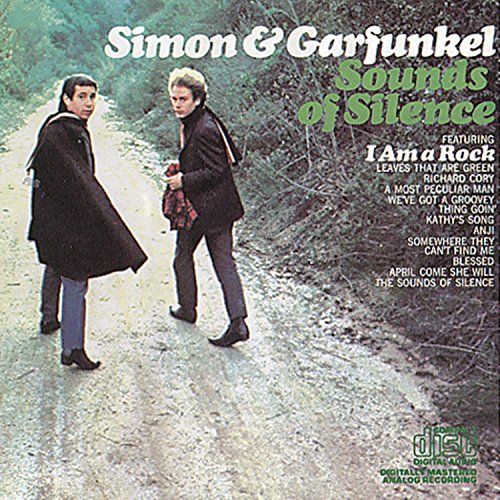
Back in the day, home stereos came in huge wooden cabinets, as much furniture as sound system. Their appeal was obvious: rich sound without dangling wires, all neatly packaged together. The downside wasn't so obvious until the tuner knob or turntable arm broke: the whole thing went to the shop for repairs, leaving only the sounds of silence.
Then came components: speakers, turntables, tuners and tape decks all separate, easily upgradeable and if the speaker blew, it was a simple matter to swap in a new one.
If that sounds weird coming to you from a medblogger, consider this:
Several months ago, when I had my little lesson in the effects of ice and gravity, the provider I chose was such a facility: a dozen or so state-of-the-art exam cubicles, but no hospital rooms. For a relatively minor injury such as mine, this was ideal: there was little chance I'd need overnight accomodations.
We've talked before about minute-clinics and surgi-centers, and how many urban hospitals are cutting back on services, and I think I see a trend: much as stereo cabinets gave way to hi-fi components, it seems to me that previously hospital-based care is moving more and more to out-patient facilities unconnected to the sprawling complexes we've come to know as "hospitals."
Is this a "good thing?"
Only time will tell, of course, but I think the trend is encouraging. Specialty facilities can offer more expert care more quickly, and (perhaps) more cost-efficiently than traditional hospitals. They lack, of course, extended stay options; when my mother was recently hospitalized, she was taken first to the same facility as I had been, but had to be transported later that day to a "regular" hospital. Still, we couldn't have known that at the time, and it seemed a reasonable choice.
Something to keep an eye on.

Thursday, April 24, 2008

Genetic Testing Update

Late last summer, we reported on a new genetics discrimination bill in Congress. HR 493 was designed to prohibit health plans from adjusting premiums for a group on the basis of genetic information. Along with "Dr No" (Oklahoma Senator Tom Coburn), we dismissed this bill as both redundant and unhelpful.
Alas, word's out that the Senate is likely to pass the bill this afternoon, and it's anticipated that President Bush will sign off on it, as well.
We'll have more on this as the full effects become apparent.

Wednesday, April 23, 2008

A Belated Thank You

I want to thank everyone who left comments at Bob's posts, wishing my family well and offering good thoughts and then condolences. They all meant a lot to me; I was pretty much offline for almost two weeks, and I didn't want anyone to think that these were being ignored. Rather, they were much appreciated.

Cavalcade of Risk #50 is up!

Julie Ferguson hosts this week's Cav at Workers' Comp Insider. It's an oustanding edition, and all the more impressive because I was unavailable to lend even a small hand. Thank you, Julie, for a great Cav and all the hard work you put into it.

Monday, April 21, 2008

Finally: Transparency = Cash

[Welcome Industry Radar readers!]
Long-time IB readers know that I have a keen interest in (obsession with?) transparency in health care. That is, I think that pricing and outcomes should more closely follow the McDonald's model than the airlines'. Except for emergency situations, where speed is perhaps the most important criteria, consumers should be able to compare the costs and likely results of procedures and treatments before having to make a decision.
It never occurred to me that one could also make a buck off of this:
I have mixed feeling about this: on the one hand, it seems to me a good thing that they're taking this effort so seriously. On the other, wouldn't handing out $100 bills affect their own pricing, forcing them to increase costs?
There's no doubting their commitment to transparency itself, though: they even have a page which lists their charges for a variety of procedures, as well as how those charges stack up against the competition.
Aside from price, another aspect of transparency is a sharing of outcomes and satisfaction levels. In this area, too, Alliance Community seems to have fully embraced the concept: on still another page, they provide a "report card" on their level of care.
And as if that weren't enough, the hospital's CEO, Stan Jonas, runs a blog with insights and information. He even has a comments section, which provides a level of executive transparency, as well.
Kudos!

Sunday, April 20, 2008

Regarding Angels

I've never given a great deal of thought to angels. It's not a religious thing; it's just that the subject wasn't really on my radar.

Until recently.

These past few weeks have been the most difficult of my life. As one can imagine, blogging (while an important and rewarding part of my life) has not been a priority to me the past several weeks. So I was touched and honored to read, when I did manage to get some "online time," Bob's updates and final tribute. He is indeed a friend, and a mensch.


Oh, that's right, angels; I have recognized quite a few over the past few weeks. Some are unlikely (gruff bearded ones here in Dayton, krusty bearded ones further south). Others were more obvious: the incredibly sensitive and compassionate folks at Hospice of Dayton, about whom I can never say enough good things. Some were physicians: my mother's long-time internist, who loved my mom almost as much as we did; the doctors and nurses at Kettering Medical Center, with whom I shared a rocky start, but grew to trust and appreciate.

Some I've know all my life: friends of my parents for over 50 years. When Uncle Milt and Aunt Honeylou enter the room, it's as if the sun has literally just burst forth. I don't think I've ever known anyone with such a love for life.

My mother's beloved sister, who begged her own mother for a baby sister (and finally got her way), is another one. Even when Mom was in Hospice (maybe especially then), she called every day, asking me to hold the phone to mom's ear so she could tell her baby sister how much she was loved.

My second father is an angel, too: although he's not in perfect health, he would not leave her side in those final days and hours. Sharing her final moments with him was a sacred thing.

My wife is, perhaps, the most likely angel. I always used to tease her that she was Mom's favorite, and there was more than a hint of truth in that. Even though she, too, was hurting and grieving, she was my rock and my anchor, and made absolutely sure that Mom was comfortable and knew that she was surrounded with love.

I suspect some folks are wondering why I'm sharing all of this in such a public forum. It is, after all, personal and painful and seems to have nothing to do with the issues we generally address here. But I was touched by some virtual angels, too: emails of love and support, the comments many have left in Bob's recent posts, all show just how many angels there are among us, even if we can't see them. I am so deeply grateful for all the love, sympathy and support from my "cyber family."

Just knowing that there are so many angels in my life is a perfect blessing.

Chag Pesach Sameach!

Wednesday, April 09, 2008

Cavalcade #49 is up!

This week's edition is available at Early Retirement. Blogger Jacob has done a great job, so please stop by.

We have slots available for June and July, so PLEASE drop us a line to reserve yours.

Tuesday, April 08, 2008

Grand Rounds is up...

Ably hosted by Dr Wes, there are 3 dozen interesting posts, including pieces on "legal thuggery" to pap smears on a man.
Do check it out.

Monday, April 07, 2008

HSA's in Jeopardy?

As a member of the National Assocation of Alternative Benefits Counselors, I receive periodic updates on legislation, pending and otherwise, regarding HSA's, HRA's, etc. Mostly, it's routine stuff, and merely confirms information I've already received from other sources.
Today, though, I learned for the first time about a move in Congress to further complicate HSA (Health Savings Account) distribution requirements. Although the email did not mention the name, number or sponsor of the bill (nor, indeed, much of anything else), a quick search of Thomas.gov gave me the information necessary to write an informed post about it.
[PARA REDACTED: Thanks to a tip from a detail-oriented reader, I've been reliably informed (and confirmed) that the bill originally referenced here is NOT ABOUT HSA's, substantiated or otherwise. This makes it even more frustrating, since the NAABC "alert" made no mention of which bill is involved. I'll keep digging, and update as necessary. My apologies to Congressman McNerney. HGS]
Let's take a step back and talk about a detail of HSA's which we don't much discuss here. When one makes a withdrawal (or "distribution") from almost any "qualified" (i.e. tax-favored) account, there are certain rules and requirements. With Health Reimbursement Arrangements (HRA's) and Flexible Spending Accounts (FSA's), one is required to "substantiate" or prove that the expense is eligible for that favorable treatment. This is really a pretty simple hoop through which to jump: the receipt is going to say "allergy med" (so it's okay) or "Snicker's bar" (which is not) [ed: Dang! Are you sure about that?]. Under Section 105 of the Internal Revenue Code, only folks participating in HRA's and FSA's are required to provide that proof; HSA participants are pretty much "on their own." That is, unless and until one is audited.
Until now.
The (as yet unidentified) bill would change that, and require HSA participants to substantiate each of their withdrawals, as well. Is this a big deal? Maybe, maybe not. According to the NAABC email:
"The proposed solution to this undiagnosed problem is to require that expenditures from an HSA be substantiated as a qualified medical expense. This would surely lead to higher administrative costs and more hassles for consumers."
I'm not convinced that that conclusion necessarily obtains. After all, many carriers offer HRA and FSA administration gratis, or for a nominal fee. Admin costs for the HSA loss-funds (the actual "accounts" in "HSA") are already all over the board; as their popularity (and marketshare) continues to grow, more admin's will come into the market, and competition will help to rein in costs. Based on this fact alone, I doubt that substantiation will be much more than a minor nuisance.
UPDATE, NAABC Responds: I sent a link to this post to the NAABC, and Harvey Randecker, its president, sent me this helpful reply:
"My only point in circulating this "Alert" was to indicate exactly how consumer-driven health plans can be destroyed...incrementally.
After The Clinton Reform Plan [ed: "HillaryCare"] was defeated in the early 90's, Bill Clinton was quoted as saying that the lesson they learned was that, in order to get what they wanted, they would need to proceed "incrementally," passing small legislation that will chip away at the system and, gradually, force a more socialized system on the American public.
Now, due to the expansion of HSAs and HRAs, the only way to halt their growth is to make them less desireable to the public. Admittedly, I thought that [the recent Medicare] legislation...made HSA provsions too liberal and that it was bound to incite anti-CDHP legislators, once they assumed control, to do whatever necessary to reverse the trend and, to me, it looks like this is just the first small step.
We are so small staffed at NAABC that all we can do is pass along Alerts like this that we receive that we feel would begin to adversely affect the CDHP market in one way or another. Unfortunately, having a tiny staff means that we really don't have anyone with the time to really digest what we receive. Nevertheless, if we ignored the alarm bells being sent us, we would not be doing a service to our members.
I appreciate your comments."
Thank you, Harvey, we appreciate both your prompt response and your insights. The point about staffing problems is, of course, spot on: it's one of the banes of such associations. It seems to me, however, that this may be one of the key benefits of blogs (such as IB): the ability to do "distributed computing" type analysis on these issues. The appeal of this method would be financial (i.e. free to the organization) as well as comprehensive (i.e. lots of folks working on pieces of the puzzle).
UPDATE 2: I received a phone call from Congressman McNerney's office this afternoon, after I'd already corrected the post. Although I was happy to have given the Congressman free publicity for his bill, I still wanted to know the name and number of the correct bill, since I still couldn't find it at Thomas. So I emailed the NAABC (again) to ask for this information, and their spokescritter had no idea what it was, or any other relevant and important details.
This is outragous: you don't send out an "Alert" about legislation when you don't even know the name or number of the bill. Regardless of the staffing issues, this is just inexcusable. I no longer consider the NAABC as a credible source for legislative information, and won't be troubling our readers with its "Alerts" in the future.

Good News is Bad News? (From the P&C Files)

Only in the world of insurance would we find the following said strictly matter-of-fact, with no laugh track expected or necessary:
Because claims have been so low, profits have been good, which means that competition (which is, of course, a good thing) is heating up. But when that happens, folks who underwrite the risks have to slash prices to make themselves more attractive, which then cuts into profits.
This is one of those times where I'm truly grateful to work in a side of the biz that understands market forces and the value of customer satsifaction and open communication.

Oh, Behave: Redux

When last we left our friends at the MVNHS©, we learned that once their "quota" was filled, it was off to the golf course.
But what happens to their patients?
Well, if you've pumped your own gas recently, then you're halfway there:
Words fail me.

Carnival of Personal Finance is up

This week's edition of the venerable Carnival of Personal Finance is now available at MoneyNing. Host David uses the (preferred) Editor's Choice then All the Rest template, with over 100(!) posts to persuse. Have fun!

Friday, April 04, 2008

Cavalcade #49: Submissions Due

Early Retirement blogger Jacob hosts next week's edition of the Cavalcade of Risk. Submissions are due by Monday the 7th, and the Cav will be up and out on the 9th. As always, please make sure to include:
■ Your blog's url
■ Your post's url
■ The post's trackback URL (if available)
■ A (brief) summary of the post
You can submit them via Blog Carnival or email.
We have slots available for May and June, so PLEASE drop us a line to reserve yours.

Thursday, April 03, 2008

The Uplifting Side of Universal Health Care...

Sorry, but I have to blog on this:

"A German woman is suing doctors after she checked in to have wrinkles removed - and woke up with a new pair of breasts."

Now here in the benighted 'States, we'd call that a "two-fer," but the poor woman simply wanted relief from unsightly (and probably uncomfortable) extra skin left after she lost an incredible 224 pounds (Atkins eat your heart out!). The surgeons claimed that adding the implants was the most efficient way to tighten her skin.

I'm thinking Dr Anderson had a hand in this.

On Aging (A Personal Post)

Although our primary focus here is insurance [ed: nice of you to notice], we also discuss more general topics, specifically those that are health-related. I'd like to share some personal experiences and observations, partially out of a need for catharsis, but also in keeping with our underlying mission of education and awareness.

Some 18 months ago, we had to move my mother into a nursing home. She'd been diagnosed with Alzheimer's (and yes, I'm aware that the definitive diagnosis actually takes place at the autopsy, but that seemed so, well, final). She's not completely "gone:" I used to talk about her having "good days" and "bad days," but I've matured a bit, and now discuss it in terms of whether she's in her world or ours.

My beloved stepfather is in the same facility, although they're not currently in the same unit; he's in somewhat better shape, and more able to take care of himself.

The reason for this post, at this time, is to share with our readers the very real, very personal, very painful reality of the dilemna that our "seasoned citizens" - and their progeny - face when things begin to go downhill. So I'm going to take some liberties here, and make some observations and suggestions:

If you're one of "the seniors," begin to downsize now. I mean it: DO NOT BURDEN your children with having to clean out your home of the past 30, 40 or 50 years of accumulated junk (and yes, much of it is junk, not treasure: deal with it). It is okay to donate, burn or otherwise dispose of it; if your kids want any of it, offer it to them, conditioned on them actually removing it in the next two weeks.

If you don't already have it (and are able to do so), buy long term care insurance. Contrary to industry propaganda, it is not a method of insuring or conserving your estate. It is to help you retain something far more important: choice. If you don't understand this, then you need to do some serious research. If the agent uses the terms "liquidity" or "estate" (or some variation thereof), find a new agent. I'm serious.

If you're the son or daughter of a senior, encourage them to downsize. Offer to help box things up, drop them off, or otherwise dispose of them. If you have your eye on a particular item (or items), just remember that, far too quickly, your children will face the same daunting task. Make it easier for them than it was for you.

For my compatriots dealing with the declining health of their parents, know that there are people in your life who do care, and want to help. If I've learned nothing else through this experience, it's how many people truly care, and want to help. Perhaps surprisingly, many (most?) of these folks won't be your "family" (that is, brothers, sisters, etc), but others whose lives you've touched. In my faith, we call this "mishpacha" which means "family," but oh so much more. You have that, too, whether you know it or not; ask for help, I guarantee that you'll get far more than you could ever have imagined.

Finally, a personal note: for those praying for me and my family, I am truly indebted, and hope that I can return the favor (when appropriate). Thank you, too, to everyone who's emailed and/or called. You are part of my "mishpacha," too.

Thank you.

Health Wonk Review is up...

Brian Klepper, proprietor of The Health Care Blog, hosts this week's collection of the best of the medwonkosphere [ed: the whatsis?!]. Brian presents almost 2 dozen intriguing, thought-provoking posts, from age-related diseases (heads up to Bob) to virtual office visits.

Do check it out!

All in a Day's (Week's? Month's?) Work: Part 1

This is the incredible story of persistence, perserverence and perspicacity on behalf of a client. Your intrepid correspondent endured countless weeks of nail-biting tension, seeking to resolve a seemingly insurmountable set of obstacles.
Either that, or it was a dark and stormy night.
While insurance certainly isn't rocket surgery, there's a reason why folks must endure many hours of training before becoming licensed, and fulfill continuing education requirements once they're officially "in the biz." And this case is illustrative of the role an agent can play in navigating potentially complicated waters. Obviously, I've changed the names of the insureds, but I'm also holding back the name of the insurer. That may change, but for now we'll just call them Thema.
In early February, I was referred to a family with a dilemna: they were on COBRA continuation which would run out at the end of the month, and the Mrs was pregnant, due mid-month. Further complicating matters was that this rendered the rest of the family uninsurable (until after the baby was born), as well. Don't ask me to explain that, by the way; it just is. So we had a definite and urgent need, and few options.
I sat down and wrote out all the the issues. After about an hour and a half (hey, I'm a little slow), I had my strategy: we would write a HIPAA plan (hang on, I'll explain shortly) for March 1, and simultaneously submit an application for a "regular" major med plan for an April 1 effective date. To my relief and pleasure, the clients are big fans of HSA's, so we chose a high deductible policy for the April 1st plan.
COBRA and HIPAA are two ubiquitous and generally misunderstood federal laws that greatly affect our health insurance choices. Under COBRA, one can keep one's existing group coverage for up to 18 months (and yes, there are exceptions) even if one is no longer part of that group. After 18 months, if one is "uninsurable," one can elect a special "HIPAA Plan:" essentially a mediocre and expensive major medical plan, whose primary benefit is to cover pre-existing conditons. In this case, the HIPAA plan was a life-saver: we could have it in place for March 1, giving us about a month and a half from the due date to the HSA's effective date.
So far, so good.
The rub is that I wanted to submit ALL the paperwork at the same time, using the same carrier. My primary reason for this was the KISS principle. I chose Thema because they had the lowest rate for the HIPAA plan (which is, by definition, standardized as to benefits) and because I like their HSA plan (which has first dollar coverage for most routine preventive benefits). And there's this: I also wanted to have all of this done prior to the baby's arrival. The good news was that the clients had a C-section scheduled, so the date was firm. So, we filled out both sets of paperwork, and sent them off to Thema (along with a cover letter I wrote to explain the extentuating circumstances). Now came the hard part: waiting and hoping.
The HIPAA plan was issued pretty quickly (as we knew it would be; generally speaking, it's something you simply sign up for, with no underwriting). The delays came when trying to get PHI (Private Health Information) from the client. PHI is a byproduct of HIPAA privacy concerns, and requires the carrier to go directly to the insured for answers (rather than through an agent). The problem was that the client was difficult to connect with (understandable, since she'd just had a baby). Complicating things further was the fact that the husband had a health history of his own, with quite a few med's.
As the clock ticked, and we got closer and closer to April 1, I became more and more concerned. It also occurred to me that, since we had submitted the applications before the due date, we'd have to add the new baby to the app while still in underwriting.
On the 25th, the client called to let me know that the Thema folks had called to discuss the PHI, and that she was going to call them back. I said "great, and you can tell them to add the new baby to the policy, as well." Progress!
Except not.
Stay tuned for Part 2.

Wednesday, April 02, 2008

"Strip-ChIP" Update

Several months ago, we reported on a Texas effort to levy a $5 fee on "adult entertainment venue" clients. The proceeds from this seemingly modest tax was purported to be used to help fund health care for the uninsured (among other things).

FoIB Joe Kristan has good news for champions of free speech (and/or lapdances):

"A Texas court has ruled a $5 admittance tax to strip clubs to be a violation of constitional free speech rights."

Hoo-Ah!

Tuesday, April 01, 2008

HSA M&A

In a recent post, Bob wrote about Health Savings Accounts for "seasoned citizens." As a result, we had a delightful and informative discussion about HSA's in the comments section. Kirsten Trusko, senior manager at BearingPoint and I had a virtual conversation about the future of these plans in general, and she provided some fascinating and helpful links for our readers.
We're pleased to share this podcast from Kirsten, in which she discusses the interaction of HSA's and "mergers and acquisitions." One wouldn't ordinarily link the two, but this is an intriguing insight into how the worlds of (high) finance and health insurance intersect.
Enjoy!


Grand Rounds: April Fool's Edition

This week's 'Rounds, (initially) hosted by Grunt Doc, is a tour de farce of unprecedented quality. Without giving away too much, be prepared for a wild ride through the medblogosphere.
You'll be amply rewarded.

Monday, March 31, 2008

Oh, Do Behave!

[Welcome Industry Radar readers!]
In his Austin Powers films, Mike Myers often jibes the Brits for their lack of emphasis on dental hygiene. While some may consider that a bit of a stretch, consider this:
Play to pay?
MVNHS© dentists are given strict quotas about how many patients they can treat, and once that's met, it's off to the golf course. We tend to think of health care rationing in terms of MRI's, chemo and surgical procedures, but it obviously extends to dental, as well:
"Patients have been told they must either pay privately or return in April when the new work year begins. People suffering from toothache have been advised to go to hospital."
And of course, we know that the MVNHS© hospitals are overcrowded and understaffed already, so this will merely exacerbate that problem.
Maybe an ice pack?

The Carnival of Personal Finance is now online...

Blain Reinkensmeyer of Stock Trading to Go hosts this week's edition of the Carnival of Personal Finance. There's scads of interesting posts on everything from debt management to taxes (pretty timely, that).
SVB (the Silicon Valley Blogger) has an in-depth post on strategies to avoid identity theft. Recommended.

Sunday, March 30, 2008

This Sceptered Isle - Part IX

So in the U.K. a “voucher scheme” is next up for the National Health Service.

Under this scheme, “patients will not be given money directly, but will decide themselves how to spend sums normally administered by the NHS.”

The U.K. health secretary notes the generation now reaching retirement expects "more control over chronic health conditions that affect four adults in 10." Of course, there are differing opinions. One source of controversy is that some service providers (who at present are paid directly by the government) fret that patients will not welcome the “extra burden” of deciding for themselves where they prefer to obtain treatment. But overall, this scheme seems to me yet another remarkably original, creative, and imaginative idea from the British National Health office. Don’t you agree?

And yet, reading about this scheme . . . I sense something . . .a presence I’ve not felt since . . .

Oh shucks that sensation is probably just deja vu all over again. Won't it be interesting to see how this scheme plays out, over there?

Friday, March 28, 2008

Losing at SOLItaire: Update

About a year and a half ago, we reported on the disturbing story of two California women who were apparently buying life insurance policies on homeless men, naming themselves as beneficiary, and then doing what was necessary to file a claim. We noted at the time that it appeared that the carriers' underwriters must have been asleep at the switch, since one of the principal requirements of a life insurance contract is insurable interest.
Today, an accomplice of the two "damsels of distress" testified against them at their trial for the murder of two of his "colleagues." Sometimes truth is stranger than fiction; this whole story sounds like a Law & Order plot line.
We'll keep you posted.

Accessing Healthcare: Part 2

They pulled my pin last Friday, so I now sport a new cast (they cut the old one off) and another follow-up appointment. The pain is gone, although I'm beginning to understand what folks with arthritis go through when the weather changes.
The EOB, or Explanation of Benefits [ed: a copy of which is available here], has finally arrived, and we now begin the process of paying for my slippery feet. The good news, one supposes, is that I met my annual deductible early. On the other hand, I still have quite a way to go with regard to the potential maximum out-of-pocket. Still, between the amount with which my wife's employer "seeded" the account and what we've put in (not to mention our premium savings), it's not too bad. Yes, I can certainly think of more entertaining uses for the $2,400. Still, things could have been much worse.
How's that, you ask?
Well, let's take the typical co-pay (non-HSA) plan: $25 for office visits, maybe $1,000 deductible for big ticket items, followed by the ubiquitous "80/20" (plan pays 80% of the next $10,000, insured pays 20%). Between the ER, the ortho and the radiologist, the bills total out to just over $3,400. None of these were "office visits," so they all go to the deductible and co-insurance.
So, the first $1,000 would be mine (deductible), and another $480 for the co-insurance, for a total of about $1,500. Add in my premium savings of some $1,600, and my net out-of-pocket would have been $3,100 (not to mention giving up that $800 HSA "seed money"). So, I'm ahead by about $700 ($3,100 less $2,400).
Not too hateful.
I still have some follow-up and, of course, therapy, so I'll need to keep a running total on those. Once the final bill's been paid, I'll post a recap. Stay tuned.

Wednesday, March 26, 2008

Cavalcade of Risk #48 is up!

Jim Strebing hosts this week's edition of the Cavalcade, available now at Insurance Yak.
We really need hosts for May and June, so please reserve yours now.

Tuesday, March 25, 2008

Told Ya So...

One of our mantras here at IB is that health care costs drive health insurance costs, which is one reason why we espouse transparency and accountability, and frown upon benefit mandates. We look at utilization as one measure of health care cost; that is, how often, and under what circumstances, a given procedure is used.
The prototypical example of this is hysterectomies: back in the day, there was quite a controversy regarding elective versions of this procedure. Part of the problem was that it was a fairly simple yet lucrative process, and so held great appeal to a certain segment of the physician community.
More recently, we learn that carriers are cracking down on what they perceive to be a similar burgeoning case of over-utilization: medical scanning technology. This would include PET and MRI scans, for example, as well as CT and even x-rays. The tech for these has dropped in cost, and as a result, we have a lot of these machines that need to be paid for. I understand, for example, that we have more MRI machines here in Ohio than in all of Canada. Is that necessarily a bad thing? Of course not, but then one must ask: "who pays for this tech?"
The answer, of course, is that we all do.
But that may be changing:
Buying, maintaining and operating all this equipment isn't free, and the cost is reflected, in part, in increased insurance premiums (see, health care costs more, thus health insurance does, too). In order to rein in some of these costs, insurers are starting to take a closer look at whether they're justified, and justifiable.
Folks who've bought into Consumer Driven Health Care (CDHC) already know this: it's their own money that pays for MRI's instead of x-rays, for example. So it's no real surprise that carriers have begun to second-guess their use, as well.
And there's this:
"Insurers fear some patients are being exposed to dangerous radiation levels from having repeated CT and PET scans, which use many times the radiation of a regular chest X-ray...Doctors, too, are concerned about patients getting excessive radiation exposure when they receive scans that aren’t needed or are ordered as “defensive medicine” to protect against possible lawsuits."
Not to mention the conflicts of interest when physicians also own the "imaging facilities" to which they refer their patients.
O Brave New World, indeed.
(Hat Tip to Holly Robinson)

Grand Rounds is up!

Monash Medical Student Jeffrey Leow presents a stark but compelling edition of Grand Rounds. His own interest in surgery is evident in the haunting photos interspersed throughout. And, with over 2 dozen intriguing posts, it's hard to choose a favorite.

Over at Distractible Mind, Dr Rob muses on a case gone horribly wrong, and the lessons painfully learned from it. Recommended, but heartbreaking.

Monday, March 24, 2008

2 Cool Monday

■ Last week, Cato's Mike Cannon participated in a debate about the pros, cons and effects of individual health insurance mandates. This is important, fascinating stuff, and I highly recommend the video to our readers.
■ Longtime readers may recall our guest post from Medical Office Manager Kelley Beloff. Her practice has truly embraced health care transparency, and even makes its "menu" available to their patients. With Kelley's permission, this intriguing look "behind the scenes" is available for download here. Enjoy!

Friday, March 21, 2008

Cavalcade #48: Submissions Due

Jim Strebing hosts next week's edition of the Cavalcade, scheduled for Wednesday the 26th. Please make sure to get your submissions in by Monday (the 24th). Jim asks that you PLEASE include:

■ Your blog's url
■ Your post's url
■ The post's trackback URL (if available)
■ A (brief) summary of the post

You can submit them via Blog Carnival or email. We have slots available for April and May, so PLEASE drop us a line to reserve yours.

Thursday, March 20, 2008

Health Wonk Review is now online...

Joe Paduda, founder of HWR, hosts this week's edition. As always, it's chock full of interesting and insightful posts on medical tech, polity and policy. With over a dozen and a half wonky posts, you're sure to find at least a few items to pique your interest.

One of the great things about HWR is the opportunity to find previously undiscovered blogs, and this edition is no different. David Hamilton runs VentureBeat, and has some cool news from Aetna, which now offers some new web-based care management tools. Recommended.

Wednesday, March 19, 2008

Mandatory Insurance: Are We There Yet?

[Welcome Industry Radar readers!]

I've been thinking about one of the "givens" in the universal coverage debate, and wanted to share some of that with our readers. We operate under a few assumptions here at IB and, although we obviously don't think in "lock step," I'm pretty comfortable in stating that, for the most part, we all agree that:
■ Health insurance costs rise primarily because health care costs do
■ Mandatory benefits impact premiums
■ Personal responsibility and accountability are desirable

None of the legislative initiatives currently on the table substantively address these issues. Which is not to say that there's nothing of value to be gleaned from them.
But first, a slight digression (which I'll then tie back in):
So-called "mandatory insurance" simply posits that citizens be required to purchase (and maintain) health insurance coverage. Leaving aside underwriting considerations (we'll get to those), the question arises: is this a good idea?
One of the arguments that proponents of mandatory coverage espouse is that health insurance should be treated like auto insurance; that is, one is required to have some kind of insurance in order to operate a car. We've touched on this before: health insurance is indeed similar to Property/Casualty in that both are based on the concept of indemnification. Mandatory auto insurance requires some minimum amount of liability cover. The idea is that this protects those whom one may injure in an at-fault accident; it does not, however, pay for repairs to one's own vehicle (that would be "physical damage").
Nor does that "physical damage" coverage (a.k.a.comprehensive/collision) pay for routine maintenance, blown tires, gas, and the like. Those are solely the owner's responsibility. As Bob would say, "there's no co-pay for new windshield wipers."
But the state (the "public") is well served by requiring drivers to protect the interests of others, so there's a net positive social benefit to mandatory auto insurance. Could the same argument be applied to health insurance?
I'm beginning to believe so.
The challenge has always been balance; that is, the inherent conflict between personal responsibility ("you should carry health insurance") and the public good ("you must carry health insurance"). From a practical standpoint, the analogy between auto and health breaks down over what the requirements are. As noted, mandatory auto coverage is pretty simple, and relatively modest: bodily injury and property damage, usually with very low thresholds. So the question becomes: can we fashion a health insurance plan with just a few moving parts (i.e. a minimum of mandatory coverages), thus rendering it more affordable?
The second piece goes to underwriting (see, I told ya we'd get to that): good drivers pay less for insurance than those with (for example) multiple DUI's and speeding tickets. Could we fashion a "minimum" health plan that mimics that (i.e. takes folks' health history into account)?
It seems to me that we can do both, by using a model that's already beginning to find more widespread acceptance: limited benefit ("mini-med") plans. These are relatively inexpensive, and can take into account a more diverse range of underwriting classes. By setting the "minimums" at a realistic level (drug discounts into of co-pays, for example), it seems to me that these could be made readily available, and affordable, to a large percent of the chronically uninsured. And just as folks with Jaguars can "upgrade" their policies to include rental reimbursement and GAP coverage, those who want "more bang for the buck" can opt instead for regular major medical plans (although I certainly hope that more folks will at least consider HSA's).
Is this a "perfect" solution? Of course not. But it's pretty well established that Americans prefer incremental changes to drastic and immediate ones, and this seems to me to be a more "doable" solution.
By the way, I'm not the only one who's giving this some thought of late: both Jason Shafrin at the Healthcare Economist and Amy Tenderich at Diabetes Mine have some intriguing ideas on the subject, as well.

Tuesday, March 18, 2008

Cannon Fodder

FoIB (and MedWonk Biggie) Michael Cannon has an interesting article in this month's Forum for Health Economics & Policy journal. In it, he proposes his solution to the health insurance issue:
What he's talking about here are so-called "Large HSA's" with deductibles starting at $8000 ($16,000 for familes). His contention is that these plans, with ultra-low premiums, will allow employers to funnel more cash away from insurance carriers and into their employees' pockets.
A laudable goal, to be sure, but I have some issues with it. Last year, Michael was kind enough to share with me the "white paper" on which this was based. I found the idea intriguing (after all, I am a major proponent of CDHP and HSA's), but had some reservations, which I shared with him at the time.
I am absolutely thrilled for Michael to have been published in such an august journal, and hope (and presume) that his piece will spark a much-needed discussion.
I'd also like to share with our readers my response to Michael last year. Hopefully, this too will help move the ball forward:
1) I've always been a believer in "rising tides raise all ships" (paraphrase): when folks talk about the inequity of the employer write-off, they always talk about deleting or capping it. I've always wondered why it wouldn't make more sense to expand it; that is, enable everyone who buys their own cover to deduct it. I see that you've taken some of that with your bigger/better HSA idea, and that's a good thing.
2) Your idea about basically taking the whatever the e'er/e'ee pay for h/c insurance and running the whole thing thru an HSA is intriguing. Seems to me that this is a variation on (expansion of?) "cafeteria plans." I really like that.
Putting those two together (plus whatever else I haven't gotten to yet), I can see where there would be some significant progress. My only reservation is one of pragmatism: how likely is it that the class-warriors would embrace this (or even consider it at all)? Obviously, that's not a reason not to pursue it, but do you have a strategy in mind for dealing with the inevitable obstructionists?
ADDENDUM: In subsequent correspondence, I also pointed out to Michael the feasibility conundrum such a plan would face. Briefly, insurers know that there is an absolute premium "floor," below which they cannot go. These include fixed and administrative costs, morbidity and reserves. In other words, no matter how high the deductible gets, there's really only "so far" the premiums can be trimmed, until there's no savings to be had. That's why, for example, you save (say) $100 going from a $3000 to a $4000 deductible, but only $25 going to the $6000.
The other problem is that, while I remain convinced that HSA's are a potent weapon in the fight against health care costs and consumer apathy, I don't believe that it is the only such. While "Large HSA's" may appeal to some "large employers," I'm not convinced that they'll play well with smaller groups (or in Peoria, as they say).
Nevertheless, Michael's made an impressive beachhead in the ongoing battle to solve the health insurance "crisis," and we applaud him for that.

Grand Rounds is up...

With a decidedly Western feel, I half expected to see Doc sauntering down the streets of Dodge. But Dr Scott, blogging at Polite Dissent, presents a laid-back and visually attractive compendium of the best of the medblogs. I particularly appreciate the shorter version, a nice break from the massive linkfests that often characterize the 'Rounds.
Do you own you, or do you belong to the gummint? In a somewhat lengthy essay, Sandy Szwarc discusses this intriguing (and disturbing) question.

Sunday, March 16, 2008

Weather Update

As many of our readers know, Bob lives in the Metro Atlanta area. Hotlanta was assaulted yesterday by the Forces of Nature©. I spoke with Bob yesterday afternoon, and he and his family are all safe (well, as safe as they can be with Bob around).

March (Hare) Madness

[Welcome Industry Radar readers!]
It's that time of year again: brackets and pools, byes and wins, vasectomies and frozen peas.
Whoa!
Vasectomies and frozen peas? What's that got to do with basketball?
Oh!
What will they think of next? (Wait, don't tell me!)

An inexpensive health insurance option?

[Welcome Industry Radar readers!]

An article in Thursday's Wall Street Journal reports on a few inexpensive health insurance plans that are now being marketed as a solution to the serious problem of the uninsured.

Although this insurance is quite affordable, the article properly acknowledges that the cost is sensitive to the rising cost of health care – specifically that more services are now available and more people are willing to take advantage of those services – as examples, the article cites hip replacement and cataract surgery.

The coverage sounds OK, if unremarkable – deductibles are available between $50 and $125 and the coinsurance is 80% to 90% depending on the options you choose. To keep costs down, very strict medical underwriting applies, and there seem to be three different levels.

First, the insurance company will not issue a policy if certain health problems already exist. (Oddly enough, having a bladder stone problem is one of the reasons reported that can result in refusal to issue a policy.) Other specific pre-existing conditions that “manifest” within a 30-day look back period following policy issue are automatically excluded – and, if the insurer rescinds the policy at that point, the first month’s premium is refunded. Still other pre-existing conditions are insurable subject to limitations. Message here is - watch out.

Wellness assistance benefits are available as add-on coverage, but the coverage is not all that generous - the insurance pays as little as 40% and some wellness regimens such as special diets are not covered.

The premiums run anywhere from about $350 to $480 per year. Oh, and I forgot to mention. This is pet insurance.


Saturday, March 15, 2008

MVNHS©: You Know the Drill

Then again, maybe you don't :
And because the Ukrainians (U-craniums?) are "very tough," the doc foregoes a general anesthetic, leaving the patient wide awake through the procedure.
In fairness, when the doc's back home, he uses a $60,000 pneumatic number, and (presumably), an anesthetic.
Or so we're told.
UPDATE: It appears that Dr Marsh may simply be reviving an ancient medical practice:
We certainly hope that Dr Marsh's patients enjoy better outcomes.

Thursday, March 13, 2008

My Southern Co-Blogger: NostraBobus

Exactly one month ago, Bob wrote:
And in today's McPaper, New Hampshire PCP Kevin Pho (aka medblog biggie KevinMD) writes:
Mazel Tov to Kevin for making USA Today's op-ed page!
Kevin makes some cogent and persuasive argumements about why this needs to be addressed, as well as suggestions on how to do so, but I'll give Bob the last word here:
"We don't see clinics totally replacing the need for a fully staffed PCP but their business model seems to be a hit."

Wednesday, March 12, 2008

MailBag: Breaking Financial News

Most reader emails that we receive are in the form of requests for help with a problem or clarification of coverage. We're generally able to help, and often refer readers to local pro's who can lend more hands-on assistance.
Once in a while, though, we get intriguing industry-related bits, such as this one, received yesterday from a regular reader (and industry pro):
"Any word on a corollary with Wellpoint and Humana? Humana took a 30% hit when wellpoint announced adjusted earnings. Is there something I am not seeing? I can see an industry dip, but that is a huge number for Humana. I can’t connect the dots on this one."
I was unaware of these figures, but I knew whom to ask. One of the benefits of blogging has been to widen my circle of professional friends, and this afforded me an opportunity to call on one. Rick Byrne is a market analyst for HealthLeaders-InterStudy, an insurance industry information company. He's a regular reader and commenter here, and is someone whom I trust. So, I forwarded the email (anonymized, natch) to Rick, and asked for his take (if any).
He replied this morning. I of course asked for, and received, his permission to post this:
"I've got a bud at [large, well-known financial services firm] HQ who sends me his analysis that the big-paying customers get. It made its way around our office like wildfire yesterday. He noted that WellPoint adjusted its profit projections down for the year because it was coming up short in both enrollment and MLR in its Medicare Advantage products, particularly HMO and PFFS. [He] suggested that might drag down the other companies that are heavily weighted in MA, which does mean Humana and Coventry. Humana has abruptly cancelled an investor meeting scheduled for this week. We might also be looking at WellCare, Universal American and HealthSpring to see what their stocks are doing, although I imagine WellCare has already fallen based on its prior problems. I also noticed that Universal American adjusted its profit projections down last week, as did Aetna."
I thought that was pretty intriguing on its own, but there was another twist or two. A little while after the email quoted above, I got a follow-up:
and
Ze plot, she thickenz...
(Special Thanks to Rick Byrne, who has this advice for IB readers who live and/or work in Indianapolis and Louisville: "don't stand under any tall buildings. Those leaping WellPoint and Humana execs might land on you.")
(And HatTip to Matt H, for bringing this to our attention)

Shackle Free Blogging

Our friends at the LexisNexis Insurance Law Center clued us into a fascinating post by lawblogger David P. Rossmiller. David opines:
If you're interested in some of the mechanics of successful blogging, this is a good place to start.

Cavalcade of Risk #47 is up!

March Madness prevails as John Cogan hosts the latest edition of the Cavalcade. Be sure to check it out.
We have hosting slots available for April and May, so PLEASE drop us a line to reserve yours.

Tuesday, March 11, 2008

Oy, Canada (Again!)

Thank goodness for medical tourism:

"Inside Sylvia de Vries lurked an enormous tumour and fluid totalling 18 kilograms [almost 40 pounds!]. But not even that massive weight gain and a diagnosis of ovarian cancer could assure her timely treatment in Canada."

So she did what an increasing number of ailing Canucks are doing, and headed for the border: Pontiac, Michigan. There, she had the foot-long tumor removed by a skilled American surgeon, and just in the nick of time: a few more weeks, and she faced the failure of multiple organs. Yikes!

But it gets worse: because she didn't cross all the t's and dot all the i's, the Ontario Health Insurance Plan refuses to cough up the $60 grand to cover the potentially life-saving procedure. The result is that her life savings are now depleted, and she faces huge medical bills and further treatment.

But hey, it's free!

Right?

Terror Insurance, Iraq Style

Typically, life insurance policies contain few exclusions; these would be for fraud, acts of war, etc. Terror attacks aren't considered "acts of war" in the traditional sense, so aren't usually excluded. Now, if one's job requires spending quality time in the oil fields of Saudi Arabia (for example), that might raise an underwriter's eyebrows.
So I'm not sure exactly what to make of this developement:
Anyone who reads the news knows that there is certianly cause for at least some concern about terrorism in that neck o' the woods. It's interesting, too, that different countries (markets) face different risks and needs. One supposes that this should be obvious, but that's not always the case.
This particular effort seems to me to be more of a marketing ploy than anything else (NTTAWWT): by "targeting" [ed: nice word choice there, Prof] certain professions and professionals, it's hoped that more sales can be made. A beneficial effect of that is hoped to be a lessening of the "brain drain" currently manifest in Iraq; for some time now doctors, engineers, academics and highly skilled workers have been streaming out of the country. Staunching this flow is a primary goal of the new plan and marketing designs.
Should make for some interesting sales calls.

Grand Rounds is up...

Canadian Medicine blog hosts this week's anthology of top-notch medical posts. I really liked this edition: it's well laid out, easy to follow, and each link has plenty of context. It helps, too, that it's of manageable size.
For those who continue to think that socialized medicine is a panacea, I recommend this post at Mousethinks, which goes behind the scenes, and beyond the numbers.

Monday, March 10, 2008

Blogging Liability

Over at Funny about Money, blogger vh has an intriguing (if not disturbing) post about blogging and slander. Regular readers may recall our post last summer about the anonymous blogger(s) and the Paris (TX) Regional Medical Center. While that post focused on anonymity and accountability, it could just as easily have focused on liability:
vh recommends checking with your homeowner's insurance carrier to be sure that your online activities don't take your finances offline.
I know I will.

Swedish Medical Update #2

Based on Part 1, and this new development, one wonders if there is (at long last) a socialized medicine scheme that we can finally sign on to:
Talk about Big Pharma! Now, if this were to take root here in the 'States, then I could see a whole new market for HRA's and HSA's, no?

Saturday, March 08, 2008

Health(y) News: I'll Drink to That!

Palmetto State-based scientists have (re)discovered exciting diet news:
Take that, Carrie Nation!
Interestingly, the best "bang for the buck" (as it were) came from imbibing only wine, as opposed to beer or hard liquor. The study also found that drinkers' HDL (the "good" cholesterol) also improved when former tea-totalers went off the wagon (no mention of a fast-food diet, though).
Well, off to lower my heart disease risk. Cheers!

Financing Health Care

So, had my initial follow-up with the orthopedic surgeon and, while going over some paperwork with his staff, noticed this brochure in a handy rack on the desk:
"We offer No Interest Payment Plans..."
Given that I don't know yet the final cost of all the medicine that was (and continues to be) committed upon me, I was curious about non-insurance options in these circumstances. Credit cards and home equity loans are popular and well-known choices, but this alternative intrigued me, and seemed to be interesting blog-fodder.
On a consumer bulletin board that Bob and I frequent, we often see posts by folks looking for ways to trim and/or manage large health care bills. It makes sense that a surgeon's office would have this kind of option available; perhaps other big-ticket providers offer similar plans. I'd be very interested in IB readers' experiences with such a plan (a note in the comments, perhaps, or an email).
Regular reader Rick B alerted me some time ago to one carrier's financing option, as well. This "CareCredit" plan offers two alternatives: a kind of "90 days same as cash" deal, and an extended version which offers discounted interest rates (although discounted from what is not entirely clear). The interest-free option seems to be available to more mundane services (under $300), while the low-interest plan is for higher ticket (over a grand) procedures.
I also noticed that my orthopedist and my vet can both offer this plan:
"CareCredit...can be used repeatedly for yourself, your entire family, and even your pets." [ed: emphasis added]
Nice to know.

Friday, March 07, 2008

Rats! It's the MVNHS©!

One of the, um, benefits of socialized medicine is the dedication of its providers to timely service (if not an emphasis on sanitation). Unfortunately, that "rush to excellence" may have been a bit misplaced:
One supposes that a dead rodent is preferable to a live one, perhaps scurrying around the OR supervising the procedure.
Or perhaps not:
"(D)espite being told that the trust's infection control experts had stated that Mr Cowper was not being exposed to an infection risk, he decided not to proceed with the operation."
I'm sure he was comforted by the fact that he had waited only a scant 11 months for the surgery to take place.