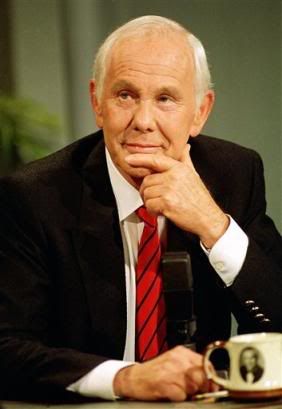
I've linked to a story from today's London Daily Mail 31 December. Please read the entire article. I warn you it is not easy reading.
“[The patient’s] daughter-in-law Amanda . . . added: ‘All that he had at the end of his 101 years was his dignity and they took that away from him.”
Also take a few moments to scroll thru the comments left by Daily Mail readers.
No one should conclude that NHS works like this, routinely. But just as clearly this episode happened, none of the hospital staff seeemed particularly concerned about it, and many of the commenters don’t seem surprised either.
Is this, after all, the future we may look forward to in the US as we sail along toward single-payer, government-controlled health care system?
What evidence is there that the answer is anything but “yes”??
It is also eye-opening to read the cold, bloodless, and lawyerly form-letter “apology” from the Hospital. It’s almost as though the hospital is responding to a complaint about late meal delivery or some other trivial service glitch:
‘Some aspects of Brig Platt’s discharge from hospital in 2006 were unacceptable and the trust apologises for any distress that this has caused.’
Some aspects, huh? Of the discharge (and not of Mr Pratt’s mistreatment prior to his discharge?) And the “trust apologises” – well, that’s about as impersonal as one can get. Gahhhh.
Wednesday, December 31, 2008


Cavalcade of Risk #68: Up and Running!
Louise at Colorado Health Insurance Insider presents the EOY '08 Cavalcade of Risk. As usual, she does a GREAT job, including her own spin on each entry.
Do check it out.
Tuesday, December 30, 2008
Stress and the CEO
Alert reader Jeff M alerts us to this, um, alert:
Saving lifestyles, one exec at a time.
Nataline a Year Later: Even More Disturbing News
About this time last year, we reported on the sad case of Nataline Sarkisyan. Our post on December 21, 2007, began:
And it appears that this is, indeed, coming to pass:
Lead attorney Mark Geragos went on to rant that Cigna HealthCare "literally, maliciously killed" Nataline Sarkisyan."
Well, to be fair, that's what he's paid to say, even if it lacks actual, you know, truth:
Those who doubt that "public" benefit plans withhhold such vital services need only peruse Bob's post on Sabrina Holloway.
And, in fact, Cigna went out of its way to justify its refusal to cover such an experimental procedure. Unfortunately, they did cave, and agreed to pay for the risky surgery, which ultimately failed to keep poor Nataline alive.
As regular reader Matt H points out, that was really Cigna's biggest mistake:
"Cigna should have stuck to the contract. I bet they will have to pay a settlement now because of their change of mind."
That sounds about right:
Had they simply stuck to their guns in the first place, the outcome wouldn't have changed (Nataline wouldn't have survived), but they also would have a compelling defense. As it stands, by backing down in the name of PR, they face an uphill battle. My guess is that the case will be based on the simple question of timing: if Cigna had agreed to cover the surgery immediately, the argument will go, then Nataline would surely have survived. By "dithering" (i.e. actually following the correct process) Cigna reduced her chances of survival.
We'll never know, obviously, whether that would have been the case, but I think that Cigna erred in succumbing to public pressure. Had they stood their ground, such a lawsuit likely would have had little chance of success. As it stands, I think Cigna will be paying out quite a few more dollars.
If there's any silver lining, it's that perhaps other carriers will learn the correct lesson from this unfortunate event.
[Hat Tip: Reader Matt H]
UPDATE: In the comments, Chad asks a very good question:
"Why is there no condemnation for the doctors and hospital that withheld this supposedly vital, lifesaving treatment for want of payment?"
Indeed.
I made a similar observation in my original post last year:
"(T)he actual choice belonged solely to the parents and the provider."
Sunday, December 28, 2008
This Sceptered Isle - Part XI
Didn’t believe me about compulsory health care, eh?
Well then, now read this:
NHS chiefs are planning to order a massive 40 per cent increase in weight loss surgery for dangerously obese patients from Yorkshire.
After getting our attention with this lead paragraph the article goes on and on, but curiously never gets around to these two questions:
1. How exactly will NHS chiefs decide who will be ordered to undergo surgery?
2. What is the penalty if one should refuse the order?
Oh well, maybe these questions aren't so important. After all, Brits have every reason to trust that Her Majesty's government will always do the right thing.
Cheerio!
Well then, now read this:
NHS chiefs are planning to order a massive 40 per cent increase in weight loss surgery for dangerously obese patients from Yorkshire.
After getting our attention with this lead paragraph the article goes on and on, but curiously never gets around to these two questions:
1. How exactly will NHS chiefs decide who will be ordered to undergo surgery?
2. What is the penalty if one should refuse the order?
Oh well, maybe these questions aren't so important. After all, Brits have every reason to trust that Her Majesty's government will always do the right thing.
Cheerio!
Friday, December 26, 2008
A Christmas Story: MVNHS© Style
Earlier this month, 36 year old Lynne Neilson arrived at Edinburgh's Royal Infirmary, and was forced to wait in an "assessment room" for hours. About 7:30 in the morning on December 5th, they got to the hospital as Mrs Neilson was experiencing labor pains. After they began to subside, the Neilson's were sent home with instructions to return when her contractions got closer.
Which, of course, they did.
Some 12 hours later, they returned to the hospital, but were told to wait. The contractions began coming closer -- and harder -- and Mr Neilson began pleading for help. Eventually, a midwife was called in, just in time to "catch the baby, who had the umbilical cord around her neck."
Whew!
Of course we're thrilled that the baby seems no worse for the experience (although that was certainly not a sure thing), but one wonders why Mr Neilson's repeated requests for help apparently fell on deaf ears. Meantime, the MVNHS© is "investigating the complaint and has apologized to the woman."
Oh, goody.
Cavalcade of Risk #68: Call for Submissions
Our 2008 EOY Cavalcade of Risk is hosted next week by Colorado Health Insurance Insider's Jay Norris. Submissions are due this coming Monday (the 29th), and Jay reminds you to include:
■ Your blog's url
■ Your post's url
■ The post's trackback URL (if available)
■ A (brief) summary of the post
PLEASE remember: ONLY posts that relate to risk (not personal finance tips and the like).
Thanks!
Wednesday, December 24, 2008
Have Yourself A Merry Little Christmas

This season, give thanks to those you love, and who love you.
This season, give thanks to those who protect us, risking their lives in the process.
This season, be sure to give thanks to the One who made it all possible.
We wish you and yours enjoy a wonderful (and safe) Christmas.
Stark Raving
In this interview the Wall Street Journal provided California Congressman Fortney Stark an opportunity to blither about "health overhaul" and repeat that his overhaul idea is "a Medicare-like program” anyone could buy.
In other words, there are problems in health care so let's do something about insurance.
Real logical, Congressman.
Health care? Health insurance? The same things, right? No, they are not and unfortunately Stark is not the only one who ignores the difference between health care and health insurance.
Besides, what exactly is Stark's idea for insurance reform? Enroll more people in something “like” Medicare! How . . . creative! But practical?
Medicare’s financial problems are exceedingly well-documented. Its yearly expenditures are projected to exceed its income within the next few years. Medicare is financed on the notorious pay-as-you-go basis, and its unfunded liability is estimated to be $60 trillion (20X's the current U.S. annual budget). I understand that there are some like Stark who apparently believe that any program so hopelessly in debt as Medicare is a successful program because it is a government program. I differ.
What evidence is there that this Medicare financial train wreck will miraculously jump back on the rails if only EVERYONE were enrolled in it? The answer is, none.
And there ain’t gonna be such evidence unless something is done to improve the effectiveness and reduce the cost of the health care delivery system we have now. And that won’t happen until the cost of insurance is understood as a symptom of the underlying cost of health care delivery, not misunderstood as a disease itself. That is, not until the health care system becomes the primary emphasis for reform. Until then, expanding Medicare will just throw more of our tax money into a system that has shown neither the ability nor the inclination to control its costs.
In other words, there are problems in health care so let's do something about insurance.
Real logical, Congressman.
Health care? Health insurance? The same things, right? No, they are not and unfortunately Stark is not the only one who ignores the difference between health care and health insurance.
Besides, what exactly is Stark's idea for insurance reform? Enroll more people in something “like” Medicare! How . . . creative! But practical?
Medicare’s financial problems are exceedingly well-documented. Its yearly expenditures are projected to exceed its income within the next few years. Medicare is financed on the notorious pay-as-you-go basis, and its unfunded liability is estimated to be $60 trillion (20X's the current U.S. annual budget). I understand that there are some like Stark who apparently believe that any program so hopelessly in debt as Medicare is a successful program because it is a government program. I differ.
What evidence is there that this Medicare financial train wreck will miraculously jump back on the rails if only EVERYONE were enrolled in it? The answer is, none.
And there ain’t gonna be such evidence unless something is done to improve the effectiveness and reduce the cost of the health care delivery system we have now. And that won’t happen until the cost of insurance is understood as a symptom of the underlying cost of health care delivery, not misunderstood as a disease itself. That is, not until the health care system becomes the primary emphasis for reform. Until then, expanding Medicare will just throw more of our tax money into a system that has shown neither the ability nor the inclination to control its costs.
Tuesday, December 23, 2008
Unintended Consequences
One of the problems with having so many, um, "undocumented" immigrants is the strain on our health care system. Many (most?) of these folks have no health insurance, nor the means to pay substantial health care bills. And yet, out of compassion or necessity or law, continue to provide them with neeeded health care.
The problem, of course, is that someone has to pay, and that "someone" is often the greater community, because the providers are forced out of business:
While it's tempting to lay the blame for this on the health insurance system, it's really the fault of politicians and activists who refuse to acknowledge the not-so-hidden costs of a policy that tacitly (and not so tacitly) encourages such folks to make their home here, without the tedious process of doing so legally.
The result?
"Nearly 600 babies were delivered at Southern Hills Medical Center each year before the hospital suspended its obstetrics services Sept. 1...Southern Hills suspended obstetric services following the resignation of our largest group of obstetricians."
It's really not difficult to divine just why Southern Hills took a pass: after all, how long can they afford to render free services?
And what's the community's response?
If you said "well, obviously they're going to try to reduce the number of illegals straining the system," you're not paying attention:
"The nurses and healthcare activists hope that a new nearby Spanish-language billboard reading "Nosotros Merecemos" or "We Deserve" will raise awareness among residents to protest the hospital's decision and will force the facility to reopen the doors to its labor and delivery unit. " [ed: emphasis added]
And just how does one force a doc to deliver babies for free?
Aye, there's the rub.
UPDATE: And adding insult to injury, The Volunteer State's not the only commonwealth to feel the pain of footing the cost of illegals' health care:
The remainder, about $81 million, went to the state’s contribution to emergency Medicaid"
Ouch.
The Lone Star State's Health and Human Services Commission compiled these figures to bolster their plea for increased dollars from the Fed. But not everyone's on board:
"Rep. Lon Burnam, D-Fort Worth, said looking just at the cost of illegal immigrants doesn’t take into account the money they pump into the state."
Perhaps Rep Burnam should heed the lesson of the broken window.
Grand Rounds is up!
Biochemist/molecular biologist Walter Jessen, blogmaster of Highlight Health, presents this week's collection of great medblog posts, with a holiday theme.
151A Update
Last week, we reported on regulators' efforts to change how Equity Indexed Annuities can be sold. Up 'til now, they were considered "fixed" products, meaning that any appropriately licensed life insurance agent could sell them. There was much concern, however, that these products were closer to "variable" ones (i.e. market-based returns) and should require special licensing and training to be sold.
There was much discussion of this in our comments section, for which we are very grateful.
In the end, the regulators won out:
"During an open meeting on Dec 17th the Securities and Exchange Commission adopted Rule 151A, which calls for the SEC to take over regulation of index annuities. This was opposed at the local, state and federal government levels as well as by many industry organizations including the NAIC, ACLI, NAIFA & NAFA."
[ed: this from an email I received this morning; no link as yet]
Of course, it will take some time for all the final pieces to come together, so folks who don't have their Series 6 may continue to sell Indexed products for a little while, at least. Long term, of course, the landscape will change, perhaps dramatically. The rules aren;t set to go into effect for another two years: it'll be interesting to see what impact this will have on production numbers between now and January 12, 2011.
Chanukah Cheartburn
Now that Chanukah's underway, a lot of familiar traditions seem to be getting a 21st century makeover. For example, I recently downloaded a (free!) app that turns my iPod Touch into a dreidl.
But this is literally over the top:
Now don't get me wrong: I love latkes (and make them every year). But seven pounds of these "crispy crepes?"
I don't think so.
Stupid Carrier Tricks: EOY Edition
The Yiddish word for "scandal" is "shanda;" the term implies not just shame, but a sense of shock. And it's the perfect word to describe the letter I received this morning (note the date: December 23) from Humana:
"This letter is to inform you about a change in Humana's participating network...the difficult decision to discontinue our contract with Premier Health Partners effective January 1, 2009."
The missive is dated December 10.
Even with a platoon of Cliff Clavens, it doesn't take almost two weeks for these things to arrive; it's obvious that they held it back. And this is important: Premier comprises almost half of the hospitals in the Dayton area, as well as a huge chunk of associated providers (physicians, etc). Dropping this little bombshell at the end of the year makes it nearly impossible to move Humana insureds to other carriers by the first of January, leaving them vulnerable to out-of-network charges at the height of cold, flu and accident season.
This is unconscionable.
Yes, carriers routinely update their networks: providers come and go throughout the year. But this is wholesale change, at a time when their insureds can not easily transition to other carriers. I find it unlikely that Humana wasn't aware of this impending train-wreck until now, and wouldn't be surprised if this was exactly the result they wanted: insureds with few options, and little (or no) time to make appropriate changes.
I am appalled.
My first order of business, of course, is to see if I can move at least some of my Humana insureds to other plans; if not by January, then at least by February. This is important: deductibles accrue beginning on January 1, and expenses that satisfy one carrier's deductible aren't applicable to another's. The later in the year we move folks, the more they're likely to be hurt.
Thanks, Humana, for nothing.
Monday, December 22, 2008
Carnival of Personal Finance is up
This week's Carnival of Personal Finance is now available at the Saving to Invest blog. Lots of good info, in an easy-to-follow format.
Sunday, December 21, 2008
Happy Chanukah 2008/5769
 For me, the very best night of Chanukah (which begins this evening) is the first night of Chanukah: although we light candles every night of this festival, on the first night we say three blessings.
The first blessing, which we recite each night, praises G-d "Who has sanctified us with His commandments and has commanded us to light the Chanukah lights."
The second blessing, which we also repeat each of the eight nights, blesses and thanks G-d for all the miracles he has wrought for us through the ages.
But the third blessing, the one which is said only the first night, is one we repeat at all joyous occasions, and is one of my very favorite prayers:
"Blessed are You, L-rd our G-d, King of the Universe, for giving us life, for sustaining us, and for enabling us to reach this season."
What a beautiful way to sum up all that we've been through, and continue to experience.
Have a warm, wonderful and meaningful Chanukah!
Thursday, December 18, 2008
Good News, Bad News: Carrier Edition
Not really sure what this means, but these two stories just popped onto the radar.
First, the good news:
[ed: West Chester is a suburb of Cincinnati, OH]
That's good news for the Queen City area, as job growth in this economy can only be viewed as "a good thing."
For our friends in The Nutmeg State, however, are about to see the other side of the equation:
Aetna's chairman and CEO, Ronald A. Williams, claims that "(t)hese actions will reduce our operating costs and allow us to manage through the economic downturn from a position of strength."
Not much one can add to that.
[Hat Tip: Rick Byrne]
Wednesday, December 17, 2008
Medicare Advantage Plans: A MOM's Perspective
[Welcome Insurance Forums readers!]
"MOM" in this case being Medical Office Manager Kelley Beloff (whose previous contribution here still gets hits). Over the course of the next few days, Kelley will be sharing with us her unique and helpful perspective on these "bad boys" of the Medicare Supplement (MedGap) world:
Part 1 The Medical Office and Medicare Patients
December usually brings thoughts of holidays, snow, egg nog, and a reprieve from the normal hectic days we all experience. As a Medical Office Manager, however, December brings thoughts of dread because between Nov. 15 and Dec. 31, all Medicare Recipients have the ability to choose a new Medicare plan. With this choice will come chaos into my office beginning January 1. How can a person practicing their right to choose a new insurance be a problem for me? After all, it is their insurance, and it has no effect on me, right? No.
Before Medicare Advantage Plans, all persons eligible for Medicare had one insurance carrier. Medicare was handled through the government and everyone had a “red, white, and blue” card. When a Medicare patient came into a Medical Office, you copied the “red, white, and blue” card (and yes, it is referred to as that in the biz.) Unfortunately, when the government designed Medicare Advantage Plans, the government did not get out of the health care business, and is still handling Medicare. Now there are two types of Medicare plans, Traditional Medicare (administered by the government) and Medicare Advantage Plans (administered by private insurance companies). This has led to an unbelievable amount of confusion.
There are three types of Medicare Advantage Plans: HMO, PPO and PFFS. The HMO and PPO plans have a deductible (not the government Medicare deductible) and co-pays (not the government Medicare co-pays). There are also in-network and out-of-network policies, depending on whether the provider is contracted with the insurance carrier of a Medicare Advantage plan. If a provider is contracted with the government (Medicare), this does not automatically mean the provider is contracted with the Medicare Advantage plan. Finally, one cannot purchase a MediGap policy to cover the costs (deductible, co pay, co insurance) associated with this new insurance. With Traditional Medicare, after the deductible is met, there is a 20% co-pay on each procedure performed in the medical office. In order to pay for these costs, many Medicare Recipients have a MediGap policy. This is a private policy purchased to cover the deductible and co pays.
The last type of Medicare Advantage plan is a PFFS. A PFFS is a great plan, so congress had to change it. Current PFFS plans are non-network policies: the patient can see any provider, as long as the provider agrees to the PFFS fee schedule, which is the Medicare Fee Schedule. However, some providers are not trusting of not having a network and will not see PFFS patients. These patients are welcomed at my practice, as I find the plans very flexible and always timely in their payments (reimbursements). As I said, Congress has changed these plans so that, in the next few years, PFFS plans will have to be network-driven.
This section deals with Medicare Advantage patients and the medical office. At the beginning of each year, medical offices collect new demographic and insurance information on their patients to ensure correct billing for the coming year. In the case of a Medicare patient, the receptionist asks if the patient has new insurance. In most cases the answer is "no, I still have Medicare." If the conversation stops there, the physician faces major billing headaches in approximately one month (I will cover this more thoroughly in Part 3). Why? Because the patient can have either Traditional Medicare with or without a MediGap program or a Medicare Advantage Plan. That plan is a HMO, PPO, or PFFS, and each plan carries its own deductible and co-pay. Hopefully, the receptionist will still ask for a copy of the patient’s insurance card, at which time the patient will drop two or three cards into the palm of the receptionist. The “red, white, and blue” card, maybe an old MediGap card and a brand new Medicare Advantage Plan card. Now the fun begins. The conversation usually goes like this:
Receptionist: “Ma’am/Sir, you have given me a Traditional Medicare Card, a Medicare Advantage Plan card and an expired MediGap card. What insurance do you have?"
Patient: “I have Medicare.”
Receptionist: “Yes, I know. Which type of Medicare: Traditional or a Medicare Advantage?”
Patient: “There is no difference, it is all Medicare." (Then they go into a monologue about being a longtime patient, never being questioned before, their other doctors don’t ask these questions, etc.)
Quiz: Has the patient told us type of insurance he/she has?
If you said no, you are correct, and this is what faces us in the Medical field every day. These patients simply do not understand that there is a difference between Traditional Medicare and Medicare Advantage Plans. The biggest problem is seniors do not understand that the “red, white and blue” card is not needed with Medicare Advantage Plans. On the day they turned 65 and received that card, they were always told that this was their insurance card forever. I have worked in this field for 5+ years, I am a Certified Medical Manager and I cannot convince my patients, or even members of my own family, that with a Medicare Advantage Plan, their “red, white, and blue” card is no longer active. I have actually told some members of my family to put their “red, white and blue” card in their dresser and never touch it again.
If you would like to read a more in depth piece on Medicare Advantage plans, here's the link to a 49-page workbook on this very topic. The one piece not covered in this workbook is how the receptionist at the physician’s office is to know which medical plan the patient has enrolled for this year.
In Part 2, we'll discuss the Government and Medicare Advantage Plans. Stay tuned.
Cavalcade of Risk #67 now online
InsuranceWriter Nancy Germond makes her Cavalcade of Risk debut with this week's collection of risk-related posts.
Super job, Nancy!
And you can do the same, just drop us a line to reserve your spot.
Tuesday, December 16, 2008
I Did Not Know That
[Welcome Lizardoid readers!]
Did you know that you can opt out of Medicare altogether? That is, once you retire, you can elect not to participate in Part A, at all? In my defense, this issue has never come up, and I couldn't begin to imagine why one might wish to do so (after all, we've already paid in a gazillion dollars in Medicare "premiums," aka taxes). But some folks, including retired Congresscritter Dick Armey, have chosen to do so.
Unfortunately, opting out of Medicare benefits also means opting out of Social Security benefits, as well.
You read that right: no Medicare, no Social Security.
Talk about pay to play!
As to why some folks might want to decline Medicare "insurance" benefits: well, it appears that they're regular IB readers:
That's gonna leave a mark.
So, Mr Armey (and several co-plaintiffs) are asking the U S District Court for D.c. to stop the Feds from cutting off their Social Security benefits. What's at stake, they believe, is our right to make choices about our health insurance and health care.
Be interesting to see how this goes.
[Hat Tip: Sonia Blumstein]
Told Ya So!
Regular readers may recall that we expressed grave doubts regarding marketplace activities by erstwhile insurance giant AIG. Specifically, now that you and I are their reinsurer, we were concerned that this created an uneven playing field, and that AIG would be tempted to play fast and loose with their conduct.
That didn't take long.
According to Financial Services Online (a service to which I subscribe):
"IRRESPONSIBLE AND UNFAIR? - Reports are surfacing that AIG, the recipient of a $150 billion taxpayer-funded bailout, is aggressively cutting its insurance rates in an attempt to win new business and boost market share. If underwriting losses become a problem, the U.S. government may have to provide more financial support. According to Liberty Mutual chief executive Edmund Kelly, "I think it's fair to say they're doing some very stupid things in the market. If (AIG units) are not reined in, it could be very destabilizing for the market."
Quelle surprise.
Grand Rounds, EOY Edition
Laurie Edwards, blogress at A Chronic Dose, hosts this week's collection of great medblog posts. Our own Mike Feehan's recent piece on health care vs health insurance was selected as an "Editor's Choice" ("best of the best")!
Do check it out.
Monday, December 15, 2008
Warning: Bad Renewal Etiquette
Last week, Bob wrote about higher auto insurance rates, and pointed out that such increases are part and parcel of a fiscally sound risk management program. Still, no one likes to pay more, so shopping around may be a good idea.
What not a good idea is this:
Remember, folks: shop, don't bop.
A public service announcement from the management of IB.
An Insurance Coverage Top 10
How can you not love a roundup of insurance-related legal mishaps that uses the term "insurance coverage hootenanny?" And that's just what legal-beagle Randy Maniloff (no relation) has put together for insurance professionals, amateurs and everyone in-between. These are cases that came before the courts over the past 12 months, including a tribute to the Texas Supreme Court and a Coverage for Dummies section.
Do check it out.
When Gummint Intervention is a Good Thing
So-called "Indexed Annuities" (aka "Equity Indexed Annuities") are an interesting product: part insurance, part investment, they're a hybrid that promise guaranteed returns with the potential for even greater profit for the buyer.
So what could go wrong?
One of the worst things a consumer can do when purchasing life insurance is to conflate "insurance" and "investment." In fact, it's illegal for the salesperson to call a life insurance policy "an investment." It's true that certain kinds of life insurance and annuity contracts (called "variable" in the trade) comprise a "sub account" which mimics a mutual fund, but they are first and foremeost insurance products, and need to be viewed as such.
Why is this so important?
The difference between "variable" products and the more pedestrian "fixed" ones is that the latter's rate of return is determined solely by the insurance company, based on its own investment returns (and other factors). They are comparable to bank accounts, in that one isn't going to get a spectaculr rate of return, but there is a guaranteed "floor," so that one gets at least something no matter what. The variable products push that "investment risk" off onto the insured, which can result in very high returns, or nasty losses, depending on the policy owner's choices.
[ed: this is, of necessity, a very brief explication of variable products. For a more detailed explanation, click here]
Many folks hear what they want to hear, and many agents tell a story that they think their prospective customer wants to hear. So variable products may only be sold by agents who have both "regular" insurance licenses and special "Series 6" (or, sometimes, 7) licenses, as well. These are issued by the NASD, and allow the agent to sell investment products. These require taking special classes and tests, are necessary only if one wants to sell these "variable" policies.
So far, anyway.
There exists a relatively new product, which lies somewhere between the fixed and variable worlds, called "indexed" life and annuities. These plans offer a guaranteed interest rate (or floor) like their fixed rate cousins, which the potential of market-related gains like variable products. Although not as complicated as variable plans, they do have more "moving parts" than fixed ones, and require much more understanding on the part of the consumer. Especially in turbulent econimic times such as these, such products are easily conflated with variable plans, which can lead to, um, unfortunate misunderstandings.
And so, Congress is currently considering [ed: nice alliteration!] legislation to require that the sale of these indexed products be regulated like variable ones, and thus subject to NASD oversight and licensing. Not surprisingly, the tone-deaf NAIFA (National Association of Insurance and Financial Advisors) is agin it, and is mustering its forces to fight these new requirements.
Their stated argument is that "concerns regarding suitability, disclosure and marketing methods are not the relevant criteria to consider in determining whether a financial product is or is not a security."
I'm in awe that they can say that with a straight face.
The very definition of security products is that they require suitability testing, not to mention more stringent disclosure and marketing criteria than their fixed rate cousins. Of course the NAIFA doesn't want barriers of any sort to these products: they represent a bold new frontier for increased sales. And since, as we've noted previously, the NAIFA exists primarily for the benefit of the carriers, this would be and unwelcome hindrance to their increased market share.
And they want agents and their clients to fight this for them!
Just. Mind. Boggling.
I plan to err on the side of the consumer, however, and will be writing my congress critter in support of "151A" (the licensing/disclosure law), and I urge you to do the same.
Mini Update: Interesting debate going on in the comments section, demonstrating once again that we have the best commenters in the blogosphere.
Carnival of Personal Finance is up
Sharon Harvey Rosenberg hosts this week's collection of personal finance posts. Stop by for some timely holiday shopping advice, and stay for some budget -cutting ideas.
Sunday, December 14, 2008
Ill in Illinois?
Does the Illinois governor situation have anything to do with health insurance – that is, anything to do with the sorts of things we talk about at InsureBlog?
Well, in part yes, it does. Let's look at it.
Here is a link to a transcript of the hearing Friday December 12 in which Illinois Attorney General Lisa Madigan argued that the Illinois Supreme Court can, and should, declare the Governor “disabled” and therefore no longer “legitimately” able to carry out his official duties. Ignore her continual abuse of the terms “disabled” and “legitimately”. That is part of a political argument and has no place here.
But read the whole transcript and then consider these two little excerpts:
MS. MADIGAN: “. . . as you are aware, the state of Illinois is behind in paying its bills, in particular to Medicaid providers.”
MS. MADIGAN: “What we have delineated are all of the activities that were contained in the criminal complaint filed by the U.S. attorney . . . based on the apparent refusal to provide Medicaid reimbursement to Children's Memorial Hospital unless he received a campaign contribution from its CEO . . .”
These excerpts provide a revealing glimpse behind the curtains – they show how governmental control of the health care system is turned into political control of graft. It’s not a pretty picture: First step, withhold government funds. Then, extract political favors as a condition for freeing up the flow of government funds. Patients suffer – but hey who cares? You say, this is exceptional? Not representative of politics in general, you say? To which I say, yeah, right. And I also say, if more government control of health care is what you want, more situations like Illinois is what you will likely get. You, and the rest of us along with you.
Well, in part yes, it does. Let's look at it.
Here is a link to a transcript of the hearing Friday December 12 in which Illinois Attorney General Lisa Madigan argued that the Illinois Supreme Court can, and should, declare the Governor “disabled” and therefore no longer “legitimately” able to carry out his official duties. Ignore her continual abuse of the terms “disabled” and “legitimately”. That is part of a political argument and has no place here.
But read the whole transcript and then consider these two little excerpts:
MS. MADIGAN: “. . . as you are aware, the state of Illinois is behind in paying its bills, in particular to Medicaid providers.”
MS. MADIGAN: “What we have delineated are all of the activities that were contained in the criminal complaint filed by the U.S. attorney . . . based on the apparent refusal to provide Medicaid reimbursement to Children's Memorial Hospital unless he received a campaign contribution from its CEO . . .”
These excerpts provide a revealing glimpse behind the curtains – they show how governmental control of the health care system is turned into political control of graft. It’s not a pretty picture: First step, withhold government funds. Then, extract political favors as a condition for freeing up the flow of government funds. Patients suffer – but hey who cares? You say, this is exceptional? Not representative of politics in general, you say? To which I say, yeah, right. And I also say, if more government control of health care is what you want, more situations like Illinois is what you will likely get. You, and the rest of us along with you.
Friday, December 12, 2008
Cavalcade of Risk #67: Call for submissions
InsuranceWriter Nancy Germond hosts next week's Cavalcade of Risk. Submissions are due this coming Monday (the 15th), and she asks that you include:
■ Your blog's url
■ Your post's url
■ The post's trackback URL (if available)
■ A (brief) summary of the post
PLEASE remember: ONLY posts that relate to risk (not personal finance tips and the like).
You can submit your post via Blog Carnival or email.
Thanks!
We still have some hosting slots available for early '09 - just drop us a line to reserve yours.
Thursday, December 11, 2008
Mumbai's Aftermath: Catastrophic Claim Writ (Very) Large
In the P&C side of the insurance business, a "Cat Claim" is one that arises from some unexpectedly severe natural or man-made occurrence. Typically, these would be large hurricanes or major earthquakes, or large-scale terrorist attacks such as last month's tragedies in Mumbai.
While we (correctly) focus on the human cost of such events, there was a lot of property damage as the result of explosions, gun-fire and the like. As one might imagine, all those hotels and, of course, death claims are beginning to add up, and are straining India's insurance capacity:
Claims from just the three hotels involved are expected to top $120 million, which represents about half of insurers' reserves. As a result, premiums are expected to increase sharply, and soon, especially for terror-related cover. India's insurance laws cap single claims at about $150 million, but that may not be nearly enough to cover the damages to the three long-standing hotels, which housed priceless artwork and historic artifacts.
Of course, things can be replaced, while people cannot, but this serves to remind us that even having "adequate" coverage in place may not be enough. That goes for hotels and artwork, and it goes for ourselves, as well.
MassCare OK
Bob tipped me to a new transparency tool available to Massachusetts' health care consumers. It's called My Health Care Options, and it's an online resource to help folks find health care providers based on location, cost and outcomes.
Pretty cool:
You input your zip code (or city, etc), and then choose to search for hospitals, physicians, or a number of other providers. Once selected, you can also specify what kind of service to research: an operation, baby delivery, MRI or whatever. Based on preference, the results can be sorted by price, or how many ICU beds are available, or a host of other criteria.
There's even consumer ratings (how well they were treated, etc); kind of like "user reviews" at Amazon and the like.
It seems pretty user-friendly, too: you don't have to know CPT codes or other medical jargon, just the service or procedure's name (e.g. "angioplasty" or "Cesarean Section").
And the site will "bottom line" it for you, as well: while there are no actual dollar figures (which seems to me to be a requirement sadly missing here), there are comparative ratings to give you an idea of who's more expensive, and who's less. It may be that, since this seems to be a relatively new service, the actual costs haven't been included yet, but will be down the road. Let's hope so, and soon.
The service itself is provided by the Massachusetts Health Care Quality and Cost Council, which was set up as part of the original Mass Care program. Frankly, this may the best thing to come out of that endeavor.
Health Wonk Review: Dragnet Edition
Be sure to tune in for this week's edition of wonky health care goodness, hosted by Vince Kuraitis, proprietor of the e-CareManagement blog (aided and abetted by Bill Gannon). It's an arresting version.
Wednesday, December 10, 2008
Pay As You Go© Insurance, Update: Good, Bad, Unsightly
As promised, this morning I attended a webinar on American Community Mutual's new product. In general, it was well done, and I have a much better handle on both the product and where it might fit into an agent's portfolio. First, though, I do need to apologize to our readers regarding one very important aspect of this plan: it is, indeed, a major medical plan, not an accident-only one. This is crucial, and although it was not obvious originally, the webinar made it clear that this is the case.
Second, I appreciated the moderator's introduction of the plan: he suggested that agents ask the insured "What's important to you? Premium cost? Co-pays? Carrier ratings?" He then suggested that folks often purchase benefits that they really don't need or use much, but pay for anyway. I was immediately reminded of Bob's admonition that "people tend to buy too much insurance."
There were exactly three benefits that I felt were worthwhile, of which only one really broke new ground. But that one is a doozy: regular readers may recall our ground-breaking investigative piece on how non-covered expenses aren't eligible for in-network discounts. This is especially critical when dealing with maternity: since almost all individual plans exclude coverage for normal childbirth, those expenses aren't discounted. As one might imagine, this can get pretty expensive. ACM gets around this with a unique and creative "hook:" normal childbirth expenses are covered at no additional premium, but subject to a separate $12,000 deductible.
Now you may ask: a $12,000 deductible?! That's way more than the actual cost; what's the point in having it at all?
While it's unlikely that the carrier would actually have to pay a childbirth claim, by extending the umbrella of "covered charge" over maternity, those expenses reap the benefit of in-network discounts.
I liked that the plan can be designed to include a 2 year rate guarantee, which could certainly help with budgets. And I like that it excluded entirely non-emergency ER expenses. This should go a long way toward discouraging folks from using the ER for primary care and the like.
But there are some major pitfalls in this plan, as well:
The base plan has no coverage for prescription drugs. While this may seem to be a minor quibble, it is, in fact, a significant flaw: what happens if one becomes diabetic, or develops MS or some other dread disease, which is treated almost entirely by medication? While it's true that one can add an (expensive) rider to provide this coverage, how many agents sell (and folks will buy) on price alone, leaving a gaping hole in the coverage?
I'm also concerned at the lengthy list of routine expenses that are automatically excluded during the first policy year, including tonsils, hemorrhoids and carpal tunnel (to name just a few). Even if one has no prior history of any of these issues, the plan excludes them from coverage for the initial 12 months.
And notwithstanding the recent Wellstone legislation, the plan specifically excludes "treatment for mental or nervous disorders, or emotional conditions." It's that last part that truly worries me: who defines an "emotional condition?" Way too subjective, and too easy to deny that claim.
I've not changed my mind about ACM: this is not a carrier with which I choose to do business, and this new plan does nothing to change my stance. On the other hand, it's not the worst idea I've ever seen, and contains at least one very good idea (the maternity non-benefit).
Tuesday, December 09, 2008
More Questions than Answers
What would you do if you found out that your physician was prescribing placebos for your acute medical condition? That's far from a rhetorical question:
My first question is: who's paying for them? If the carrier's being billed, wouldn't the EOB (Explanation of Benefits) give away the game? And if it's not being submitted, then the patient's paying out of pocket for the fake; but are they being charged for the "real McCoy?"
And if this is supposed to be for treatment, how's it being coded? Again, wouldn't the EOB give some indication of what was going on?
And if the treatment consists of a series of placebos (or even some placebos and some med's), how is the provider being reimbursed? Aren't there some ethical considerations in what's being charged for what is essentially a phony treatment? Or has "First, do no harm" devolved into "Don't ask, don't tell?"
[Hat Tip: Holly Robinson]
Grand Rounds: Presidential Q&A Edition
Alvaro Fernandez hosts this week's round-up of the best medposts at the SharpBrains blog. In a fascinating and creative twist, he presents his 'Rounds as a Question and Answer session with our President-Elect.
Very cool!
Friday, December 05, 2008
Pay As You Go© Insurance?
Let me state at the outset that I am not a fan of American Community Mutual Insurance Company (ACM). Some years ago, we parted ways over an ethics issue: I had ethics, they did not. I have no idea whether or not that's changed, and I have no desire to find out.
However, this is an insurance blog [ed: nice of you to notice, Mr Swedish health care basher], and ACM is rolling out a new product which may have some value. Called "Community Flex," it starts out as an accident policy (major claims are only paid for injury, not illness), with some coverage for doc visits, preventive care, and a drug discount card. A rider is also available for maternity coverage (no word on whether that must be "accidental," too).
A two year rate guarantee is available for folks who choose higher deductibles ($5,000 and up).
Now, if you want more coverage, such is available through a "Gold Plan" buy-up. This gets you coverage for more doctor's visits, more preventive care, and better prescription drug coverage.
Perhaps I'm missing something here, but does anyone else notice a big, glaring hole?
A free, one-year's paid subscription to IB for the first person to call it.
UPDATE: Please click here for the latest on this product.
Sad News
Medical Mutual of Ohio (formerly Blue Cross of Ohio) doesn't get a lot of pixels here: they're not a large carrier, and haven't done much to either tick us off or make us shout "hurrah!" But they are part of our industry, and I just learned that their CEO, Kent Clapp, was killed in a plane crash this past Wednesday (the 3rd).
Kent was only 62 years old when he died. According to the carrier's website, he was a philanthropist who enjoyed giving back to the community: "In 2000, he was awarded the March of Dimes Franklin Delano Roosevelt Humanitarian Award, and in 2002 he was honored at the Northeast Ohio MS Society’s Dinner of Champions."
According to news reports, he was flying in a twin engine plane which crashed as he and his fiance were returning from a vacation. It was a last-minute charter flight (they had apparently missed their regular, commercial flight).
As FoIB Rick Byrnes notes, perhaps the saddest thing was this observation by company spokesman Jared Chaney:
"There is nothing that was that important...Looking back on it, he could have waited for another plane."
Our deepest sympathies go out to his family and co-workers.
Niche Marketing or Terror Enabling?
Recently, we reported on a unique niche marketing effort aimed at the gay demographic. And, of course, other such campaigns have targeted other buyer groups. It's how businesses grow.
World Net Daily reports that disgraced insurance giant AIG is developing (has developed?) a sharia-compliant homeowners insurance policy.
[ed: "sharia" is traditional Islamic law]
These particular plans are based on the Islamic concept of "Takaful," which apparently means "mutual assistance." We've seen similar "plans" in the health area, where folks join a group and are assessed when a member has a claim. Another aspect is that the carrier will only invest in companies or funds which are "sharia-friendly:" like "green" mutual funds (which invest only in companies buying into the global warming scenario), "sharia friendly" companies would be those that (for example) don't market pork products, or tobacco and the like.
On its face, this seems pretty innocuous: a market with a need (Muslims who own homes) and a solution (niche-friendly insurance). Assuming that the plans are adequately reserved and appropriately underwritten, where's the harm?
At least one organization, Family Security Matters is concerned that such a scheme opens the door to sharia-based law here, supplanting our own legal system. Since we taxpayers now own AIG, the argument seems to be, we have a right and obligation to see that this doesn't happen. They're concerned that we now own "part of [a] company with a business that promotes an Islamic supremacist ideology that is against equality, against liberty, and in support of discrimination."
I'm not sure I see that.
According to the carrier's site, the company sees its products as "an investment in the future of socially responsible insurance." Assuming that the profits flow back to the stakeholders (that would primarily be thee and me), I'm not sure I see a problem.
There are those who will object that the carrier will market only to Moslems, and that this is blatantly discriminatory.
D'uh!
Insurance is all about discrimination: we discriminate against speeders, and people with cancer, and teenagers...the list is pretty long. USAA sells only to folks associated with the military, Lutheran Brotherhood to their co-religionists, and so on. This seems to me to be no different.
If it turns out that this new carrier is, indeed, funneling its profits to terror groups, then of course the plug will need to be pulled, and fast. But there doesn't seem to be any evidence of that, merely speculation. Still, it seems prudent to keep a watch on this, to make sure that it is simply another niche marketing scheme, and nothing more sinister.
We'll keep you posted with any new developments.
Medicare (Dis)Advantage?
Both IB reader Jeff M and the folks at the bwell blog have tipped us that the first MMA (Medicare Modernization Act) casualty may be Medicare Advantage plans. While increasingly popular, they have also "added to Medicare's complexity and costs and...created potential inequities, without apparent improvements in quality.”
Ooops.
So if these plans are on their way out, what happens to all those seniors who've come to depend on them? There are a number of options, many (most?) of which are discussed at Medicare's website. Once you've gotten an idea of what's available, we recommend consulting with a local, professional, independent agent who specializes in health coverage, and who has experience with the whole gamut of Medicare options.
Thursday, December 04, 2008
Socialized Health Care: Busted!
Here at IB, we strive to keep our readers abreast of developments in nationalized health care systems. Recently, the boobs who run Sweden's Social Insurance Agency penalized a young lady for being out front with a particular condition:
Although Jessica Andersson had never experienced back or neck pain prior to an auto accident some six years ago, the government agency decided that her over-abundance was primarily to blame for her continued discomfort, and has decided to discontinue her disability payments.
Her troubles began when, while driving to work, her car was hit from behind; there's no indication that her airbags were deployed. Adding insult to injury, the agency's consulting physician suggested that breast reduction surgery would enable her to return to work, although who would pay for such an elective procedure is unclear (she could be left holding the bag on that, as well).
Ms Andersson begs to differ with the good doctor:
"I’m 99.9 percent sure that it wouldn’t make a difference if I had surgery on by breasts. It’s not ideal to have neck injuries and at the same time have heavy breasts, I understand that. But the injury would still be there after an operation."
No doubt.
She's now considering filing an appeal, which may run into its own speedbumps:
"I had understood authorities to be impartial, but I don’t feel that way any longer. I see this as more of a political judgment than a medical one."
That sounds right. We don't wish to bust her balloon, but these systems don't have a particularly good track record vis-a-vis the patient. In the event, we wish her the best of luck, and certainly hope she keeps those bureaucrats in her headlights.
Wednesday, December 03, 2008
Insurance Insurance?
[Welcome Kaiser Network readers!]
VERY COOL UPDATE: Don't know how I missed this, but if you scroll down the story, you'll see our very own Bob Vineyard quoted extensively. WooHoo!
Not really sure what to make of this:
When one buys a disability insurance policy, one oft-included rider is a Guaranteed Purchase Option, which allows one to increase the policy down the road, regardless of health. And there are similar riders available on certain life insurance policies. But I've never seen such a benefit available on a "stand alone" basis like this one.
Like medical discount cards, this plan is not an insurance policy, so it's hard to say what it's value might be. For a fee, one buys the right to purchase some kind of health coverage if one becomes at once uninsured and uninsurable.
While I applaud the innovative thinking that went into this product, I can't help but question its usefulness. There are already all kinds of safeguards built into "the system:" HIPAA and COBRA come to mind, as well as state-mandated programs. It's not clear exactly what one's buying here, other than a vague promise to issue a non-underwritten policy should the need arise (and one qualifies under the terms of the deal).
It appears that, even though this is not insurance, it is still underwritten ("(t)hose who do pass a medical review"), and the price seems a little steep for such a vague promise ("20 percent each month of the current premium on an individual policy to reserve the right to be insured under the plan at some point in the future").
"(S)ome point in the future." Maybe.
The article examines the hypothetical case of a Columbus, OH gentleman who buys into the idea, paying "$32 a month for the right to eventually get that coverage — or 20 percent of a policy that now costs $159 a month." That's about $400 a year (which will most certainly increase) for what is, essentially, a "promise of a promise."
Color me unimpressed.
UPDATE (from Bob): I don't have all the details. UHC has called me a few times on this plan, so I am (and have been) aware of it. So far, it is not available in GA so I did not pay much attention to the nuances.
Here is a broad brush.
Continuity is a rider to an existing portfolio product. All the plans currently available (if approved in your state) come with the continuity rider option. You can pick a Copay plan, Saver plan, Plan 100/80 or HSA.
The product is underwritten like any other plan and works like existing shelf products until you become eligible for an employer group plan.
At that time, the policy goes "dormant" (my phraseology) until you lose employer coverage. At that time you reactivate the coverage at current premium.
The policy has application, but very limited in my opinion.
Also, I think the 20% dormant "premium" is a bit high.
It is a somewhat sophisticated product with (IMO) limited appeal. The product has been 3 yrs in development. It might have gotten more play had it come out a few years ago.
Under current economic conditions and with the threat of Obama-care, I think UHC misjudged the market.
[Hat Tip: Holly Robinson]
CF Update: Good News
Looks like enough heat was brought to bear that the craven "student leaders" at Carleton University have decided to rescind their previous attempt to politicize innocents suffering from a devastating illness.
Good for them.
Cavalcade of Risk #66: Double Whammy Edition online
Perhaps best known for his On the Moneyed Midways features, "Ironman" presents two versions of this week's Cavalcade of Risk:
Either way, you're sure to find something to suit your fancy.
Tuesday, December 02, 2008
Food Pyramid Update: Space Cadet Version
It's been a while since we last updated our (in)famous food pyramid, one important component of which is that wonderful concoction of spring water, malt, barley and hops. Today's update comes to us from the International Space Station, not usually associated with such exotic liquids:
Boo!
To be fair, the astronauts grew wheat, lettuce and peas, as well, and plan to cultivate space-potatoes down the road. Unfortunately, Cosmonaut Boris Morukov conceded that "we would try to grow potatoes as food, not for vodka production."
Oh, well.
Wow, Just Wow: UHC Edition
FoIB Rick Byrne tips us to this blockbuster:
Never fear though, they have a plan:
"Partially offsetting the commercial weakness are expected gains next year for its Medicare plans for seniors and Medicaid plans for low-income Americans."
Of course, Medicare Advantage plans face their own obstacles, which makes this strategy a bit problematic.
One puzzler that has me stumped: to where, exactly, does UHC think these millions of (ex-)members are going? Competitors? Just go bare? The article doesn't say.
And there's this: with as many of our pixels as UHC's earned in the Stupid Carrier Tricks series, I don't feel too bad.
A Deadly Serious Grand Rounds
Based on a musical piece called "Death and Transfiguration," Mexico Medical Student presents this week's roundup of great medblog posts. It's an intriguing way of presenting a lot of interesting entries, and well worth reading through.
Monday, December 01, 2008
Carnival of Personal Finance is up...
John Wedding, proprietor of Mighty Bargain Hunter, hosts this week's collection of personal finance tips and info.
Subscribe to:
Posts (Atom)


 Posts
Posts