Friday, October 30, 2015

I see, er, insure, Dead People

Actually, this is a great idea:

"An audit by the State Comptroller’s Office has revealed that hundreds of dead people were enrolled in New York’s health exchange, with nearly two dozen of them enrolling after death."

Point 1: Dead people Metabolically-challenged citizens (MCCs) have historically filed the fewest claims of any demographic.

Point 2: Is it their fault that they (presumably) died while waiting for the 404Care.gov site to let them proceed?

Point 3: MCCs are also the least likely to complain about bare-bones (sorry!) policies and skinny networks.

All-in-all, win-win.

Thursday, October 29, 2015

Gaba, Gaba Do!

Meanwhile, on Twitter: One of the folks I follow is Charles Gaba, with whom I rarely agree, but who does offer rational, generally well-researched conversation. He's also a blogger, and has published a really extensive and well-done post with Six Seven pieces of ACA/Open Enrollment advice.

I do have a major problem with #6:

"The tax penalty for *not* being covered is $695 or 2.5% of your taxable income this year."

It's not that the information is inaccurate - it's not. My problem with it is that the fine penalty tax is both a good deal, and toothless.

We had quite the little conversation (at 140 characters per), but it really boiled down to this: the minimum fine for 2016 is $695 per person, which translates to $58 per month. If you're not getting a subsidy, there's no plan at any age that's going to be that low. Then add in the $6,000+ out-of-pocket for the Bronze plan (cheapest metallic level), and the fine begins to look like a real bargain.

Are there downsides to this?

Of course: there's always the risk that you'll need care. But that's what EMTALA is for, no? Now, I'm not (necessarily) advocating this strategy for folks in general, but I do think it's important to recognize its plausibility for healthy folks who make too much to be subsidy-eligible.

Related: Fellow insurance pro and blogger Louise Norris has a new (free!) ebook out, and it's quite timely: The Insider's Guide to Obamacare's Open Enrollment. Available now (for free!) at Amazon.

Training Day - Epilogue

So, the other day I finished up my 2016 Federal Marketplace (Exchange) training. As I noted previously, this is mostly a re-hash of previous years, but there was one significant change that I took note of, and which I think is a (very) good thing:
 
[click to embiggen]

"1. Online. The individual can log in ... then report a life change"

Previously, all status changes (moves, marriages, divorces, income adjustment, etc) had to be reported to the Marketplace by telephone. On the one hand, it's a toll-free number, but the problem I've always had with that was the lack of a "paper" trail (pixels would be fine, as well). Well, now that objection is resolved, and I feel better about the process going forward.

Wednesday, October 28, 2015

Beating the horse

FoIB Holly R tips us to this (unsurprising) news vicious lie:

"ObamaCare Rates Revealed; Lowest-Cost Plans Jump 13%"


To which I can only reply:

La plus ca change, HHS-style

So, this past summer we noted that during last year's Open Enrollment season, the Government Accounting Office (GAO) had successfully registered almost a dozen fake Exchange accounts, complete with subsidies and insurance policy purchases.

We're happy to report that all of these problems have now been fixed, and...

Wait, what?

/sigh


They set up the "sting" to see if last year's experiences had borne fruit, in the form of "plugging up" the obvious HIX holes. And of course, the rocket surgeons running it are still failing.


[Hat Tip: Co-Blogger Patrick]

Saying Goodbye to the Arches

Under the Obama administration the term non-profit takes on an entirely new definition.
Arches Health Plan, a (non-profit) membership cooperative that was born out of the Affordable Care Act and insures 66,000 Utahns, has been ordered out of the insurance market for 2016.
Arches insures more low-income Utahns on the federal exchange, healthcare.gov, than any other company besides SelectHealth. - SL Trib
Arches becomes the 11th Obamacare co-op to fail out of the original taxpayer funded 23.

35,000 people will be forced to find new health insurance for 2016.

If you like your plan, get over it.
Arches was not able to raise the cash needed to assure regulators that it would be solvent enough to handle claims through 2016. The co-op has enough money to ensure existing policyholders have a "soft landing," with all claims paid, Kiser said.
Where are all those smiling faces now?

#ObamacareFail  #Co-opFail

Monday, October 26, 2015

So sorry, that's not covered

Regular readers already know that struggling South Carolina CO-OP Consumers’ Choice Health has hit the skids, and that Wyoming's WINHealth was in serious trouble.

Turns out, WIN has really lost:

"The Wyoming Department of Insurance said it is going to court to try to put [the] struggling health insurer ... into receivership."

Small wonder: they lost some two-and-a-half million dollars in the first half of this year alone, and of course got stiffed on the risk corridor cash it was counting on. Gee, might be a lesson there....

Oh, some 8,000 Cowboy State residents set to lose the insurance they (presumably) liked.

It's almost like they were lied to.

Black, White and Red

Obamacare is failing.

Failing the people it was supposed to protect.

Failing the carriers that provide the health insurance.

The promised free entitlement is crumbling as the illusion of the campaign promise is being exposed.
for every person who’s allowed to join (a subsidized health insurance plan) and has, two people haven’t 
Among this population of the uninsured, HHS reports that half are between the ages of 18 and 34 and nearly two-thirds are in excellent or very good health. The exchanges won’t survive actuarially unless they attract this prime demographic 
The HHS survey shows three of four ObamaCare-eligible uninsured people think having coverage is important—but four of five say they couldn’t fit their share of the premiums into their budgets even after the subsidies. 
MLRs measure the share of premium revenue that flows to reimbursing medical claims. ObamaCare sets an MLR floor of 80% for patient care, with one-fifth left over for overhead like administration and profits, and the pre-ObamaCare 2010-13 historical trend for the individual market ranged from 79% to 86%.
The researchers found that in 2014—the first full year of claims experience in ObamaCare—average MLRs across all health plans sold on 16 state exchanges roamed from 90% to 99%. Average MLRs in 11 states climbed to 100% or more, reaching as high as 121% in Massachusetts. A business can’t stay solvent for long spending $1.21 for every $1 that comes in. - WSJ
Now let that soak in and think about it.

#ObamacareFail

Saturday, October 24, 2015

Easy come, easy go

So this happened:

"[T]he GAO report found that ... at least $1.6 billion [is] unaccounted for."

That's out of over $5 billion in "loans" sent to states, most of which went for state-based Exchanges (which, per SCOTUS, don't actually exist).

And there's this little gem:

"Even though states were supposed to set up their marketplaces by the end of last year, they are not yet legally required to return unused funds."

Hunh. Wonder what "yet" means.

Anyone? Bueller?

Friday, October 23, 2015

Interesting $Rx develpment:

For those folks following the saga of the $750-per-dose Daraprim kerfluffle, there's been a rather dramatic new development:

Now that's a bargain!

And it proves (again) the power of the free market. In fact, the company plans to expand this effort to other "sole-source generic" meds. So the market self-corrects without heavy-handed government intervention.

Gee, wonder if this could apply to other sectors, as well.

Thursday, October 22, 2015

Red States, Green States

With today's announcement of the failure for South Carolina Obamacare Co-op Consumers Choice you can get out your crayon and color South Carolina RED

In total, only 15  (now 16 and counting) out of the 23 CO-OPs created by the law remain. These closures reveal how ill-advised this aspect of the ACA was both in terms of lost money and the turmoil for the people who enrolled in them. The eight that have failed have received almost $1 billion in loans, and overall CO-OPs received loans totaling $2.4 billion that might never get paid back. In addition, roughly 400,000 people will lose their plans. - Cato
In one of the 2012 debates Gov. Mitt Romney suggested that Obama "just doesn't pick winners and losers, you pick only losers".

Prophetic.

And pathetic.

In less than two years 43% of Obama funded health insurance co-ops have failed. Imagine how bad it would have been if the voters had given him permission to take over ALL health insurance and replaced it with co-ops.

#ObamacareCo-op   #ObamacareFail

Say Goodbye to South Carolina Consumers Choice

Like a never ending bad dream, another one of Obama's proud pieces of Obamacare is going belly up.

Consumers Choice Health Co-op is assuming room temperature.

Consumers’ Choice Health Insurance Company (Consumers’ Choice) has agreed to avoluntary run-off and will not offer health insurance coverage in 2016.
“This was a difficult decision for the insurer and this agency, but this is what is in the best interests of South Carolina consumers and health care providers,” said Ray Farmer, Director of the South Carolina Department of Insurance.
“The recent announcement of a risk corridor reimbursement of just 12.6% cast doubt on the collectability of tens of millions of dollars through the federal risk corridor program and led to an unavoidable outcome,” said Jerry Burgess, President and CEO of Consumers’ Choice. 

That pesky risk corridor is to blame. Too bad they didn't think of pricing their plans to make a profit without additional taxpayer bailouts.

No word yet on which mortuary is handling the remains.

Full press release here.


#ObamacareCo-operative  #ObamacareFail

Spooky Health Wonk Review

This weeks edition of HWR has treats but no tricks.

- Julie Ferguson discusses the terrifying disappearance of workers who leave home in the morning but never return.

- Charles Gaba predicts frightening results for the folks in DC that are expecting 21 million Obamacare enrollee's by the end of 2016

- David Williams looks into his crystal ball and is spooked by rising drug prices

- Henry Stern suggests there is no reason to be scared by the failure of a third of the Obamacare co-ops

- Jason Shafrin treats us to his views on attempts to measure the quality of health care

Wednesday, October 21, 2015

The 97% "Solution"

The ObamaTax continues its run as a rousing success (for certain values of "success"). The stated premise was to get more people insured; most folks quite reasonably understood that to mean "buy health insurance." As with most endeavors driven by good (?) intentions rather than sound economics, of course this proved not to be the case.

Want proof?

Here ya go:

"Health insurance enrollment data for 2014 shows that ... the vast majority of the increase was the result of 8.99 million individuals being added to the Medicaid rolls."

Medicaid is most assuredly not "insurance," thereby putting the lie to claims of record-breaking enrollments. But even that fails to properly describe the utter failure of the train-wreck:

"[T]he net increase in private health insurance in 2014 was just 260,000 people."

Yup, when you add up all the folks who actually lost the coverage they (presumably) liked, plus all those folks now on the dole, just over a quarter of a million people actually gained coverage.

Somewhat short of that multi-million person goal, no?

Actions Have Consequences

A local (Georgia) doctor (Dr. Deep Shah) weighs in on health care, health insurance, and Obamacare.
The past decade has witnessed dramatic consolidation in every dimension of the metro Atlanta health care market. Spurred by changes from the Affordable Care Act, hospitals are hastily marrying each other and buying up smaller medical practices in their quest to expand. - Georgia Health News
OK, he gets part of it right. This would not have happened, or at least not at the same level, if not for Obamacare.

Many of the consolidations, as well as physician practices merged with hospitals, is due to the high cost of implementing the EHR portion of Obamacare.

Another subset is lower medical care reimbursement, which means time to trim overhead. Fewer offices, fewer support staff, etc.
Such activities tend to increase costs by 20 percent or more in an already concentrated market like ours. 
Where did you get a 20% INCREASE in cost?

Please show your work.

Next the doc takes on insurance company mergers which will potentially reduce the number of large health insurance carriers from 5 to 3.
Lower wages: Increased costs for employers will ultimately be shifted to employees.
What increased costs?
Higher premiums and deductibles: Consider that under the current system, with five large commercial insurers, premiums in Georgia are set to rise 8 percent to 29 percent in 2016. These rates will likely increase more steeply once there is less competition.
For starters, the mergers have not occurred yet, nor do we know if they will happen. Yet the doc expects me to buy into his argument that mergers have already had an impact on 2016 rates.
Small provider networks getting even smaller: Consider that 83 percent of plans currently offered through the Georgia health insurance marketplace limit patients to narrow or very narrow networks. More leverage for insurers will likely worsen this problem
True, but has nothing to do with mergers.

It is because of Obamacare.

Did I mention the mergers have not yet occurred?

May I suggest that Dr. Shah stick to medicine and forget trying to teach economics.


#Obamacare  #HospitalConsolidation  #SmallerNetworks

Our Betters in DC vs Reality

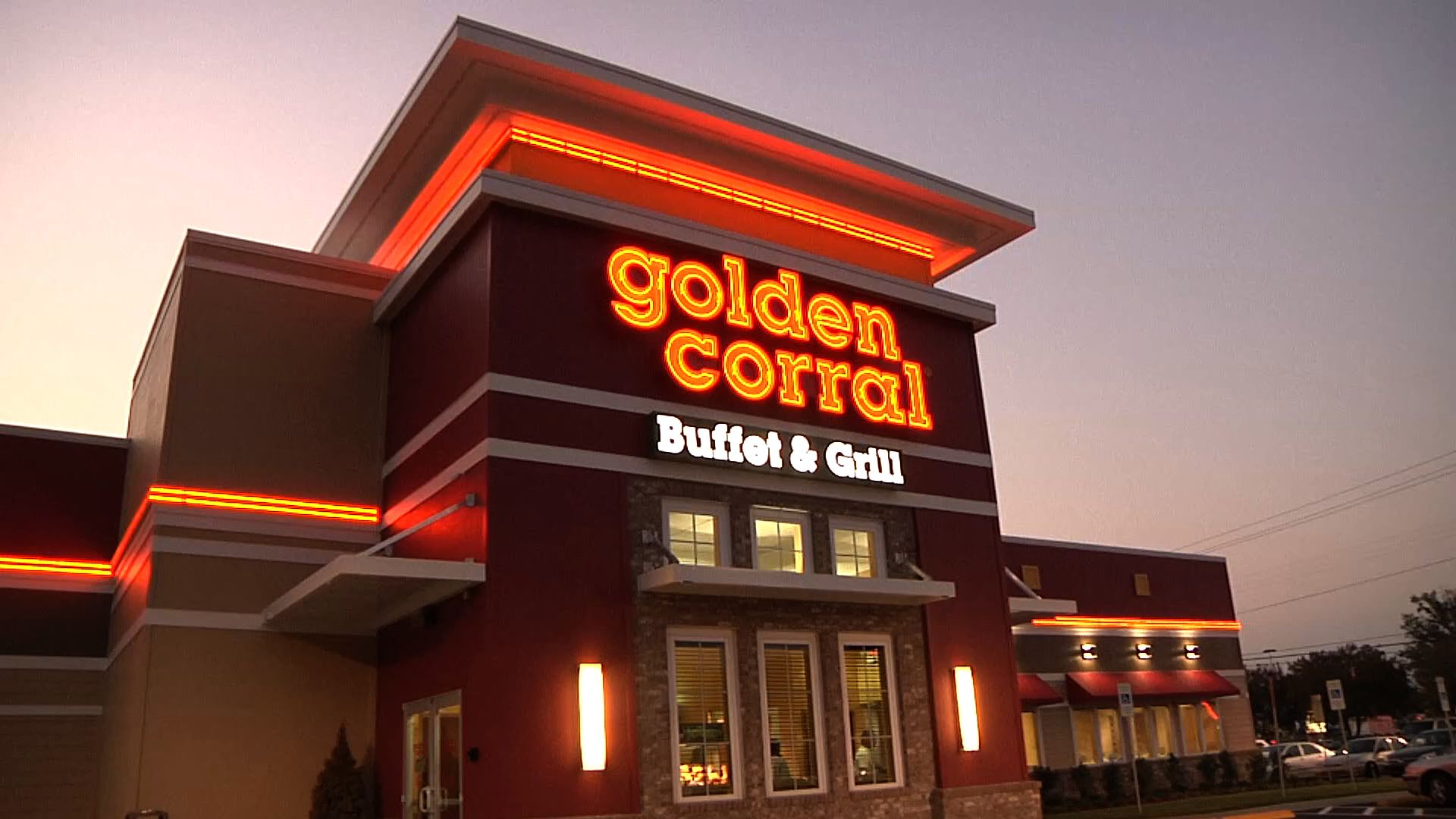
As we've said before, Americans aren't as stupid as the rocket surgeons in DC seem to believe. Case in point: Billy Sewell, head honcho of Golden Corral. Because of the (evil) Employer Mandate, and although concerned about the cost, he started offering employees access to his company's group health plan.  Depending on participation, this move could cost him over a million dollars.

Fortunately for him, his employees knew that actually enrolling would be a sucker move on their part:

"His actual costs, though, turned out to be far smaller than he had feared. So far, only two people have signed up."

But hey, rousing success.

[Hat Tip: FoIB Holly R]

Tuesday, October 20, 2015

Walk Down Memory Lane

You are entitled to your opinion, but not your own facts.


#ObamacareFantasy

CO-OP Secrets and Suits [UPDATED]

Lawsuits, that is. Seems that our post yesterday about how the Centennial State CO-OP was circling the drain has some pushback:

"Colorado HealthOP [has] sued the state's Division of Insurance in response to the agency's action Friday that in effect will shut [it] down."

And they're serious, too: they're asking for an injunction to keep the state from booting them off its Exchange. Interesting development.

UPDATE: Wow, that was fast:

"Colorado HealthOP CEO Julia Hutchins said after Monday’s unsuccessful challenge that she was barred by law from describing it."

We could tell you, but then....

[Update Hat Tip: Charles Gaba]

Obviously, it's no secret that HealthOP is on the ropes, and Pat's post from this past Saturday named quite a few others. But (and this is a big but) we may still not have the whole story: there's apparently a secret list of 11 such entities "on the verge of failure." Since all 11 of those on the list are alleged to be on "enhanced oversight," I may end up eating my words (metaphorically, of course) regarding Ohio's own InHealth (also on enhanced oversight):

Monday, October 19, 2015

Two more CO-OPS down the tubes

So when the dust (finally) settles, will there be any left?

One wonders:

"The Colorado Division of Insurance today announced that it will decertify the Colorado Health Insurance Cooperative"

The Centennial State CO-OP will be enjoined from offering coverage to new victims enrollees, although it will be allowed to help its existing client base (as things wind down). With Open Enrollment around the corner, current policyholders will (presumably) at least have a place to land.

A bit to the west, folks in the Beaver State face a similar fate:

"Health Republic Insurance of Oregon, has also announced plans to wind down its operations by the end of the year."

Interestingly, that endeavor was masterminded by the same rocket surgeons responsible for the now shuttering New York state CO-OP.

Failure theatre tickets now on sale.