Tuesday, March 31, 2015

Explosive Renter's Coverage?

Last week's terrible explosion claimed 2 lives (so far) and left scores homeless. Jeanne Salvatore, of the Insurance Information Institute, explains how renter's insurance helps in these circumstances:


My Answers.com article has a more detailed explication of this valuable coverage, as well.

Tuesday Potpourri

Interesting items for your early week perusal.

■ Item 1 - Not exactly a surprise:

"[A] survey of 743 personnel executives by the Society of Human Resource Management ... Nearly 14% of firms have cut part-time hours for workers ... and another 6% plan to do so."

But hey, free health care.

■ Item 2 - And some more good news (for certain values of "good"):

"The death spiral isn’t just a theory. Eight states learned this the hard way in the 1990s when they enacted two policies known as “community rating” and “guaranteed issue ... Obamacare includes both community rating and guaranteed issue"

Three guesses where this is heading (and the first two don't count).

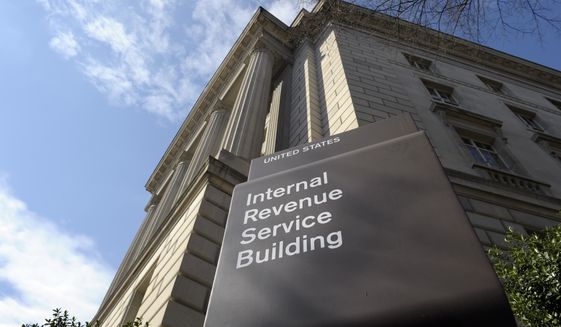
■ Item 3 - As we head into the tax season home stretch, the IRS has "put out a plea for consumers and their tax preparers to look on HealthCare.gov for advice about exemptions from the [ObamaTax]."

Of course, since they ask for zero documentation, one wonders how many folks will just go ahead and check "yes." Trying to figure out the downside of that.

Happy Tuesday!

Monday, March 30, 2015

Face-Palming HIX Tricks

Regular readers may recall Bob's post a week or so ago lambasting the folks running the ObamaTax for shortchanging citizens by effectively locking out their agents and brokers:

"[T]there is also a concern for the lack of informed advice available to the consumer that dialogues with a navigator who has barely a few weeks of training (if that) buys through the exchange. What kind of counsel are they getting? Do the navigators understand the nuances of a PPO plan vs. HMO? And what about drug formularies?"

Of course not, but because the "agents are unnecessary (if not evil)" meme was fully entrenched, it seemed that folks who could truly benefit from having access to a knowledgeable, accountable agents were outta luck.

The good news is that at least one state, Washington, has seen the light:

"If you want to get people insured, you go to agents and brokers ... the board notes it is working to increase broker participation, and therefore increase enrollment participation."

And it gets even better: the folks running the beleaguered Maryland Exchange "said they were looking to brokers to reach those remaining uninsured. That including rotating brokers into their call centers." [ed: not sure how well that'll work, since agents work best independently, but perhaps time will tell].

Are eyes being opened at long, long last?

Sunday, March 29, 2015

Yeah, 'bout those ObamaTax Sign-ups

Saw an interesting comment at another blog I frequent:

"Did [my taxes] early, with TurboTax. If I explained why, you would definitely not suspect I was some kind of overachiever. I was expecting a bunch of paperwork to prove I had health insurance, but all there was was some sort of affirmation and no further hassle.

Which tells me that the stats about who has health insurance and who does not will be lies
."

And then I thought back to ours, and remembered I was surprised that no documentation was required (nor was there any indication that it could be attached).

I'm mildly disappointed in myself for failing to make the connection the commenter did.

But it's spot on, no?

Friday, March 27, 2015

More March (Open Enrollment) Madness

As we noted a few weeks ago, Our Betters in DC© have (illegally) extended Open Enrollment season for those who flaunted the (evil) Individual Mandate last year:

"The Centers for Medicare & Medicaid Services (CMS) announced today a special enrollment period (SEP) for individuals and families who did not have health coverage in 2014 and are subject to the fee or “shared responsibility payment”

Aetna has emailed a helpful "message for the brokers" to let us know that "[t]his Special Enrollment Period is for on-exchange business only and all applications must go through the Marketplace." That's actually a helpful bit of info: it means that one can only satisfy the requirement this way by going to the buggy, security-challenged Exchange.

The carrier also "expects premiums to be paid prior to the member’s specified due date. Exchange rules require a payment grace period. Although this is not a new term, the grace period for Exchange premium payments will differ between non-subsidized and subsidized members."

Which is a rather long-winded way of saying that some insureds are more equal than others. You'll also note that they don't specify exactly how some are more equal, presumably to avoid giving folks any ideas about gaming the system (heh). The bottom line is that, if you're eligible for and take a subsidy, your grace period is 3 times greater than the rest of us proles.

Isn't that special.

Oh, and ICYMI, only those who meet these criteria are eligible at all:

  • Are not already enrolled in a 2015 plan.
  • Were unaware or did not understand the implications of the fee for not enrolling for 2014 until after the end of open enrollment (February 15, 2015).
  • Owe a fee for not having coverage in 2014

Thursday, March 26, 2015

Outstanding Carrier Trick

A few months ago, I "inherited" a small group from a colleague transitioning out of that side of the business. One of the challenges with this process is that the new agent doesn't have any of the original paperwork (applications, etc) to refer to should the need arise.

Yesterday morning, I received a frantic call from the employer: one of her employees had recently changed doctors, and needed to have a prescription filled. For some reason (I'm still unclear on the specifics), the pharmacist couldn't get the okay from the insurer because the employee's birth date didn't match what the carrier had on file.

The employer called me to see if there was anything I could do to resolve this as quickly as possible, preferably by the end of the day. I explained that insurance companies (very) rarely move that fast, but that I'd see what I could do.

Fortunately, I had the contact info for the carrier's rep. Even though this wasn't his area (he toils on the individual side), he was able to access the original application to confirm that the records didn't match. He quickly helped me get to the proper department, where I explained the problem to a very nice lady, who told me that all she needed was an email with some basic info (group and ID number, and correct date of birth) and that we needed this resolved ASAP. I immediately fired that off, and let the employer know that we'd at least gotten a good start, I also advised her that she should urge the employee to wait until (at least) today to try getting the scrip filled, since it generally takes a while for these things to resolve.

Oh me of little faith!

About an hour later, I got an email telling me that "[t]he correction has been made to the drug system.  She can pick up her Rx now."

Wow!

So, kudos to Medical Mutual of Ohio, and especially Mike B and Nancy K for a job (very) well done.

Health Wonk Review: We're not really in Daytona edition

Over at Wing of Zock (which, as we've noted before, would make a great name for a band), Jennifer Salopek hosts this week's outstanding round-up of health care wonkery, covering a panoply of topics from who owns our health records to the recent travails at California Blue Cross (about which our own Bill Halper has written).

It's a grand edition, and worth perusing.

Wednesday, March 25, 2015

Medicaid & Long Term Care: An Update

FoIB Holly R tips us to this from the folks at NPR:

"The Morgans live in Stockton, California. They are in their early 60s and are retired, aside from Rod’s occasional construction jobs ... In 1993, Congress passed a law requiring states to recover the costs of long-term care services spent on Medicaid recipients over the age of 55 after they die, the exact burden the couple was hoping to avoid."

No kidding.

In fact, we've noted this issue many times (most recently a few months ago). Unlike the ObamaTax clawback problem, this one's entirely reasonable: if your fellow taxpayers are footing your long term care bills, then we have a right to be reimbursed from your remaining assets. Fair's fair.

Of course, some folks don't see it that way:

"Pat McGinnis, the executive director of California Advocates for Nursing Home Reform, says estate recovery hurts the people who need inheritance the most."

No doubt, but that's where planning and risk management come into play: Partnership-compliant Long Term Care plans help defray the cost of long term care and preserve part (maybe most) of your estate.

Something to think about.

Tuesday, March 24, 2015

Tangled Webs

Maybe it's the troubled economy, or perhaps folks are really pressed for funds to pay their ObamaTax, but it seems like there's been a spate of fraudulent life insurance death claims of late. A few months ago, it was a "widow" filing for $2 million worth of life insurance; turned out, her "late" hubby was very much alive. That one was truly a family affair: "Her son ... was charged with actively concealing the fraudulent scheme." That one included another nice touch: "At her request ... the body was cremated."

One way to get rid of evidence.

But even that well-planned scheme pales in comparison to the intriguing case of The Gorman and The Fox:

"When a man was found dead in a Houston-area motel room of apparent natural causes in January, police figured it would be an open-and-shut investigation ... the man — whose fingerprints identified him as Gerard Joseph Gorman — was suspected of murder in Colleyville."

And it just gets worse from there; it appears that Mr G and his son "stalked and killed Anita Fox, an elderly Alvarado housekeeper."

Grisly, yes. Tragic, of course. But what has any of this to do with life insurance, let alone fraud?

Well, ya see, Danny boy, the Gorman's were Irish Travelers, "a secretive and nomadic ethnic group whose members often garner their wealth by doing dubious repair work and executing scams — and by taking out exorbitant life insurance policies on one another."

In this case, it appears that the late Anita Fox was no stranger to these schemes, even as she fell victim to one.

Here's my question, though: Mrs Fox is described as "an elderly Alvarado housekeeper;" how, exactly, did someone convince the carrier to issue a million dollar policy on a maid? Generally speaking, a policy that large is going to require at least some "financial underwriting;" that is, one's income and/or assets have to justify such a large (even by today's inflated standards) amount.

As an aside, I really hate it when reporters just take their subject's word for something, as if either one of them had an actual clue:

"In America, there’s a clause which allows you to insure anyone with a blood connection"

This is simply wrong: no such "clause" exists, and it doesn't even pass the smell test: Really? An insurance company will let me buy a $1 million insurance policy on my second cousin, in another state, no questions asked? So "insurable interest" is trumped by blood?

I don't think so, Deanna. Next time, do a bit more research.

Something just doesn't add up.

Monday, March 23, 2015

The Best Laid Plans [Updated]

From the "No D'unh!" Department:

"A special enrollment period to obtain health insurance for millions of uninsured people who owe a tax penalty under the Affordable Care Act is off to a slow start ... Only 12% of uninsured people would buy policies if informed of the penalty"

In other words, a lot of folks with even rudimentary math skills have figured out that paying the fine penalty tax and "going bare" is a much more cost-effective choice than buying coverage.

No kidding.

UPDATE: Rubbing salt in the ObamaTax wound, we also learn that (surprise!), the overall enrollment picture ain't exactly rosy:

"Of the 8 million people who signed up for a marketplace plan last year, 6.7 million actually enrolled"

Shocker.

Friday, March 20, 2015

Top. Men. An IRS Story...

The folks in charge of your health care now:

"The IRS sometimes uses old software without key security patches that leave its computer systems vulnerable and could endanger taxpayers’ private information ... Part of the problem is that the IRS hasn’t even always followed its own guidelines for assessing risks and creating information security plans"

Here's the best part: as a broker who sells on-Exchange plans, we have to take annual re-certification training, part of which is an extensive section on security and privacy, including computer security issues.

Which apparently don't apply to the folks enforcing the rules.

Nice double-standard there, guys.

Thursday, March 19, 2015

Yeah, about that *Affordable* Care Act

Contra the President's explicit promise to lower health insurance premiums by 3000%, the reality is that average premiums rose 23% from last year, and that's after subsidies.

Yes, those wonderful gimme's designed to (artificially) reduce premiums actually didn't.

Shocking, I know.

One big reason is that the subsidies themselves actually decreased at the same time that, due to medical inflation and other factors, premiums increased. So the net result is that the ObamaTax is less "affordable" than ever. And it's not likely to get any better:

"Next year is likely to bring more premium pain, if the Congressional Budget Office is right. It says insurance costs will climb 8.5% in 2016"

And let's also not forget the other elephant on the table: MOOPs. But hey, we had to pass it to...

Another Potential Alzheimer's Break-through

An alert reader tips us to this potentially outstanding news:

"[A] team of researchers have discovered a new non-invasive ultrasound technology that could be used to treat it and even possibly restore memory."

While we usually think of ultra-sounds at the other end of the life cycle, it appears that the tech could hold promise for folks at the far end suffering from dementia. It does this by attacking "neurotoxic amyloid plaques;" as we've previously blogged, "beta-amyloid, a protein fragment that accumulates in the brain of Alzheimer's sufferers to form the disease's signature plaques." In that post, we noted that some research seems to indicate that prolonged cell-phone use could actually be a way to break those down; this sonogram-type process seems a lot safer.

What's really exciting about this process is that it appears to actually restore memory, not just halt progression of the disease.

Research is still in the embryonic stage (SWIDT?), so only time will tell. Still, some really great news for those for whom this disease has been so horrible.

[Hat Tip: DoIB HS]

Wednesday, March 18, 2015

Blue Shield of CA has its state tax-exempt status revoked...

I guess you can't have $4.2 Billion surplus in the bank, pay your CEO $5 Million/yr. and still call yourself a non-profit.  Bummer.

California's Franchise Tax Board apparently revoked the non-profit last August and ordered the company to file State taxes for 2013 forward.  The news is just now coming out.

More information is in the LA Times article.

And the Hits Keep Comin'

It seems like only weeks ago that Anthem suffered a catastrophic security breach of sensitive, private customer info.

Wait, it was just weeks ago, and now sister (?) company Premera Blue Cross reports that it, too, has been hacked:

"[I]nformation on 11 million people may have been exposed in a cyber attack uncovered six weeks ago."

Wait, what?

Six weeks to report it? According to Evergreen State insurance commish Mike Kreidler, it took Premera officials that long to notify his office. What could possbly justify that kind of lag-time?

Stolen info seems to include the usual: names, social security numbers, bank and private health information. The good news (for certain values of "good")  is that this represents a much smaller database than Anthem's, which topped off at just under 80 million clients affected.

Tuesday, March 17, 2015

The Public Option Lives!

Co-blogger Mike was eerily prescient last summer when he wrote about the Public Option as it relates to Medicare Advantage plans:

"Medicare has not chosen to respond to its Medicare Advantage competition by improving its own product. Instead, Medicare chose to respond to its competition by using its power to kill its competitor, rather than compete with it.  That illustrates pretty well how governments tend to "compete" and we all need to keep this in mind when the "public option" idea again surfaces."

Indeed.

But what does that have to do with the price of tea in China?

Well, as Our Betters in DC© continue to "streamline" ObamaTax alternatives, they've (perhaps unwittingly) turned the spotlight once again to the Public Option, which for so long has been presumed dead.

So, what's the "Public Option," you may ask?

Well:

"The "Public Option" is a euphemism for Single Payer, the obvious end-game for the ObamaTax from the get-go.


And how do we know this?


That is, the government sets up its own health insurance racket scheme to "compete" with the private sector. Of course, the private sector is made up of commercial carriers that are enjoined from collaborating in a way that the government is not. The government, of course, has the lawful power of force, which it can use to ensure an unfair and insurmountable market advantage. Thus, the end of the private insurance business.

So, why bring this up now? The Public Option is dead, right?

Maybe so, maybe not:

"The BHP [Basic Health Program] system could appeal to states that would have liked to see Congress offer a government-run, "public option" health insurance throughout the country, in addition to or in place of the PPACA exchange system"

In fact, the power of the government's purse is so strong, there's no "maybe" about it. Seems to me that this alone dwarfs the current Halbig/King/Burwell kerfluffle: by definition, the Public Option is itself simply one big subsidy.

Sweet.

Monday, March 16, 2015

Time Lord, CLU

Dalek coverage optional:

Saturday, March 14, 2015

Yeah, about that "If you like your plan..." Dealio

Residents of the The Centennial State are about to get a rude wake-up call:

"Colorado Sen. Cory Gardner (R) said he’s “utterly appalled” by the Colorado Division of Insurance decision to cancel 190,000 health plans that don’t comply with Obamacare regulations"

Colorado is one of 14 state-based HIX (Exchanges); as an aside, these are the states with legitimate subsidies. The plans at issue had been "Grandmothered" in, meaning that they could continue to be sold as long as the state's insurance department allowed. Colorado's insurance commish justified the cancellation because "by delaying it, it doesn’t give us a good pathway into full implementation of the ACA.”

Which is an eminently reasonable rationale.

The problem, of course, is that it's part of why The Obamastration's explicit promise about keeping your plan was always a lie: under the ObamaTax, all plans would eventually have to come into compliance, an impossibility given how they're structured.

But hey, they had to pass it to...

Friday, March 13, 2015

Insuring Pi

In honor of Pi Day tomoorow, we have this great infographic courtesy of our friend Claire Wilkinson at III:


[Click on pic for details]

Thursday, March 12, 2015

Health Wonk Review springs forward

Brad Wright hosts this week's refreshing collection of health care wonkery from around the 'net.

'Tis a breath of fresh air!